Money recognition Numbers Worksheets for Ages 4-8
3 filtered results
-
From - To
Enhance your child's financial literacy with our engaging Money Recognition Numbers Worksheets, designed specifically for ages 4-8. These worksheets provide fun and interactive activities that help young learners identify and understand various denominations of money. Through colorful visuals and hands-on exercises, children will develop essential counting skills and financial awareness in a playful environment. Our resources align with early education standards, ensuring that your little ones gain confidence in recognizing and using money. Perfect for homeschooling or classroom activities, these worksheets make learning about money exciting and accessible. Start building a solid foundation for your child's financial journey today!
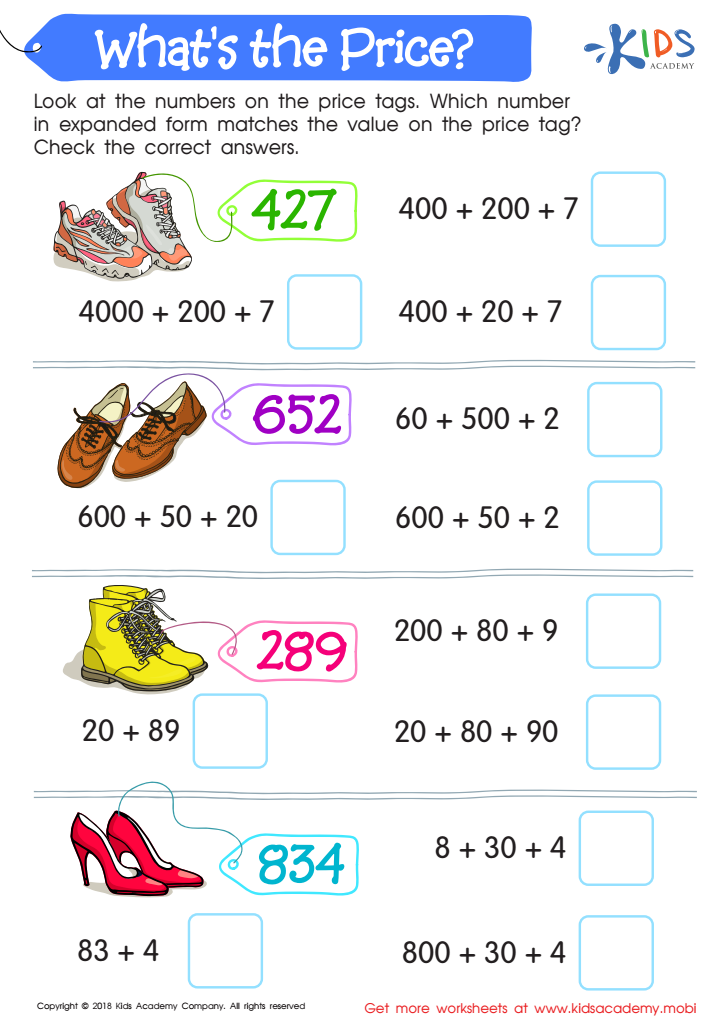
What's the Price? Worksheet
 Assign to My Students
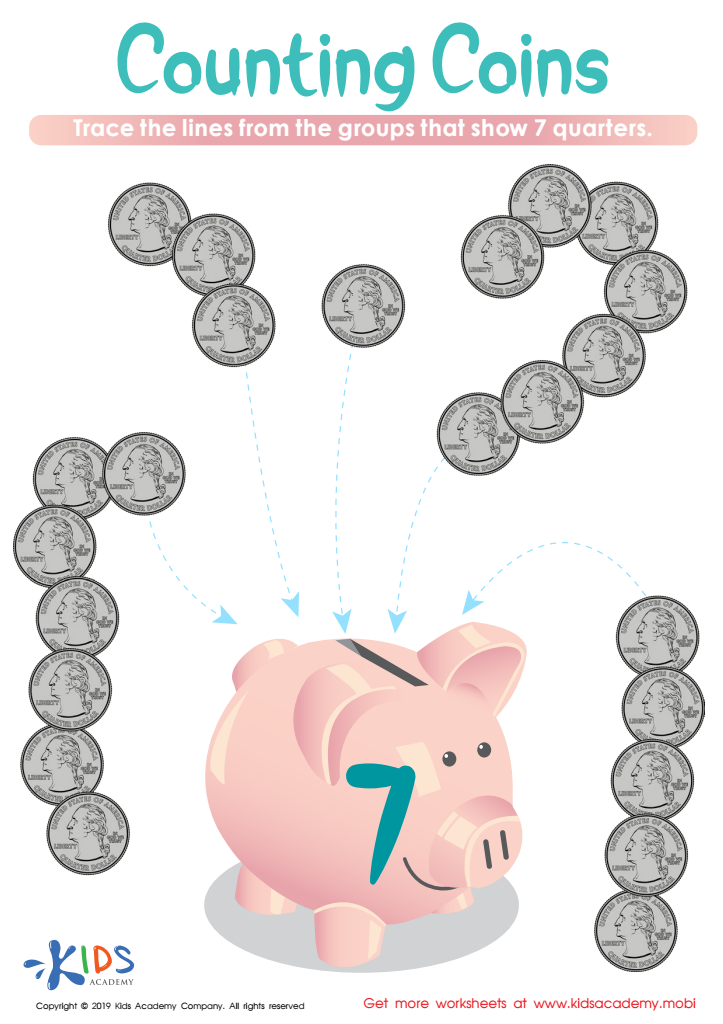
Counting Coins Worksheet
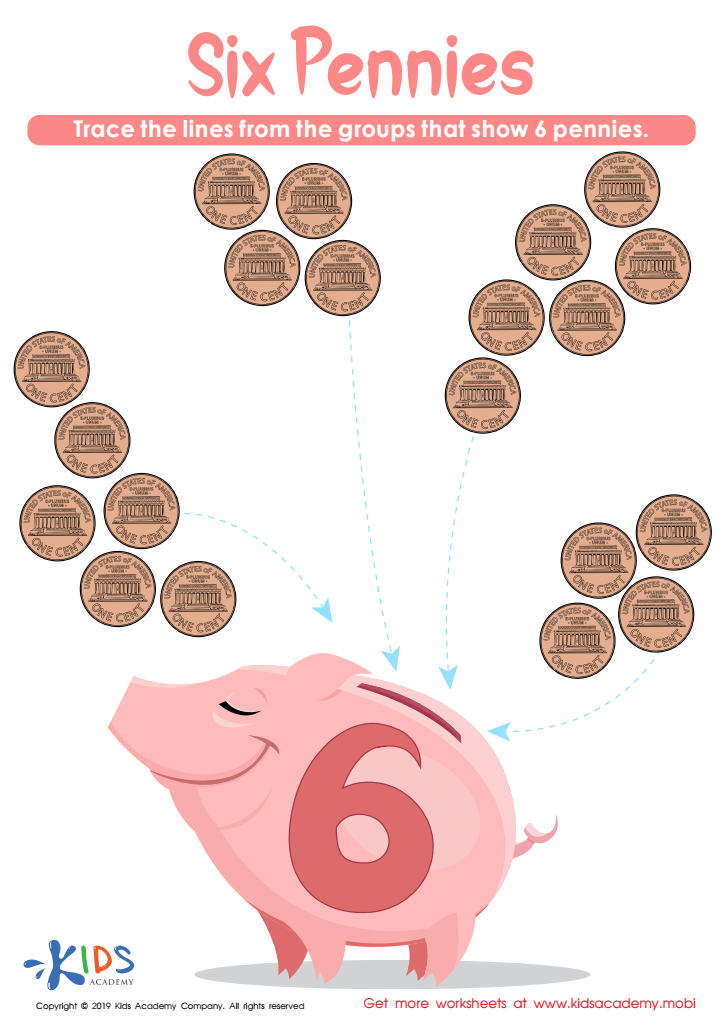
Six Pennies Worksheet








Money recognition is a critical skill for children ages 4-8, and both parents and teachers should prioritize it for several reasons. First, learning about money helps children develop strong foundational math skills, such as counting, addition, and subtraction. Understanding different denominations laid down the groundwork for complex financial concepts they will encounter later in life.
Moreover, recognizing money also supports essential life skills. It empowers children to make informed financial decisions, such as saving, spending, and understanding value. By grasping the concept of money early, children gain confidence when handling financial transactions, ultimately fostering a sense of independence in their economic activities.
Money recognition further aids in developing critical thinking skills. For example, children can learn to compare prices, calculate totals during play-based activities, and make choices based on their acquired preferences.
Socially, money management helps kids understand sharing, trade, and the value of currency in society. Furthermore, with the increasing emphasis on financial literacy in today's fast-paced world, instilling these skills early will better prepare them for future responsibilities. Ultimately, promoting money recognition not only enriches children's educational experience but also lays the groundwork for lifelong fiscal responsibility.








