
Number comparison Numbers Worksheets for Ages 4-8
11 filtered results
Difficulty Level
Grade
Age
-
From - To
Subject
Activity
Standards
Engage your child with our Number Comparison Worksheets, perfect for ages 4-8! These expertly designed resources from Kids Academy help young learners grasp the concept of comparing numbers in a fun, interactive way. Through a variety of engaging exercises, children will sharpen their skills in identifying greater than, less than, and equal values. By building a strong foundation in number sense, our worksheets pave the way for future math success. Ideal for home or classroom use, these printable activities make learning numbers thrilling and enjoyable. Start your child's mathematics journey with Kids Academy today!
Favorites
With answer key
Interactive
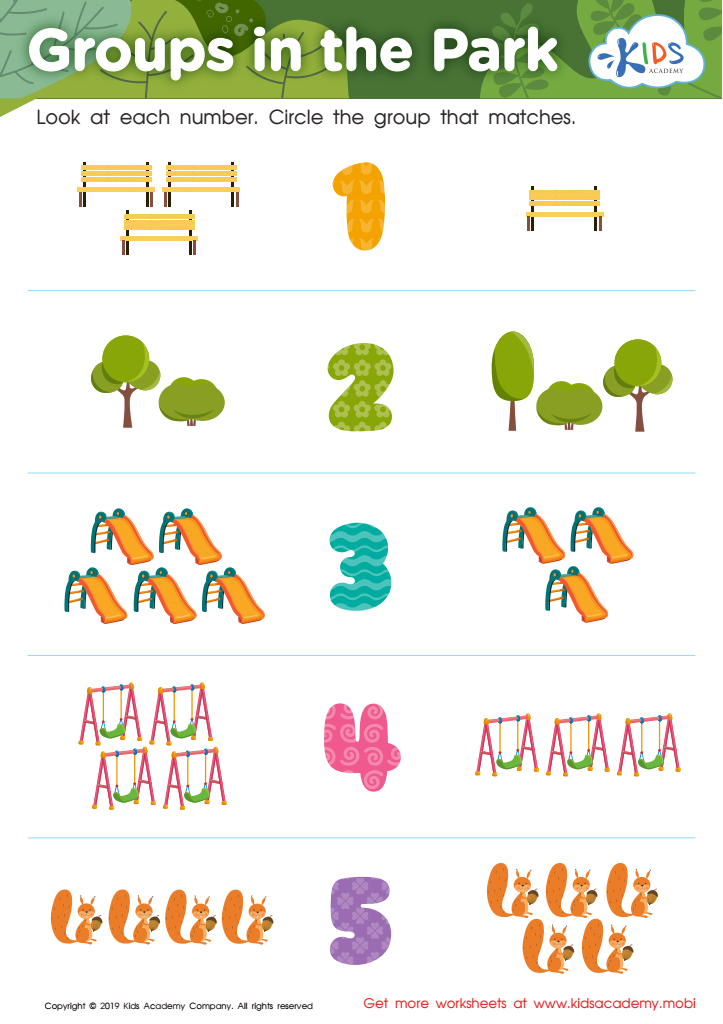
Groups in the Park Worksheet
Take your kids to the park and let them enjoy the freedom to play! Ask them what they love doing most and study a picture together - name items and count objects in the sets, then circle the correct one. It's a fun way for your kids to learn.
 Assign to My Students
Groups in the Park Worksheet
Worksheet
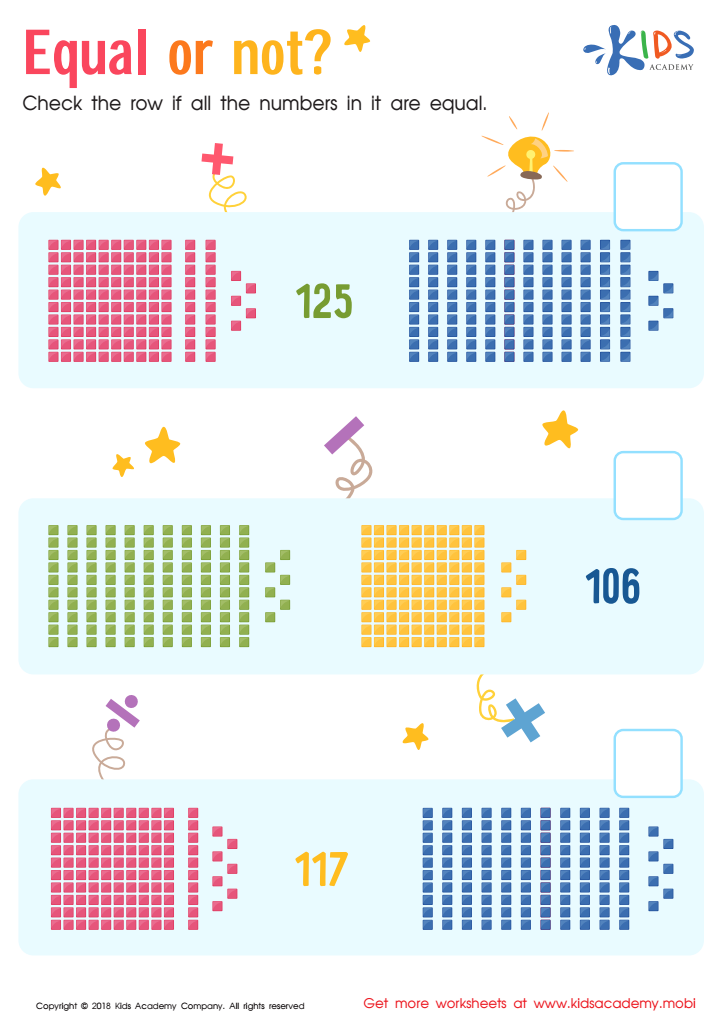
Equal or not Worksheet
To grow your child's learning, challenge them with new tasks. Stimulate their brains with activities that will build their knowledge and thinking skills. Take advantage of this worksheet exercise: ask your child to check the rows where all the numbers are equal. This simple exercise will improve their learning.
Equal or not Worksheet
Worksheet
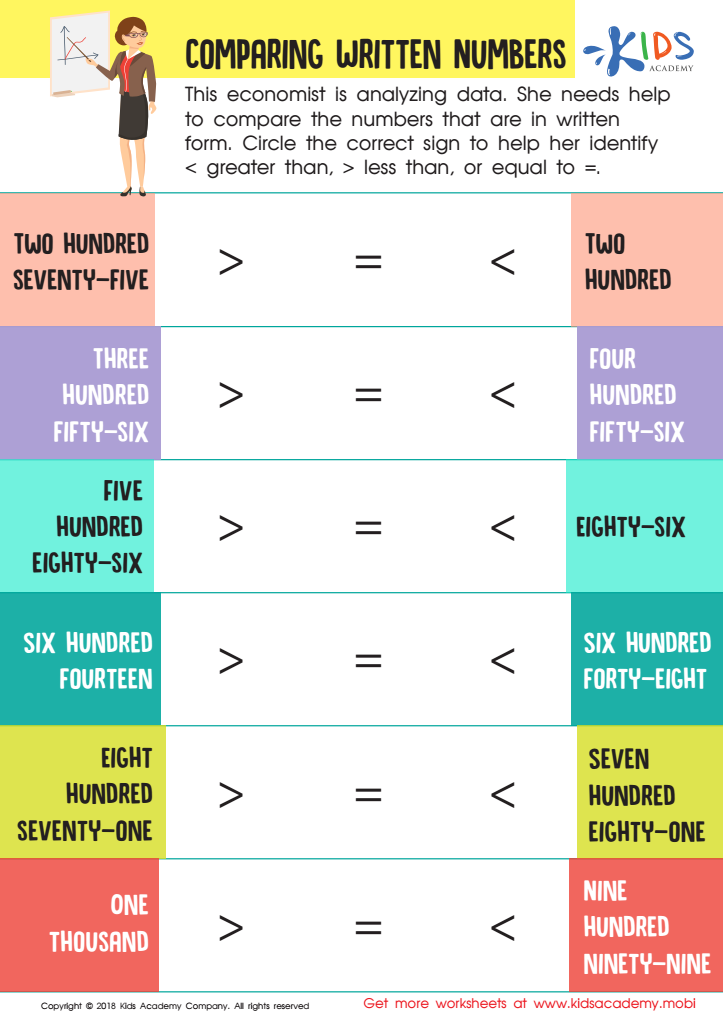
Comparing Written Numbers Worksheet
Children need to grasp that numbers come in different forms. This exciting PDF provides practice for comparing values written as words. Young economists can analyze the number pairs, then circle the sign (<, =, or >) to make comparisons true.
Comparing Written Numbers Worksheet
Worksheet
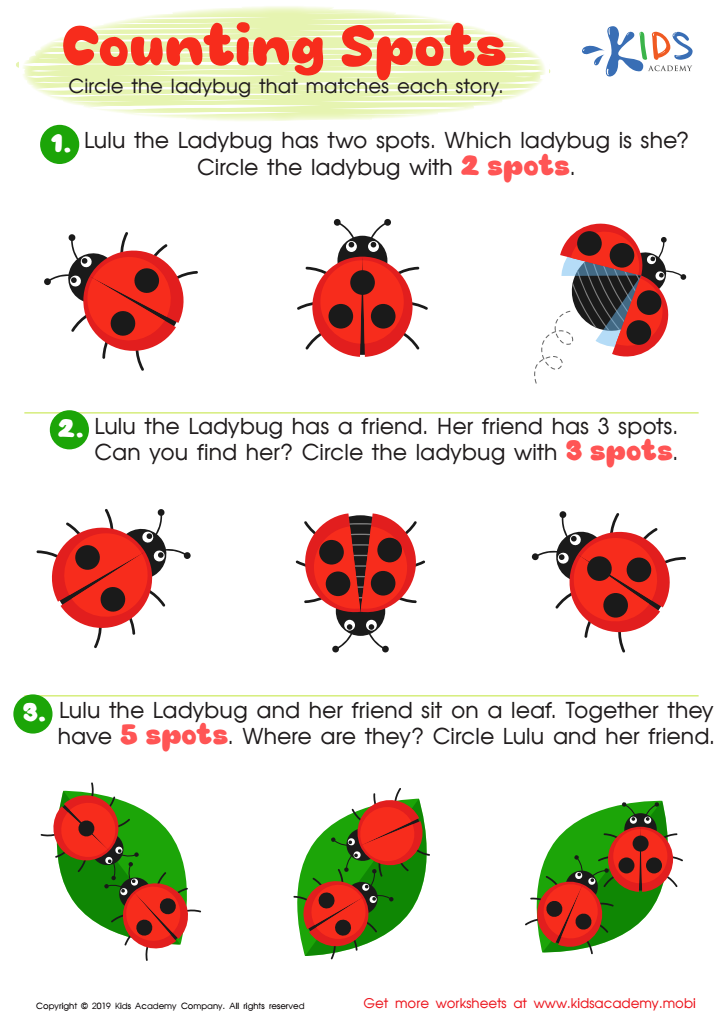
Counting Spots Worksheet
This worksheet is full of cute, colorful ladybugs. Help your kids identify Lulu, who has two spots on her body. Count the spots on each ladybug and circle the one with two spots. Then read the instructions on the other sections and help them find the ladybugs there, too!
Counting Spots Worksheet
Worksheet
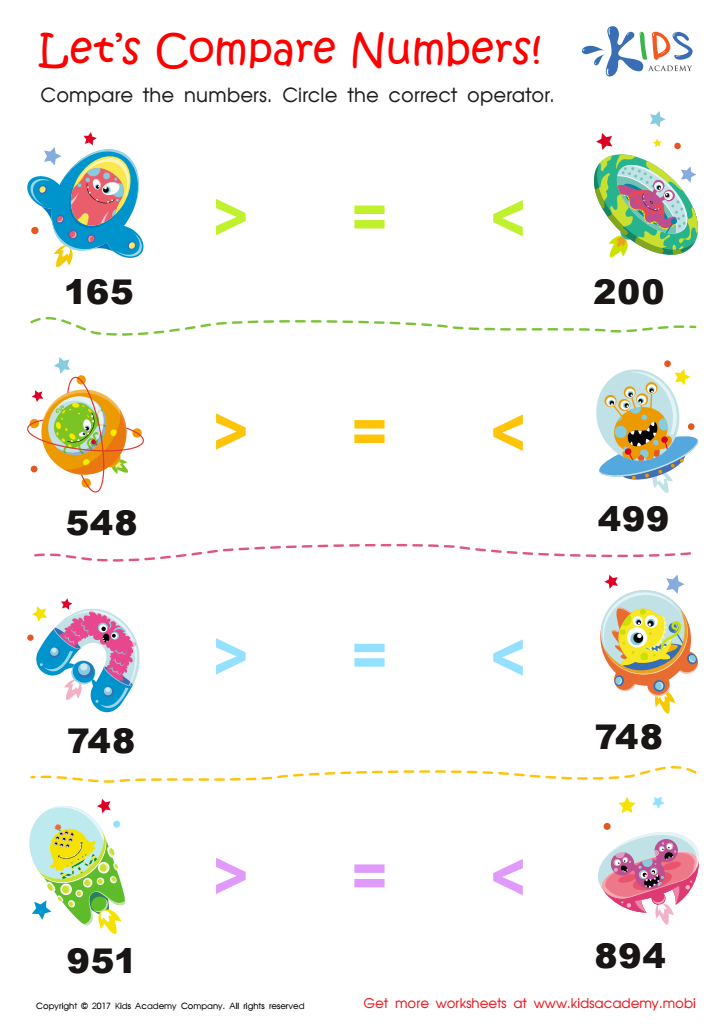
Comparing Numbers Worksheet for 2nd Grade
Alien friends are back to help your child learn to compare numbers using >, < and = symbols. This 2nd grade worksheet will challenge them with larger numbers!
Comparing Numbers Worksheet for 2nd Grade
Worksheet
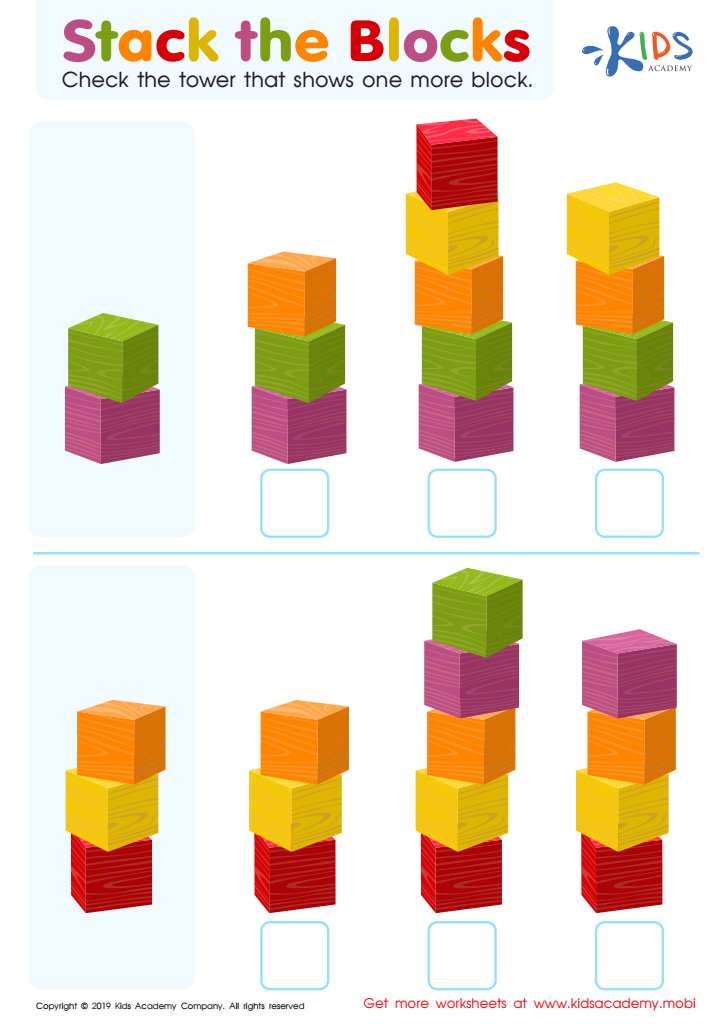
Stack the Blocks Worksheet
Playing with blocks is a great way for kids to learn! They can create patterns, shapes, and even count. In this worksheet, ask them to identify the colors and count each stack of blocks. If they can spot one extra block in the tower, even better! Encourage learning through play with these fun blocks.
Stack the Blocks Worksheet
Worksheet
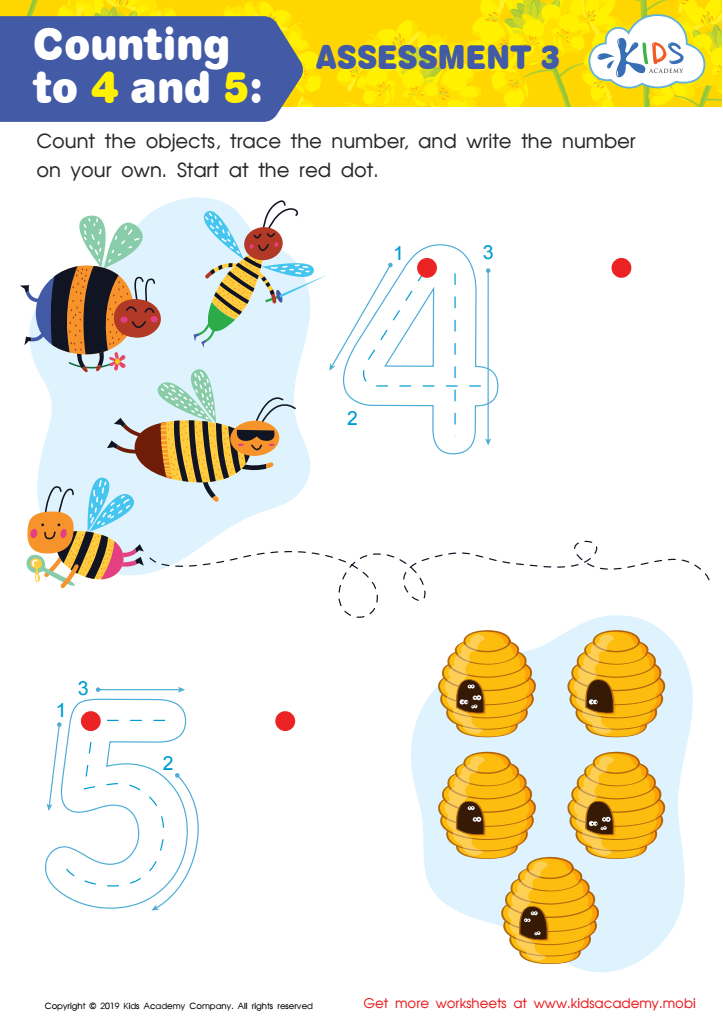
Counting to 4 and 5: Assessment 3 Worksheet
Help your kids learn to count with fun objects and items they like - like the bees in this worksheet. Ask them to count, trace the number, and write it down. Give guidance, starting at the red dot. This is an important first step in math and your kids will love it!
Counting to 4 and 5: Assessment 3 Worksheet
Worksheet
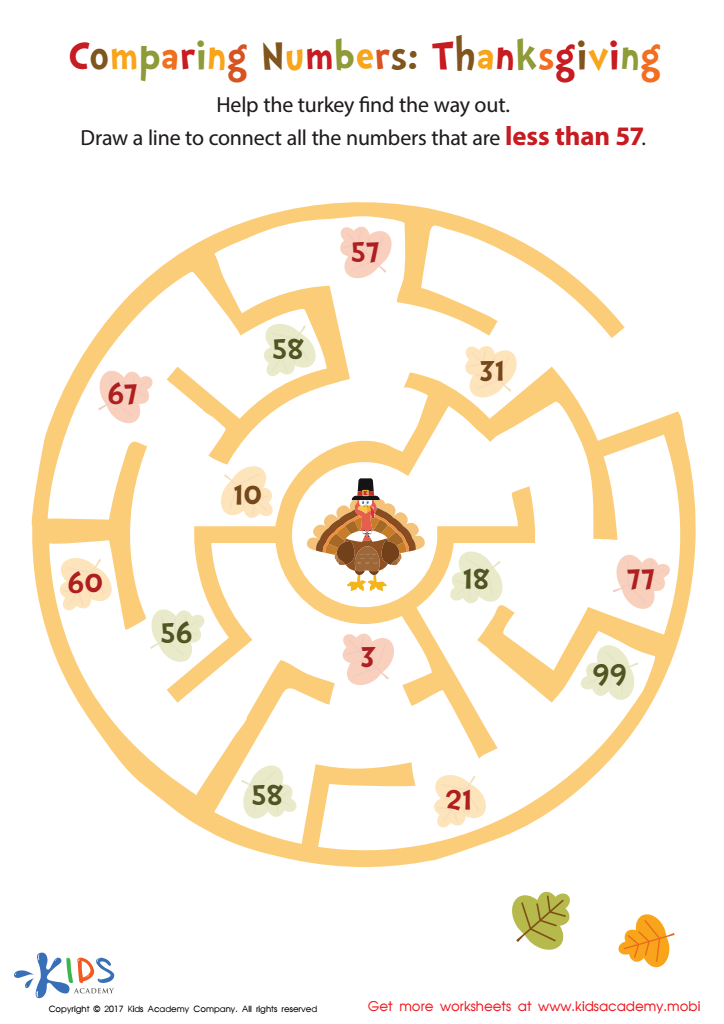
Comparing Numbers Printable
Test your child's number skills with this fun and tricky maze! This Thanksgiving worksheet lets them explore a maze, using numbers less than 57 to get to the tasty goal: A Thanksgiving turkey! Develop their number sense in a fun and engaging way!
Comparing Numbers Printable
Worksheet
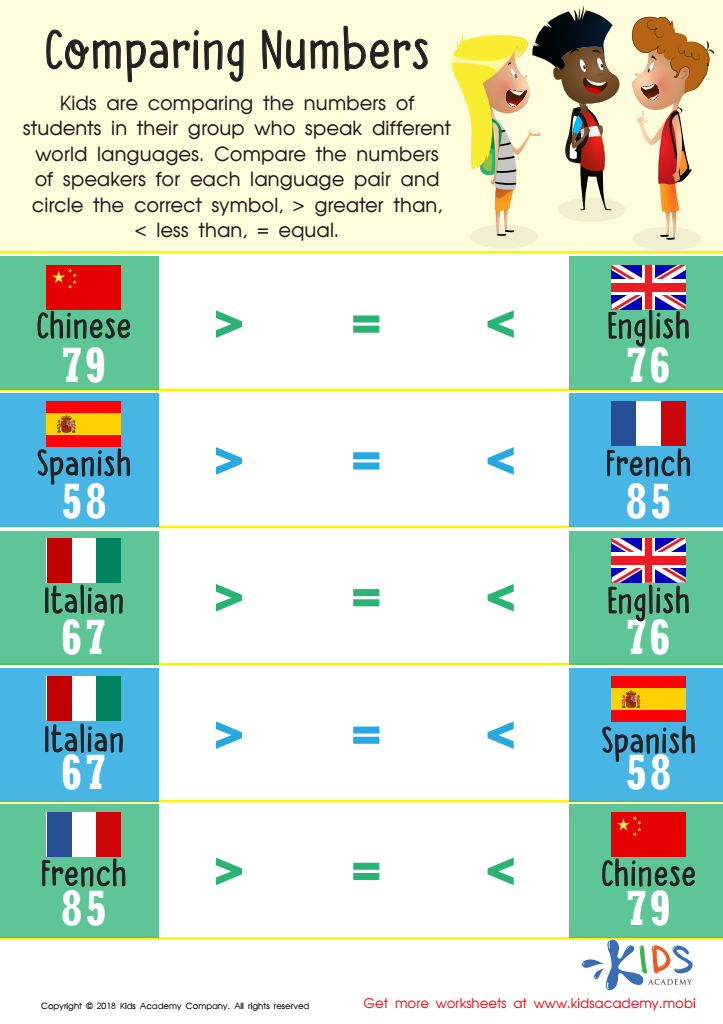
Comparing Numbers Worksheet for 1st Grade
Children can build number sense by exploring the relationship between numbers. This worksheet uses bright international flags to compare numerical groups. Kids will love the cheerful colors and flags from different countries. It encourages them to compare numbers and reinforces their number sense with tens and ones place values.
Comparing Numbers Worksheet for 1st Grade
Worksheet
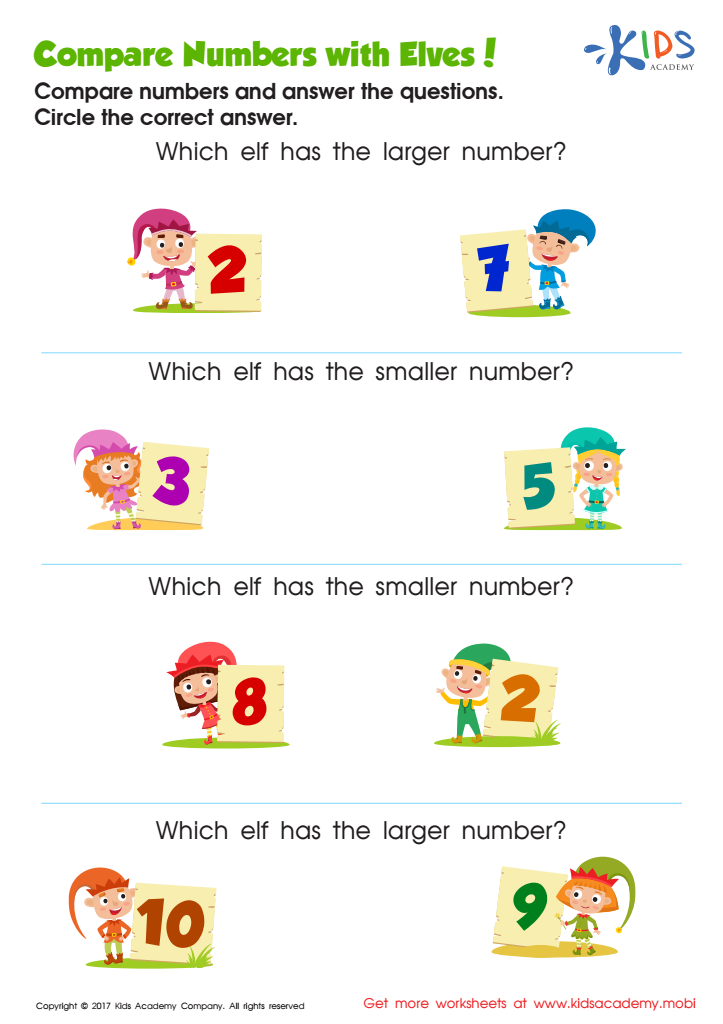
Comparing Numbers Worksheet for Kindergarten
Your child will love helping Santa's elves compare numbers with this fun worksheet for kindergarten! They must determine which number is bigger or smaller then circle the answer. It's a great activity for Christmas or any time!
Comparing Numbers Worksheet for Kindergarten
Worksheet
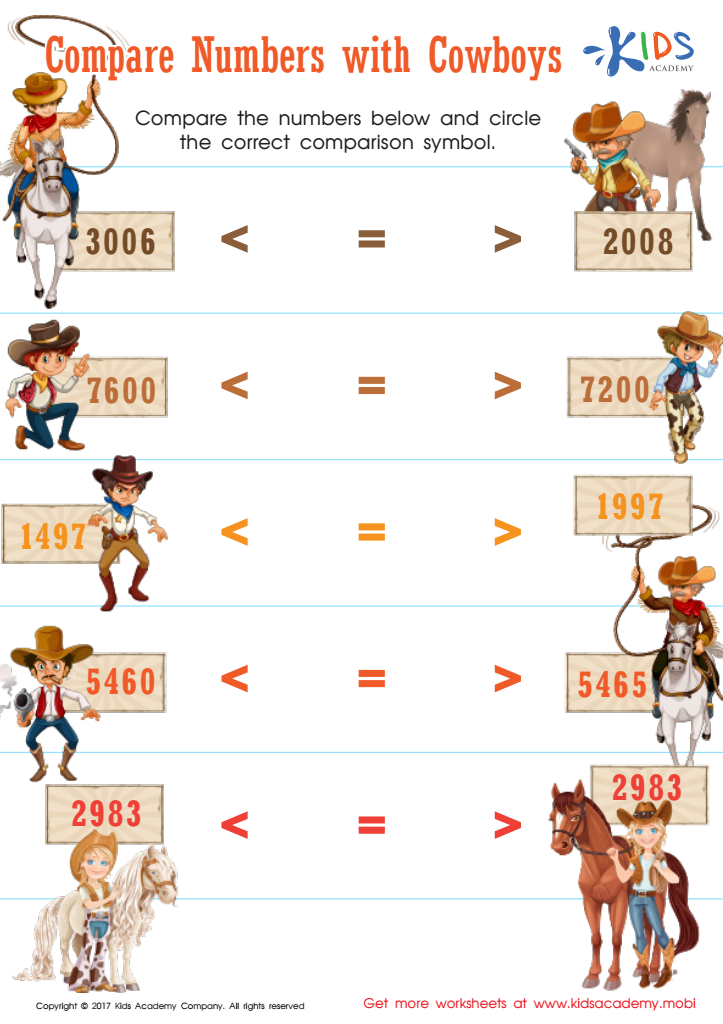
Compare Numbers Worksheet for 3rd Grade
Time to get a roundup on big numbers! Help your 3rd grader practice comparing thousands with this compare numbers worksheet. They'll use >, <, and = symbols for tricky numbers. Jump in and join the cowboys!
Compare Numbers Worksheet for 3rd Grade
Worksheet
Join Kids Academy for Free
Who is primarily going to use this learning content?








Number comparison is a fundamental mathematical skill crucial for children aged 4-8 as it lays the foundation for more complex math concepts they will encounter later in school. When parents and teachers emphasize number comparison, they are helping children develop a sense of numeracy, which is their ability to understand and work with numbers.
At this early age, children are building their cognitive abilities, and number comparison activities strengthen their understanding of quantities, counting, and the relationships between numbers. Children learn to identify which numbers are bigger, smaller, or equal, which teaches them critical thinking and problem-solving skills. These skills are not only vital for math but also for everyday decision-making and other academic areas.
Moreover, mastering number comparison helps children gain confidence in their mathematical abilities. When they can easily compare numbers and understand their relationships, they are better prepared for concepts such as addition, subtraction, multiplication, and division. This early competence in math promotes a positive attitude towards the subject, reducing math anxiety and fostering a lifelong appreciation for learning.
In conclusion, parents and teachers should care about number comparison for children aged 4-8 because it is essential for developing foundational math skills, fostering critical thinking, and building confidence that will support future academic success.








