Sorting skills Numbers Worksheets for Ages 4-8
5 filtered results
-
From - To
Discover an array of printable Sorting Skills Numbers Worksheets designed to enhance the numerical understanding of children aged 4-8. Our engaging and colorful worksheets help young learners develop essential sorting and categorization skills by practicing with numbers, objects, and patterns. Each worksheet is meticulously crafted to promote cognitive development and improve problem-solving abilities in a fun, interactive way. Perfect for both classroom use and homeschooling, these resources aim to make learning numbers an enjoyable adventure, building foundational math skills that will serve kids throughout their educational journey. Start exploring our worksheets today and watch your child's confidence grow!
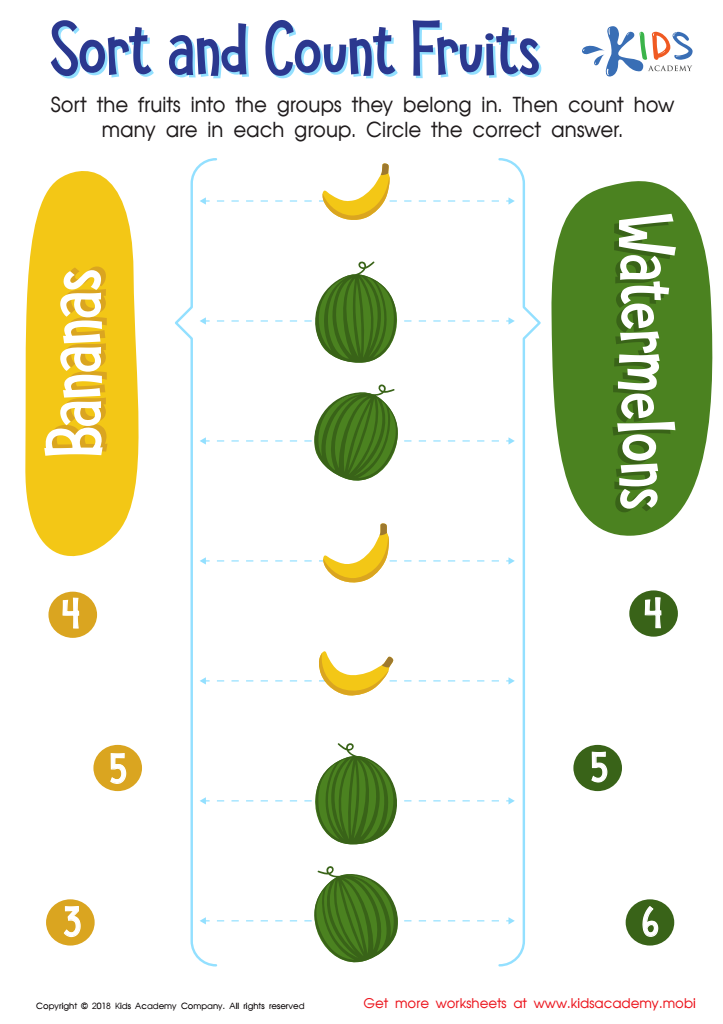
Sort and Count Fruits Worksheet
 Assign to My Students
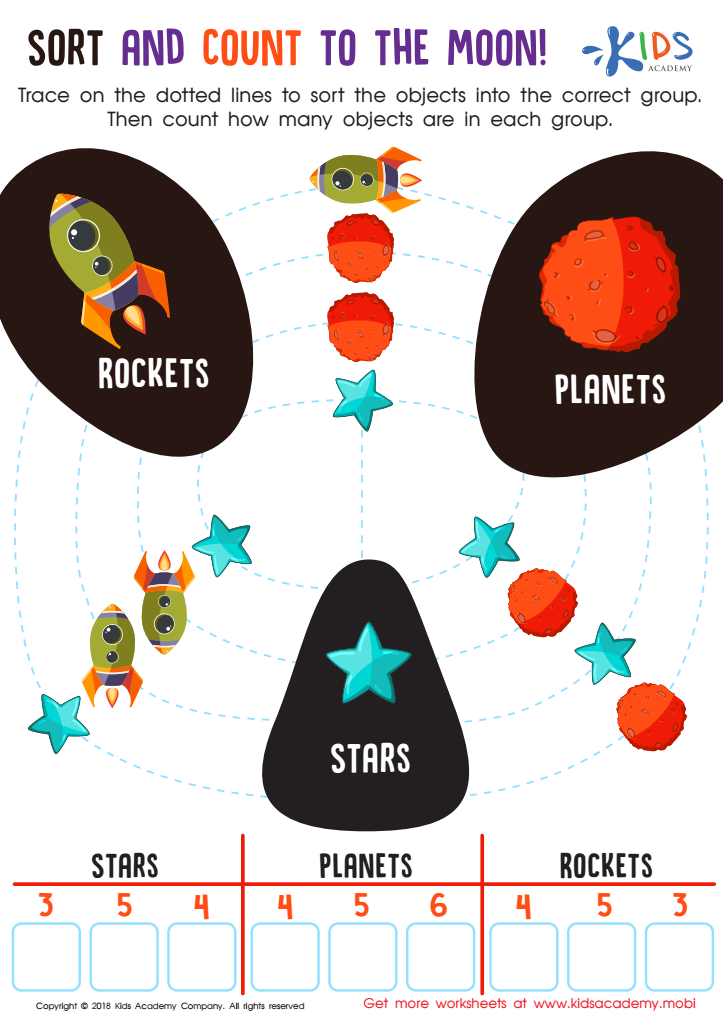
Sort and Count to the Moon Worksheet
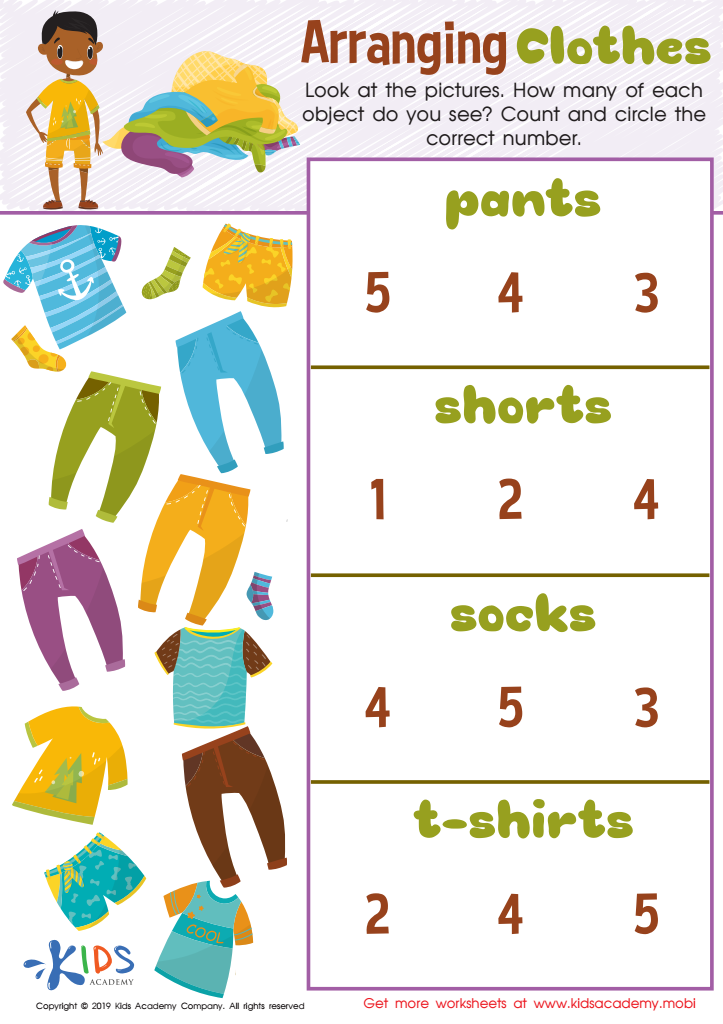
Arranging Clothes Worksheet
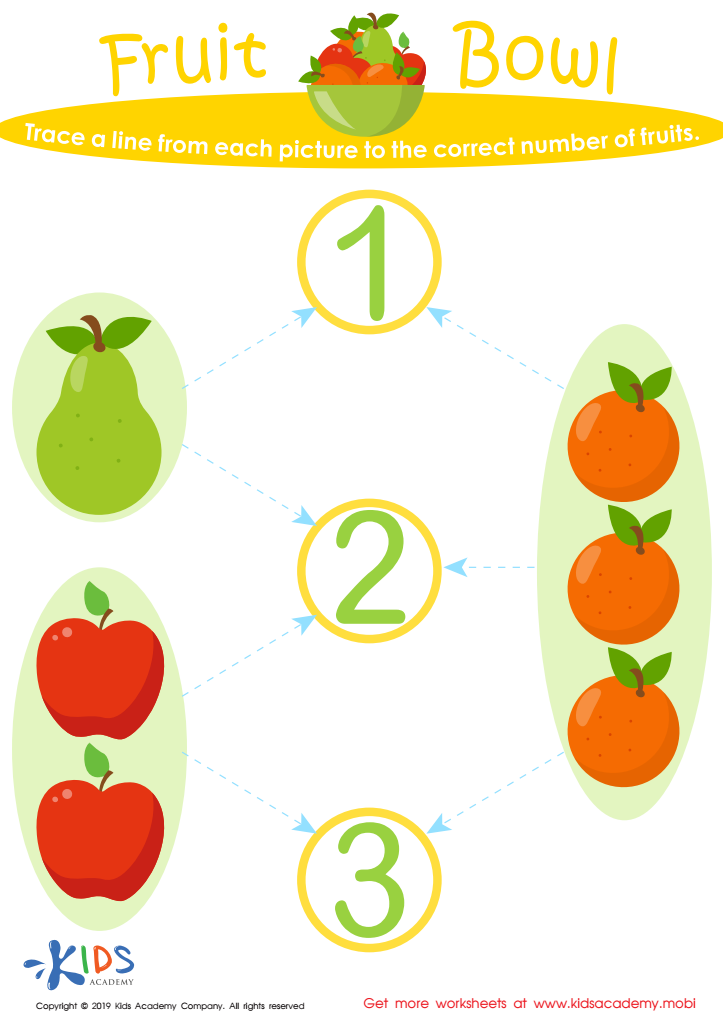
Fruit Bowl Worksheet
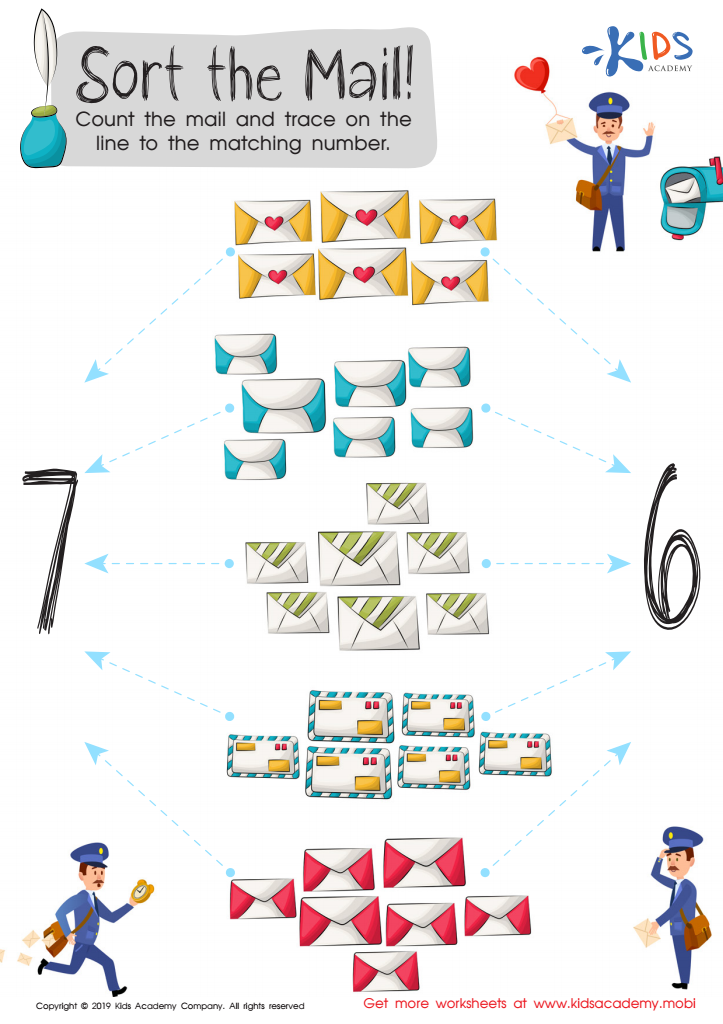
Sort the Mail Worksheet








Sorting skills are a cornerstone of early mathematical development and are especially crucial for children aged 4-8. These skills lay the foundation for number sense, classification, and logical thinking—essential components that contribute to higher-level math and science understanding. Encouraging sorting activities can help young learners discern patterns, categorize objects, and establish relationships between numbers.
For instance, when children sort objects or numbers, they start recognizing attributes such as size, shape, and quantity. This forms the basis for comparing and ordering numbers, crucial aspects of basic arithmetic operations like addition and subtraction. Moreover, sorting allows kids to enhance their problem-solving skills by determining why items belong to specific groups and identifying anomalies.
From a cognitive perspective, sorting fosters critical thinking and executive function skills such as focusing, planning, and following instructions. It supports language development as children explain their sorting criteria, enhancing their ability to articulate thoughts clearly and logically.
For parents and teachers, integrating sorting activities in daily routines—whether through games, interactive toys, or practical tasks like organizing toys—can be profoundly beneficial. These foundational skills not only make formal education milestones like learning to count, read graphs, and solve equations more intuitive but also instill a lifelong love and understanding of mathematics.








