
Addition up to 5 Math Worksheets for Ages 4-8
4 filtered results
Difficulty Level
Grade
Age
-
From - To
Subject
Activity
Standards
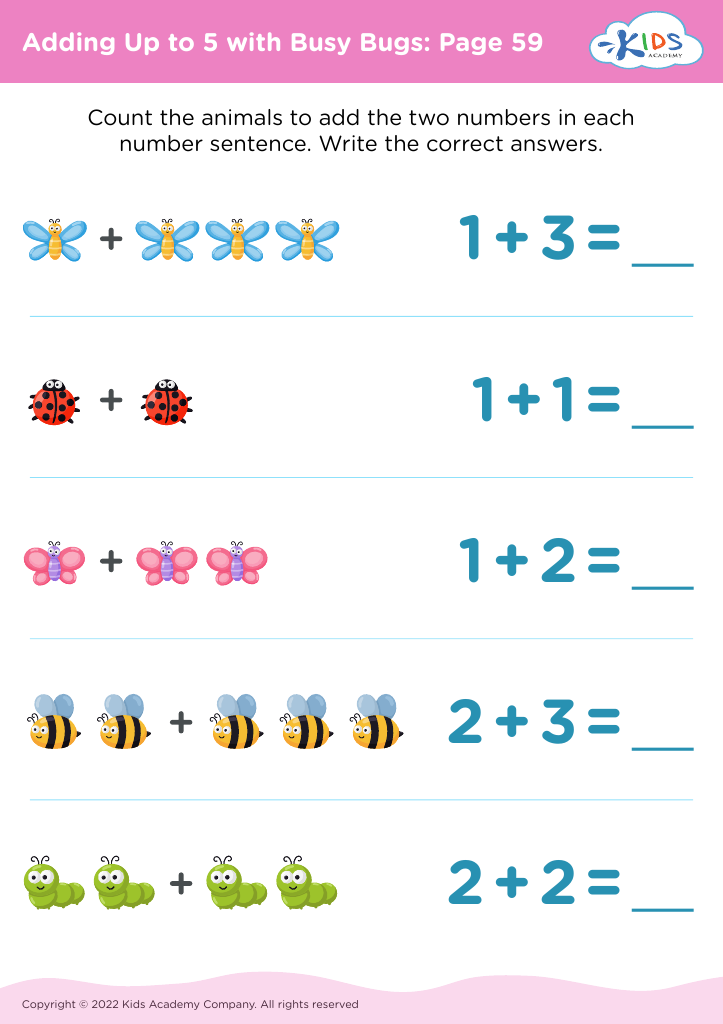
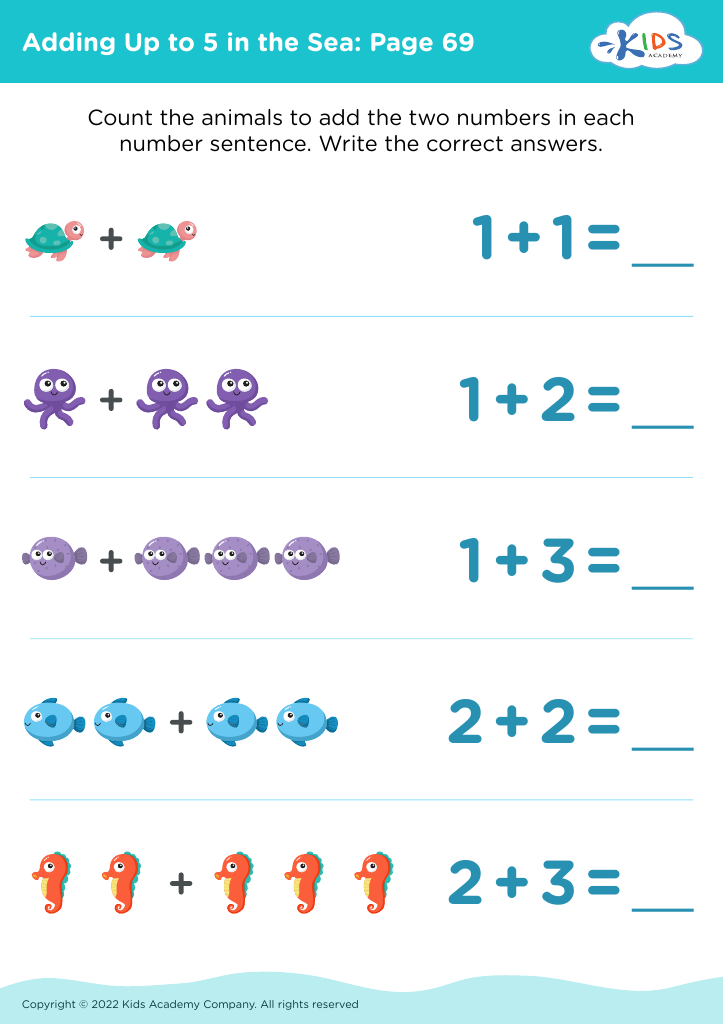
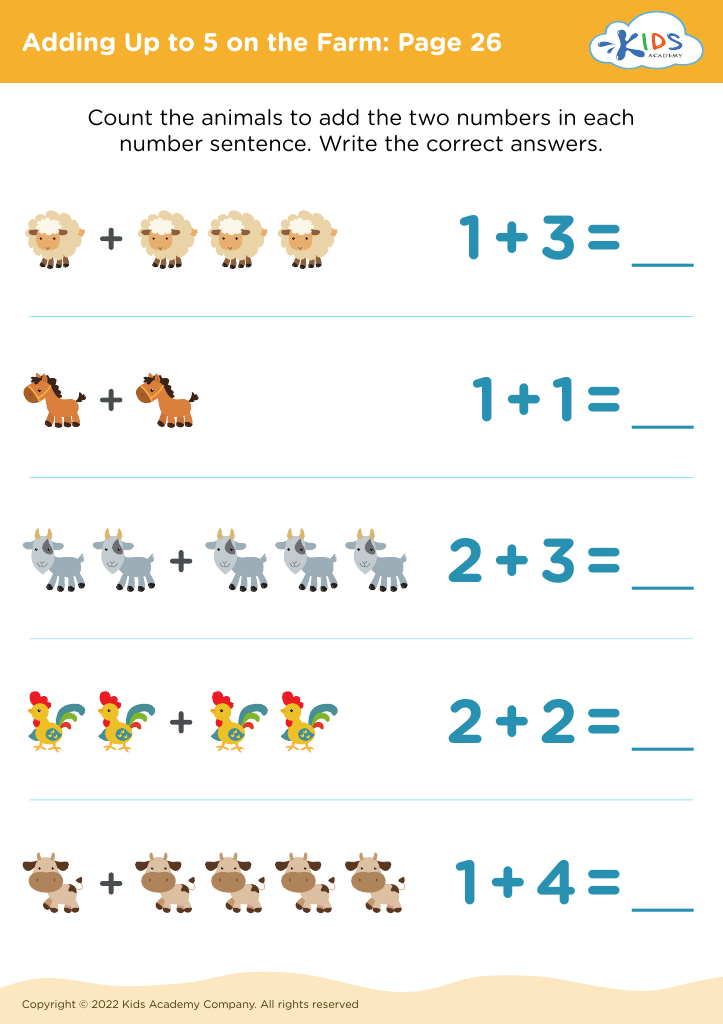
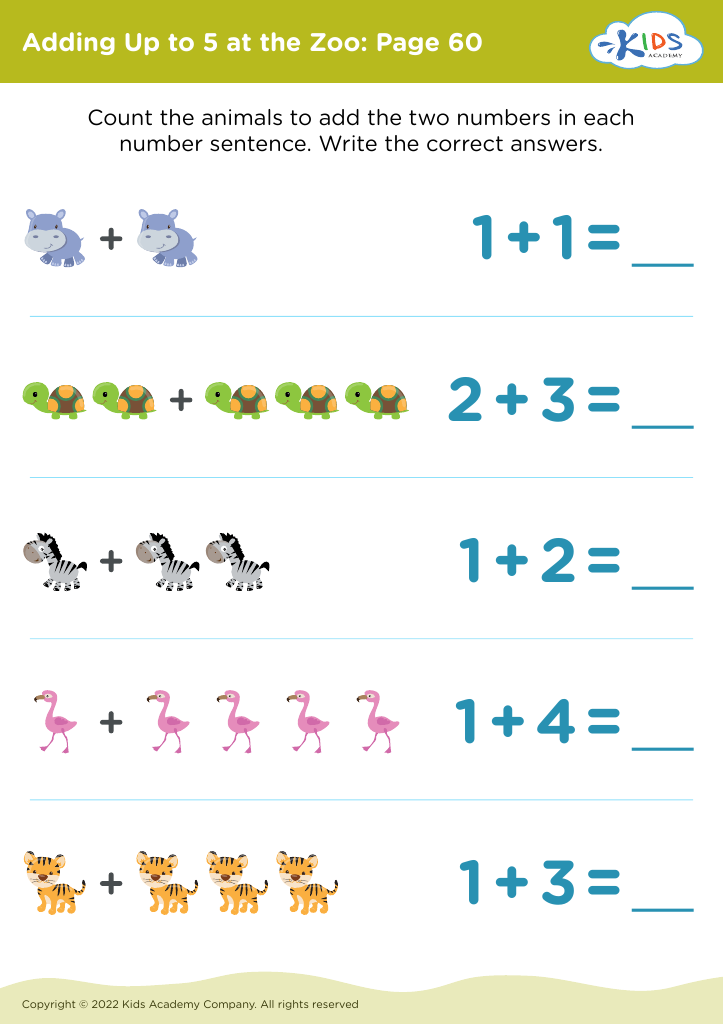
Welcome to our "Addition up to 5 Math Worksheets" page, designed specifically for children ages 4-8! These engaging worksheets provide a fun and interactive way for young learners to grasp basic addition concepts. Featuring colorful visuals and age-appropriate exercises, our worksheets help children practice adding numbers up to 5 effectively. By solving puzzles, completing exercises, and enjoying hands-on activities, kids will build a strong foundation in math while enhancing their problem-solving skills. Perfect for parents and educators, our printable resources turn learning into an enjoyable adventure. Get ready to inspire your little ones with math confidence and creativity!
Favorites
With answer key
Interactive
Join Kids Academy for Free
Who is primarily going to use this learning content?








Parents and teachers should prioritize addition up to 5 for children aged 4-8 because this foundational math skill is crucial for their cognitive development and future academic success. Mastering basic addition sets the stage for understanding more complex mathematical concepts later on. At this age, children are like sponges, eager to learn, and grasping simple math can significantly enhance their problem-solving and critical thinking abilities.
Additionally, addition up to 5 fosters confidence in young learners. Achieving fluency in small numbers builds a solid self-esteem in math, equipping students with the skills needed to tackle challenging tasks as they progress. This early proficiency also enhances pattern recognition and logical thinking.
Engaging with simple addition activities in playful contexts reinforces learning. When parents and teachers incorporate games, visual aids, and real-world applications into math learning, they make math enjoyable and relevant. This approach promotes a positive attitude toward mathematics and helps cultivate a lifelong love for learning.
Furthermore, these early math skills are not just about academics; they play a role in daily life. Whether counting snacks, toys, or peers, mastering addition up to 5 allows children to apply their knowledge practically, marrying education with everyday experiences. Recognizing its importance can profoundly shape a child's educational journey.








