Analog Clock Understanding Math Worksheets for Ages 4-8
3 filtered results
-
From - To
Discover our Analog Clock Understanding Math Worksheets, specially designed for children aged 4-8. These engaging worksheets help young learners develop essential time-telling skills using analog clocks. Through fun activities, kids will explore concepts such as telling time to the hour and half-hour, as well as understanding the relationship between numbers and clock hands. Perfect for classroom or home use, these worksheets enhance cognitive development, boost confidence, and support early math literacy. With a diverse range of colorful and interactive exercises, your child will gain a solid understanding of time while having fun! Start their time-telling journey today with our expertly crafted resources.
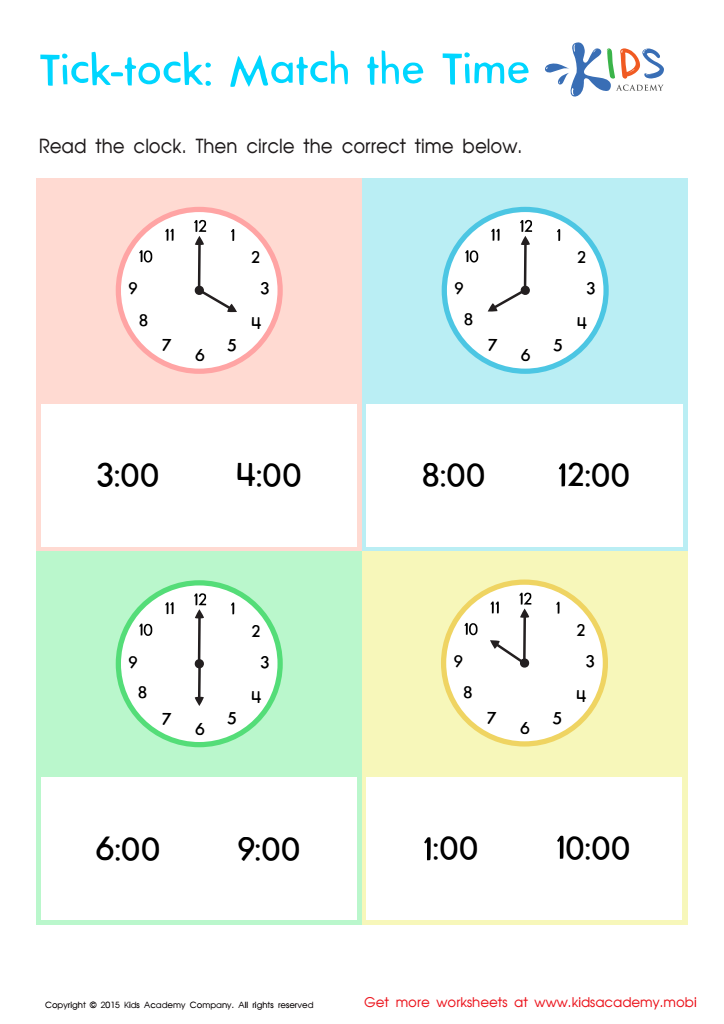
Telling The Time Worksheet: Part 4
 Assign to My Students
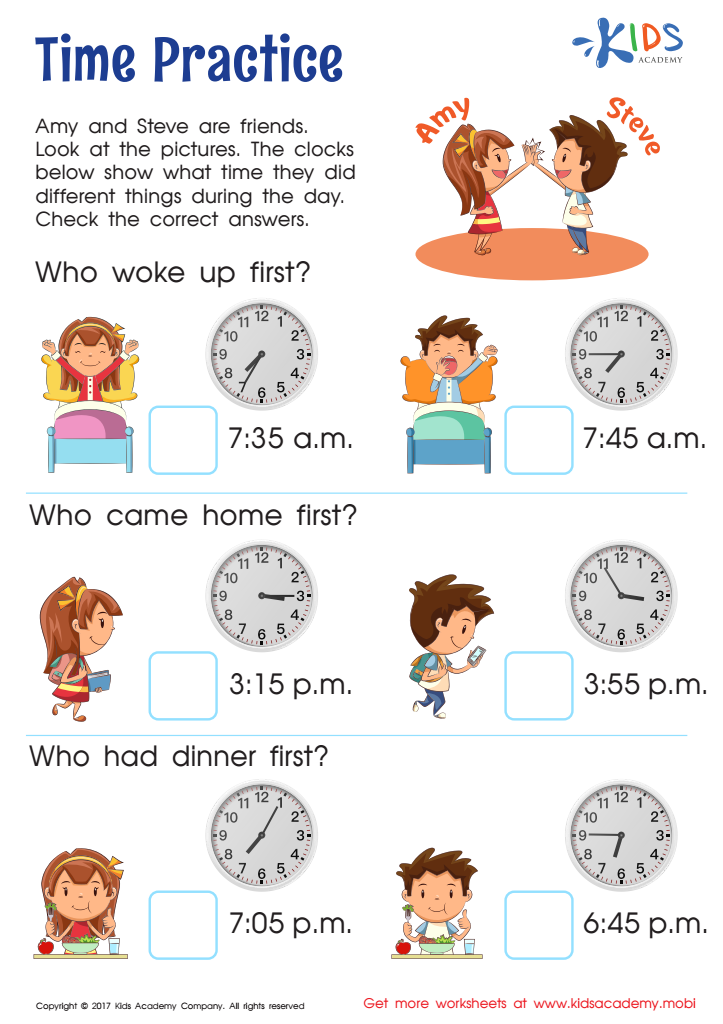
Time Practice Worksheet
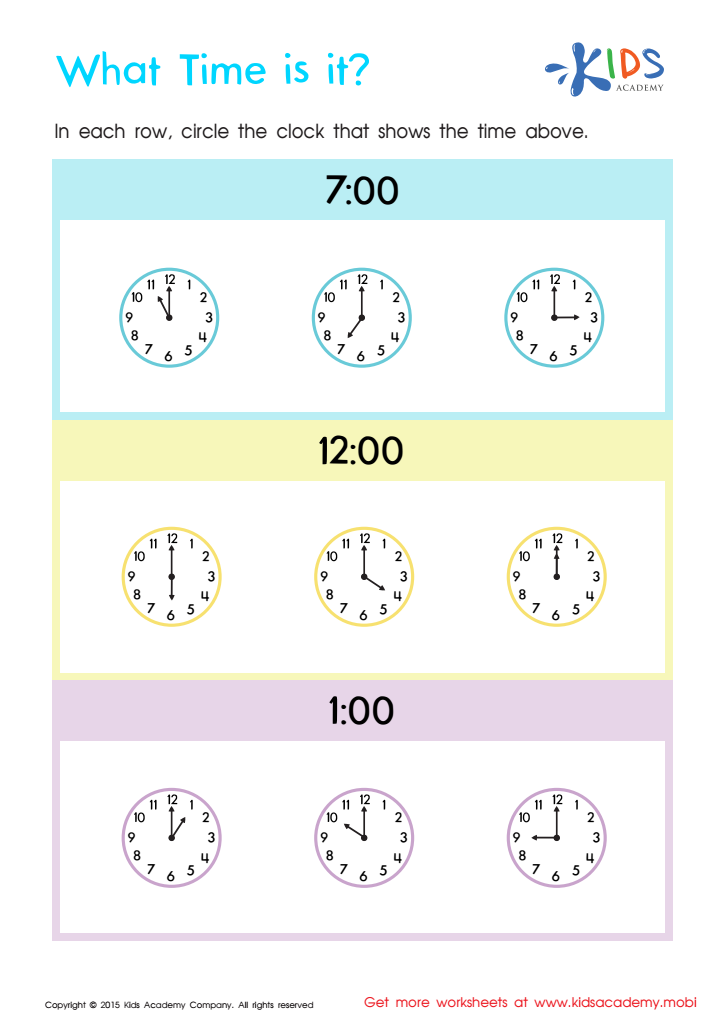
Telling The Time Worksheet: Part 3








Understanding analog clocks is vital for children aged 4-8 as it plays an essential role in their mathematical development and everyday skills. Learning to read analog time helps children grasp the concept of numbers and the relationship between them. This process reinforces foundational math skills like counting, addition, and subtraction. By identifying minute and hour hands and recognizing increments, children develop spatial awareness and critical thinking skills.
Moreover, understanding analog clocks fosters independence and time management in young learners. Children who can tell time can better manage their daily activities and routines, enhancing their self-discipline and responsibility. This skill becomes increasingly relevant as children move through school, participating in scheduled classes, completing homework on time, and balancing extracurricular activities.
Furthermore, analog clocks promote cognitive skills as children learn to interpret and represent time. This vital skill bridges the gap between quantitative reasoning and real-life application. As digital clocks dominate today’s environment, grounding children in traditional methods enriches their comprehension and appreciation of different perspectives on timekeeping.
In summary, teachers and parents should prioritize analog clock understanding to bolster mathematical skills, promote independence, and cultivate valuable cognitive abilities that benefit children both in and out of the classroom.








