Applying math skills Math Worksheets for Ages 4-8
3 filtered results
-
From - To
Explore our delightful collection of Applying Math Skills Worksheets for Ages 4-8, designed to make learning fun and engaging. Created by experienced educators, these resources help young learners practice essential math skills like addition, subtraction, counting, and basic geometry. Each activity is crafted to foster critical thinking, problem-solving, and confidence in math through enjoyable, hands-on exercises. Perfect for both classroom and home use, these worksheets inspire curiosity and lay a strong foundation for future math success. Visit Kids Academy to download and elevate your child’s learning journey with our enriching, age-appropriate math worksheets!
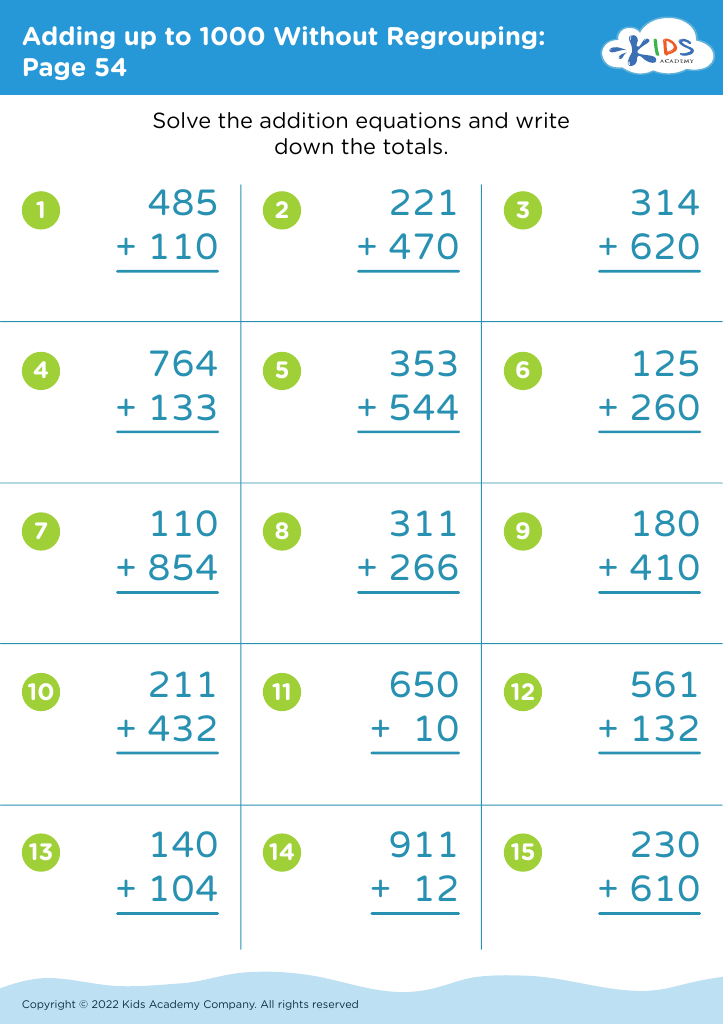
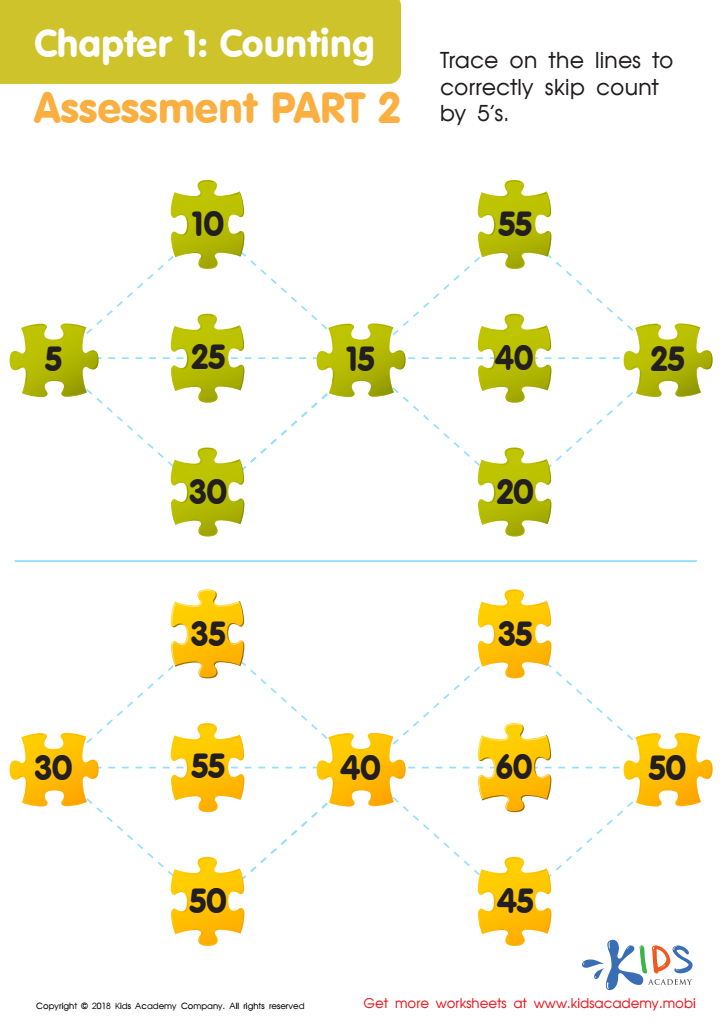
Counting: Assessment 2 Worksheet
 Assign to My Students
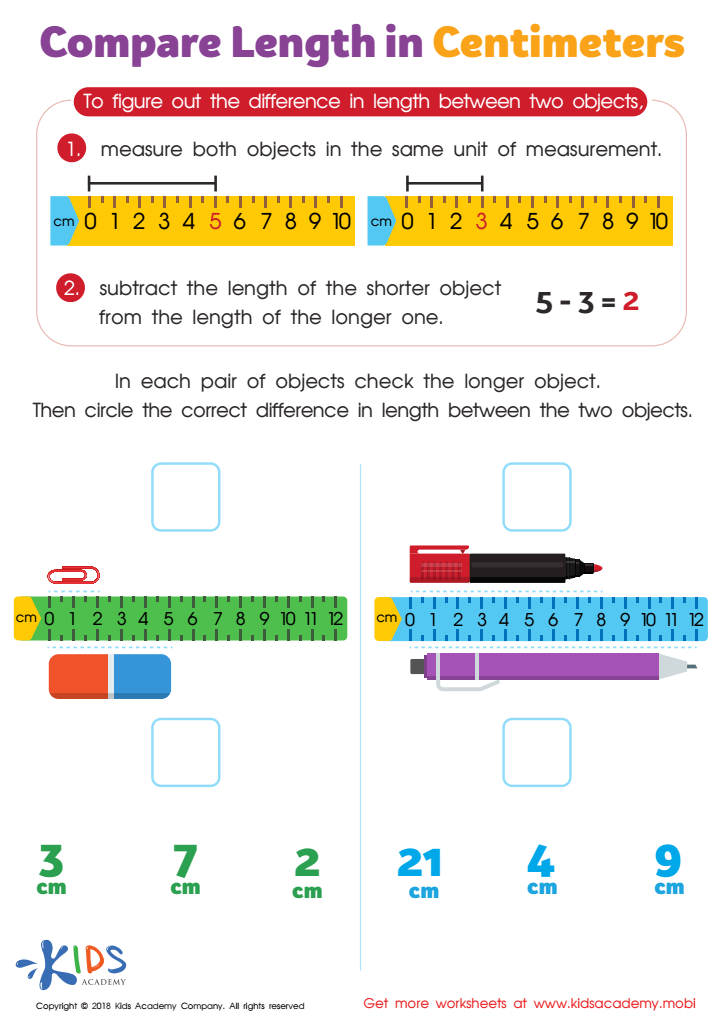
Compare Length in Centimeters Worksheet








Introducing math skills to children ages 4-8 is crucial for their cognitive development and future academic success. At this early age, children are like sponges, absorbing information rapidly. Teaching math concepts such as counting, recognizing numbers, and basic addition and subtraction can lay a strong foundation for more complex mathematical understanding as they grow.
First, math skills help enhance problem-solving abilities. When children encounter mathematical challenges, they learn to think critically and develop solutions. This process fosters logical thinking and perseverance, qualities that are essential both inside and outside the classroom.
Second, math promotes literacy in numerical understanding, which is ubiquitous in daily life. Whether it's measuring ingredients for a recipe, telling time, or handling money, fundamental math skills are essential for day-to-day activities. Early math proficiency also boosts confidence, encouraging a positive attitude towards learning new concepts and tackling challenges.
Moreover, early math skills correlate with later academic achievement across various subjects. Schools often emphasize STEM (Science, Technology, Engineering, and Mathematics) disciplines, and a solid grasp of early math can ease the transition into these areas, supporting long-term educational and career opportunities.
Thus, parents and teachers should prioritize early math education to give children the tools they need for a successful and fulfilling future.








