Building vocabulary Math Worksheets for Ages 4-8
3 filtered results
-
From - To
Unlock the world of mathematics for your young learners with our engaging Building Vocabulary Math Worksheets for ages 4-8! These expertly designed worksheets provide a fun and interactive way for children to enrich their math vocabulary while mastering essential concepts. From basic operations to shapes and measurements, our resources cater to diverse learning styles and promote language development alongside mathematical skills. Perfect for classroom or at-home learning, these worksheets encourage critical thinking and enhance comprehension through practical, real-world applications. Watch your child's confidence soar as they explore numbers and words in harmony. Start building their foundation for future success in math today!
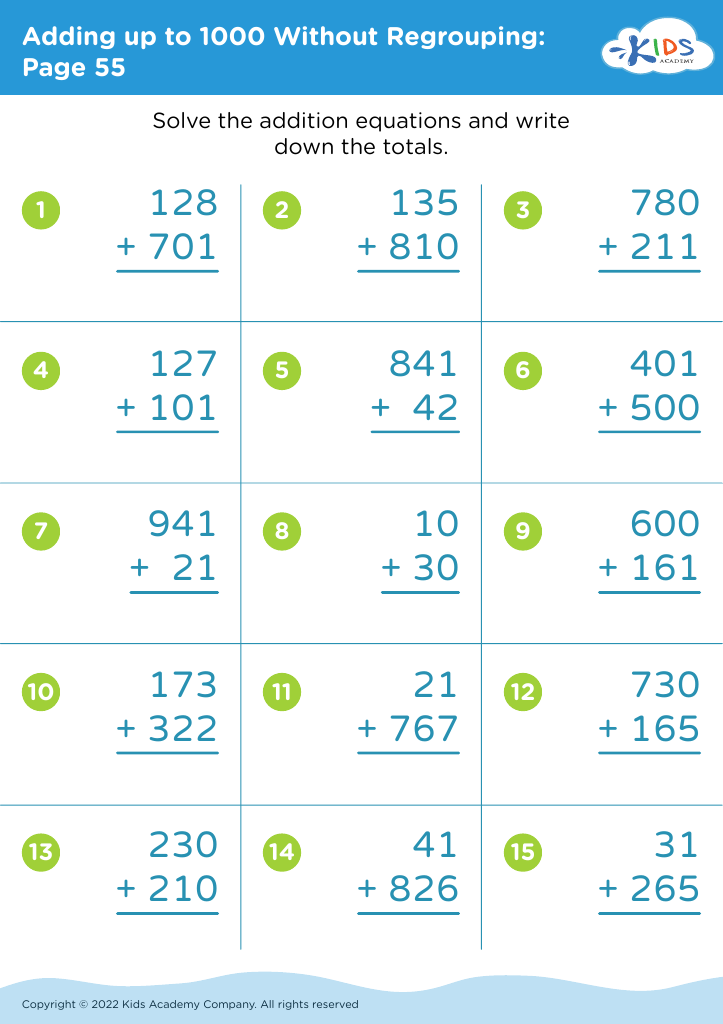
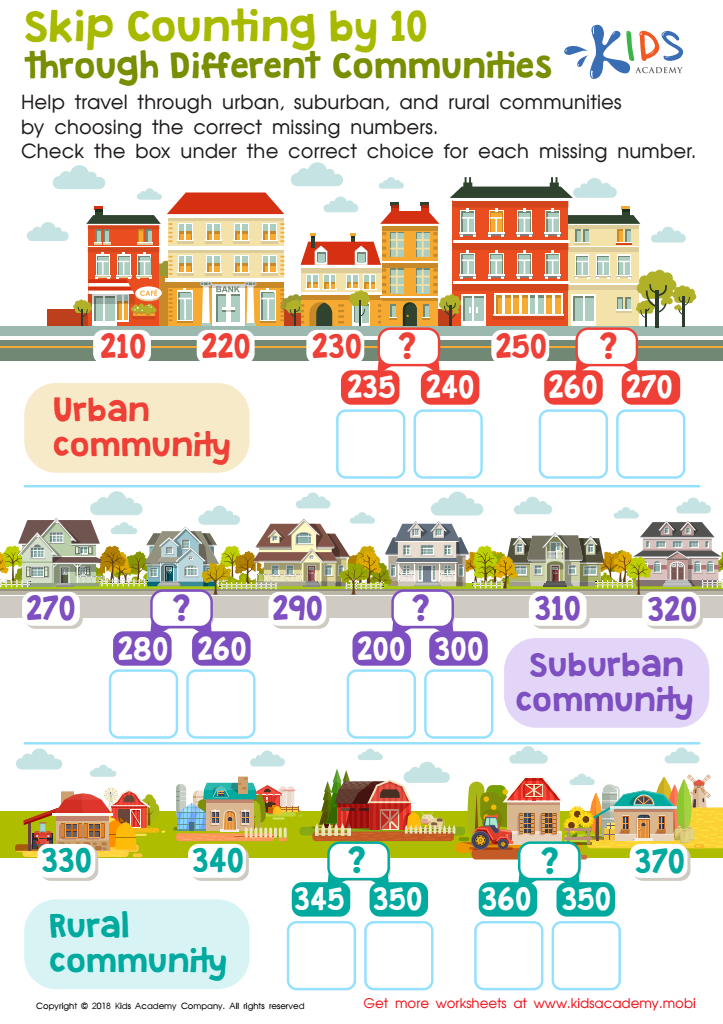
Skip Counting by 10 through Different Communities Worksheet
 Assign to My Students
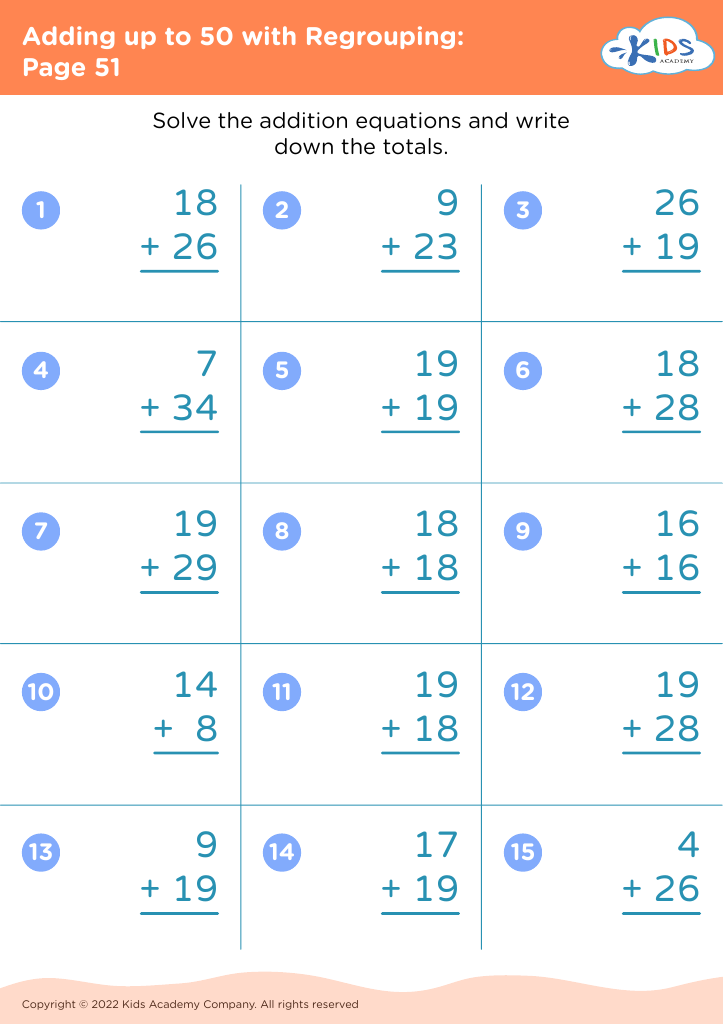








Building vocabulary in math for children ages 4 to 8 is crucial for their overall academic success and cognitive development. Early math vocabulary, including terms such as "add," "subtract," "more," and "less," helps children articulate their understanding of mathematical concepts and processes. This foundational skill fosters a positive attitude toward mathematics, promoting confidence in their abilities to solve problems and think critically.
Parents and teachers play a key role in vocabulary development by creating rich, language-rich environments that incorporate math vocabulary during everyday activities. Engaging children in discussions about shapes, patterns, and measurements can scaffold their understanding of these concepts, making them accessible and relatable.
Furthermore, strong math vocabulary supports literacy skills, enhancing overall language development. As children become familiar with mathematical terms, they can better comprehend word problems and communicate their thought processes effectively.
Encouraging a dialogue around math fosters a growth mindset, showing children that making mistakes is part of learning. By emphasizing math vocabulary from an early age, educators and parents lay the groundwork for more complex mathematical reasoning in the future, ultimately leading to enhanced academic performance and lifelong problem-solving skills. Through this focus, we can nurture not just mathematicians but critical thinkers.








