Data analysis Math Worksheets for Ages 4-8
4 filtered results
-
From - To
Discover engaging Data Analysis Math Worksheets designed specifically for children aged 4-8! Our printable resources enhance young learners' critical thinking and analytical skills through fun, interactive activities. Covering concepts like sorting, graphing, and interpreting data, these worksheets help students explore the world around them while developing essential math competencies. Encourage creativity and curiosity as your child tackles real-world scenarios, improving their understanding of patterns and relationships. Perfect for both classroom activities and home learning, these worksheets make Data Analysis exciting and accessible. Start your child’s math journey today and watch them thrive with our comprehensive, age-appropriate materials!
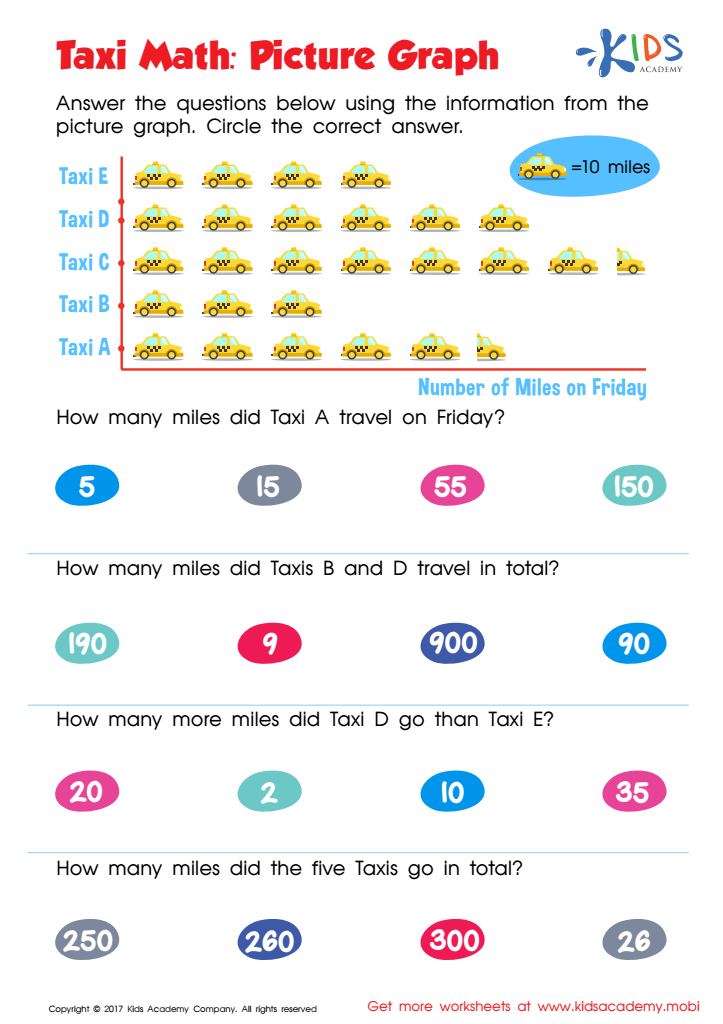
Taxi Math Worksheet
 Assign to My Students
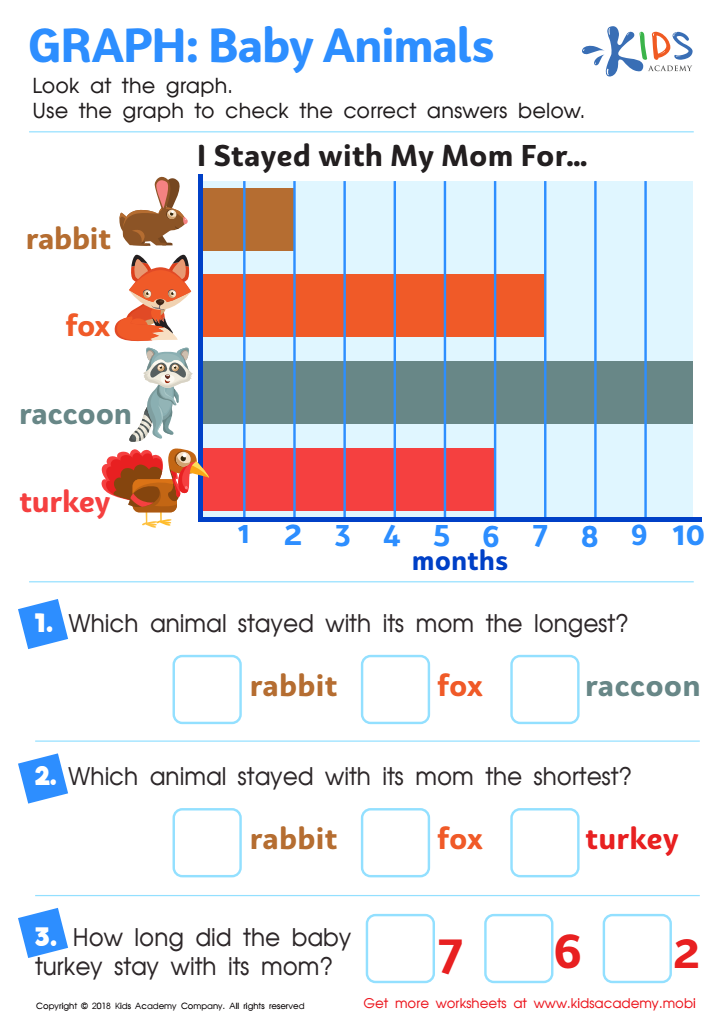
Graph: Baby Animals Worksheet
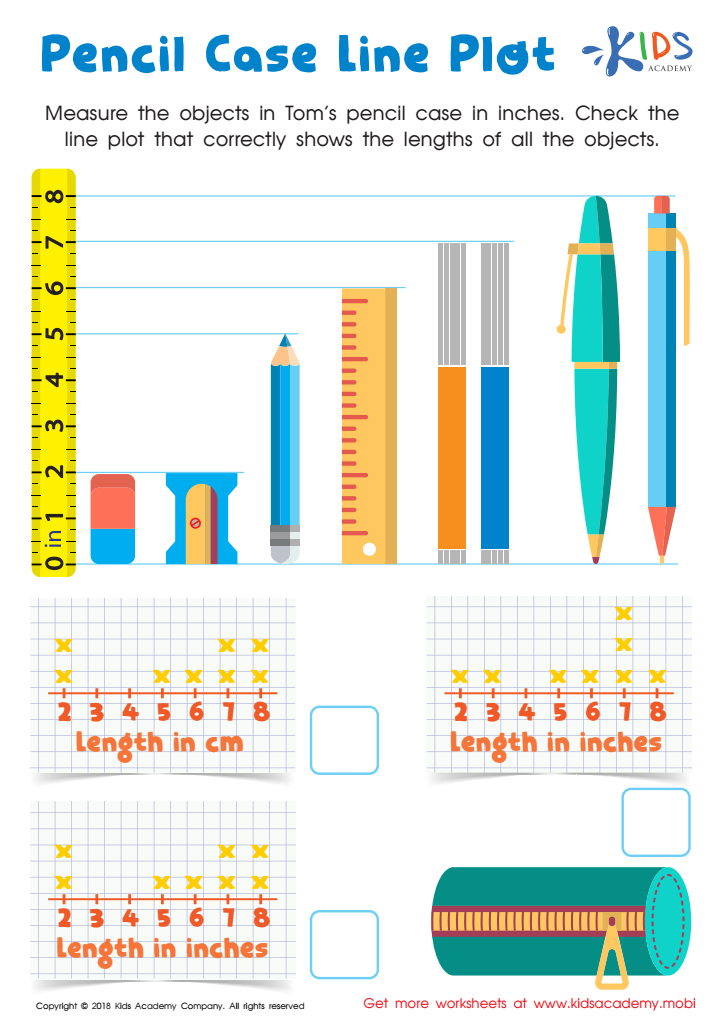
Pencil Case Line Plot Worksheet
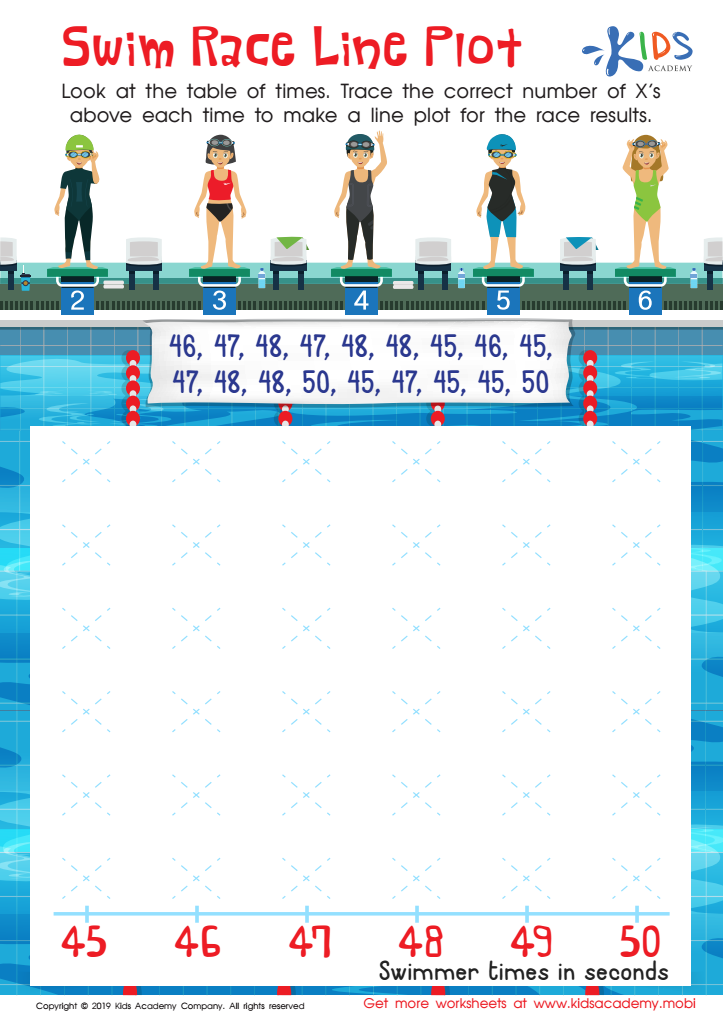
Swim Race Line Plot Worksheet








Parents and teachers should prioritize data analysis in math for children aged 4-8 because it lays the foundation for critical thinking and decision-making skills. At this age, children are naturally curious and eager to explore the world around them. Introducing data analysis fosters their ability to collect, organize, and interpret information, skills they will use throughout their education and in everyday life.
Engaging with data analysis equips young learners with the ability to recognize patterns, make comparisons, and draw conclusions from real-life situations. Activities such as sorting objects, creating simple graphs, and discussing findings enhance their mathematical understanding and promote visual and analytical skills. These activities can be made fun through games and hands-on projects, making learning interactive and stimulating.
Moreover, early exposure to data analysis helps children develop a strong basis for future math concepts. Research shows that early competencies in math correlate with academic success later on. Additionally, teaching them how to analyze data instills confidence in their problem-solving abilities, encouraging a growth mindset as they navigate challenges. By caring about data analysis in math, parents and teachers are investing in their children's future readiness in an increasingly data-driven world.








