Check out this FREE Trial Lesson on Math for age 4-8!

X

Favorites
With answer key
Interactive
  • 4-8
  • Fine motor skills (writing)
  • Math
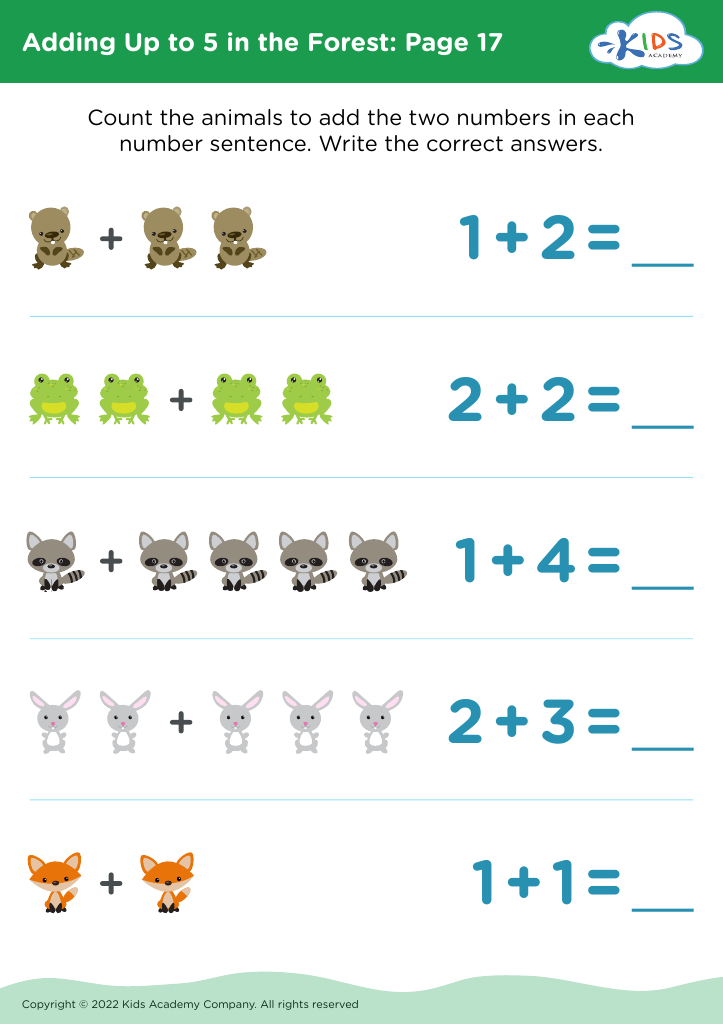
Adding Up to 5 in the Forest: Page 17
Worksheet
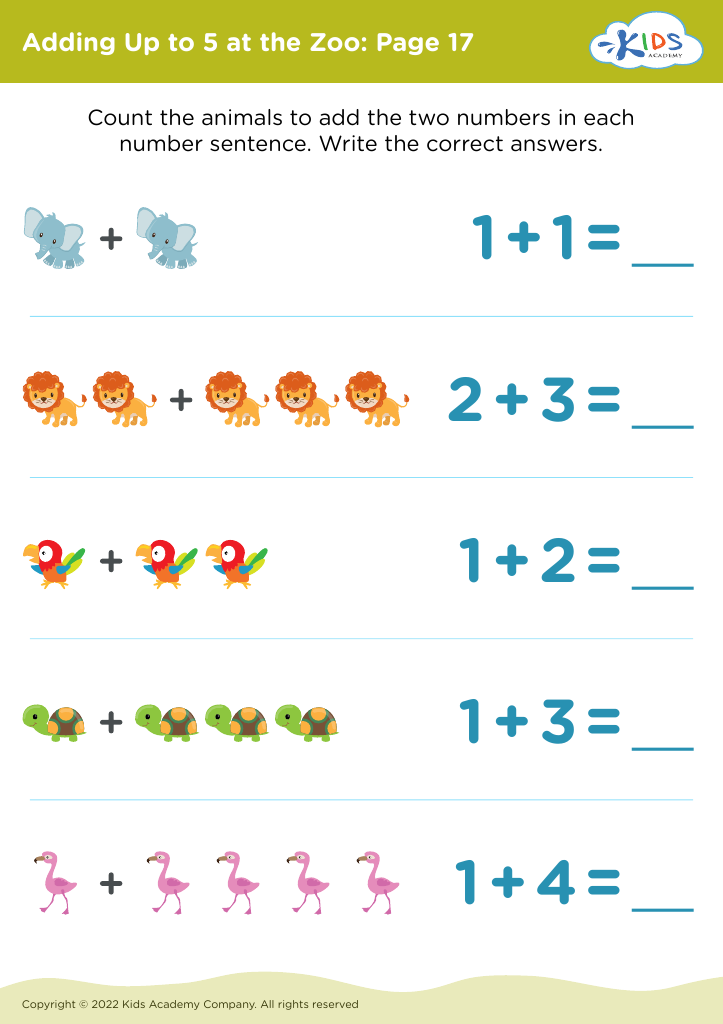
Adding Up to 5 at the Zoo: Page 17
Worksheet
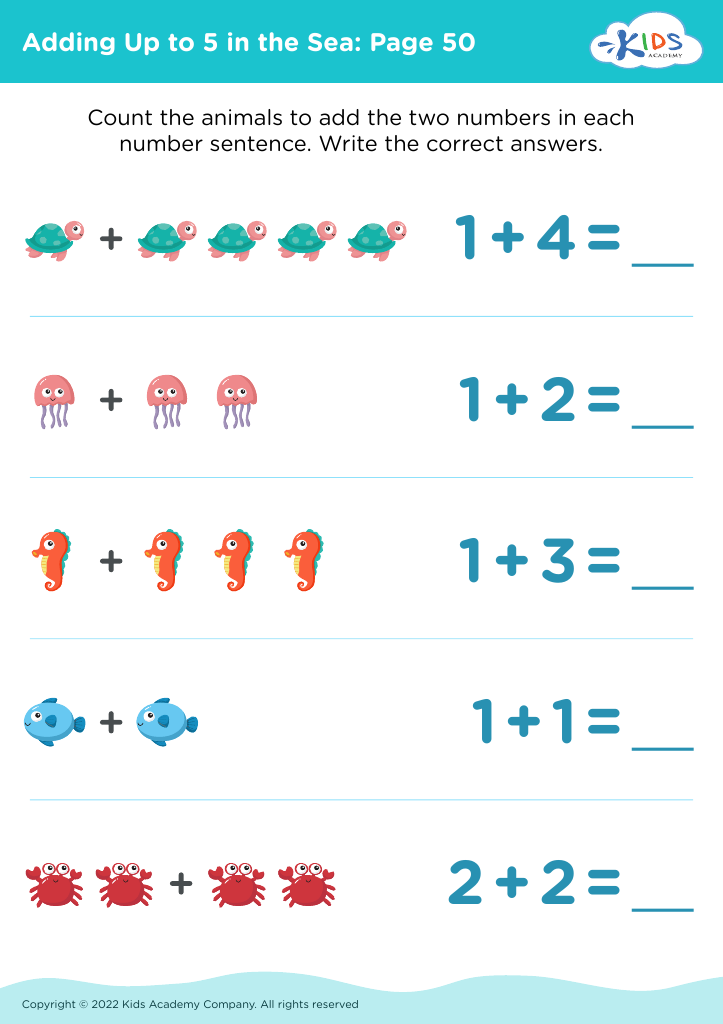
Adding Up to 5 in the Sea: Page 50
Worksheet
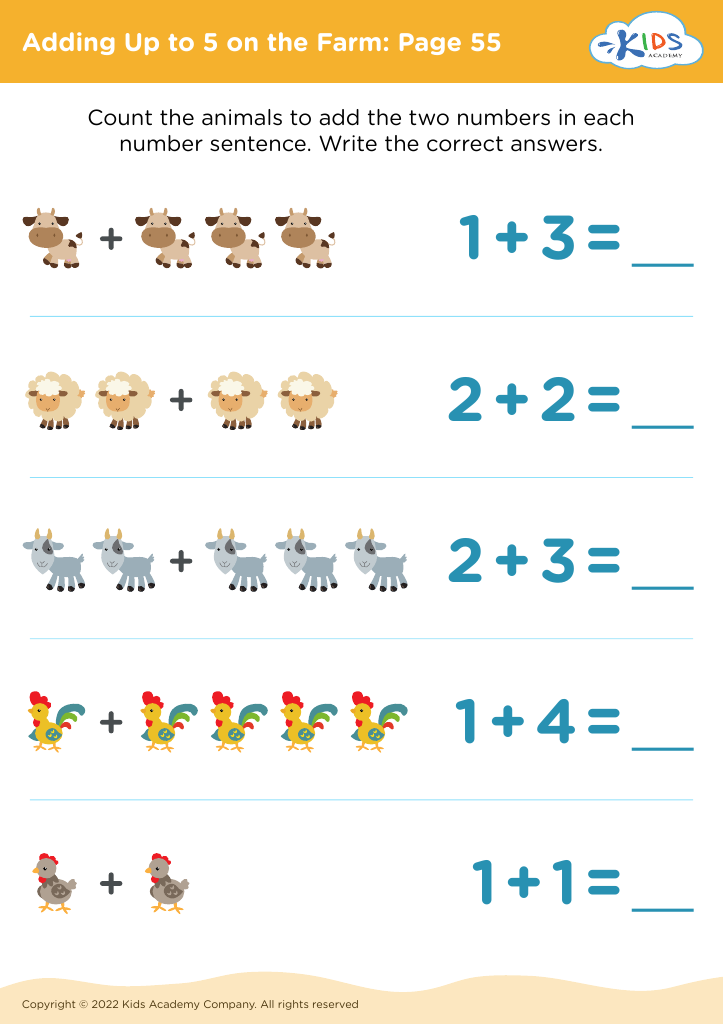
Adding Up to 5 on the Farm: Page 55
Worksheet
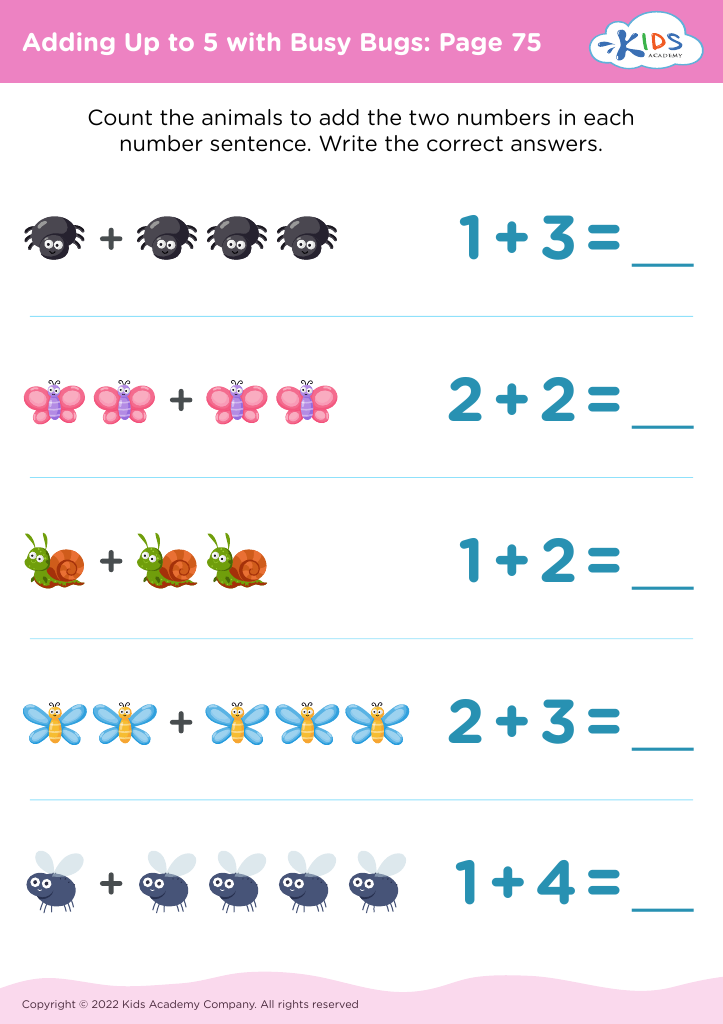
Adding Up to 5 with Busy Bugs: Page 75
Worksheet
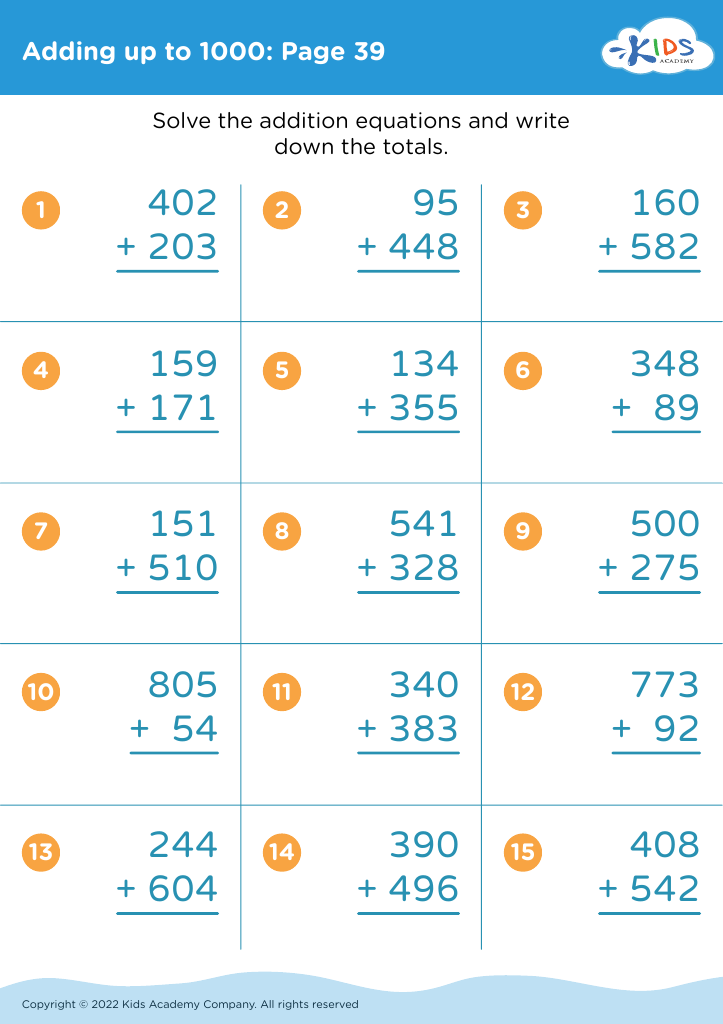
Adding up to 1000: Page 39

Adding up to 1000: Page 39

Adding up to 1000: Page 39
Worksheet
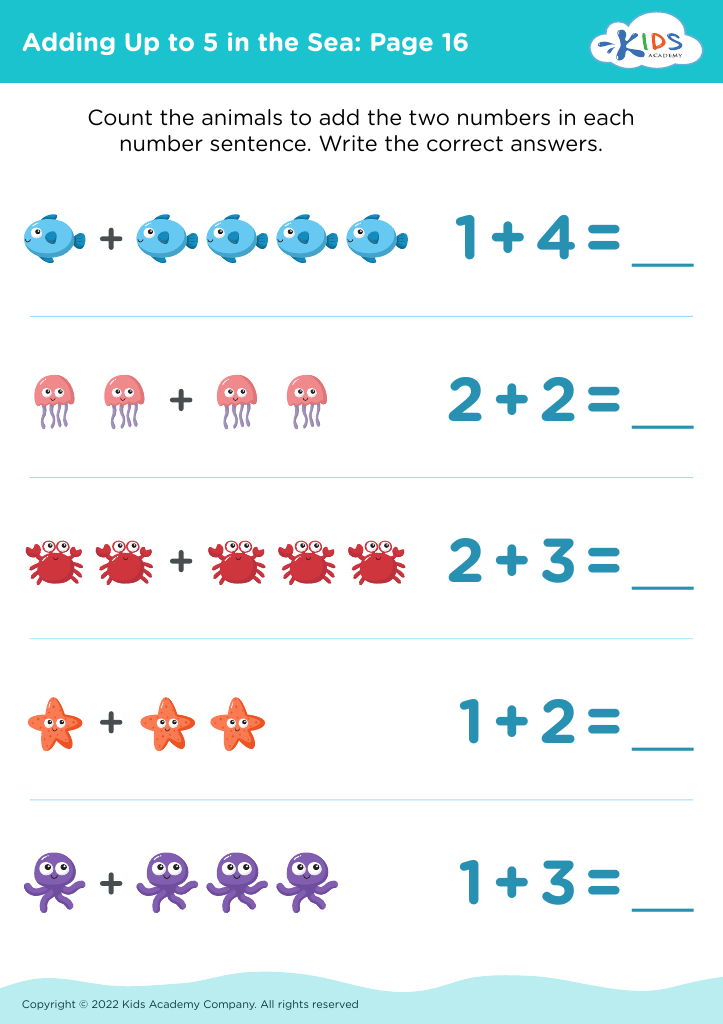
Adding Up to 5 in the Sea: Page 16
Worksheet
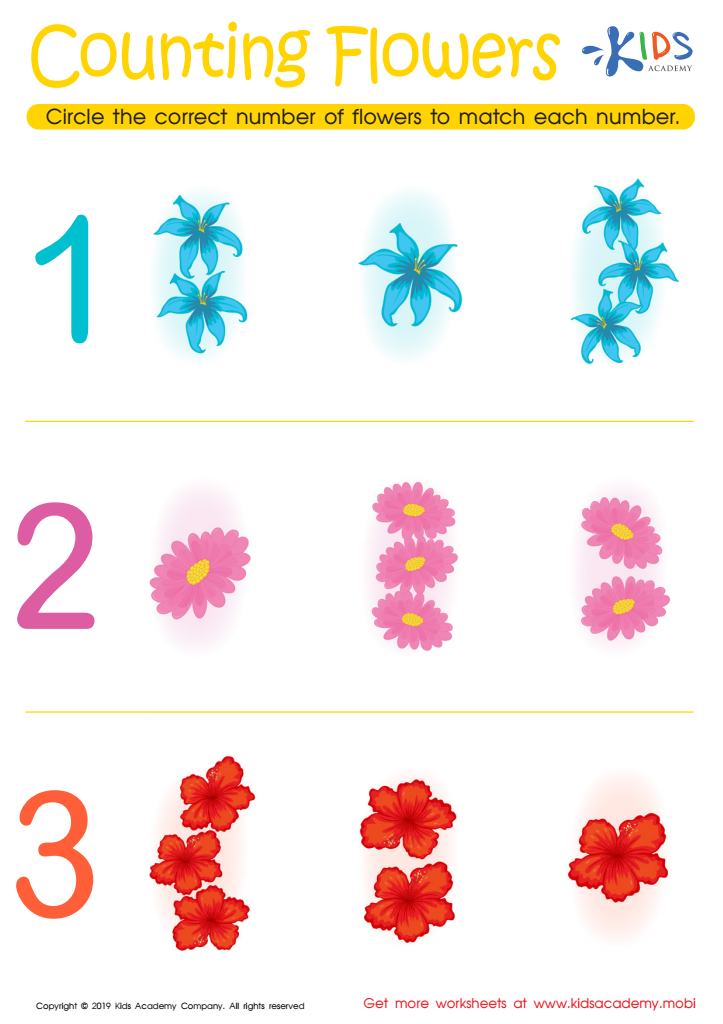
Counting Flowers Worksheet

Counting Flowers Worksheet

Kids love Flower Power! This free PDF helps kids practice basic number sense and counting. They match the correct number of colorful flowers to the corresponding numeral. An enjoyable game that improves basic number sense - perfect!
Counting Flowers Worksheet
Worksheet
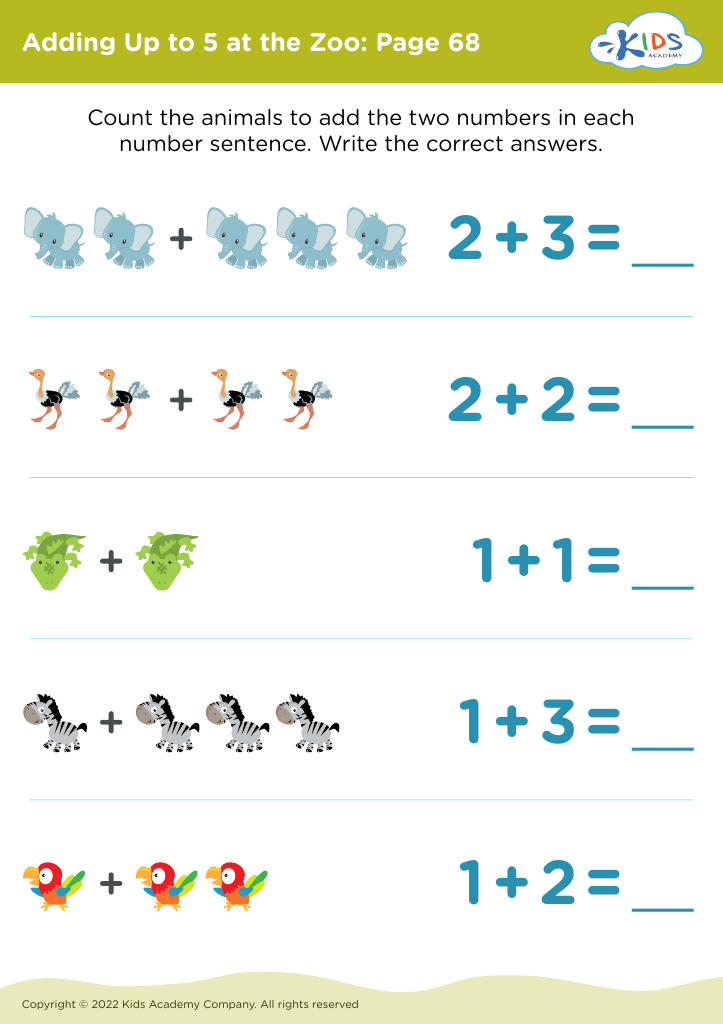
Adding Up to 5 at the Zoo: Page 68
Worksheet
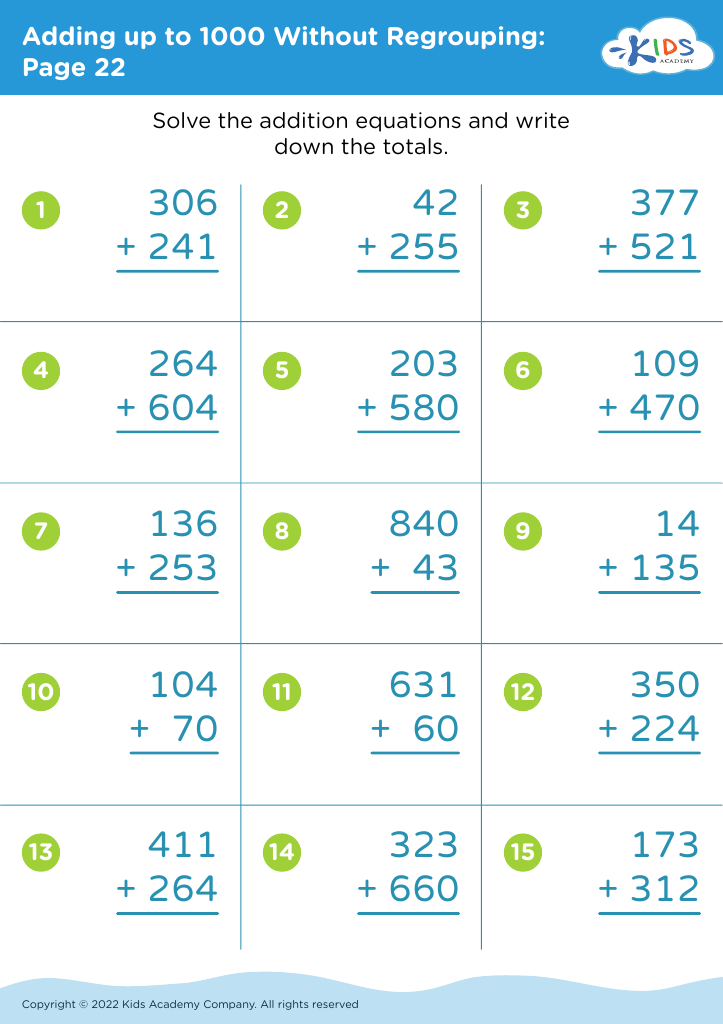
Adding up to 1000 Without Regrouping: Page 22
Worksheet
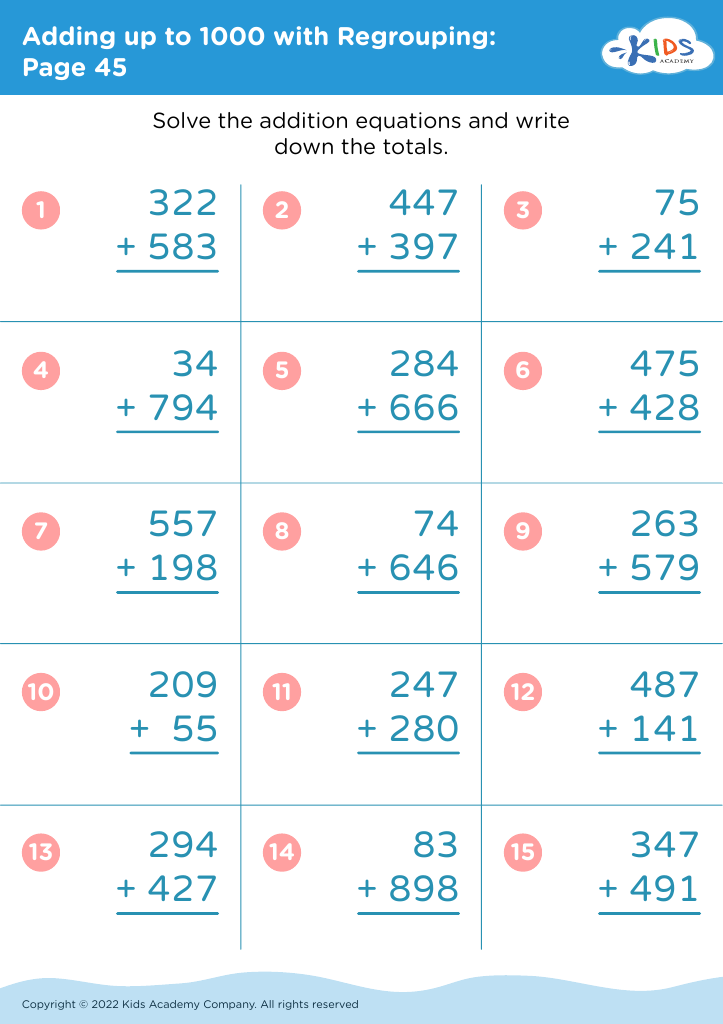
Adding up to 1000 with Regrouping: Page 45
Worksheet
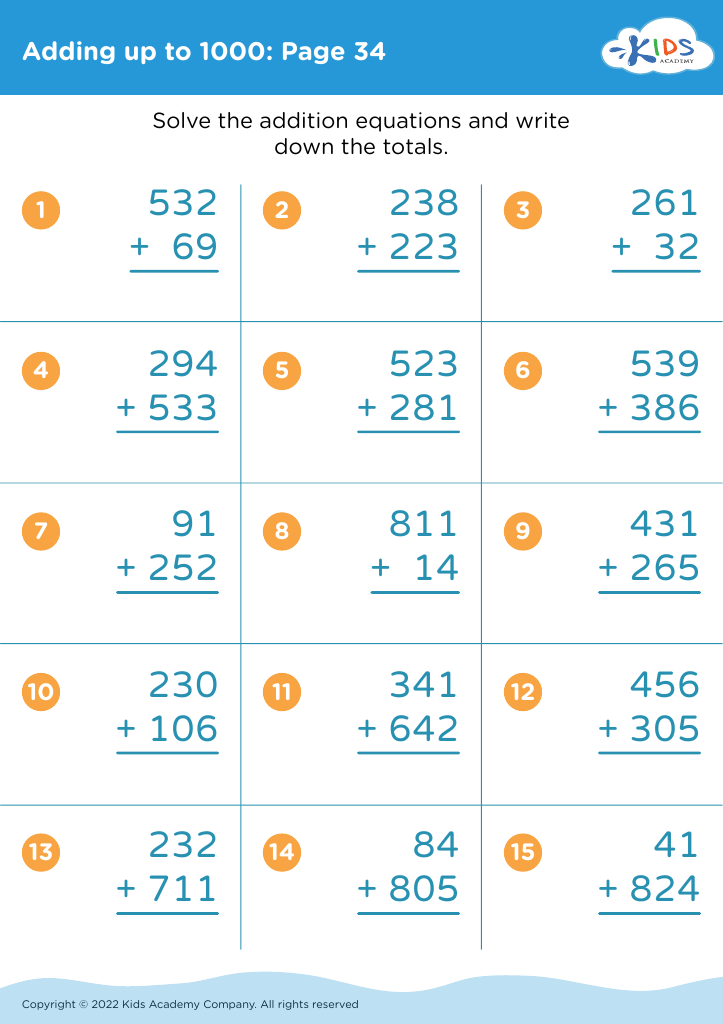
Adding up to 1000: Page 34

Adding up to 1000: Page 34

Adding up to 1000: Page 34
Worksheet
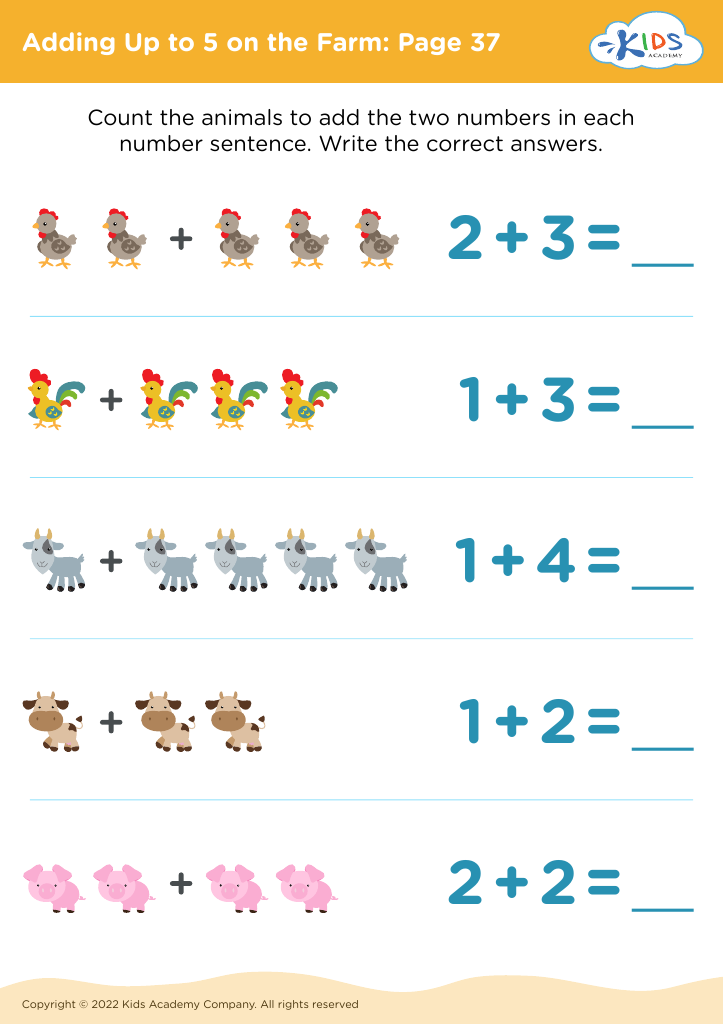
Adding Up to 5 on the Farm: Page 37
Worksheet
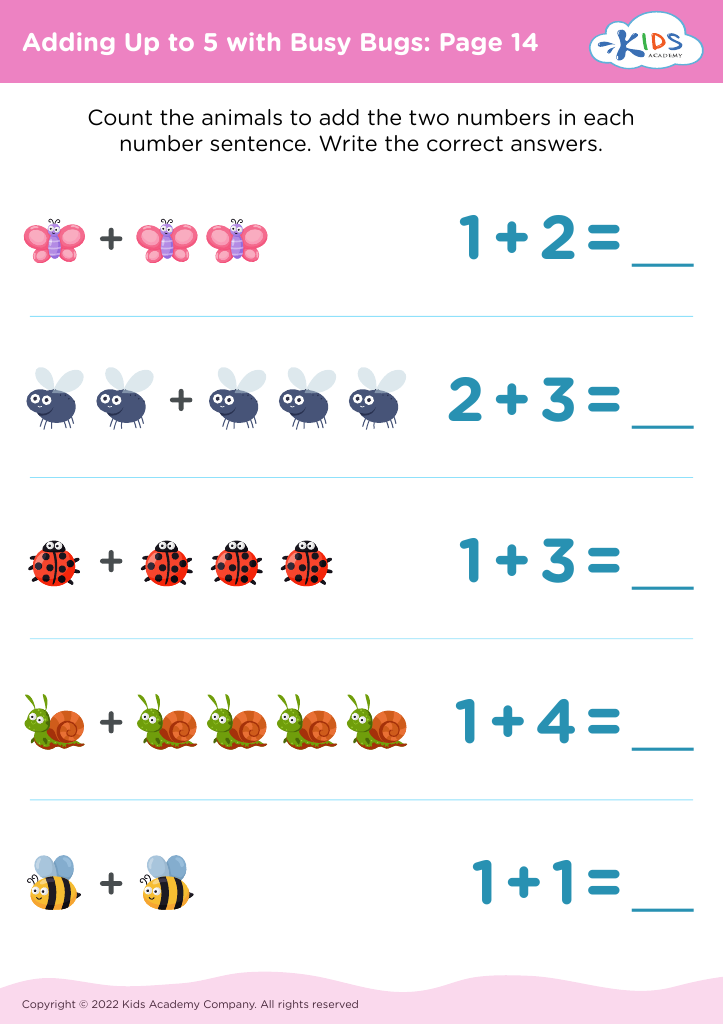
Adding Up to 5 with Busy Bugs: Page 14
Worksheet
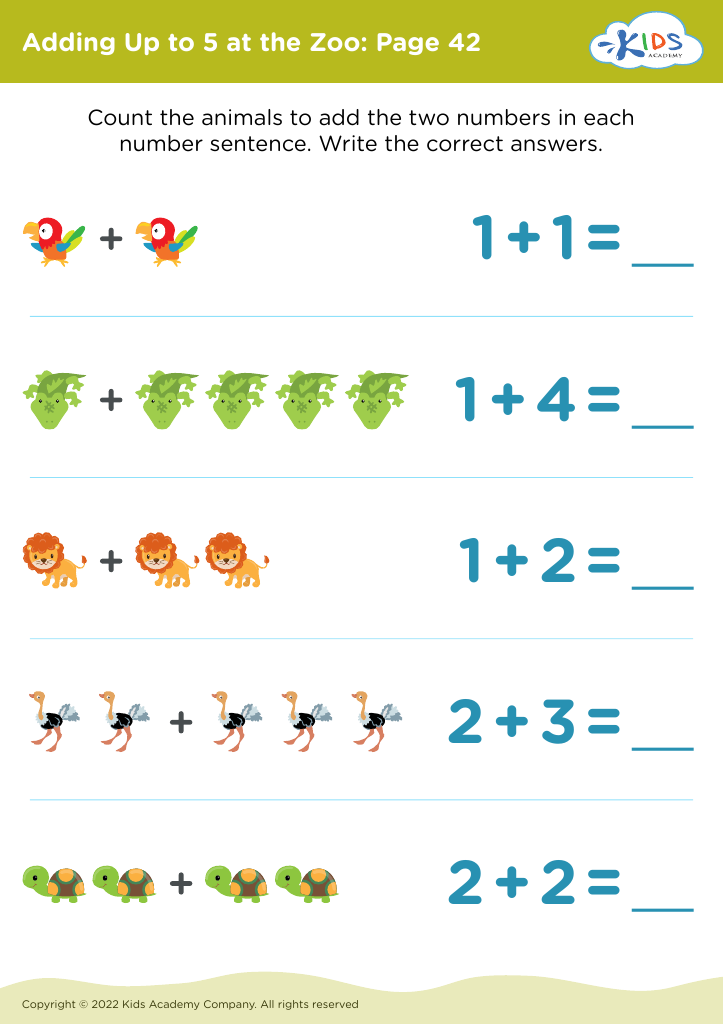
Adding Up to 5 at the Zoo: Page 42
Worksheet
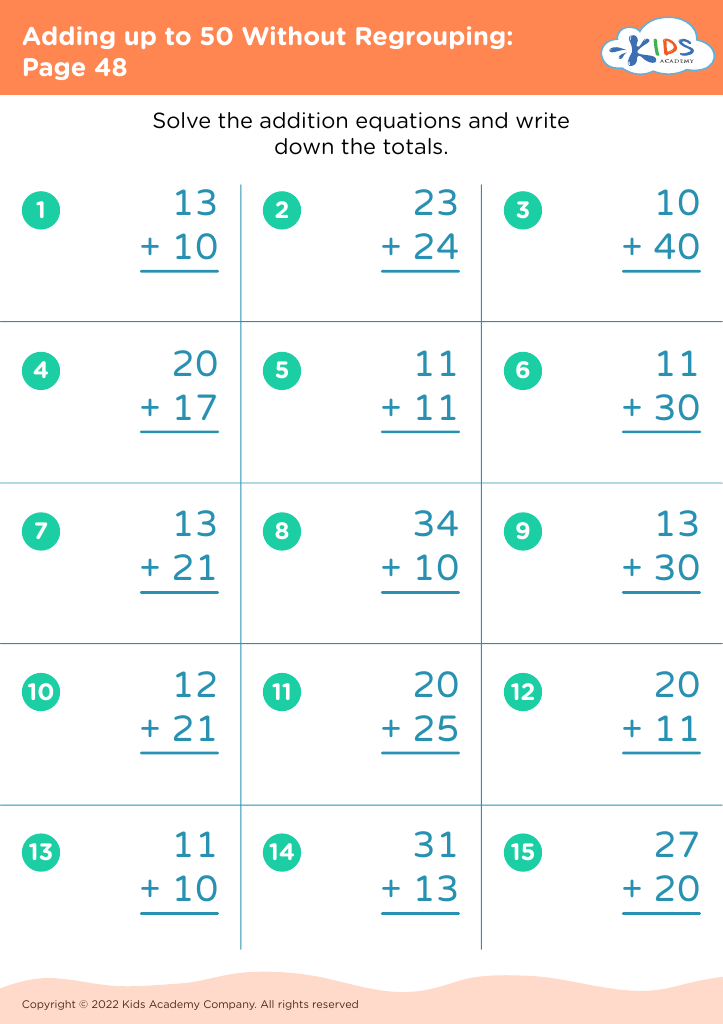
Adding up to 50 Without Regrouping: Page 48
Worksheet
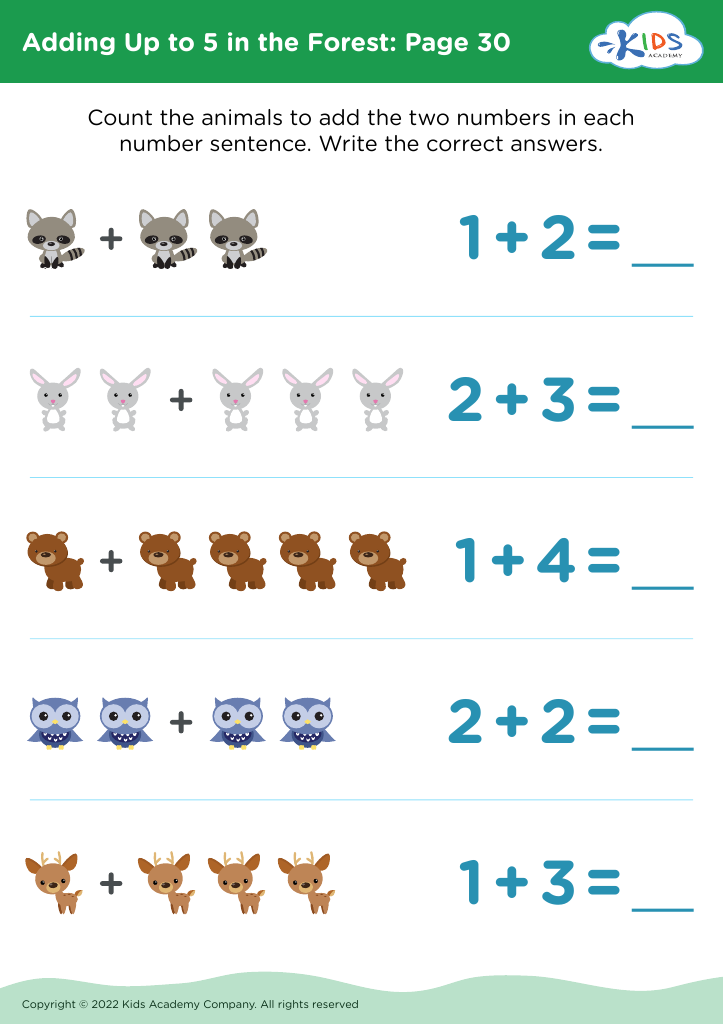
Adding Up to 5 in the Forest: Page 30
Worksheet
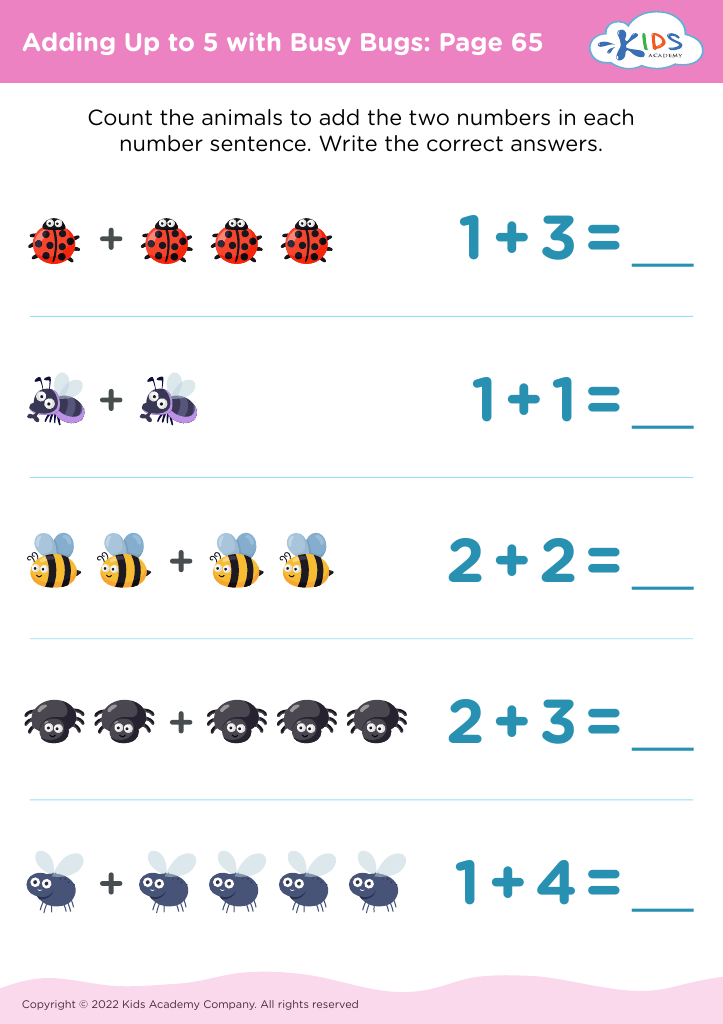
Adding Up to 5 with Busy Bugs: Page 65
Worksheet
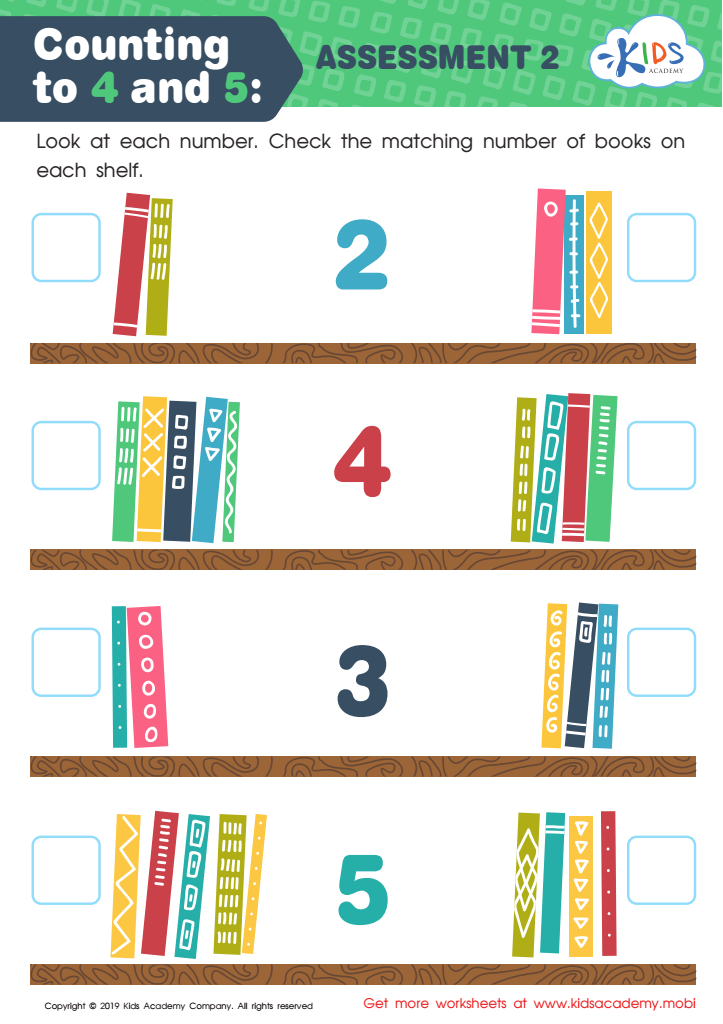
Counting to 4 and 5: Assessment 2 Worksheet


Counting to 4 and 5: Assessment 2 Worksheet

Counting is a key skill for math success. Help your kids get off to a good start by counting the books on each shelf in the pictured printout. Point to each set of books, counting aloud, and then look for the matching number in the centre. With this simple worksheet, your kids can get the practice they need before taking on more advanced math skills.
Counting to 4 and 5: Assessment 2 Worksheet

Worksheet


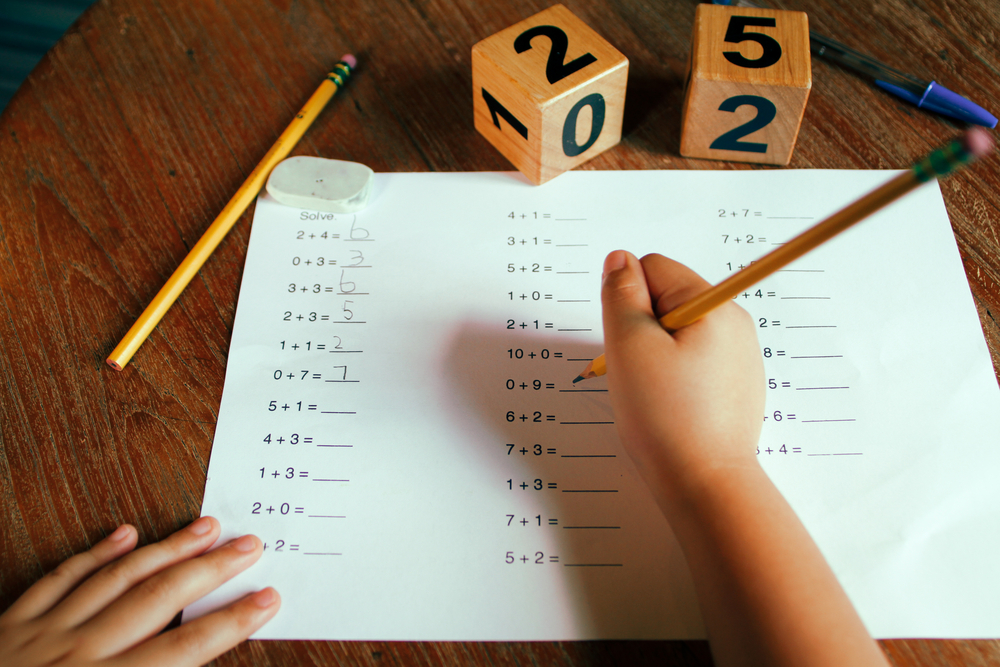
Parents and teachers should place significant importance on developing fine motor skills in children ages 4-8, particularly because these skills are foundational for success in writing and math. Fine motor skills involve the coordination of small muscles, especially those in the hands and fingers, and are essential for tasks like gripping a pencil, forming letters, and manipulating small objects.

In the context of writing, the ability to grasp and control a pencil accurately allows children to express their thoughts, complete assignments, and communicate effectively. Early proficiency in writing can bolster a child's confidence, facilitating a more engaging and fruitful learning experience across all subjects.

In math, fine motor skills play a key role in activities such as organizing objects, counting, drawing shapes, and using math tools like rulers and manipulatives. Manipulating small items such as counting beads enhances children's understanding of quantities and spatial relationships. When children develop these skills early, they are better able to focus on cognitive tasks rather than struggling with the physical demands of writing or handling objects, thereby enhancing their overall academic performance.

Moreover, early mastery of fine motor skills lays the groundwork for future educational tasks that require even more complex motor coordination. Therefore, fostering these skills at a young age is crucial for holistic academic development and lifelong learning.