Improve counting Math Worksheets for Ages 4-8
3 filtered results
-
From - To
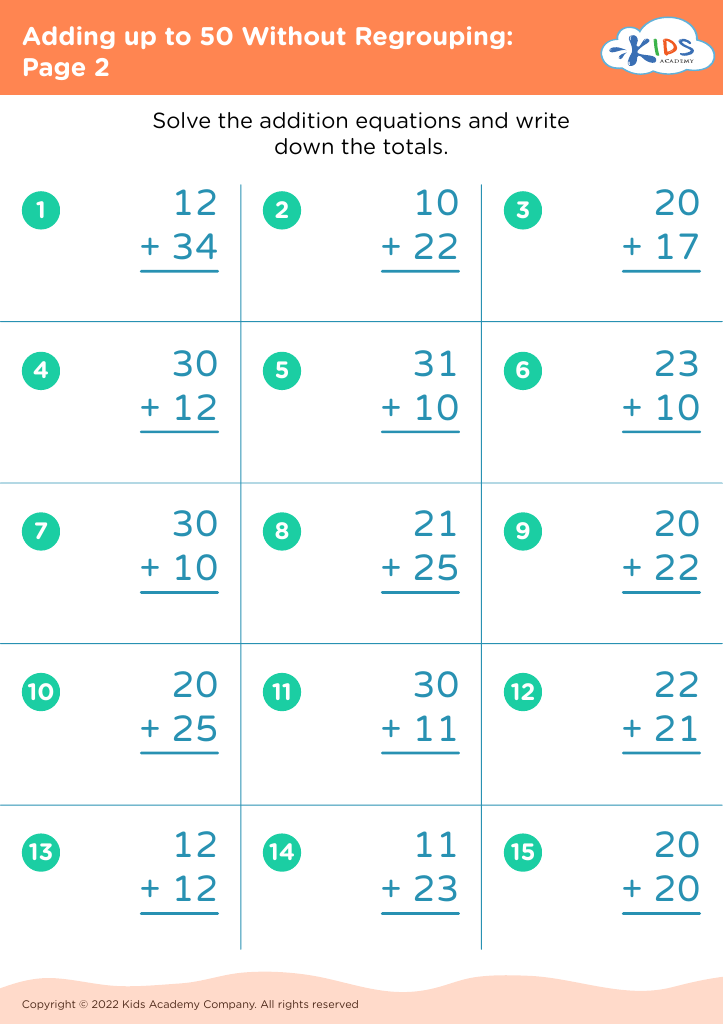
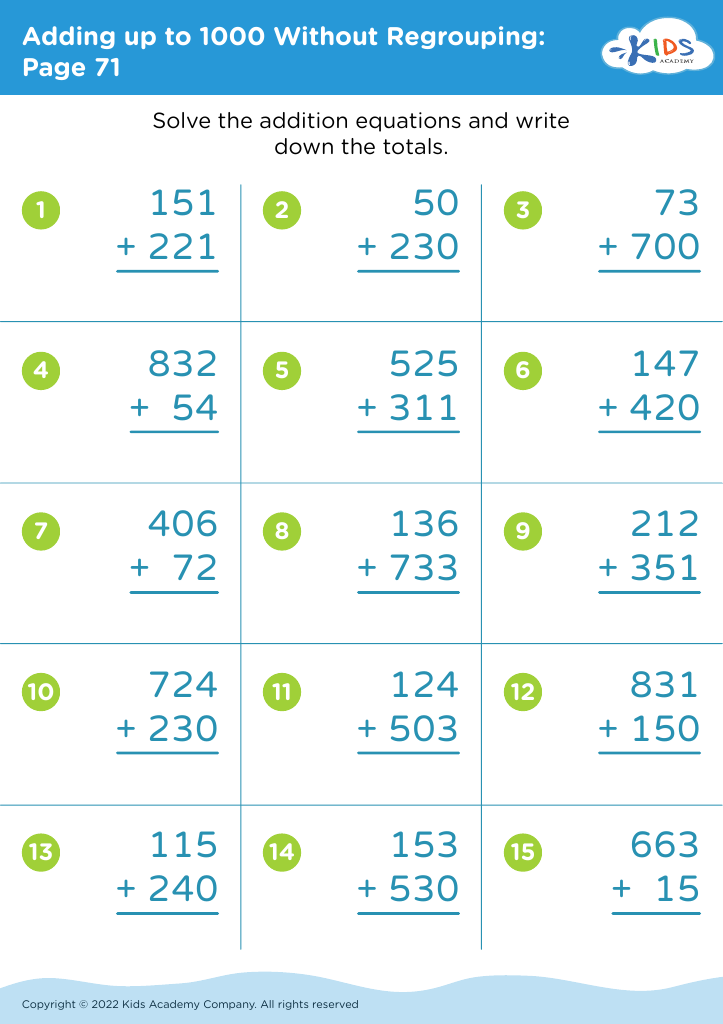
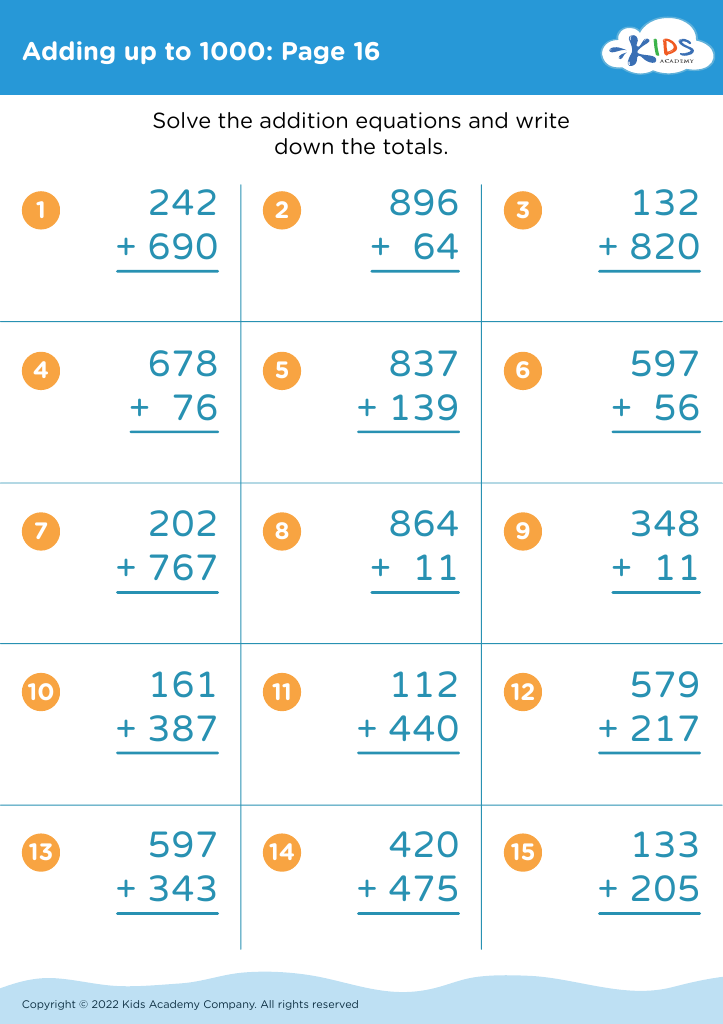
Enhance your child's counting skills with our engaging "Improve Counting" math worksheets designed specifically for ages 4-8. These interactive worksheets make learning enjoyable while helping young learners master essential counting techniques. From fun number puzzles to colorful visuals, each activity promotes numerical understanding and encourages critical thinking. Our worksheets are easy to print and can be used at home or in the classroom, providing a flexible learning experience. Foster a love for math with these creative and educational sheets that aim to build a strong foundation for future mathematical success. Start exploring today and watch your child's confidence grow!







Improving counting skills in young children aged 4-8 is vital for several reasons. First, counting is one of the foundational concepts in mathematics. It serves as the building block for more complex mathematical operations, including addition, subtraction, and beyond. When children develop strong counting skills early on, they are better equipped to grasp these advanced concepts later.
Additionally, counting aids in the development of critical thinking and problem-solving abilities. As children count, they learn to think about quantities, comparisons, and patterns. These cognitive skills extend beyond mathematics; they are essential for literacy, science, and daily decision-making.
Moreover, early counting proficiency boosts children's confidence in their abilities. When educators and parents encourage counting through engaging activities, it fosters a positive attitude towards math, reducing the anxiety often associated with the subject in later years.
Lastly, strong counting skills often correlate with academic achievement. Children who struggle with basic counting are at risk of falling behind in overall math proficiency as they progress through school. By prioritizing counting skills at an early age, parents and teachers can ensure a solid mathematical foundation, setting the stage for lifelong learning and success in various subjects.








