Improve counting skills Math Worksheets for Ages 4-8 - Page 3
53 filtered results
-
From - To
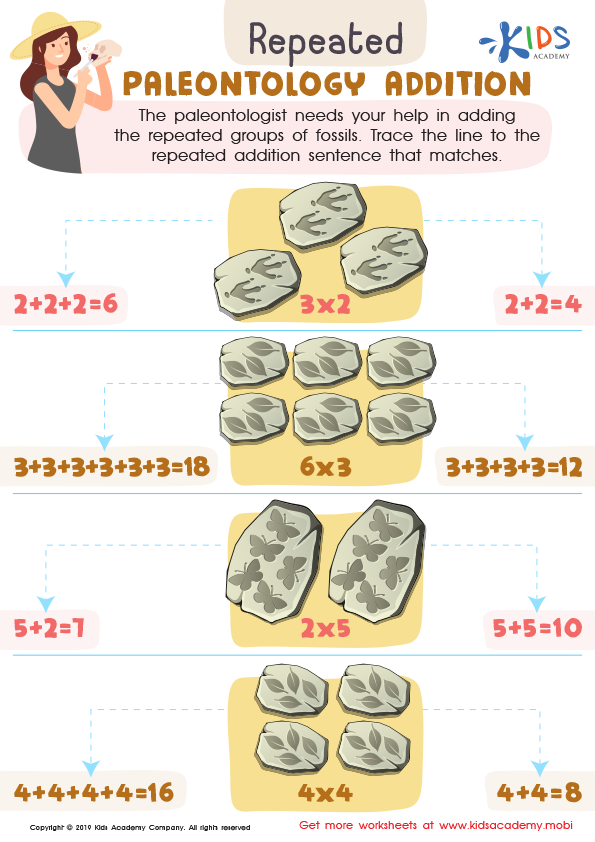
Repeated Archaeology Addition Worksheet
 Assign to My Students
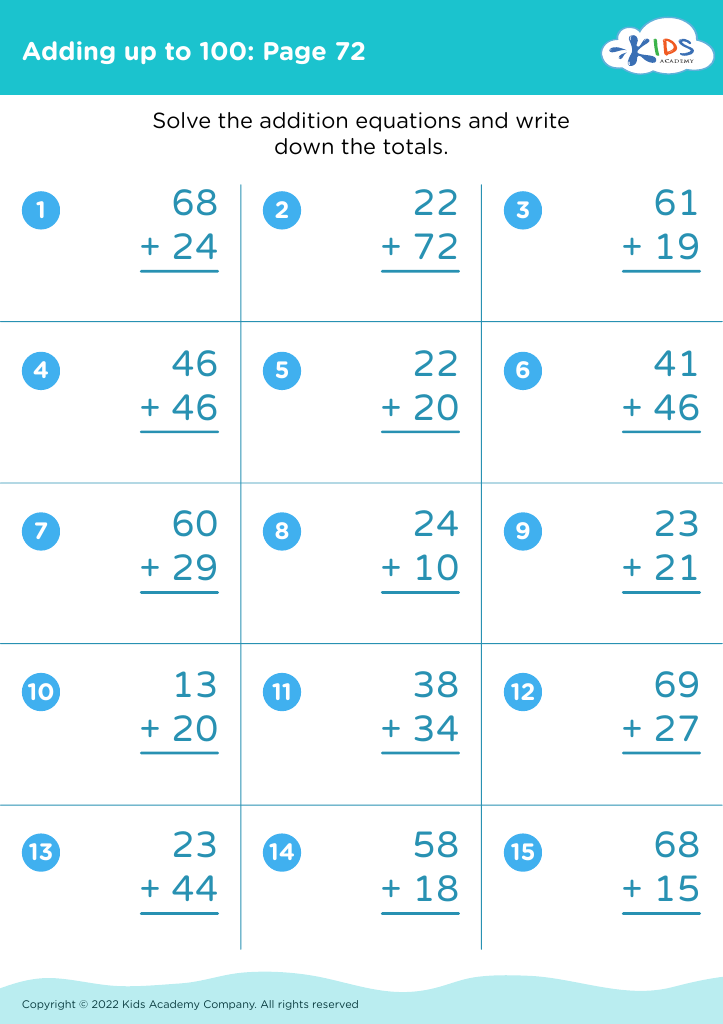
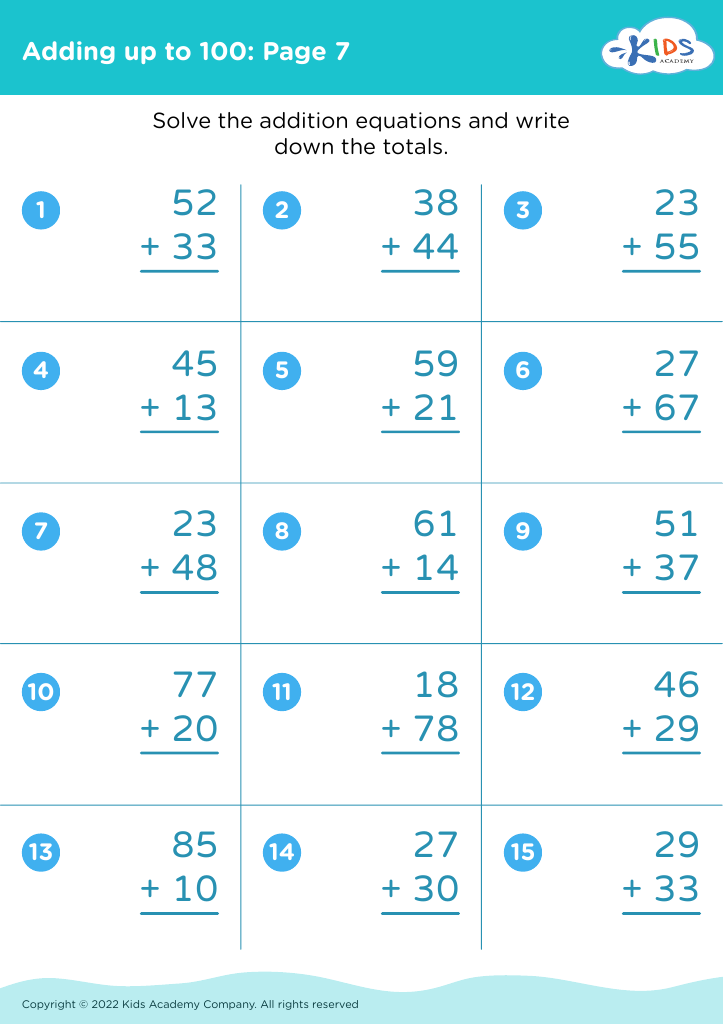
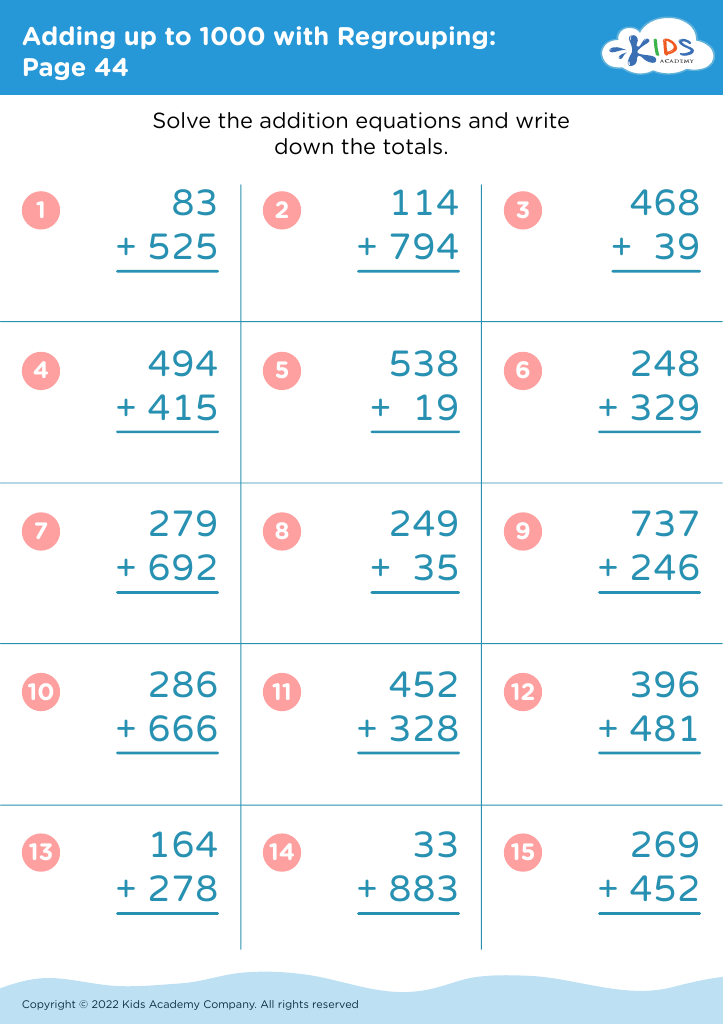







Improving counting skills in children aged 4-8 is crucial for their overall mathematical development and future academic success. During these formative years, counting forms the basis for a wide array of more advanced mathematical concepts such as addition, subtraction, multiplication, and division. Strong counting skills enhance a child's number sense, helping them understand the relationship between numbers, quantity, and simple operations.
Additionally, solid counting skills contribute to cognitive development by enhancing logical thinking and problem-solving abilities. Children who are confident counters are more likely to feel at ease when approaching new math concepts, fostering a positive attitude toward learning and reducing math anxiety.
Both parents and teachers play a pivotal role in creating an environment that nurtures and supports children's early mathematical skills. Through engaging activities, games, and real-world applications, they can make counting a part of everyday life. For example, counting objects during playtime or ingredients while cooking can reinforce these essential skills in an enjoyable way.
Encouraging strong counting skills also has cross-curricular benefits, aiding in improved literacy skills through pattern recognition and symbolic thinking. When children master counting early, they lay a solid foundation for academic success and lifelong learning, making it a critical focus for educators and parents alike.








