Unlock your child's potential with our engaging "Improve Math Skills" worksheets designed for kids aged 4-8! These printable activities provide a fun and interactive way to develop essential math concepts, from basic addition and subtraction to pattern recognition and counting. Our worksheets cater to various learning styles, making math enjoyable and accessible for every child. With colorful designs and age-appropriate challenges, kids will build confidence as they master important skills. Perfect for home or classroom use, these resources are invaluable for early math education. Help your child excel in math while fostering a love for learning through our expert-designed worksheets!
Check out this FREE Trial Lesson on Math for age 4-8!

T

Favorites
With answer key
Interactive
  • 4-8
  • Improve math skills
  • Math
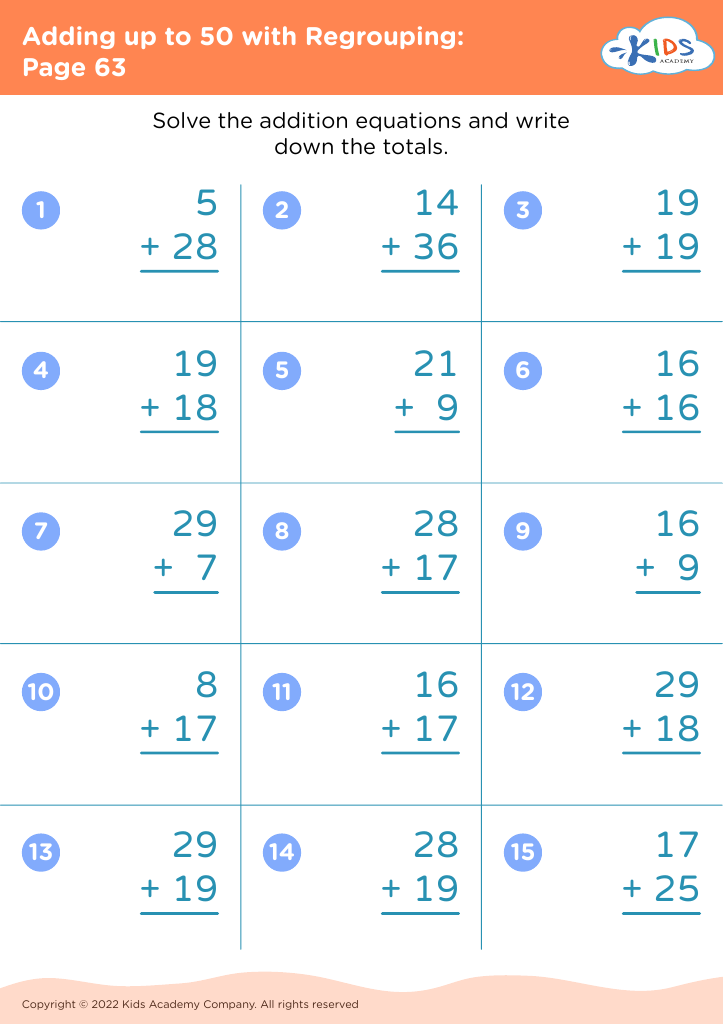
Adding up to 50 with Regrouping: Page 63
Worksheet
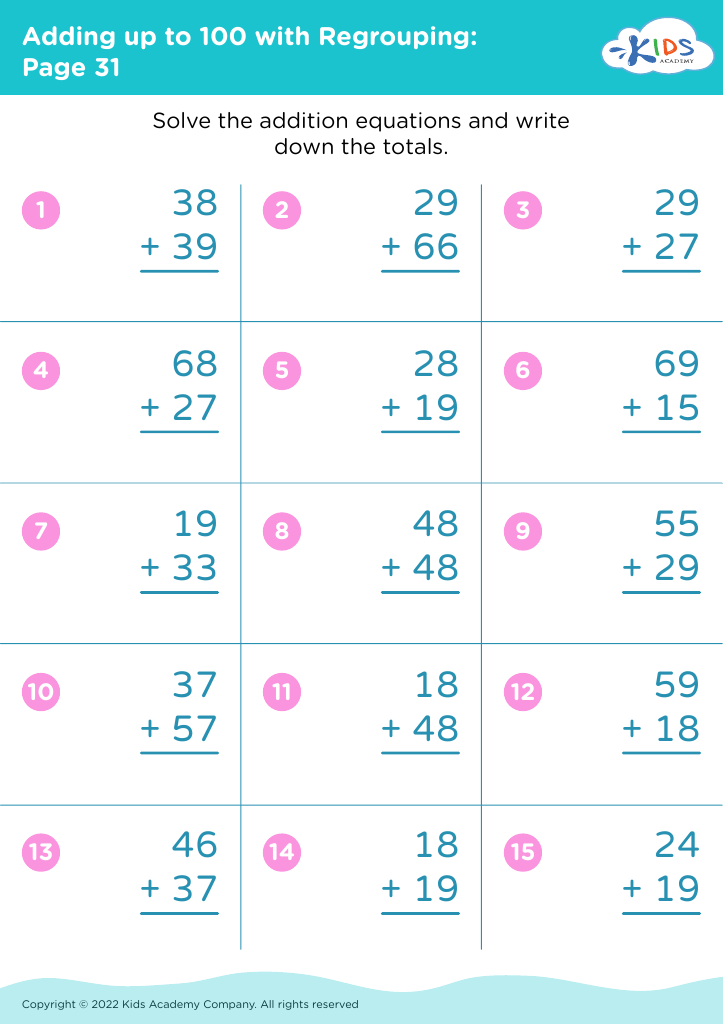
Adding up to 100 with Regrouping: Page 31
Worksheet
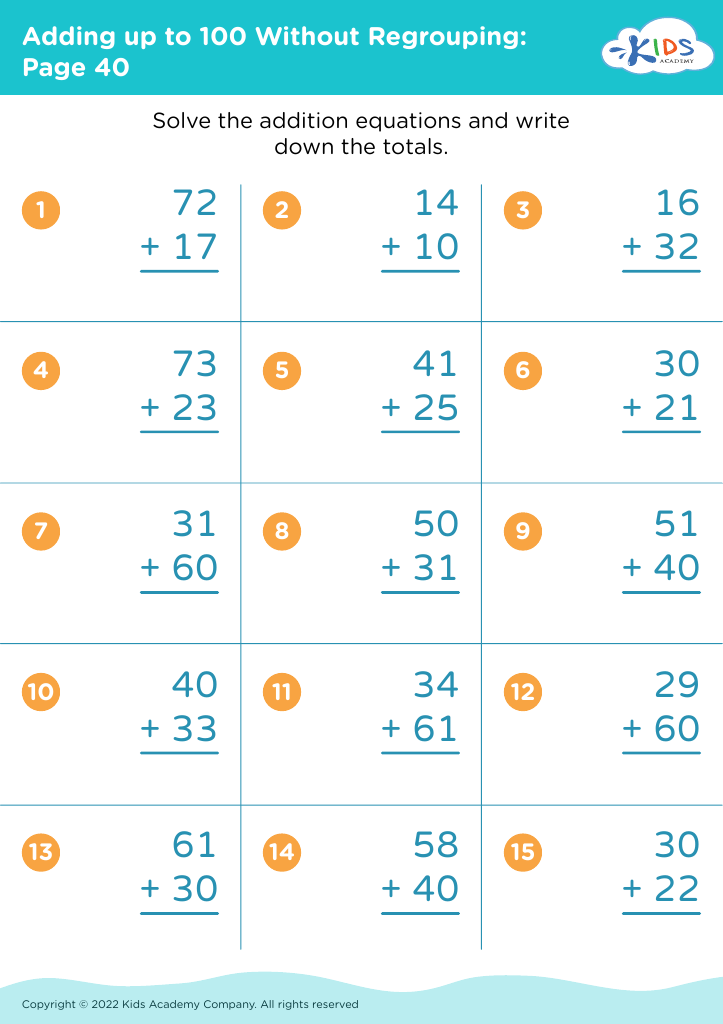
Adding up to 100 Without Regrouping: Page 40
Worksheet
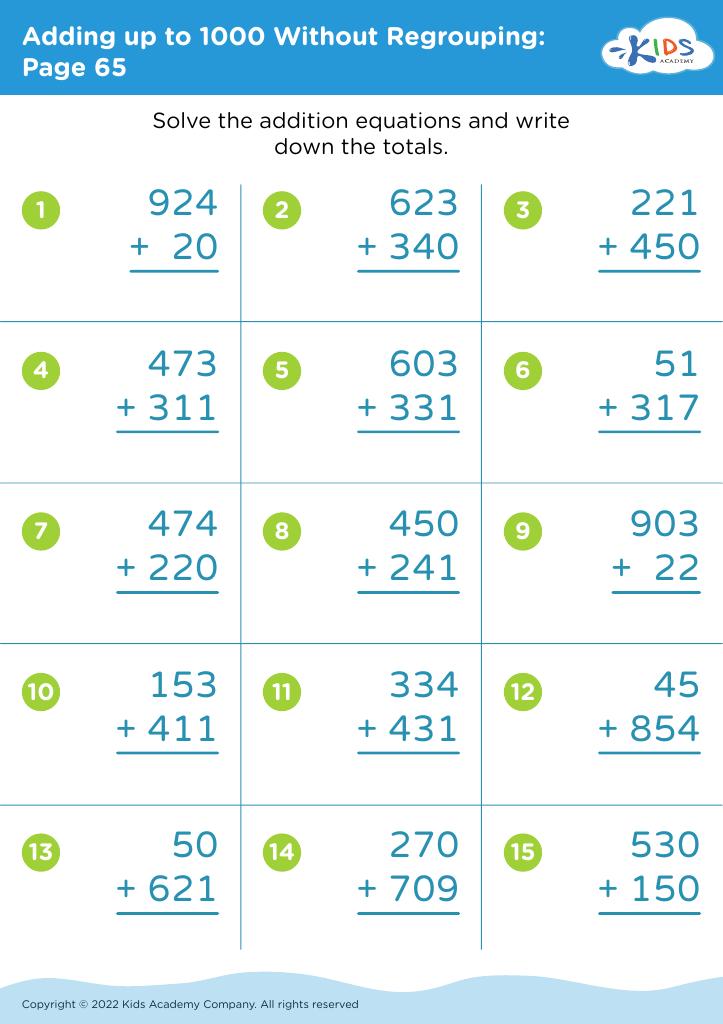
Adding up to 1000 Without Regrouping: Page 65
Worksheet
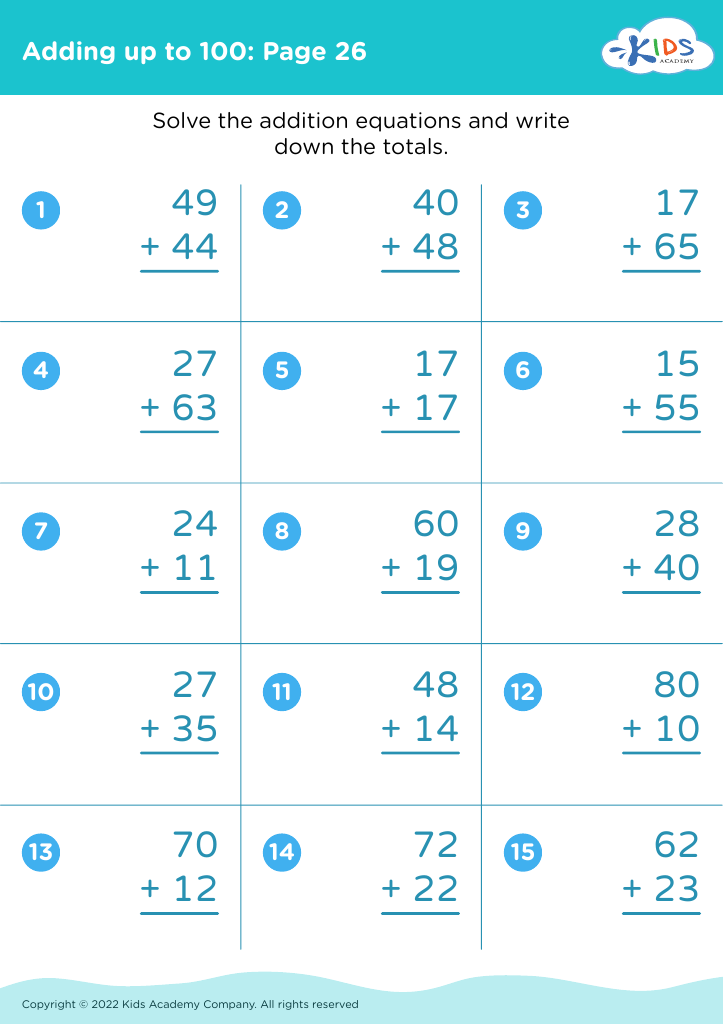
Adding up to 100: Page 26

Adding up to 100: Page 26

Adding up to 100: Page 26
Worksheet
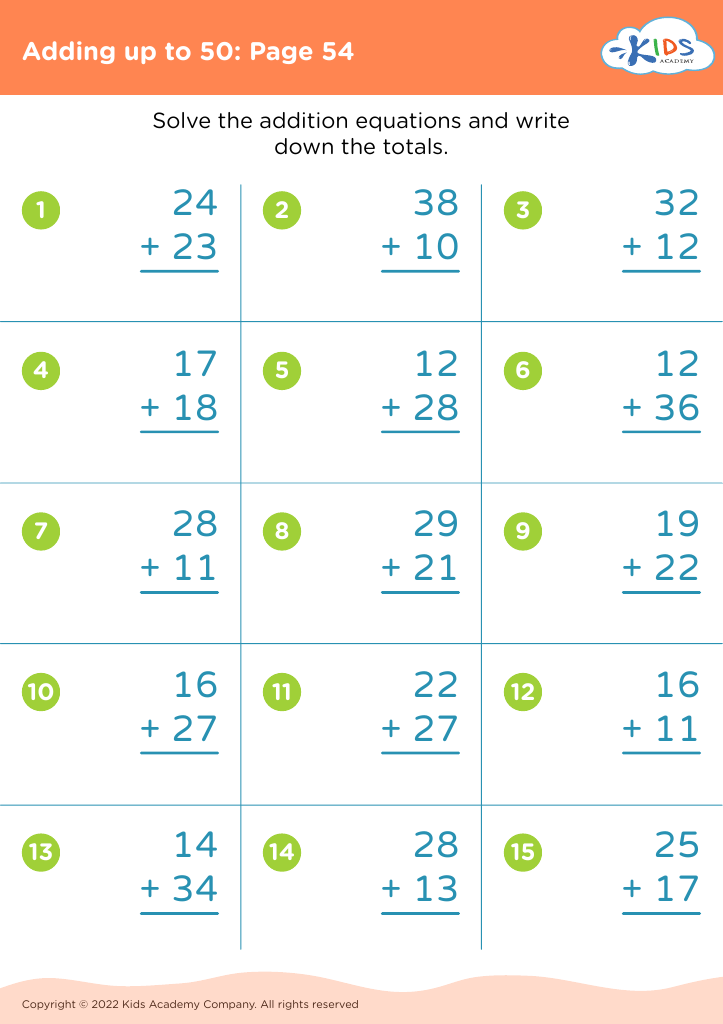
Adding up to 50: Page 54

Adding up to 50: Page 54

Adding up to 50: Page 54
Worksheet
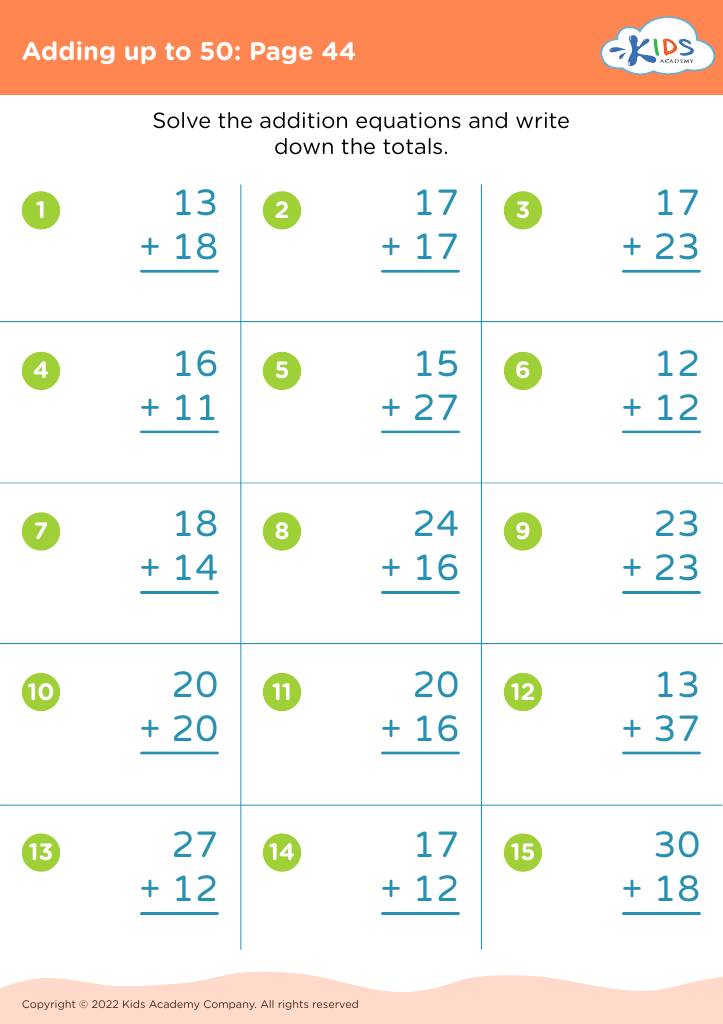
Adding up to 50: Page 44

Adding up to 50: Page 44

Adding up to 50: Page 44
Worksheet
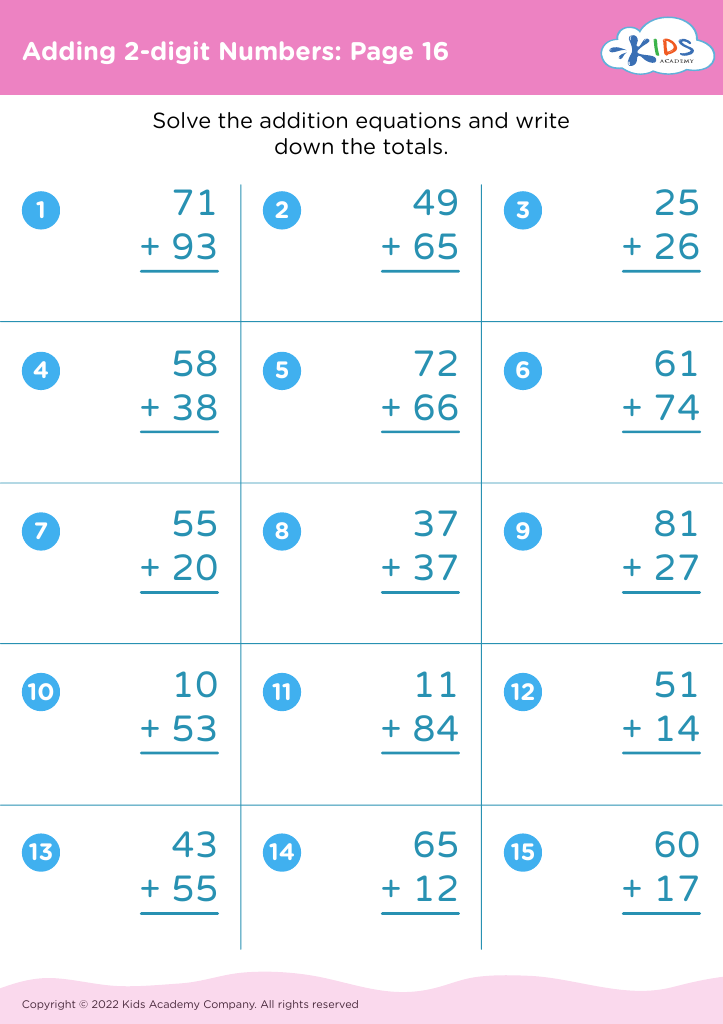
Adding 2-digit Numbers: Page 16

Adding 2-digit Numbers: Page 16

Adding 2-digit Numbers: Page 16
Worksheet
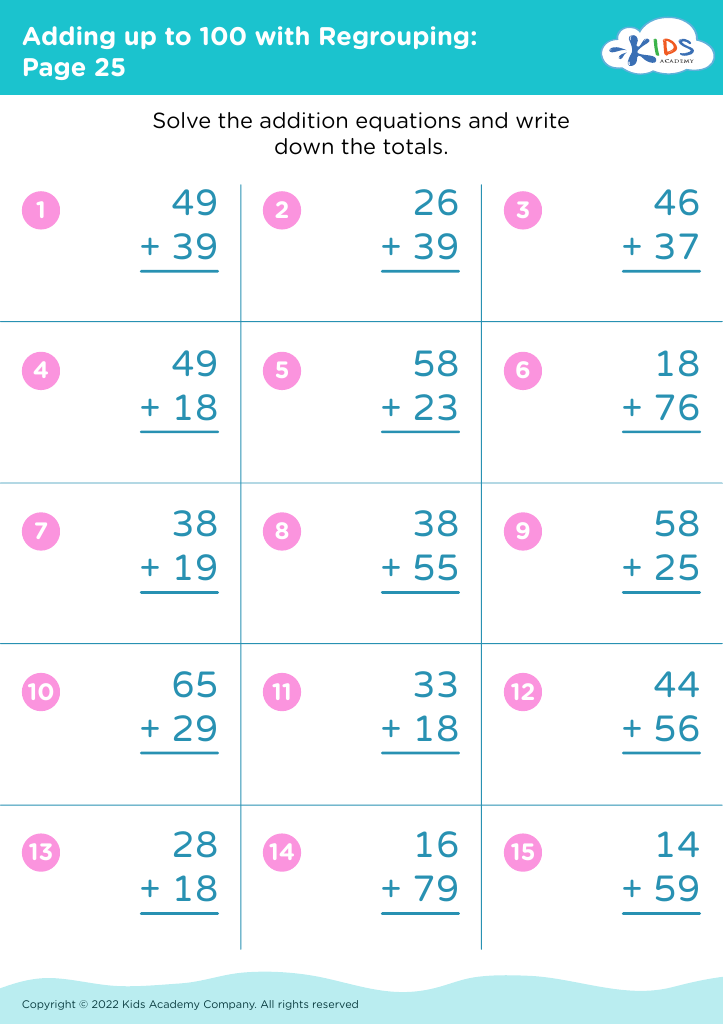
Adding up to 100 with Regrouping: Page 25
Worksheet
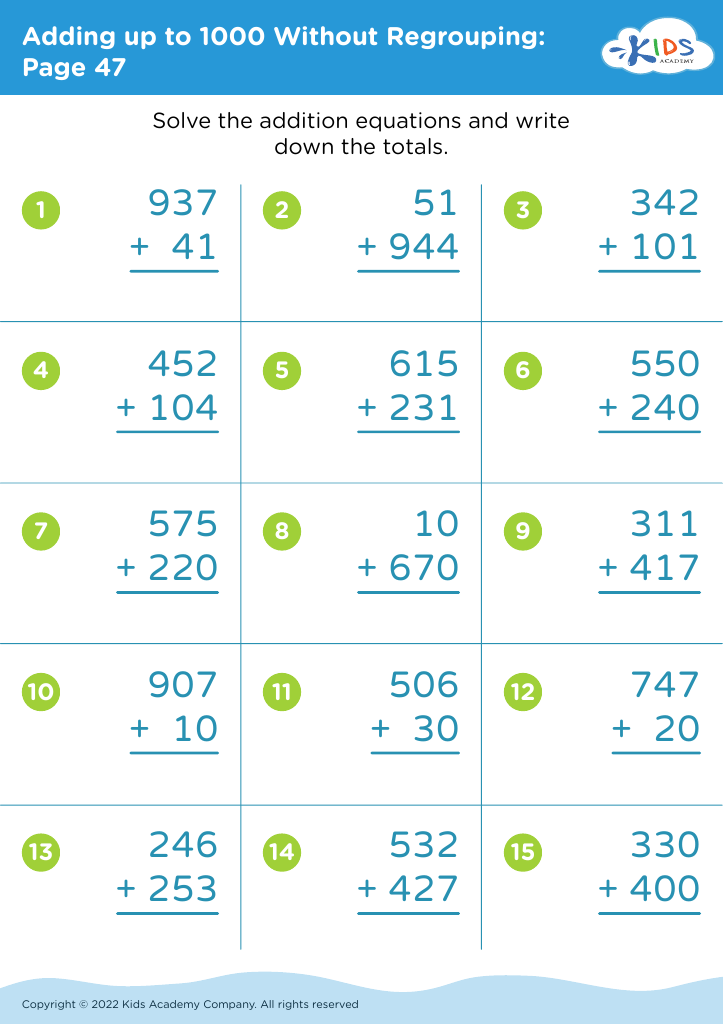
Adding up to 1000 Without Regrouping: Page 47
Worksheet
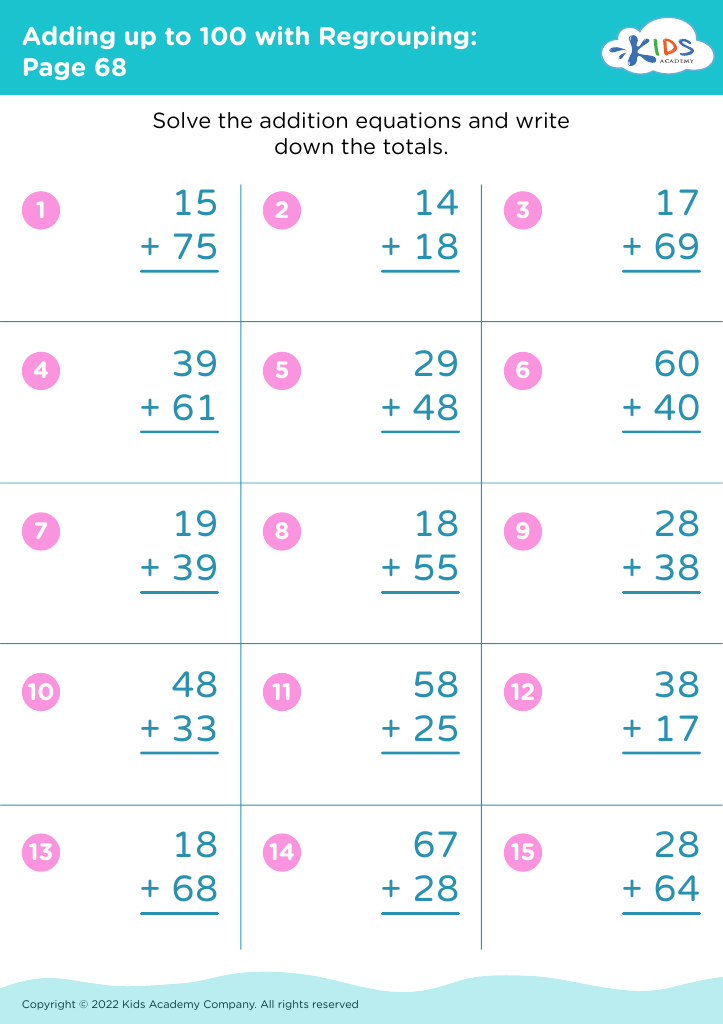
Adding up to 100 with Regrouping: Page 68
Worksheet
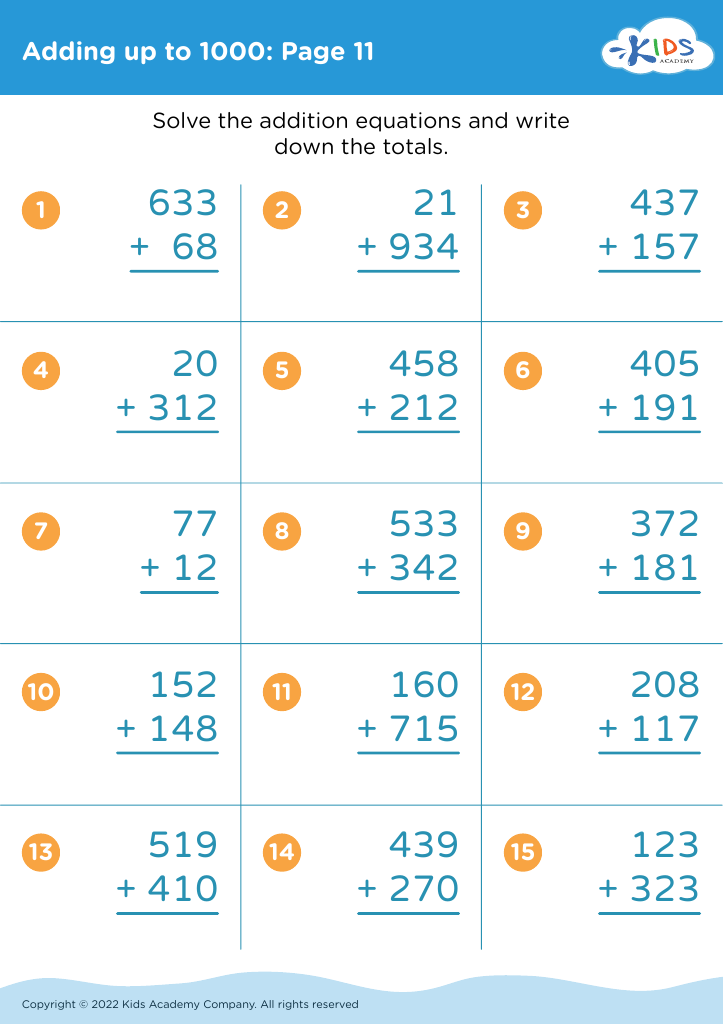
Adding up to 1000: Page 11

Adding up to 1000: Page 11

Adding up to 1000: Page 11
Worksheet
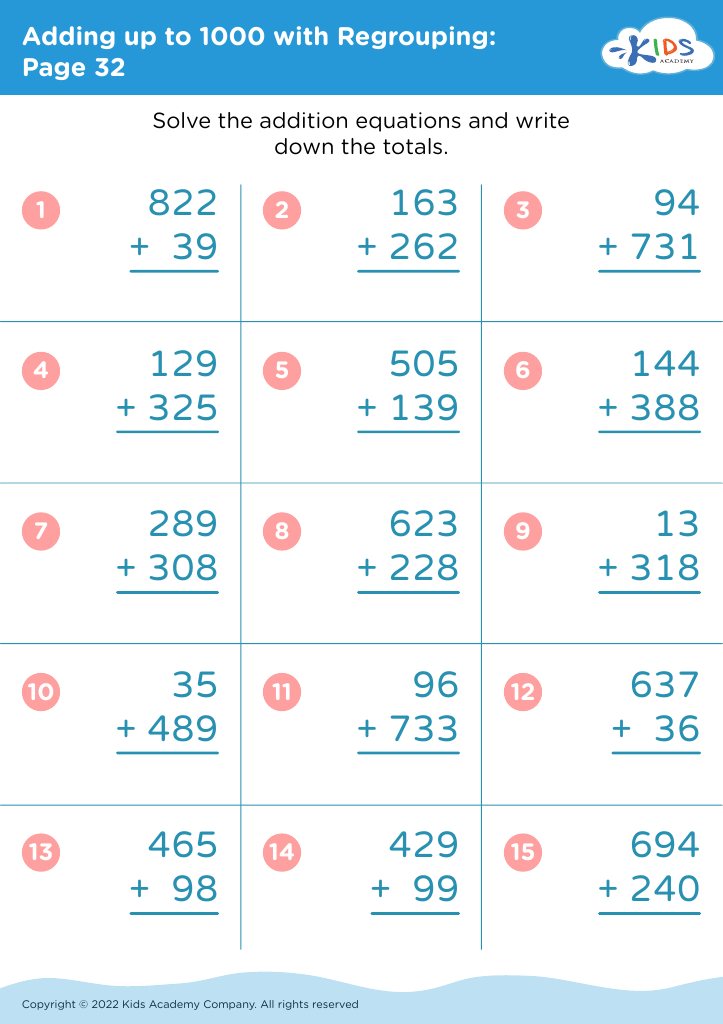
Adding up to 1000 with Regrouping: Page 32
Worksheet
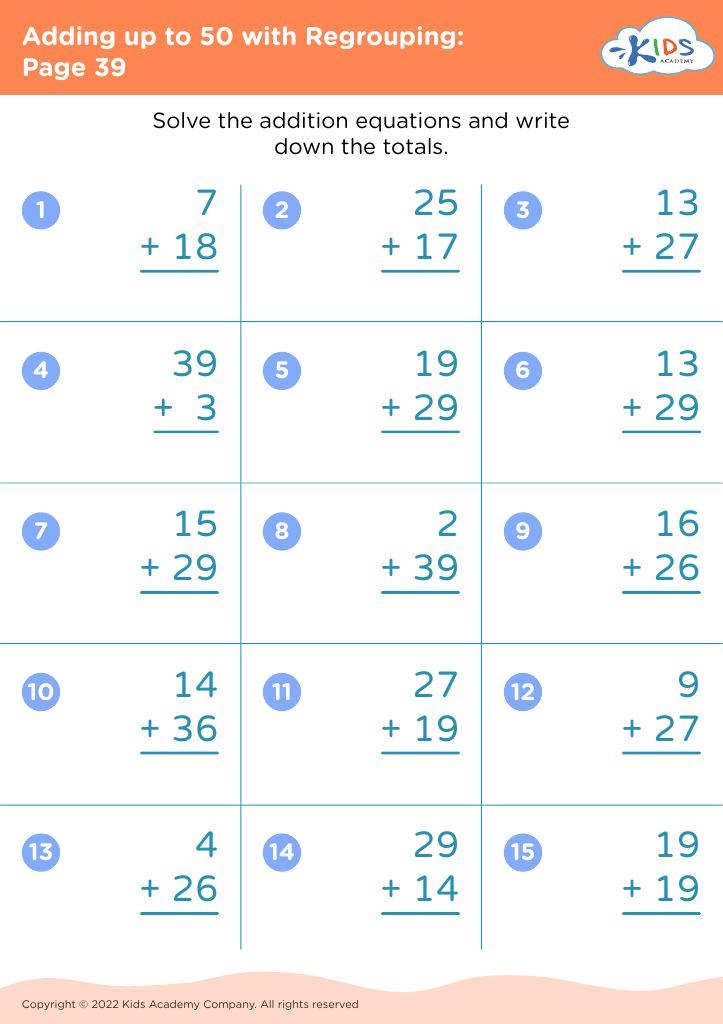
Adding up to 50 with Regrouping: Page 39
Worksheet
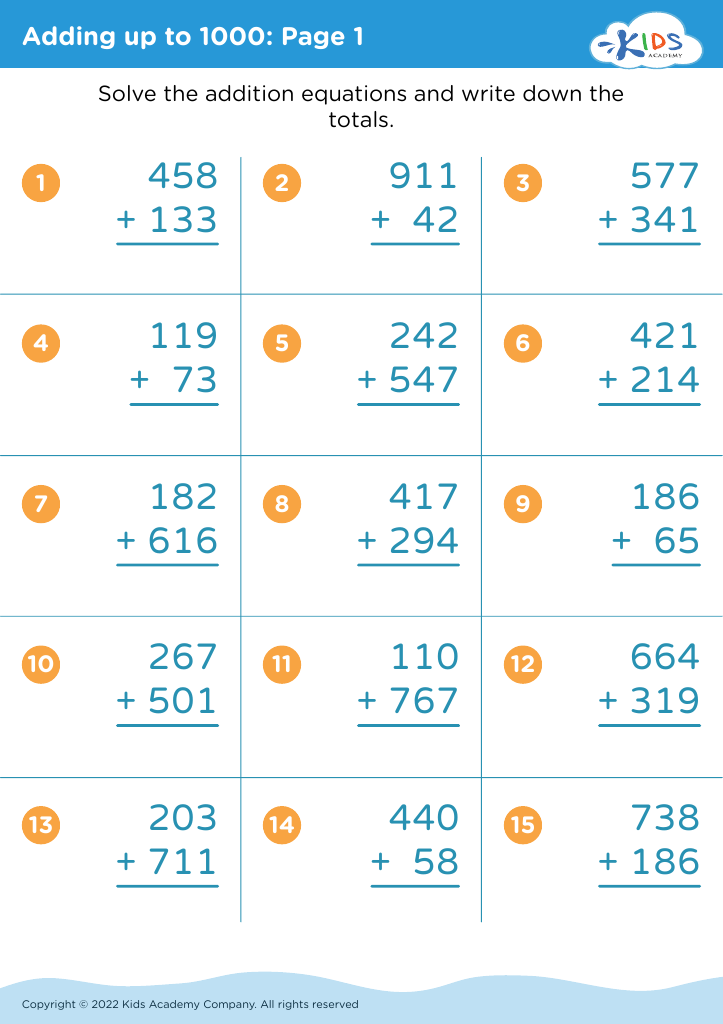
Adding up to 1000: Page 1

Adding up to 1000: Page 1

Adding up to 1000: Page 1
Worksheet
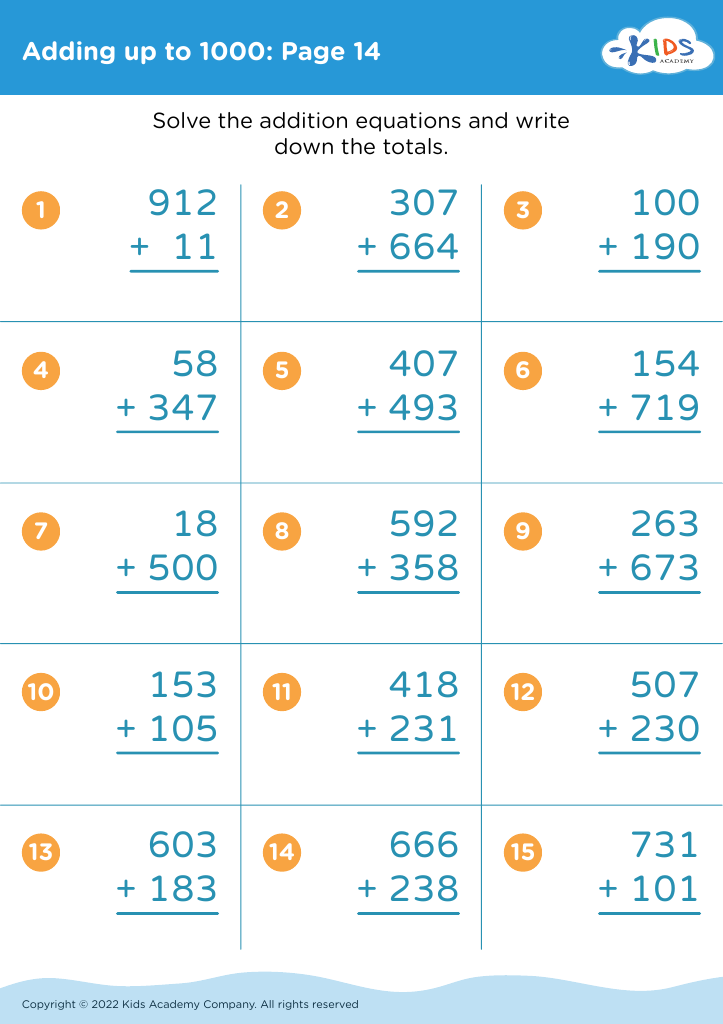
Adding up to 1000: Page 14

Adding up to 1000: Page 14

Adding up to 1000: Page 14
Worksheet
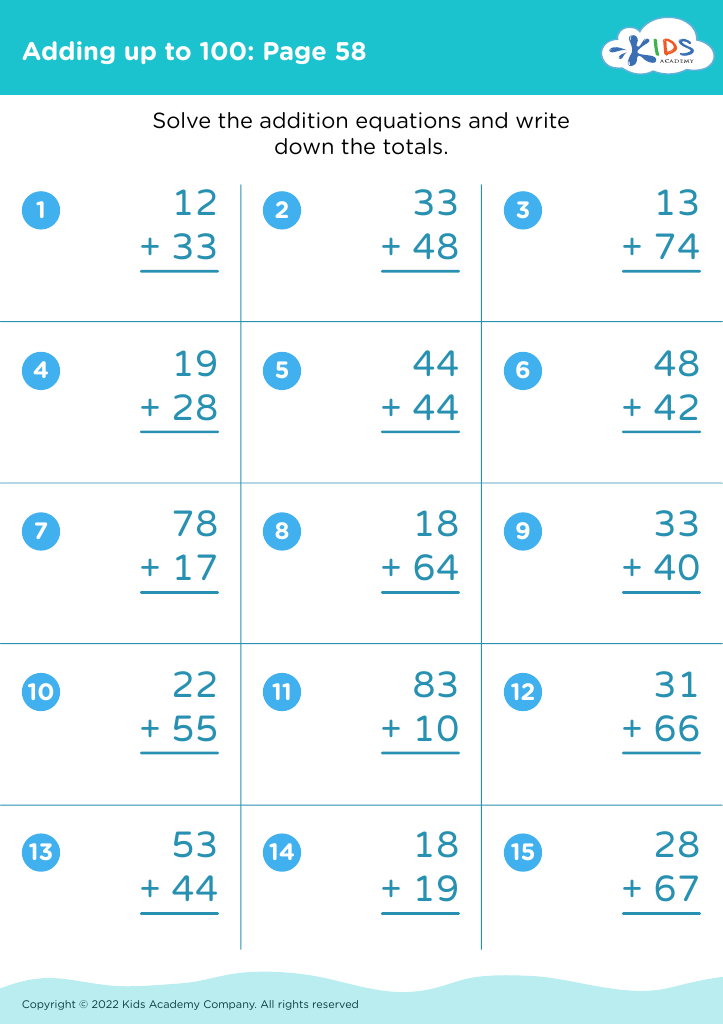
Adding up to 100: Page 58

Adding up to 100: Page 58

Adding up to 100: Page 58
Worksheet
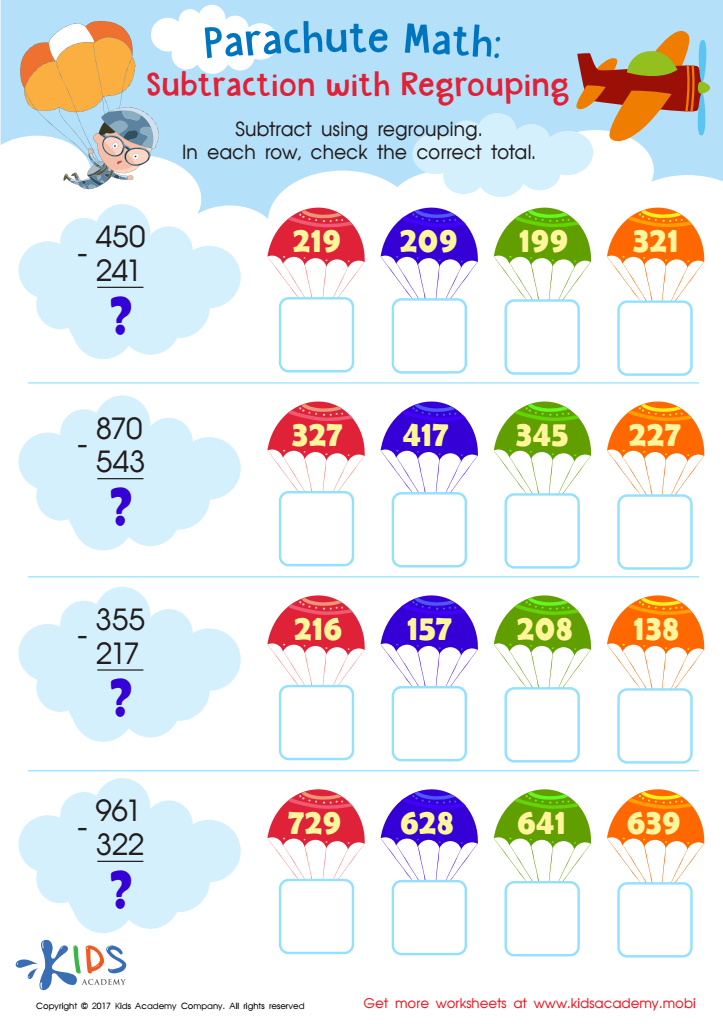
Subtraction with regrouping worksheet for 3rd grade

Subtraction with Regrouping for 3rd Grade Worksheet

Kids will have fun mastering subtraction with regrouping with this parachute-themed worksheet! Perfect for 3rd graders, it provides plenty of practice so your child can take to the skies in their math understanding.
Subtraction with Regrouping for 3rd Grade Worksheet
Worksheet


Improving math skills in children aged 4-8 is crucial for their overall development and future academic success. During these formative years, children are laying the foundational skills that will influence their performance in higher-level mathematics later on. Research shows that early mathematical competence is linked to improved academic achievements across subjects, not solely in math itself.

Parents and teachers play a vital role in this developmental phase. Engaging children with age-appropriate math activities—ranging from simple counting games to basic addition and shape recognition—helps in fostering a positive attitude towards math, making it enjoyable rather than intimidating.

Furthermore, math skills contribute to essential life skills, such as problem-solving, critical thinking, and logical reasoning. As children learn to quantify, measure, and compare, they are also enhancing their ability to make informed decisions in real life.

Moreover, teaching math at an early age can mitigate math anxiety later, setting a strong positive mindset towards learning. By prioritizing math development, parents and teachers can empower children with the skills and confidence they need to excel academically and in everyday activities, ultimately supporting their lifelong learning journey.