Improve mathematical skills Math Worksheets for Ages 4-8
3 filtered results
-
From - To
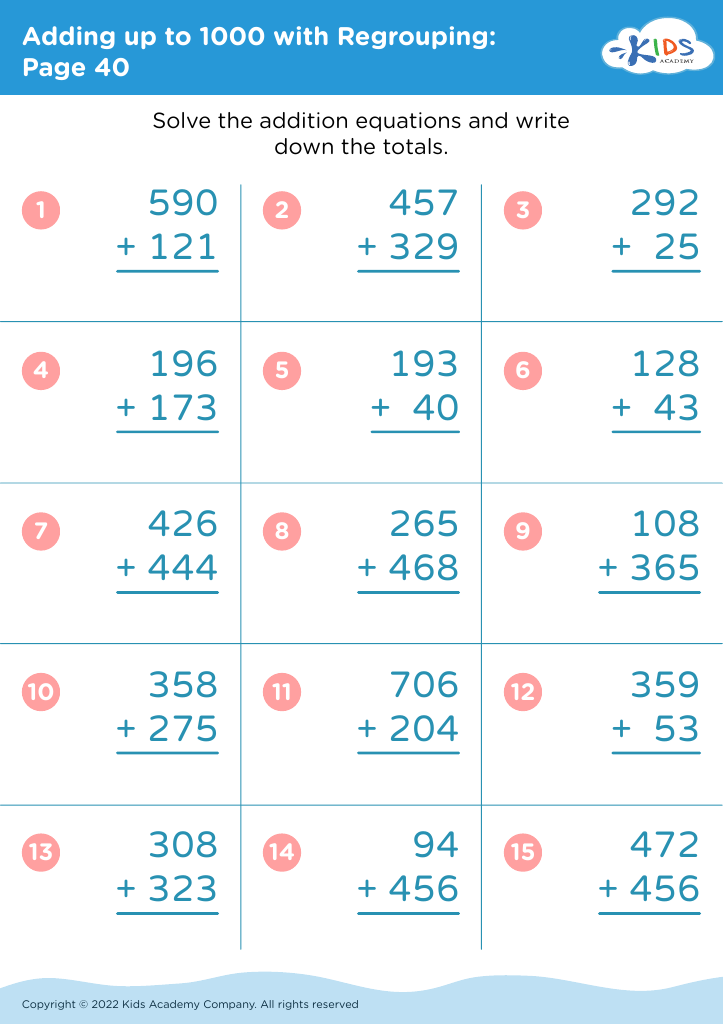
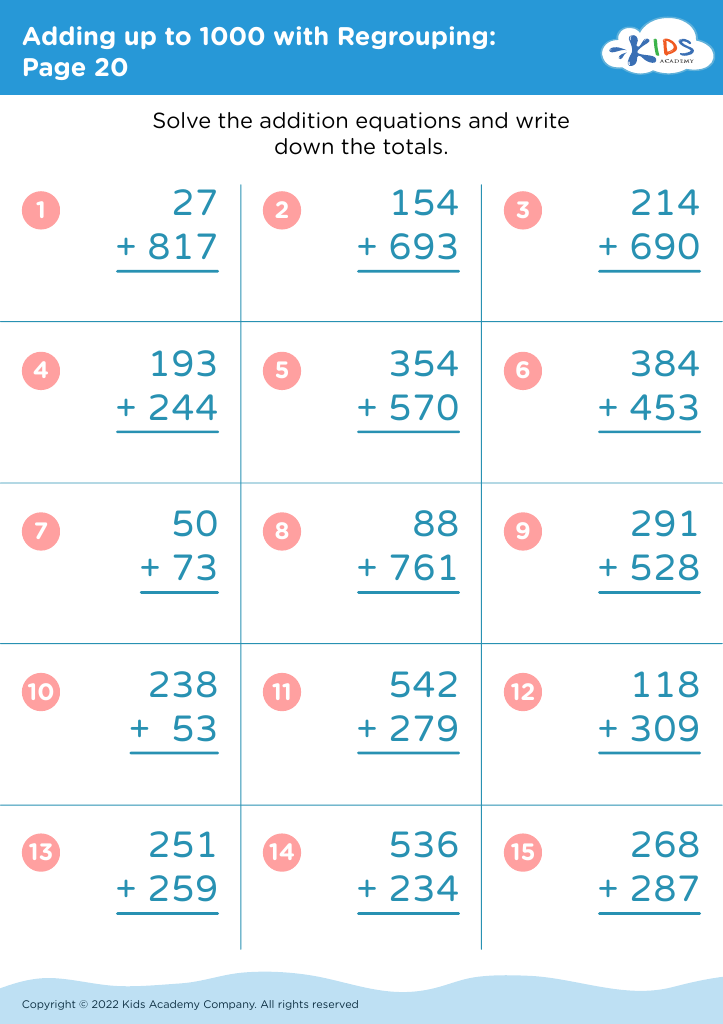
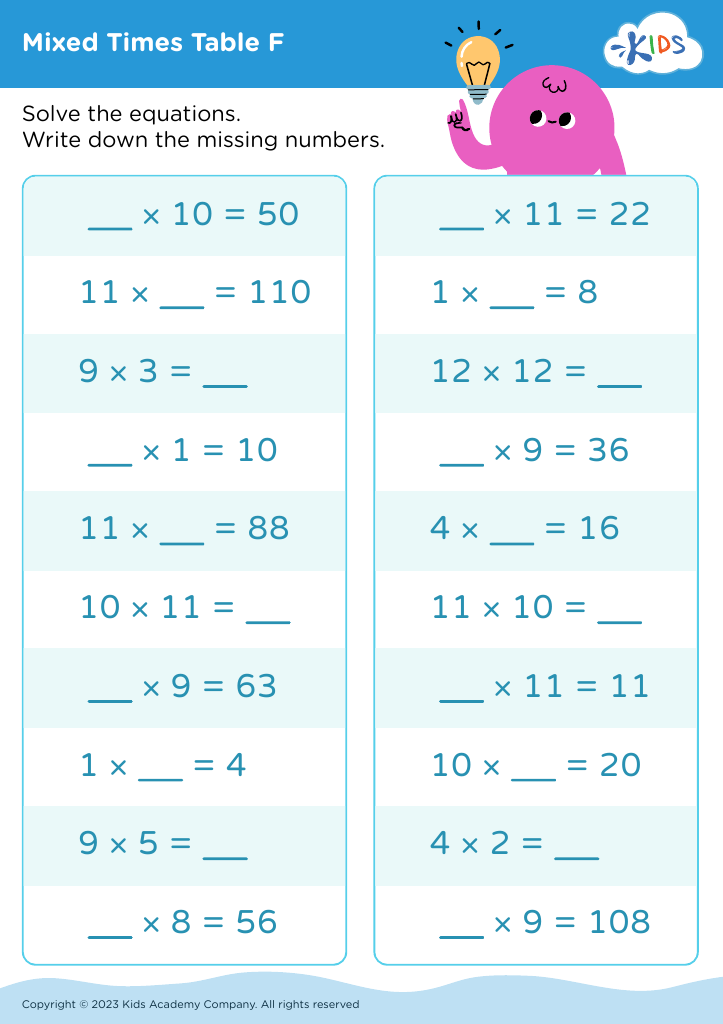
Discover our engaging Math Worksheets designed specifically for children ages 4-8, aimed at improving their mathematical skills in a fun and interactive way. Our comprehensive collection covers essential concepts such as addition, subtraction, shapes, and counting, ensuring a strong foundational understanding. Each worksheet is tailored to cater to various learning styles, promoting critical thinking and problem-solving in young learners. By practicing with these worksheets, children can build confidence and competence in math while enjoying colorful graphics and creative activities. Enhance your child's math journey today and watch them thrive! Start exploring our worksheets now and unlock a world of mathematical discovery!








Improving mathematical skills for children aged 4 to 8 is crucial for several reasons. Firstly, this age group is a vital developmental stage where foundational skills are established. Proficiency in math not only boosts academic performance but also enhances critical thinking and problem-solving abilities. Early mathematical understanding lays the groundwork for more complex concepts encountered in later grades, promoting a smoother educational journey.
Moreover, fostering math skills encourages confidence. Children who grasp basic math concepts early on, such as counting, addition, and subtraction, are more likely to participate actively in classroom activities. This builds their self-esteem and motivates a lifelong love for learning.
Additionally, developing mathematical skills comes with real-life applications. From basic budgeting to understanding time, math is inherently related to everyday life. When parents and teachers emphasize the importance of math through engaging activities and play, they help children see its relevance, which enhances motivation.
Lastly, addressing math skills in early education can help bridge gaps in learning that may lead to difficulties later on. Ensuring that children have strong mathematical foundations ultimately contributes to equitable educational opportunities, national economic growth, and social equity. Investing in these early skills supports not only individual children but society as a whole.








