Number sequence learning Math Worksheets for Ages 4-8
3 filtered results
-
From - To
Discover our engaging number sequence learning math worksheets, crafted specifically for children ages 4-8. These worksheets are designed to help young learners develop essential math skills as they explore counting, ordering, and identifying patterns. With vibrant illustrations and interactive activities, children will enjoy practicing number sequences in a fun, stimulating way. Our worksheets cater to various learning styles, making math accessible and enjoyable for every child. Each worksheet gradually increases in difficulty, ensuring a solid foundation for future math concepts. Spark your child’s interest in numbers and boost their confidence with our thoughtfully crafted resources today!
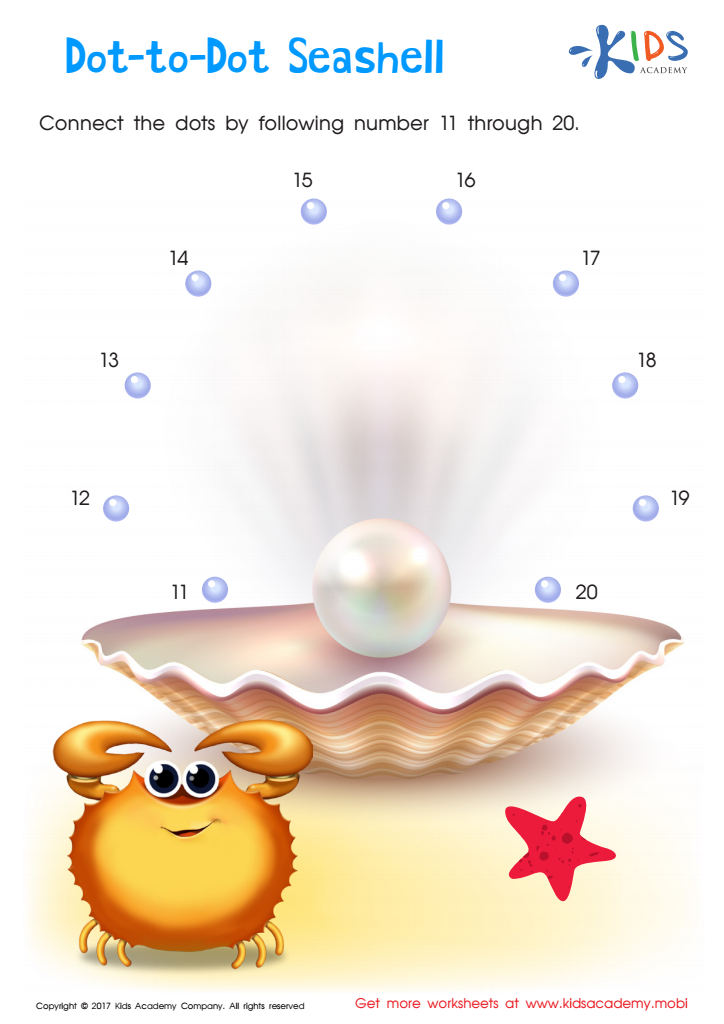
Ordering 11–20: Dot–to–dot Seashell Printable
 Assign to My Students

Counting on the City Skyline: Dot-to-Dot Worksheet








Number sequence learning is a foundational aspect of early mathematics that is crucial for children aged 4-8. Understanding number sequences, which involves recognizing patterns, counting, and ordering numbers, lays the groundwork for more complex mathematical concepts.
Parents and teachers should care about this learning because it fosters critical thinking and problem-solving skills essential for academic success. Mastery of number sequences enhances a child’s ability to perform basic arithmetic operations, such as addition and subtraction, and paves the way for understanding concepts like skip counting, which is foundational for multiplication.
Additionally, early math skills correlate strongly with later academic achievement. Children who grasp number sequences are more likely to enjoy math and persist through challenges, cultivating a positive attitude towards the subject. Early exposure to these concepts also aids in the development of fine motor skills through hands-on activities, making learning engaging and interactive.
Moreover, recognizing the significance of math can provide parents with the tools to support their children’s education at home, reinforcing what is learned in the classroom. By prioritizing number sequence learning, adults can empower children with confidence and competence in math, preparing them for lifelong learning and success.








