Practice counting Math Worksheets for Ages 4-8
6 filtered results
-
From - To
Welcome to our collection of Practice Counting Math Worksheets designed specifically for children aged 4-8! These engaging worksheets help young learners develop essential counting skills through fun activities and colorful illustrations. Each worksheet offers a variety of exercises, from counting objects to number matching, ensuring that kids can enjoy learning at their own pace. Our resources align with early education standards, making them perfect for parents, educators, and homeschoolers. Foster a love for math while strengthening your child's number sense and ability to count confidently. Explore our printable worksheets today to support your child’s journey in mastering counting!
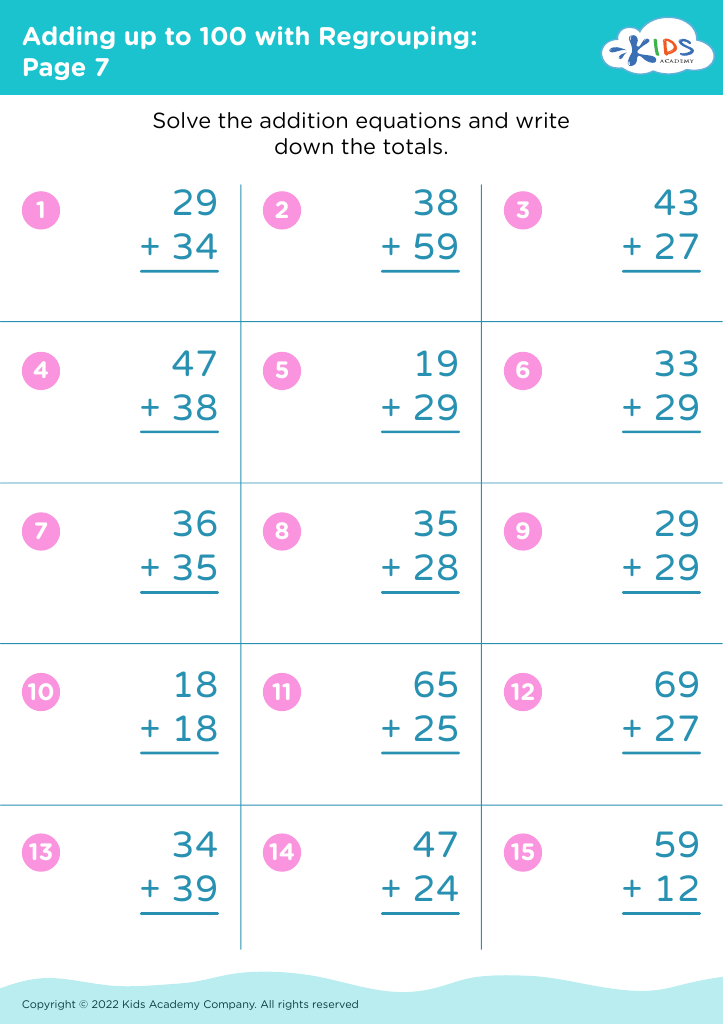
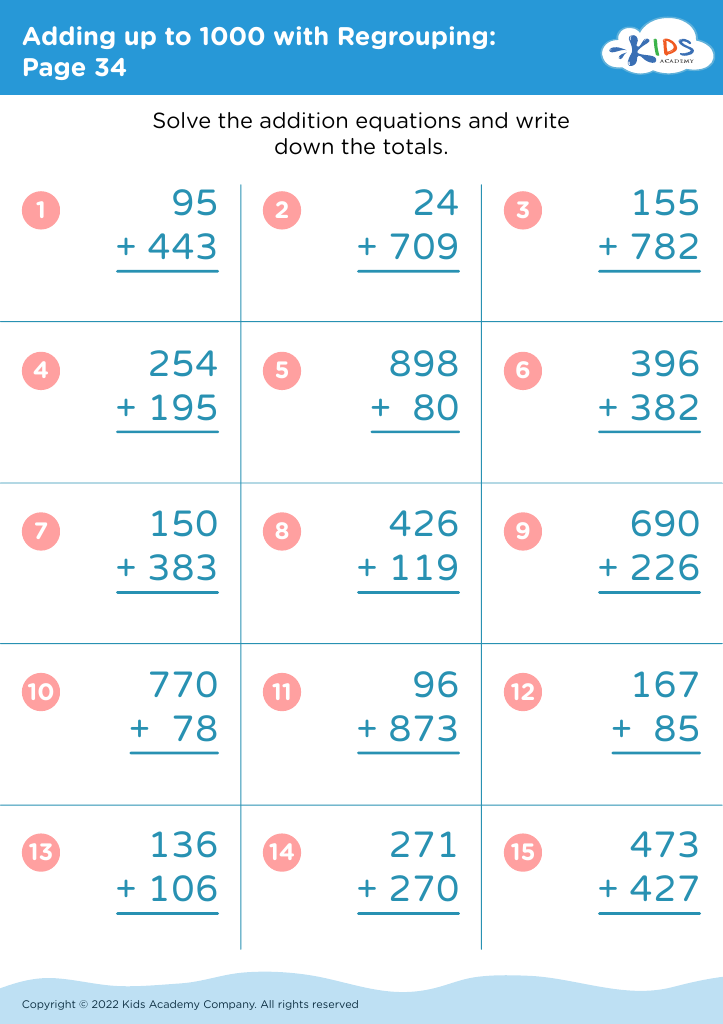
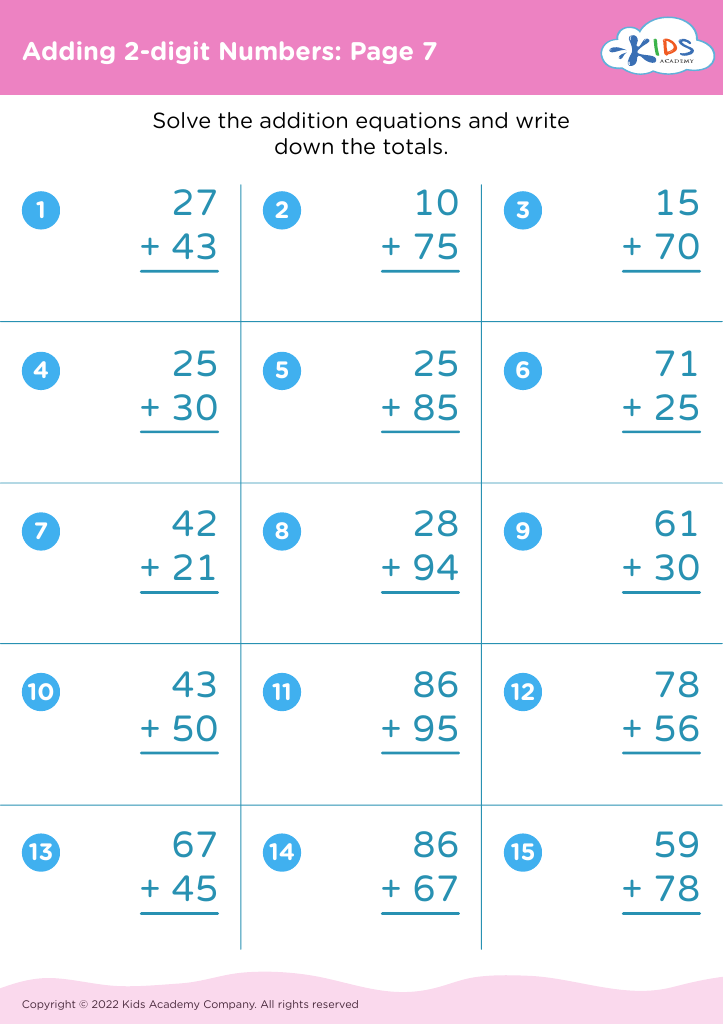
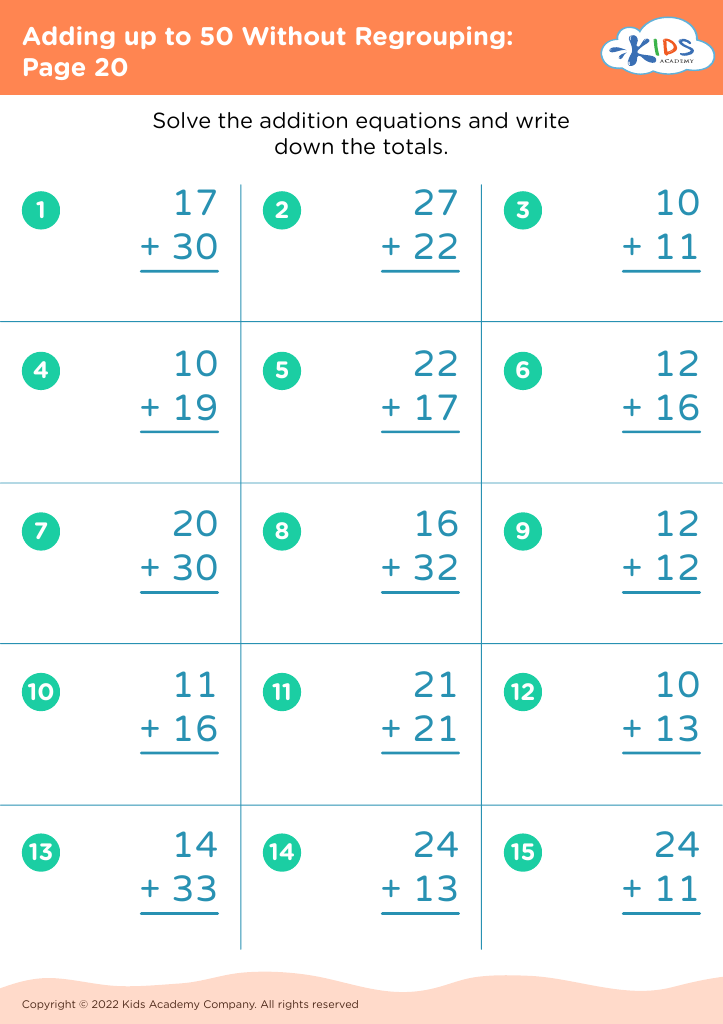
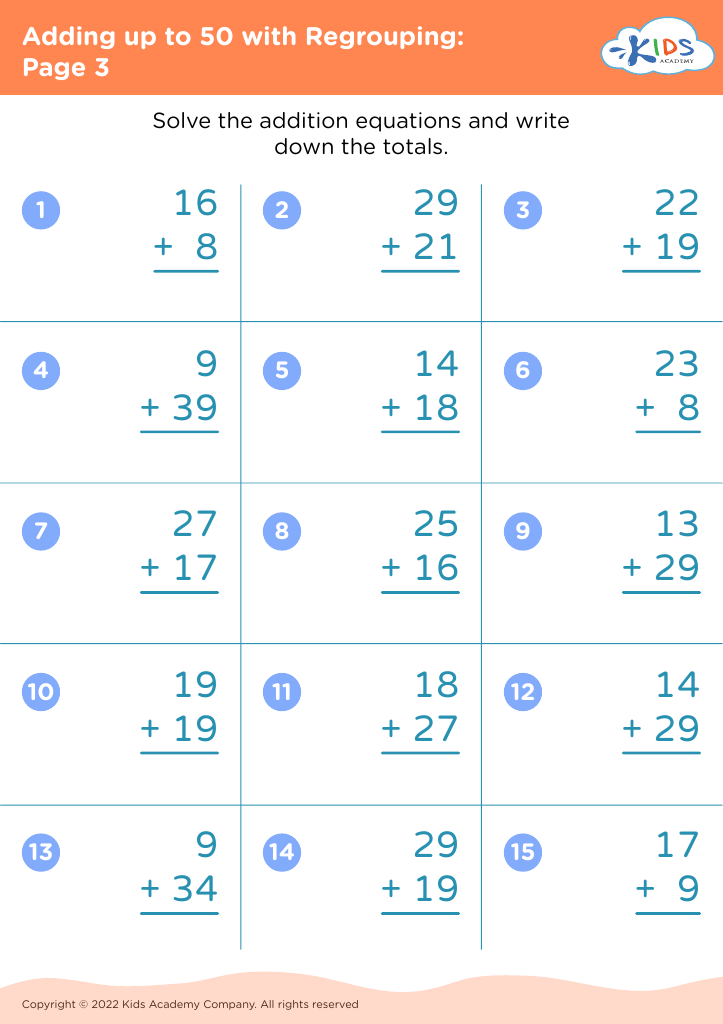
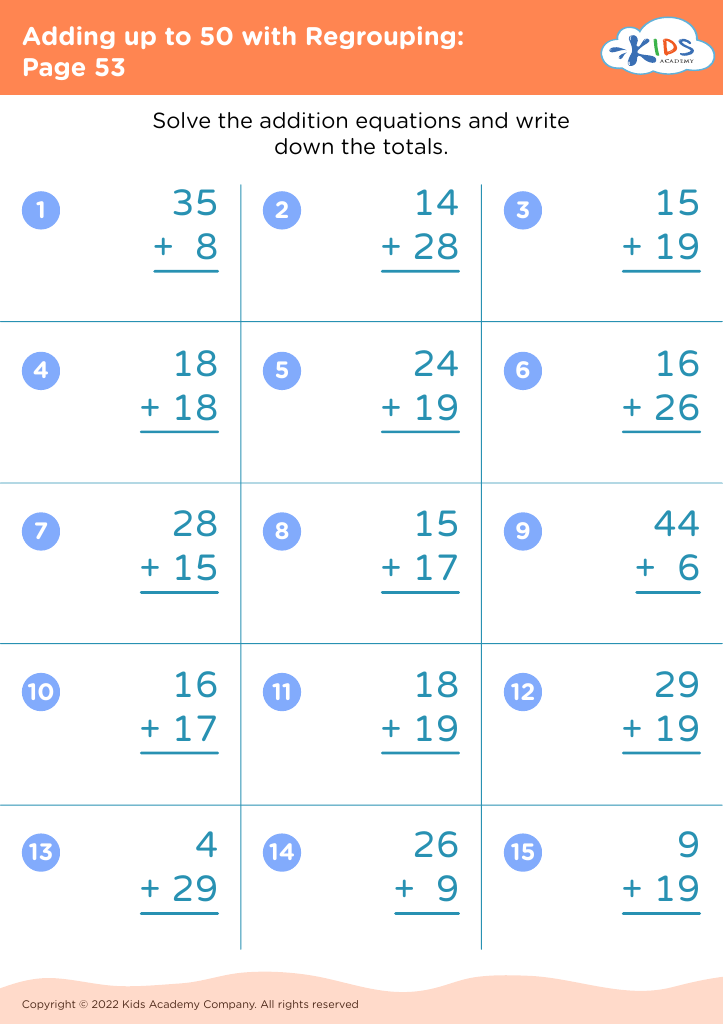








Parents and teachers should prioritize practice counting in math for children ages 4-8 as it lays the foundational skills crucial for future mathematical understanding. During these formative years, kids are at a critical stage in developing numerical sense, and counting serves as the gateway to grasping larger concepts, including addition, subtraction, and number recognition.
Practicing counting helps children build confidence and fosters a positive attitude towards math. It enhances their ability to understand quantities and relationships, laying the groundwork for problem-solving and critical thinking skills. Additionally, engaging in counting activities encourages fine motor skills and cognitive development, as children learn to manipulate objects such as blocks, beads, or counters.
Moreover, incorporating counting into fun, everyday activities makes learning engaging and relatable. This can transform mundane tasks—like setting the table—into enjoyable learning experiences. Parents and teachers can foster a supportive environment that recognizes children's achievements, further encouraging their interest and participation in math.
In today’s tech-driven world, solid counting skills are essential for navigating everything from basic finances to advanced STEM subjects. Ultimately, by supporting counting practice, parents and educators are empowering children with the essential skills they need for lifelong learning and success.








