Problem-solving development Math Worksheets for Ages 4-8
3 filtered results
-
From - To
Nurture young minds with our Problem-Solving Development Math Worksheets for ages 4-8! Designed to inspire curiosity and analytical thinking, these engaging printables help children tackle math challenges with confidence. Each worksheet introduces age-appropriate problems that strengthen critical skills such as addition, subtraction, pattern recognition, and logical reasoning. With fun themes and interactive elements, kids will stay motivated and eager to learn. Perfect for home or classroom use, our worksheets support the development of essential math competencies while making learning an exciting adventure. Prepare your child for a bright future with these foundational tools today!
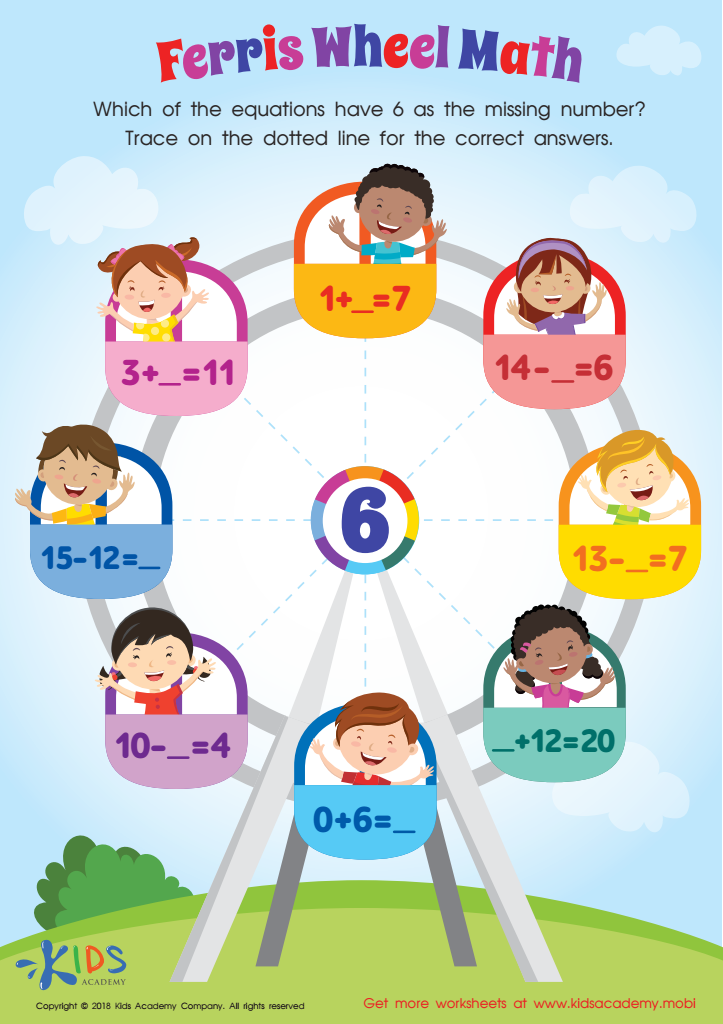
Missing Number: Ferris Wheel Math Worksheet
 Assign to My Students
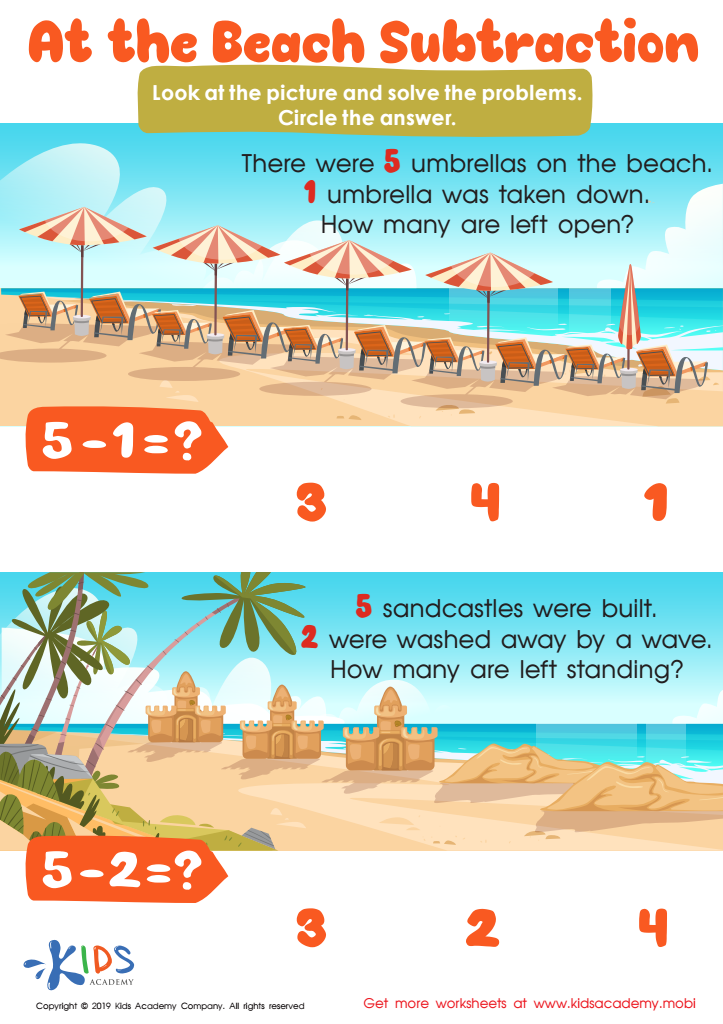
At the Beach Subtraction Worksheet
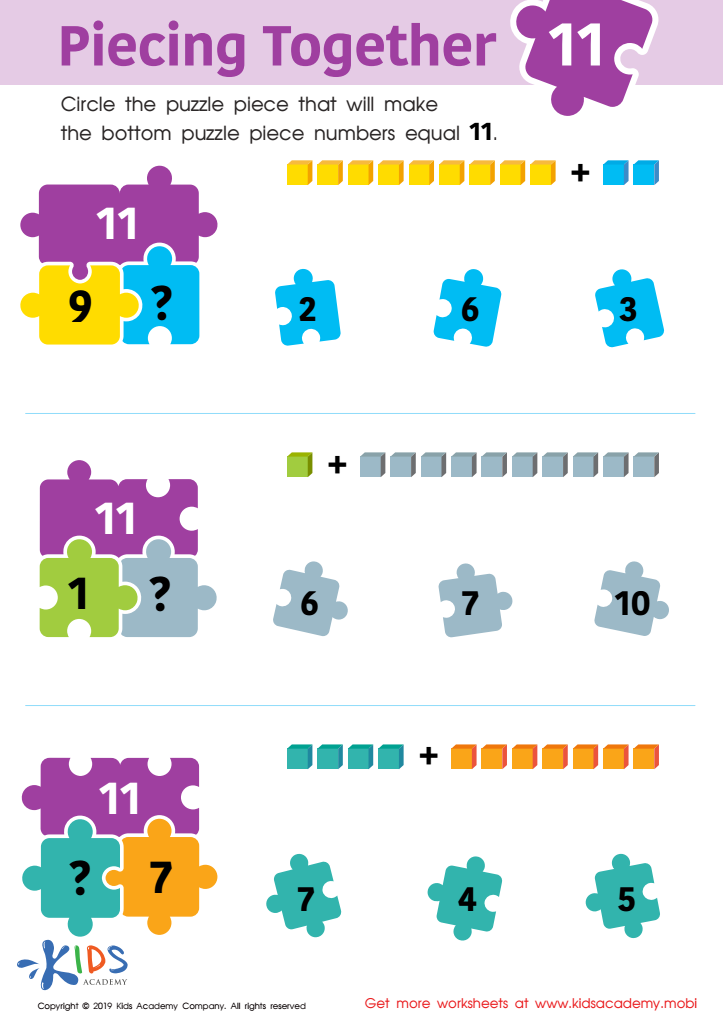
Piecing Together 11 Worksheet








Problem-solving development in Math for children ages 4-8 is a cornerstone for their cognitive growth, laying a crucial foundation for future academic successes and real-world competencies. At this tender age, children's brains are remarkably receptive to new information and skill-building. Engaging in problem-solving activities helps enhance their critical thinking and reasoning abilities, skills that are transferable to all areas of learning and everyday decision-making.
Introducing math-based problem solving encourages young children to understand concepts like patterns, sequences, and relationships between numbers. These skills are essential not only for more advanced mathematical learning but also for subjects outside of math, such as science, technology, and even literacy, as they require logical thinking and the ability to analyze and solve problems.
Moreover, early proficiency in problem-solving instills a sense of curiosity and boosts self-confidence. When children learn to tackle challenges and figure things out for themselves, they develop an "I can do this" attitude, which is invaluable for lifelong learning. Socially, these activities often involve collaboration and communication with peers, fostering teamwork and improving interpersonal skills.
Parents and teachers play a pivotal role in nurturing this aspect of development by providing supportive, engaging, and varied problem-solving experiences. Ultimately, focusing on problem-solving in early math education sets up children not just for academic success but for a proactive and capable approach to life's myriad challenges.








