Spatial understanding Math Worksheets for Ages 4-8
4 filtered results
-
From - To
Discover our engaging Spatial Understanding Math Worksheets tailored for children aged 4-8! These interactive resources are designed to enhance young learners' ability to visualize and manipulate objects in space. From identifying shapes and sizes to understanding directions and distances, our worksheets help develop essential spatial reasoning skills through fun activities. Each worksheet is crafted to align with early math curricula, promoting confidence and fostering a love for learning. Ideal for both classroom use and at-home practice, these worksheets encourage exploration and creativity. Help your child build a strong foundation in math with our thoughtfully designed spatial understanding resources!
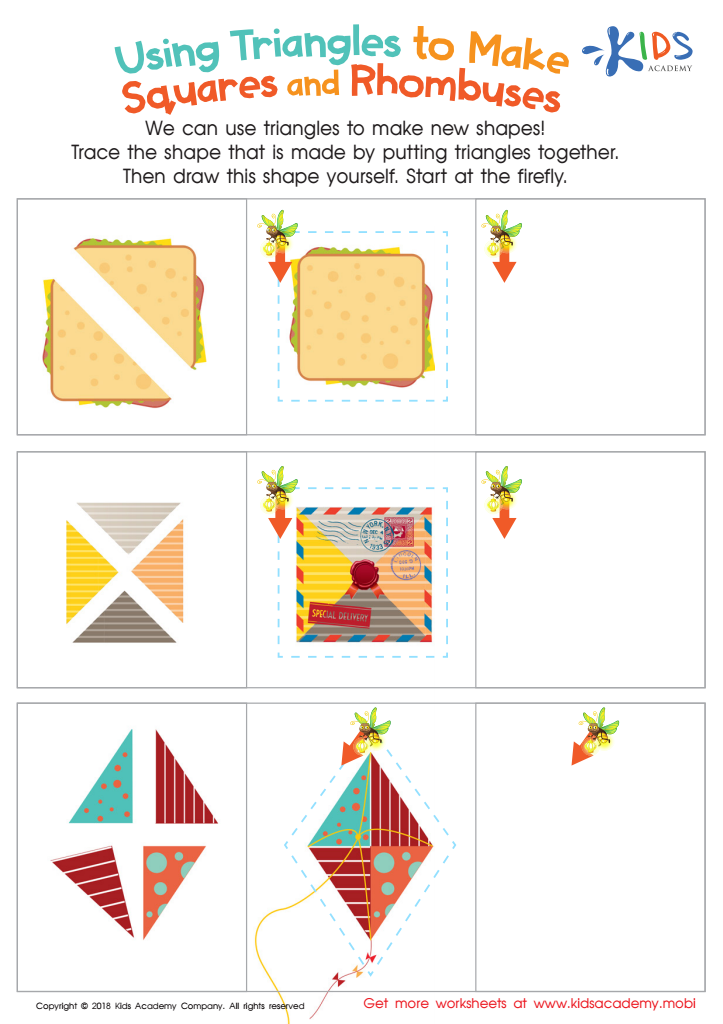
Using Triangles to Make Squares and Rhombuses Worksheet
 Assign to My Students
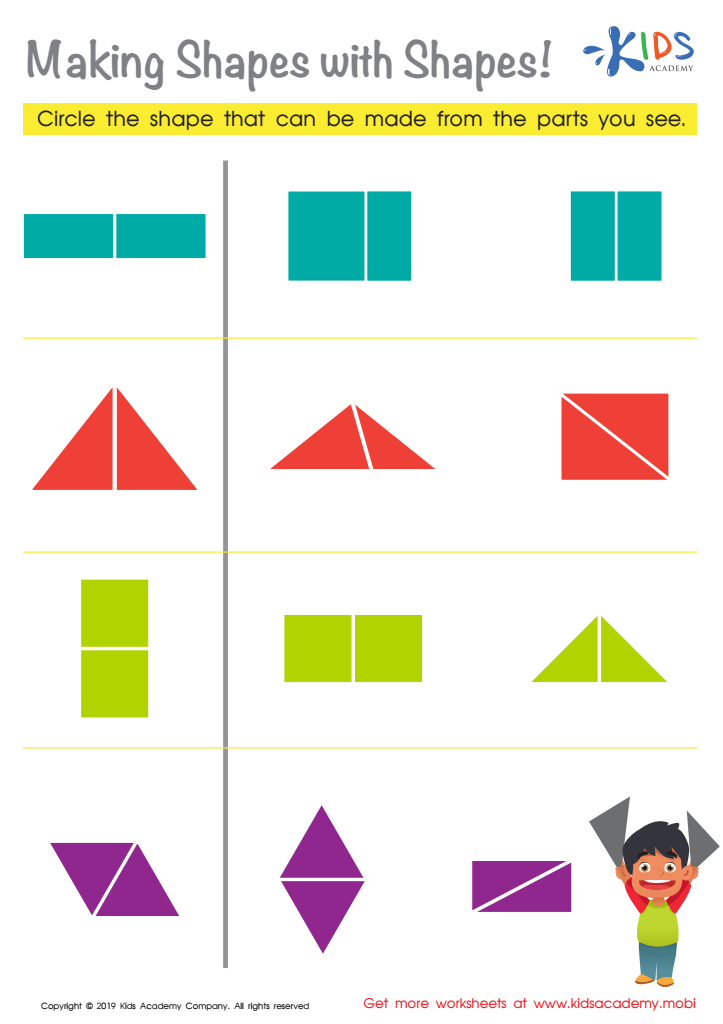
Making Shapes with Shapes Worksheet
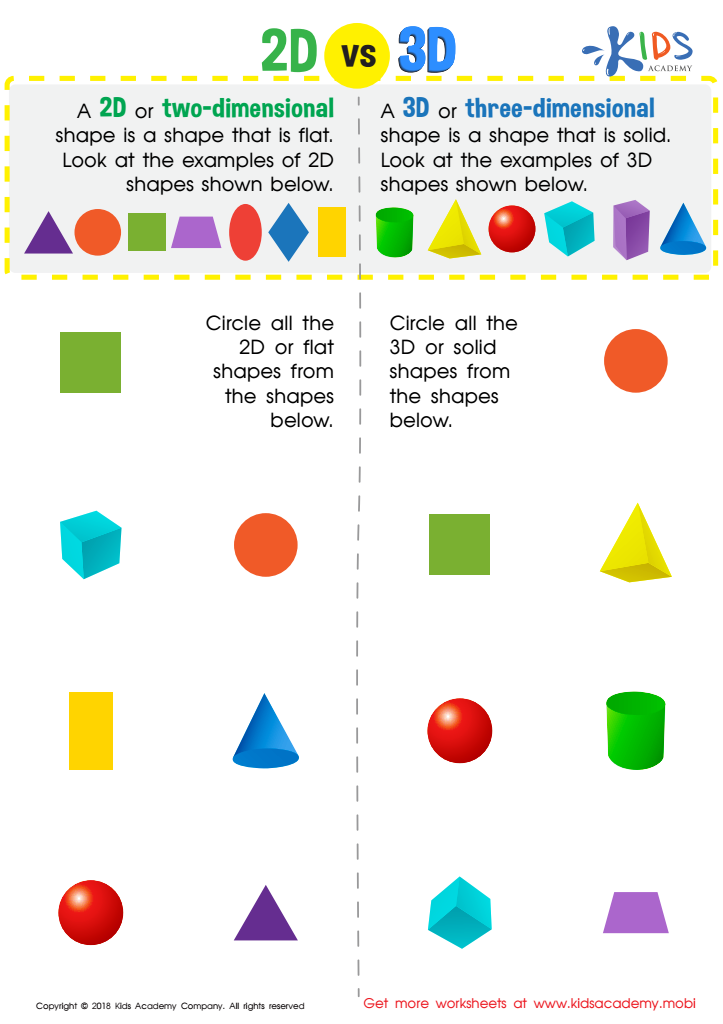
2D vs 3D Shapes Worksheet






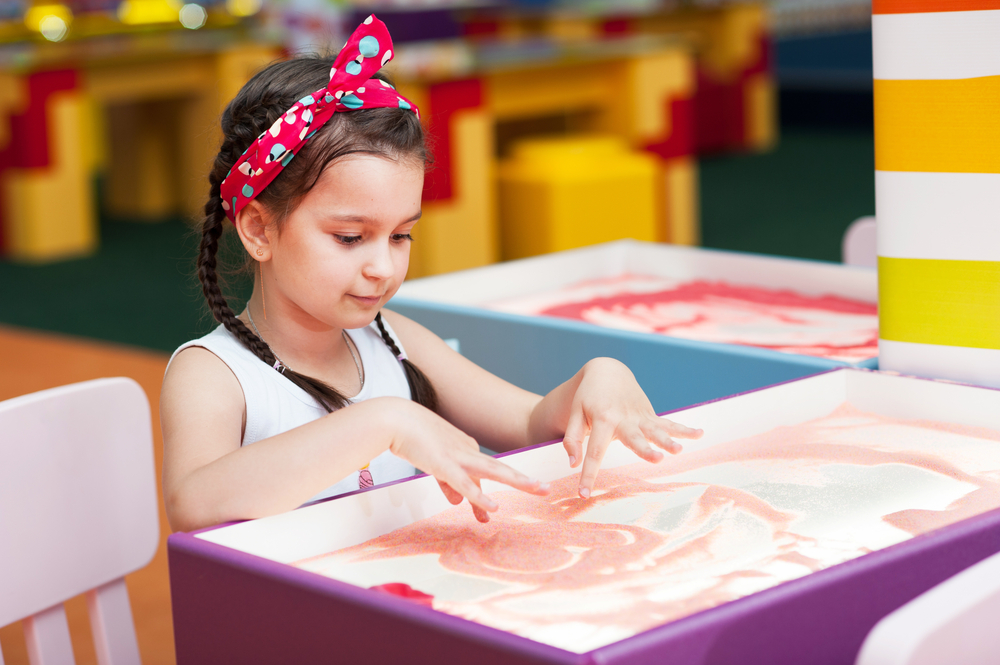
Spatial understanding is a critical aspect of mathematical development for children aged 4-8. It refers to the ability to visualize, manipulate, and reason about shapes and space. This foundation is essential for later success in not only mathematics but also science, engineering, and everyday problem-solving.
For young children, engaging with spatial concepts through activities such as building blocks, puzzles, and drawing helps strengthen their cognitive skills. These experiences allow children to recognize patterns, understand symmetry, and develop the ability to think in three dimensions. Such skills lay the groundwork for understanding more complex mathematical concepts, like geometry, measurement, and even algebra.
Parents and teachers play a crucial role in fostering spatial understanding. By providing opportunities for interactive and hands-on learning, they can enhance children's ability to visualize and solve spatial problems. Additionally, conversations around spatial concepts can boost vocabulary and communication skills.
Encouraging spatial awareness not only supports academic achievement but also fosters confidence in children. In a world increasingly driven by technology and innovation, having a strong spatial understanding is vital for future success. Overall, prioritizing spatial understanding in early education is an investment in a child's future learning and problem-solving abilities.








