
Story comprehension Math Worksheets for Ages 4-8
3 filtered results
Difficulty Level
Grade
Age
-
From - To
Subject
Activity
Standards
Unlock your child's mathematical potential with our engaging Story Comprehension Math Worksheets, designed specifically for ages 4-8! These interactive worksheets combine storytelling and math, fostering both comprehension and problem-solving skills. Each activity encourages children to read, analyze, and solve math-related stories, making learning fun and memorable. Our resources support young learners in building essential skills like addition, subtraction, and reasoning through creative narratives. Perfect for classrooms and at-home learning, our worksheets are easy to use and adaptable to various learning styles. Discover the joy of math and storytelling together—explore our collection today and watch your child thrive!
Favorites
With answer key
Interactive
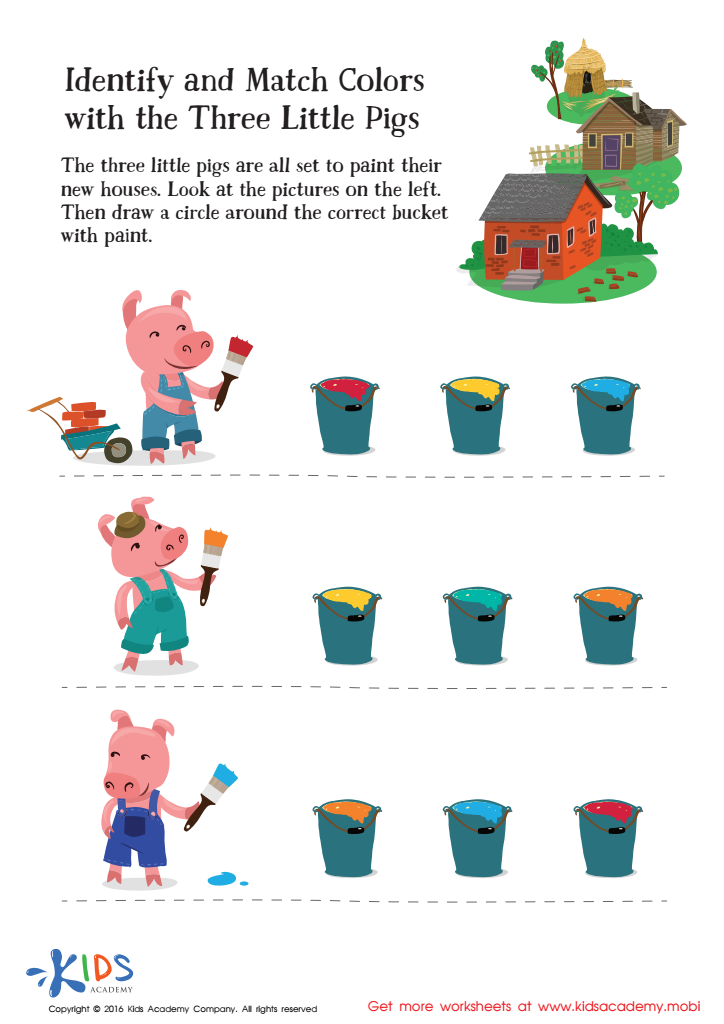
Fairy Tale Worksheet: Identify and Match Colors with Three Little Pigs
Help the 3 Little Pigs find the right color for their houses! This fun worksheet will have your child developing their problem solving and color recognition skills. It's a great way to start building the foundation for advanced logic skills. Plus, they'll love the Three Little Pigs coloring pages.
 Assign to My Students
Fairy Tale Worksheet: Identify and Match Colors with Three Little Pigs
Worksheet
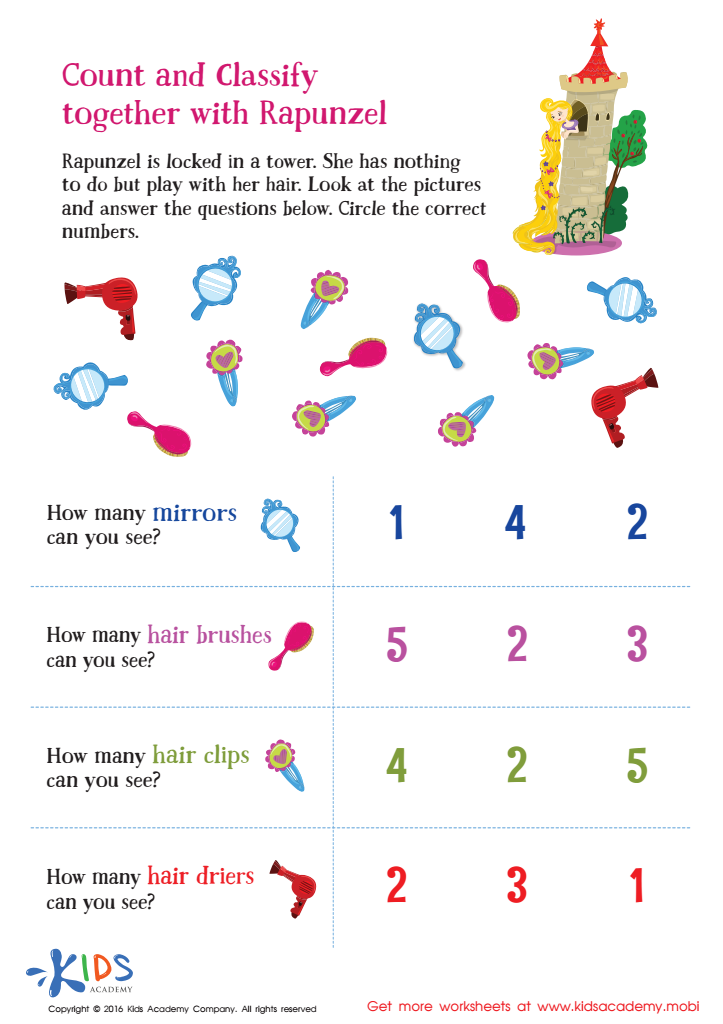
Fairy Tale Worksheet: Count and Classify with Rapunzel
Get printing and shine a light on your pre-math skills!
Fairy Tale Worksheet: Count and Classify with Rapunzel
Worksheet
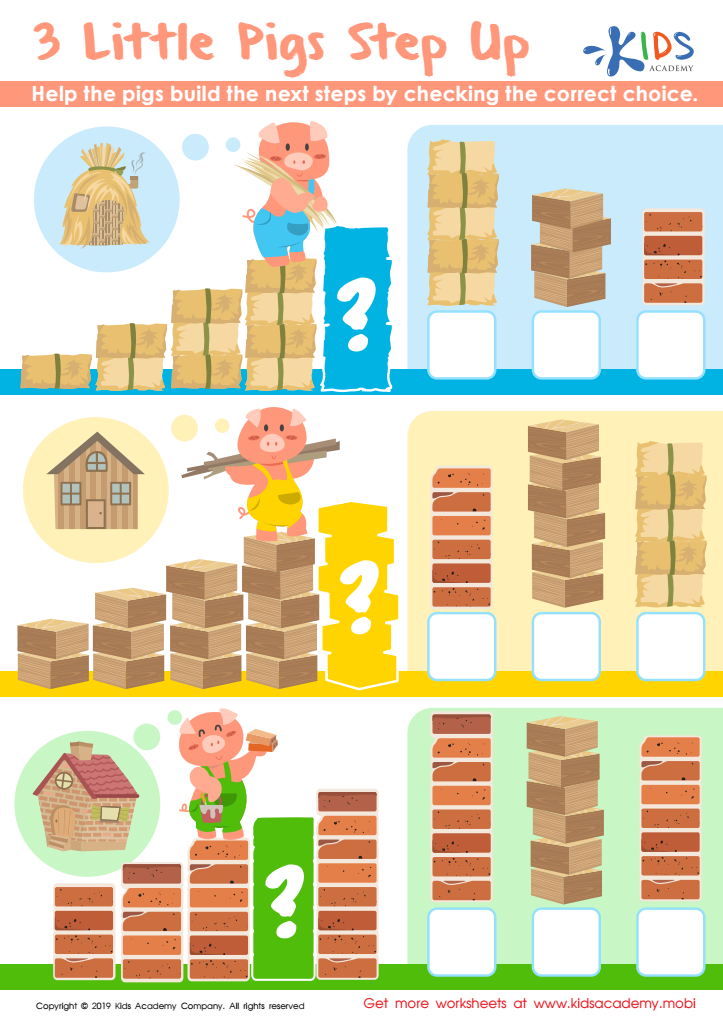
3 Little Pigs Step Up Worksheet
Test your kids' knowledge of the three little pigs' story. Ask them to tell you the important parts and then look at the pictures in this worksheet. Can they identify what's going on? They'll need to count the materials and help build the next steps by choosing the right option.
3 Little Pigs Step Up Worksheet
Worksheet
Join Kids Academy for Free
Who is primarily going to use this learning content?








Story comprehension in math for children aged 4-8 is crucial for several reasons. Firstly, this skill bridges literacy and numeracy, allowing young learners to contextualize mathematical concepts within relatable narratives. When children encounter math through stories, they engage more deeply, making abstract ideas tangible and relevant. This approach fosters critical thinking, as students learn to extract information, identify patterns, and solve problems within a narrative framework.
Furthermore, story-based math encourages a positive attitude towards mathematics. Engaging narratives can captivate children’s imaginations, reducing anxiety often associated with math. Parents and teachers play a vital role in this process; by employing stories that incorporate mathematical principles, they can motivate children to explore and enjoy learning.
Moreover, supporting story comprehension sharpens listening and interpretation skills. Young learners become adept at following sequences of events, understanding cause and effect, and predicting outcomes, all essential skills in both math and reading. In essence, the integration of story comprehension in math education not only enhances cognitive development but also prepares children for future academic success. Ultimately, nurturing these skills can lead to more confident, capable learners, fostering lifelong enthusiasm for both literacy and mathematics.








