
Understand sequences Math Worksheets for Ages 4-8
5 filtered results
Difficulty Level
Grade
Age
-
From - To
Subject
Activity
Standards
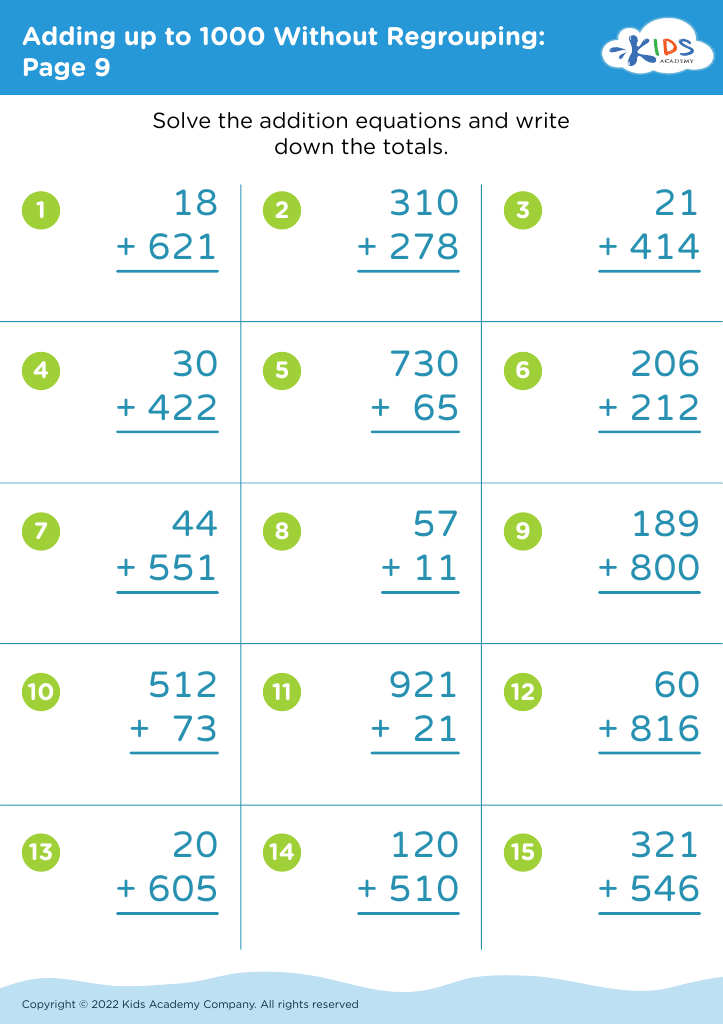
Unlock your child's mathematical potential with our "Understand Sequences" math worksheets, designed specifically for ages 4-8! These engaging and interactive resources help young learners grasp essential sequencing skills through fun activities and visual aids. From ordering objects and numbers to recognizing patterns, our worksheets provide a solid foundation for early math concepts. Perfect for home learning or classroom use, our carefully crafted materials boost confidence and reinforce skills through repetitive practice. Watch as your child's understanding of sequences blooms, laying the groundwork for future mathematical success. Explore our collection today and make learning an enjoyable adventure for your little one!
Favorites
With answer key
Interactive
Join Kids Academy for Free
Who is primarily going to use this learning content?






Understanding sequences in math is crucial for children aged 4-8 as it lays the foundation for more complex mathematical concepts in their future education. Sequences help children recognize patterns, which enhance their critical thinking and problem-solving skills. For example, when children learn to recognize a simple pattern, such as "2, 4, 6, 8," they are not only identifying numbers but also beginning to understand the concept of addition and counting by twos.
Furthermore, by grasping sequences, children develop better organizational skills, as they learn to arrange information logically. This organization transcends mathematics and benefits them in reading, writing, and other subjects.
Additionally, introducing sequences fosters curiosity and engagement in learning. When parents or teachers encourage children to explore patterns in everyday life—through nature, art, or even music—they create meaningful connections that make math relevant and enjoyable.
Ultimately, caring about sequencing in math equips kids with the necessary tools to navigate complex tasks, paving the way for academic success and confidence. By prioritizing this area of learning, parents and teachers can significantly impact a child's educational journey, ensuring they have the skills needed for future challenges while fostering a love for learning.








