Understanding area Math Worksheets for Ages 4-8
3 filtered results
-
From - To
Welcome to our "Understanding Area Math Worksheets" page for children aged 4-8! These engaging and interactive worksheets are designed to help young learners grasp the concept of area through fun activities and visual aids. Tailored to spark curiosity and foster a solid foundation in math, these resources introduce basic principles of measuring space in two dimensions. Children will enjoy measuring areas, counting squares, and solving simple problems, all while developing critical thinking skills. Perfect for home or classroom use, our worksheets encourage hands-on exploration and reinforce mathematical concepts in an enjoyable way. Start your child’s journey to mathematical understanding today!
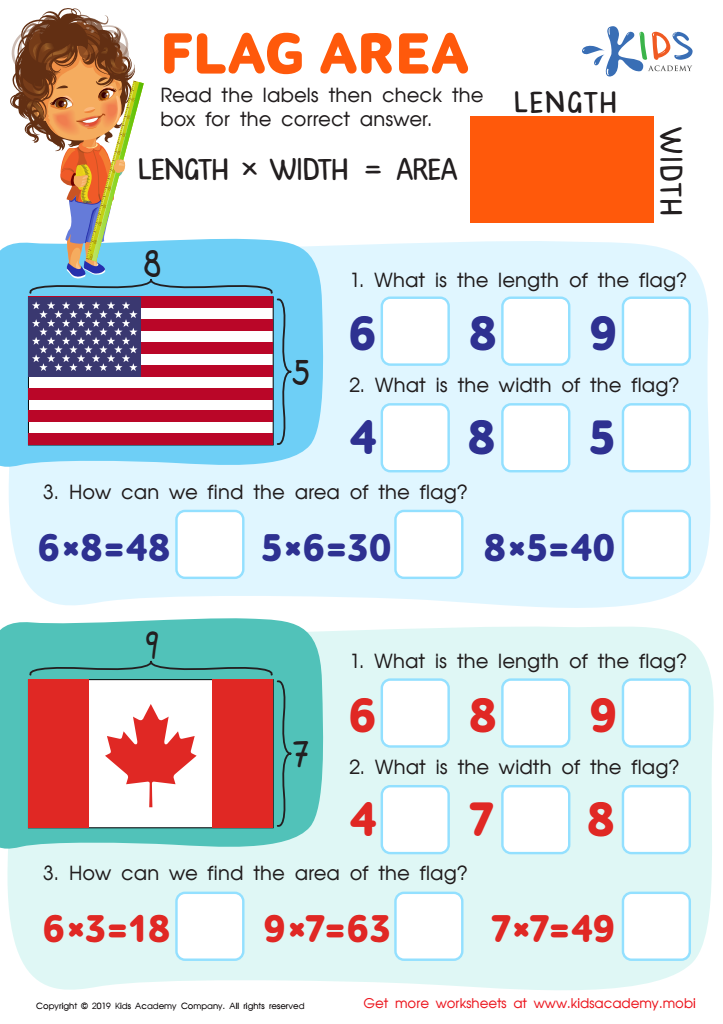
Flag Area Worksheet
 Assign to My Students
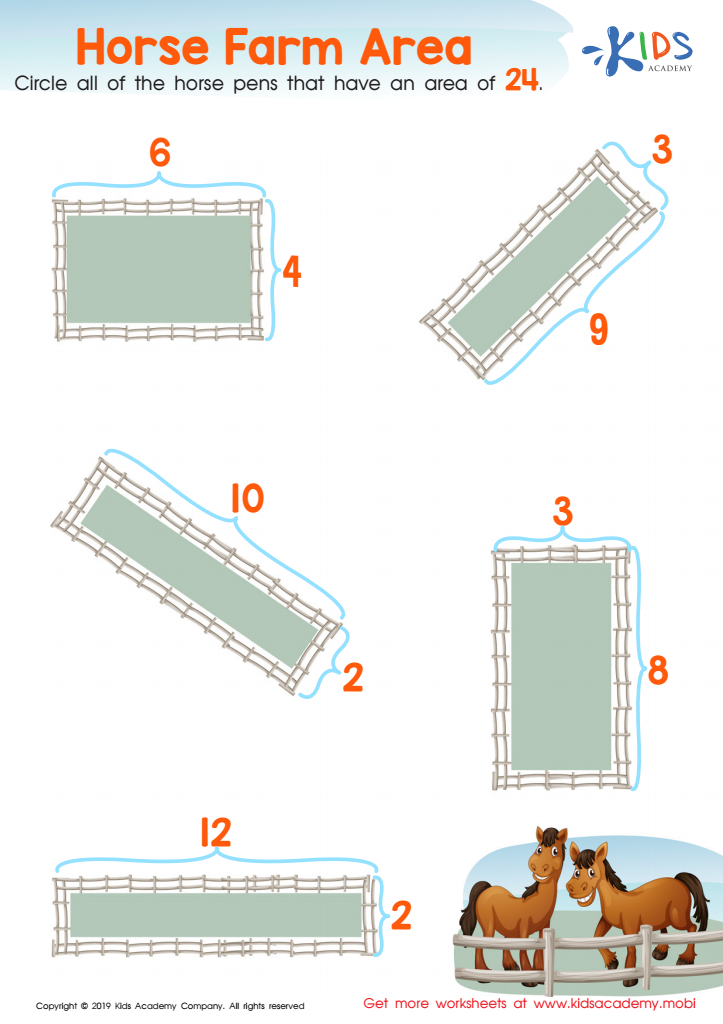
Horse Farm Area Worksheet
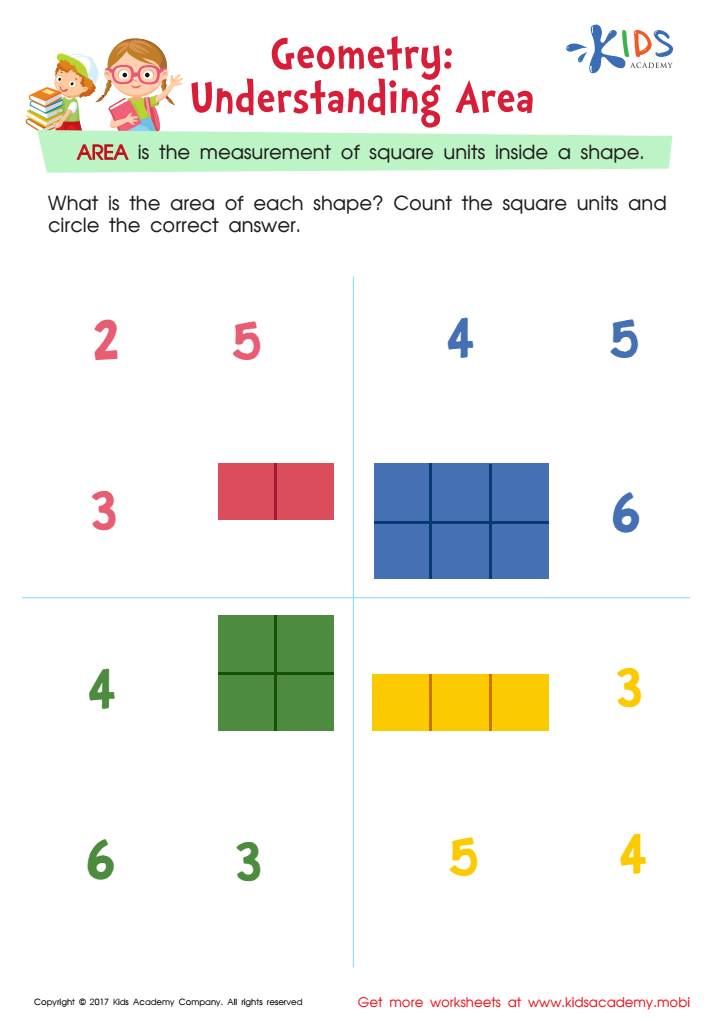
Understanding Area Worksheet








Understanding area math is crucial for children aged 4-8 because it lays the foundation for their spatial awareness and critical thinking skills. At this age, kids are naturally curious and keen to explore their surroundings. Engaging them in area concepts through playful activities helps to make abstract math tangible. For instance, when children measure and compare the areas of different objects or play with geometric shapes, they develop a practical understanding of space and measurement.
Moreover, grasping area enhances problem-solving abilities. It encourages children to think logically and approach challenges with confidence. This foundational skill also supports later learning in geometry, arithmetic, and even science, as they begin to explore concepts like perimeter and volume.
Parents and teachers play a pivotal role in fostering this comprehension. By integrating area activities in everyday situations—like cooking, crafting, or gardening—adults can help children relate math to real-world scenarios. This relevance bolsters interest and motivation. Ultimately, nurturing an understanding of area math not only fosters mathematical proficiency but also empowers young learners with skills they will use throughout their educational journey and beyond. Engaging children in these fundamental concepts ensures they grow into confident, capable individuals.








