
Understanding base ten Math Worksheets for Ages 4-8
3 filtered results
Difficulty Level
Grade
Age
-
From - To
Subject
Activity
Standards
Discover our engaging base ten math worksheets designed for children ages 4-8. These resources help young learners grasp the foundational concepts of place value and number grouping through interactive and hands-on activities. Our worksheets offer a progressive learning approach, aiding children in visualizing numbers and understanding how tens and ones work together. With vibrant illustrations and relatable themes, your child will find math fun and exciting. Perfect for both classroom and home use, these worksheets support early math skills, ensuring your little one builds a strong understanding of base ten concepts! Explore our collection and enhance math confidence today!
Favorites
With answer key
Interactive
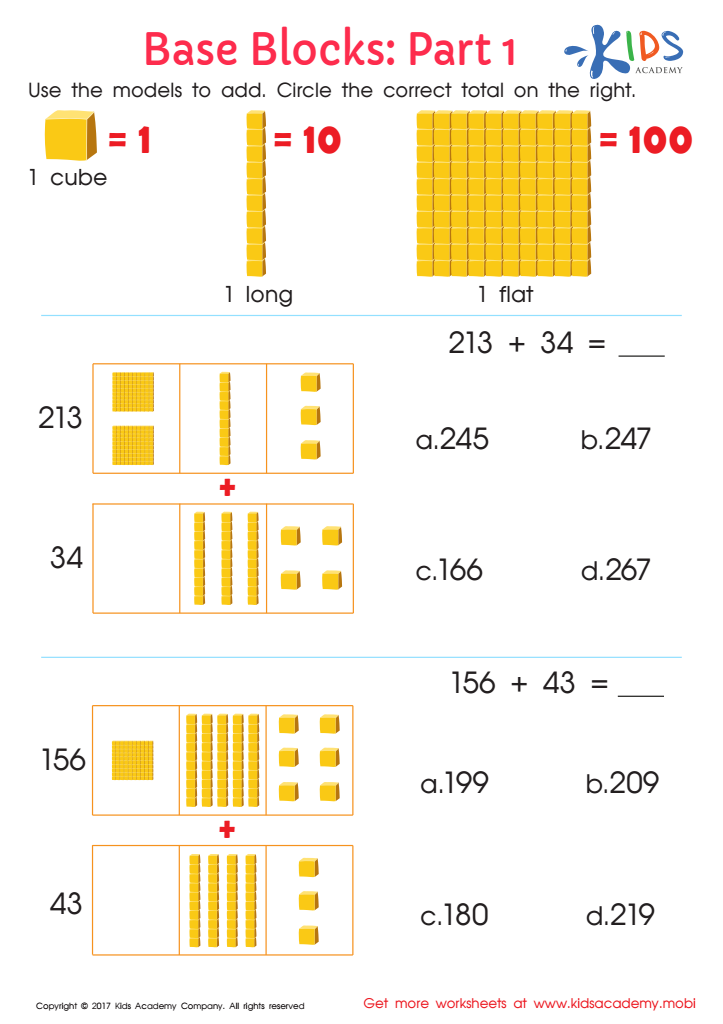
Base Ten Blocks Worksheet: Part 1
They promote numeracy and are a great substitute when kids don't have access to physical blocks.
 Assign to My Students
Base Ten Blocks Worksheet: Part 1
Worksheet
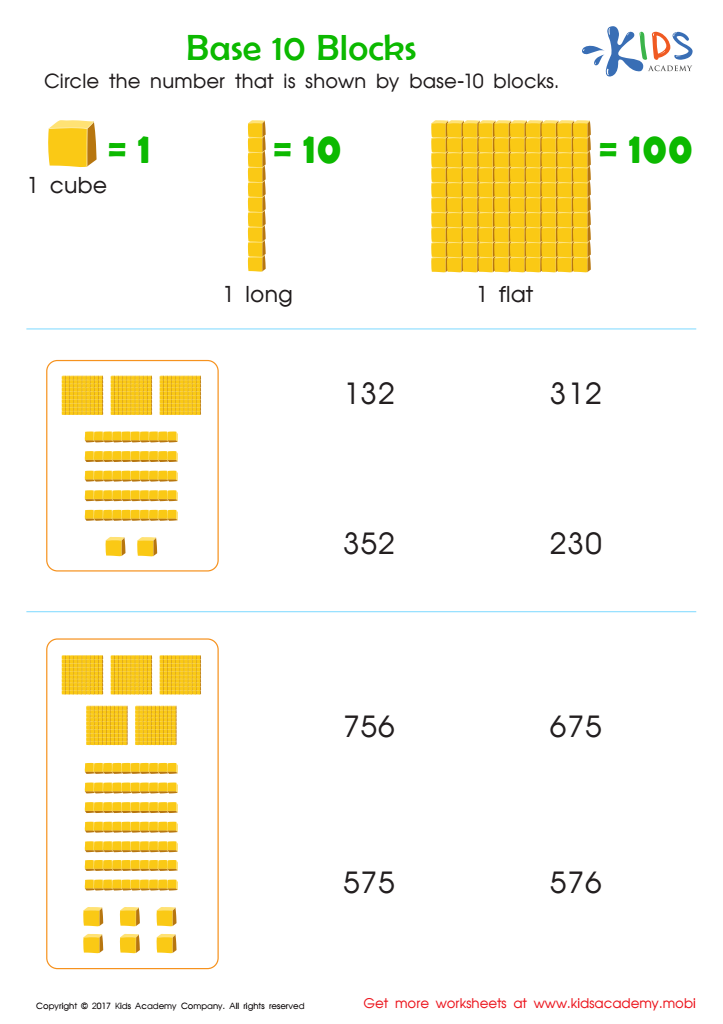
Base Ten Blocks Worksheet
When school ends, your child can still practice place value at home with this base ten blocks worksheet. They'll count and circle the right number, gaining mastery of the concept. It's a fun, easy way to hone their skills!
Base Ten Blocks Worksheet
Worksheet
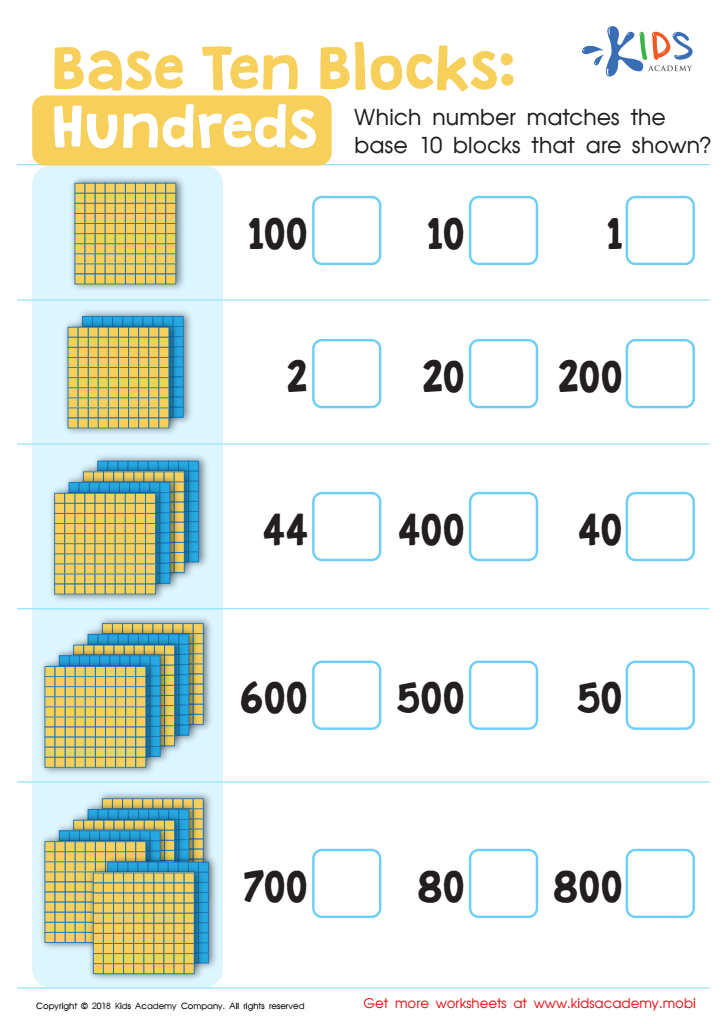
Base Ten Blocks: Hundreds Worksheet
Help your child overcome their dislike of math by guiding them with this base ten blocks worksheet. Count the blocks and answer the questions together. Ask them which number matches the base ten blocks shown. This will help them solve math problems more easily.
Base Ten Blocks: Hundreds Worksheet
Worksheet
Join Kids Academy for Free
Who is primarily going to use this learning content?







Understanding base ten math is essential for children ages 4-8 as it serves as the foundation for their future mathematical learning. This system, which organizes numbers based on the powers of ten, simplifies complex concepts while fostering number sense. When children grasp the base ten system, they can easily understand how numbers are built and related, moving beyond mere memorization of addition and subtraction facts.
For parents and teachers, facilitating this understanding means enabling children to develop critical thinking and problem-solving skills necessary for more advanced math, such as multiplication and division. It also enhances their ability to recognize patterns and make sense of numerical relationships, which are vital skills in both math and everyday life.
Moreover, early engagement with the base ten system promotes confidence and a positive attitude toward mathematics. Children who struggle with foundational concepts often lose interest and may develop a fear of math, which can have long-lasting effects on their academic journey. By prioritizing base ten understanding, parents and teachers can help young learners establish a solid mathematical foundation that supports continuous learning, ultimately setting the stage for future educational success.








