Understanding biodiversity Math Worksheets for Ages 4-8
3 filtered results
-
From - To
Unlock the wonders of nature with our "Understanding Biodiversity Math Worksheets" designed for children aged 4-8! These engaging worksheets combine foundational math skills with intriguing concepts about biodiversity, allowing young learners to explore the variety of life in our environment. Through interactive activities, kids will practice essential math tasks while learning about ecosystems, habitats, and species diversity. Perfect for classrooms or home learning, our resources foster a love for math and science alike, stimulating curiosity about the world around them. Dive into this fun and educational experience, where young minds can develop critical thinking and problem-solving skills through the lens of biodiversity!
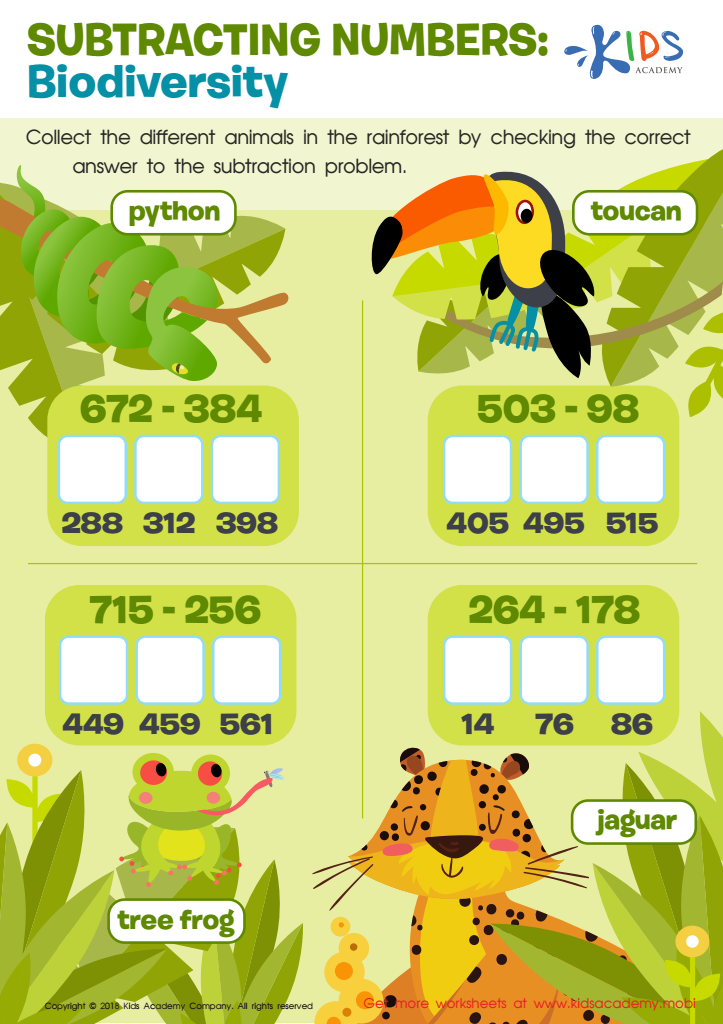
Subtracting Numbers: Biodiversity Worksheet
 Assign to My Students
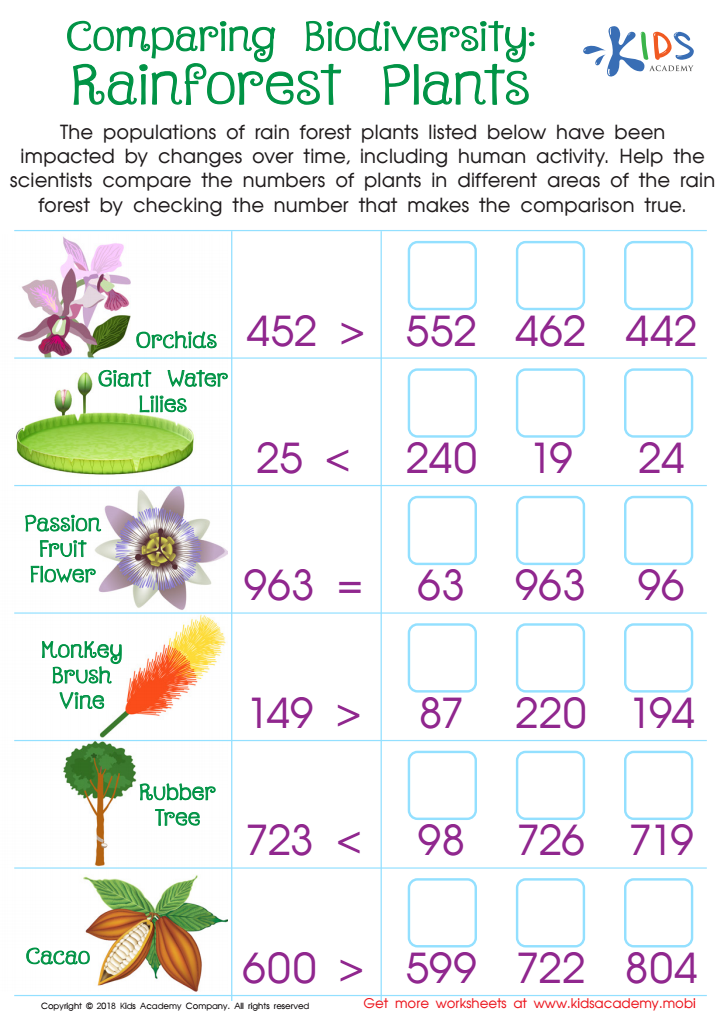
Comparing Biodiversity: Rainforest Plants Worksheet
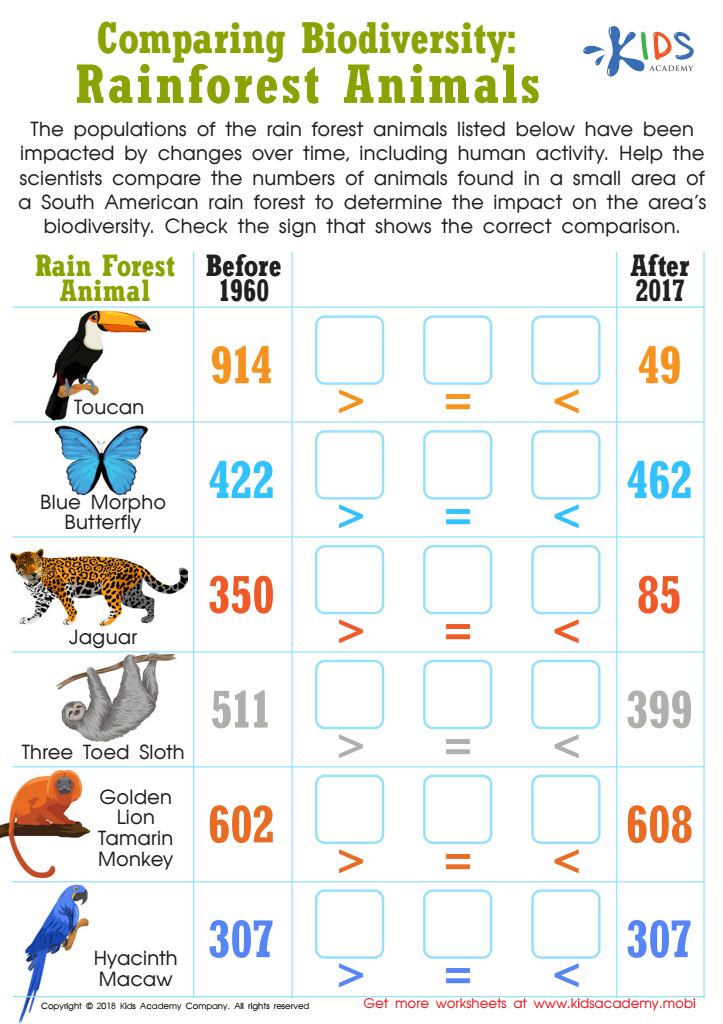
Comparing Biodiversity: Rainforest Animals Worksheet








Understanding biodiversity is crucial for children aged 4-8, and parents and teachers play a pivotal role in fostering this awareness through math. At this developmental stage, kids are naturally curious about the environment and its many forms of life. Introducing concepts of biodiversity alongside math helps them connect quantitative skills with real-world applications, enhancing both their cognitive and emotional growth.
Math can be used to explore biodiversity by engaging children in activities like counting species in a local park, measuring plant growth, or charting animal populations. This integrates mathematical skills—such as counting, addition, subtraction, and basic statistics—with ecological awareness. It lays the foundation for critical thinking and problem-solving, as children learn to ask questions, process data, and draw conclusions about the living world around them.
Moreover, understanding biodiversity encourages empathy and responsibility towards nature. When children learn about different species and their roles in the ecosystem, they begin to make connections between their actions and environmental health. This blends seamlessly with subjects like science and geography, promoting a holistic educational approach. Engaging children with biodiversity through math not only enhances their learning experience but also cultivates future stewards of the environment, fostering a deep-rooted appreciation for the natural world.








