Understanding equations Math Worksheets for Ages 4-8
7 filtered results
-
From - To
Discover our exciting "Understanding Equations" math worksheets designed for children aged 4-8! These engaging resources help young learners build a solid foundation in mathematical reasoning. With a variety of activities focused on simple equations, addition, subtraction, and number comparisons, children will gain confidence in their problem-solving skills. Each worksheet promotes critical thinking through fun, interactive exercises tailored to their developmental level. Whether at home or in the classroom, our worksheets provide teachers and parents with effective tools to make math enjoyable and accessible. Encourage your child's love for learning math today and watch their skills flourish!
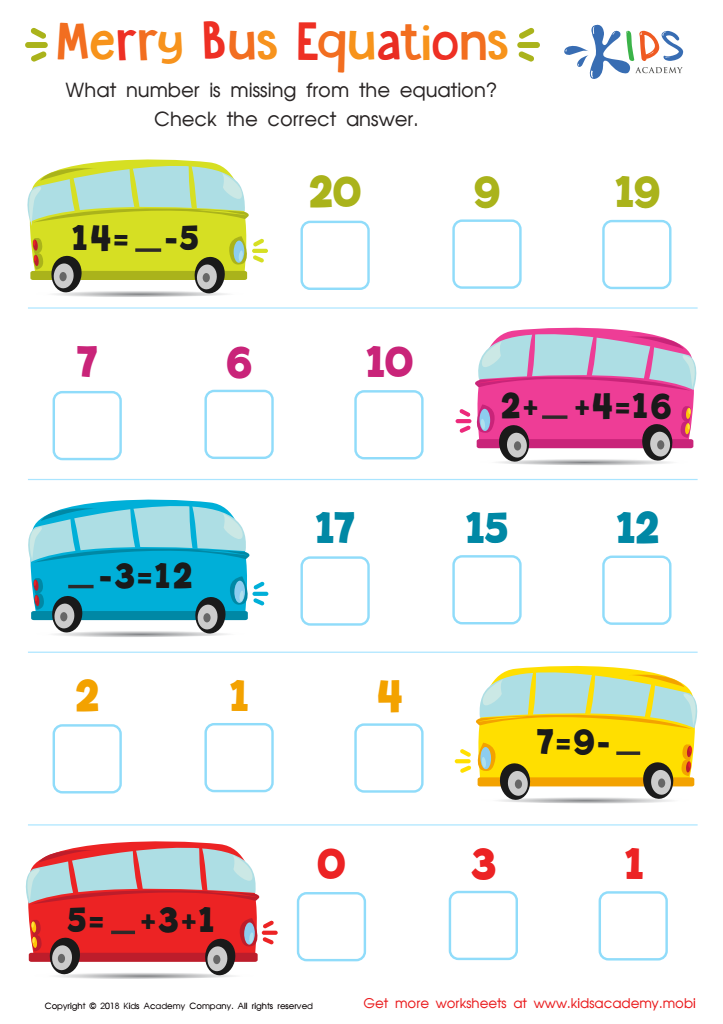
Merry Bus Equations Worksheet
 Assign to My Students
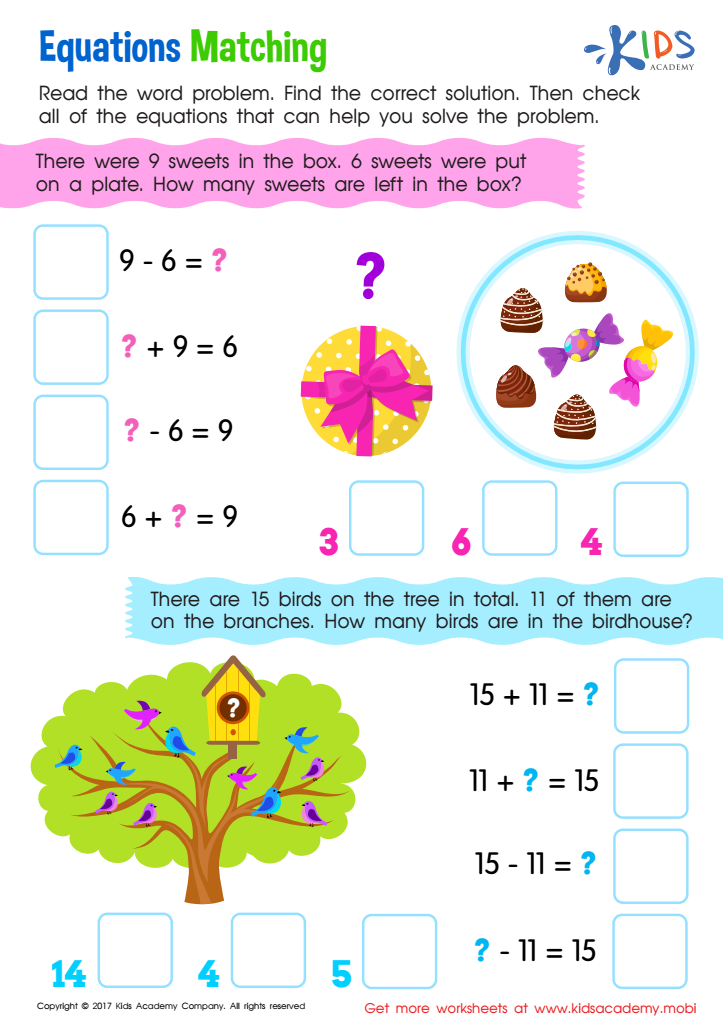
Equations Matching Word Problems Worksheet
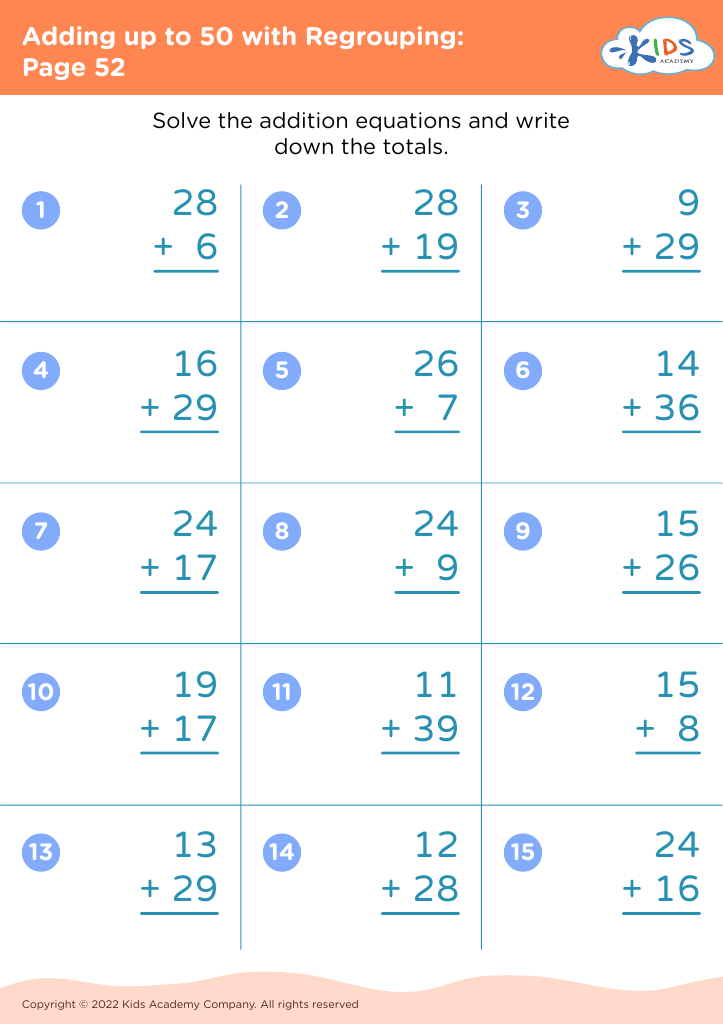
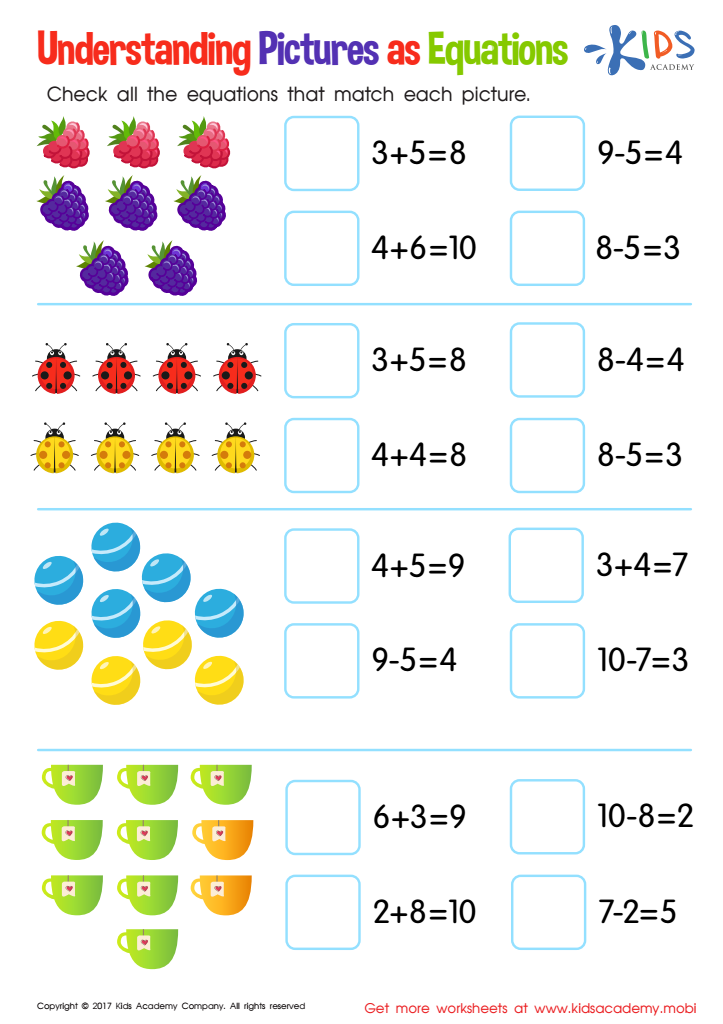
Understanding Pictures as Equations Worksheet
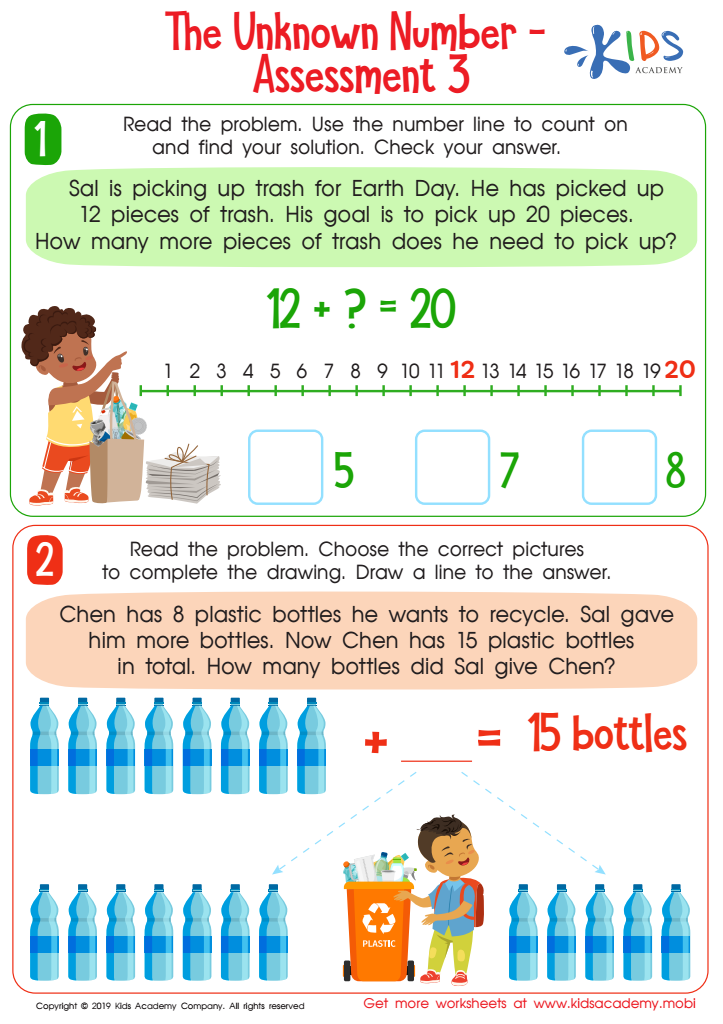
The Unknown Number - Assessment 3 Worksheet
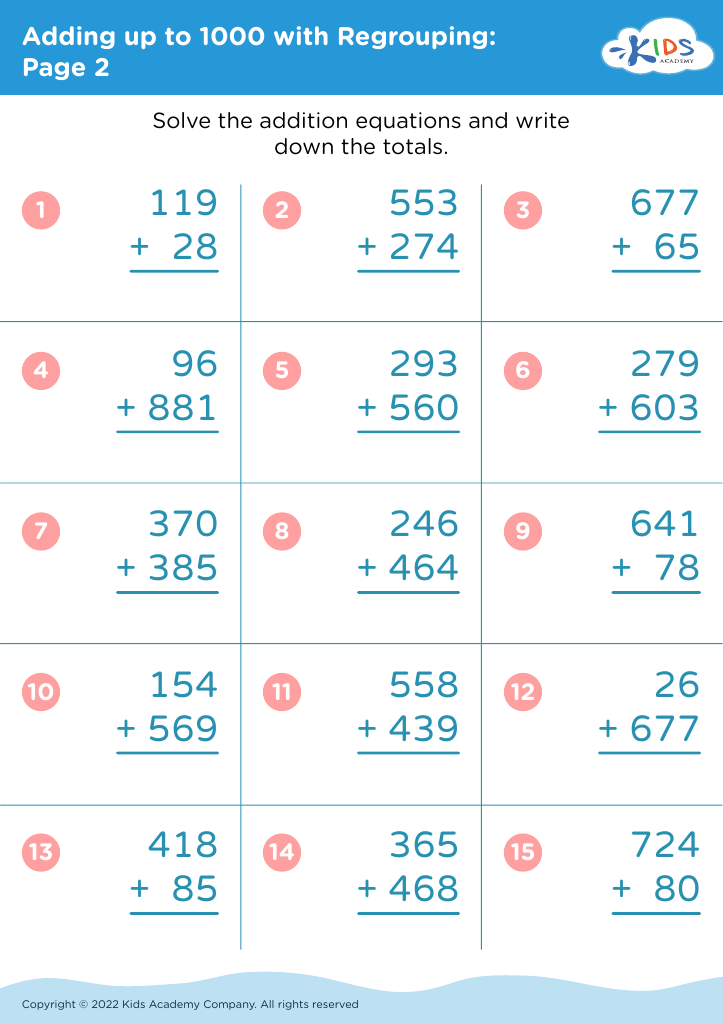
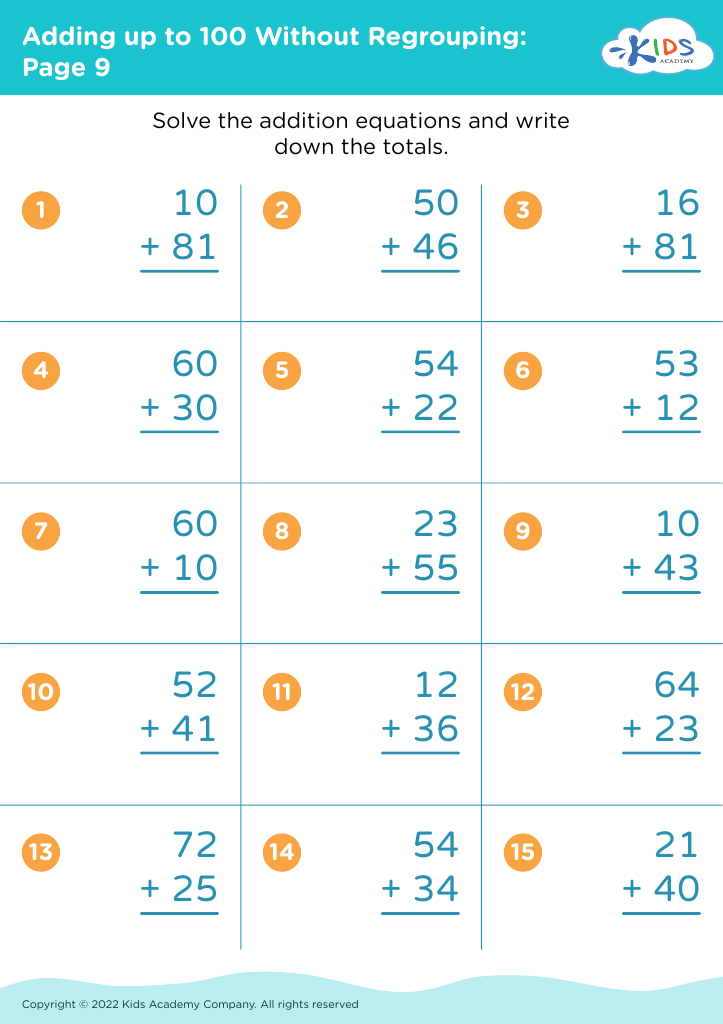








Understanding equations is vital for children aged 4-8 as it lays the foundation for mathematical thinking and problem-solving skills. At this stage, children are naturally curious and begin to comprehend relationships between numbers, which helps them make sense of the world around them. Learning equations, even in simple terms, introduces them to the idea of balance and equality, concepts that are essential in both math and everyday life.
For parents and teachers, fostering this understanding encourages critical thinking and builds confidence in handling numbers. When children grasp the basics of equations, they enhance their ability to tackle more complex mathematical concepts in later years, reducing anxiety around math. Early exposure to equations facilitates pattern recognition, logical reasoning, and the ability to approach problems systematically.
Additionally, comprehensive math skills contribute to academic success across various subjects—math is integrated into science, economics, and even art. By nurturing mathematical literacy early on, parents and teachers equip children with skills that are applicable in real-world situations, preparing them not only for future academic endeavors but also for life challenges. Thus, understanding and embracing equations can inspire a love for learning and a strong foundation for lifelong success.








