
Visual interpretation Math Worksheets for Ages 4-8
8 filtered results
Difficulty Level
Grade
Age
-
From - To
Subject
Activity
Standards
Enhance your child's mathematical journey with our engaging Visual Interpretation Math Worksheets, designed specifically for ages 4-8. These interactive resources help young learners develop essential skills, such as pattern recognition, comparison, and reasoning, through vibrant visuals and relatable scenarios. Each worksheet features fun illustrations that encourage creativity while making math concepts easier to grasp. Perfect for independent practice or guided learning sessions, our worksheets promote critical thinking and analysis in a playful manner. Whether at home or in the classroom, inspire a love for math with our thoughtfully crafted visual interpretation activities that cater to different learning styles and abilities!
Favorites
With answer key
Interactive
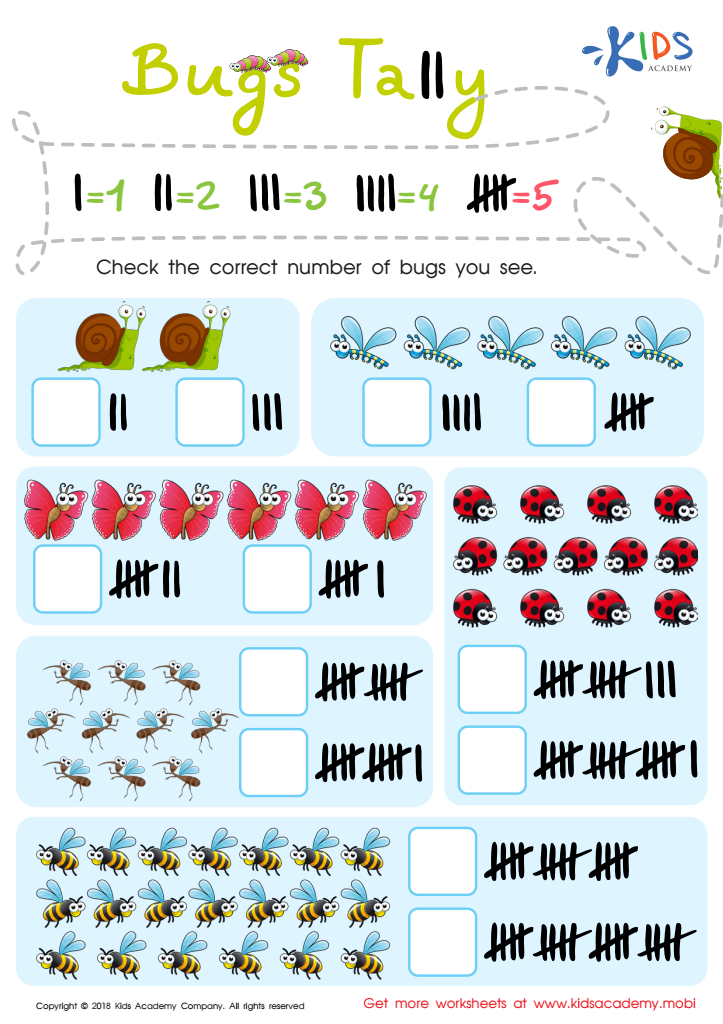
Bugs Tally Worksheet
This fun worksheet uses friendly bugs to help young mathematicians learn numbers and tally marks. They'll gain real-world skills to help with adding, subtracting and counting. Representations will solidify number reasoning, aiding with game playing and more.
 Assign to My Students
Bugs Tally Worksheet
Worksheet
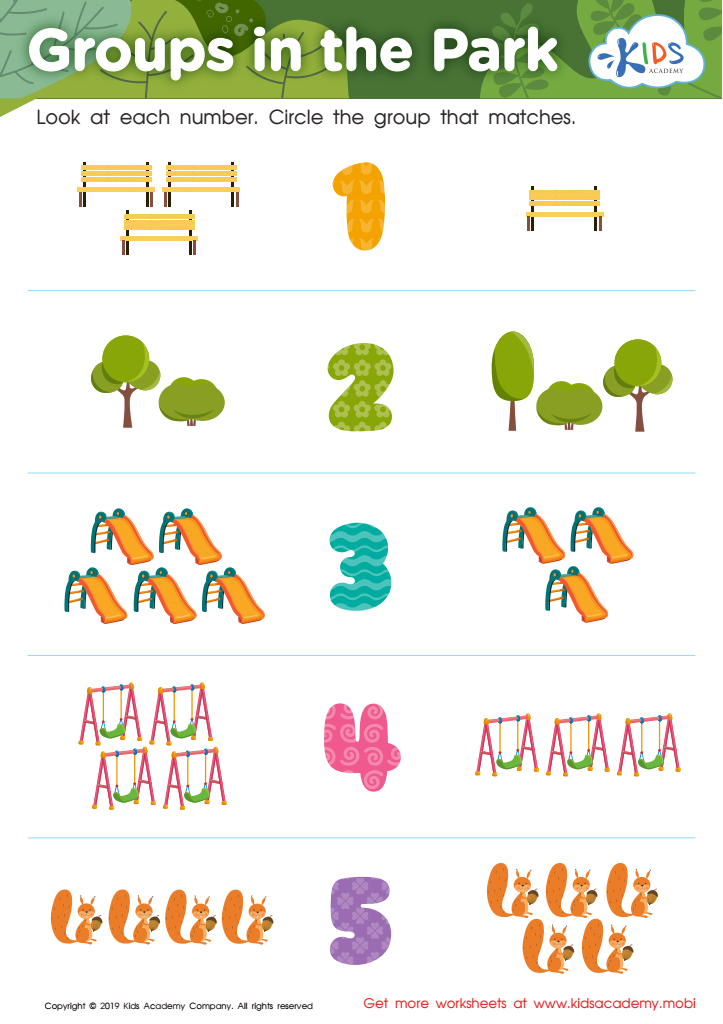
Groups in the Park Worksheet
Take your kids to the park and let them enjoy the freedom to play! Ask them what they love doing most and study a picture together - name items and count objects in the sets, then circle the correct one. It's a fun way for your kids to learn.
Groups in the Park Worksheet
Worksheet
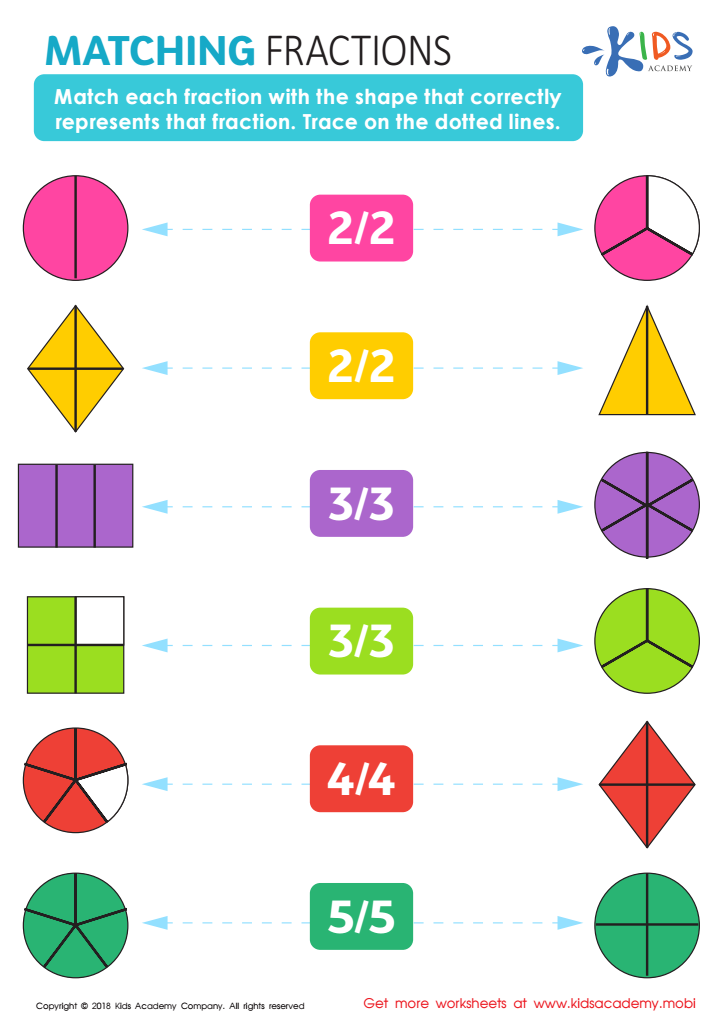
Matching Fractions Worksheet
This worksheet uses colorful images to engage students. On the left are six shapes, mirrored on the right, with fractions in the middle. Students must match up the fraction with the right shape. It's a fun way to sharpen fractions skills!
Matching Fractions Worksheet
Worksheet
Join Kids Academy for Free
Who is primarily going to use this learning content?








Visual interpretation in math for children aged 4-8 is crucial for fostering foundational skills that extend beyond numbers and operations. At this developmental stage, children's cognitive abilities are highly visual and tactile, making it essential to incorporate visual aids in mathematical learning. By using diagrams, pictures, and hands-on materials, parents and teachers can help children grasp abstract concepts like addition, subtraction, and basic geometric shapes more effectively.
Visual interpretation encourages critical thinking, as children learn to decipher information presented in various forms. It promotes engagement and makes learning math enjoyable, reducing anxiety associated with the subject. When children visualize mathematical problems, they develop deeper comprehension and better retention of concepts.
Moreover, mastering visual interpretation equips children with the tools for problem-solving in real-life scenarios. For instance, understanding how to read graphs or interpret measurement visuals is a skill transferable to future academic pursuits and everyday situations.
In summary, nurturing visual interpretation skills in young learners not only enhances their mathematical abilities but also lays the groundwork for a lifetime of critical thinking and problem-solving proficiency. Parents and teachers should prioritize these teaching methods to support healthy and balanced growth in early mathematics education.








