Comparing heights Measurement Worksheets for Ages 4-8
3 filtered results
-
From - To
Introduce your little learners to the world of measurement with our engaging "Comparing Heights Measurement Worksheets" designed for ages 4-8. These fun, educational worksheets help children understand and compare different heights, enhancing their observation and analytical skills. Featuring colorful illustrations and interactive exercises, kids will enjoy measuring and comparing objects while developing essential math skills. Perfect for classroom or home use, these worksheets support early learners in identifying taller, shorter, and equal heights in a playful, intuitive manner. Boost your child's confidence in math with our expertly crafted printable resources, aiding their overall academic growth.
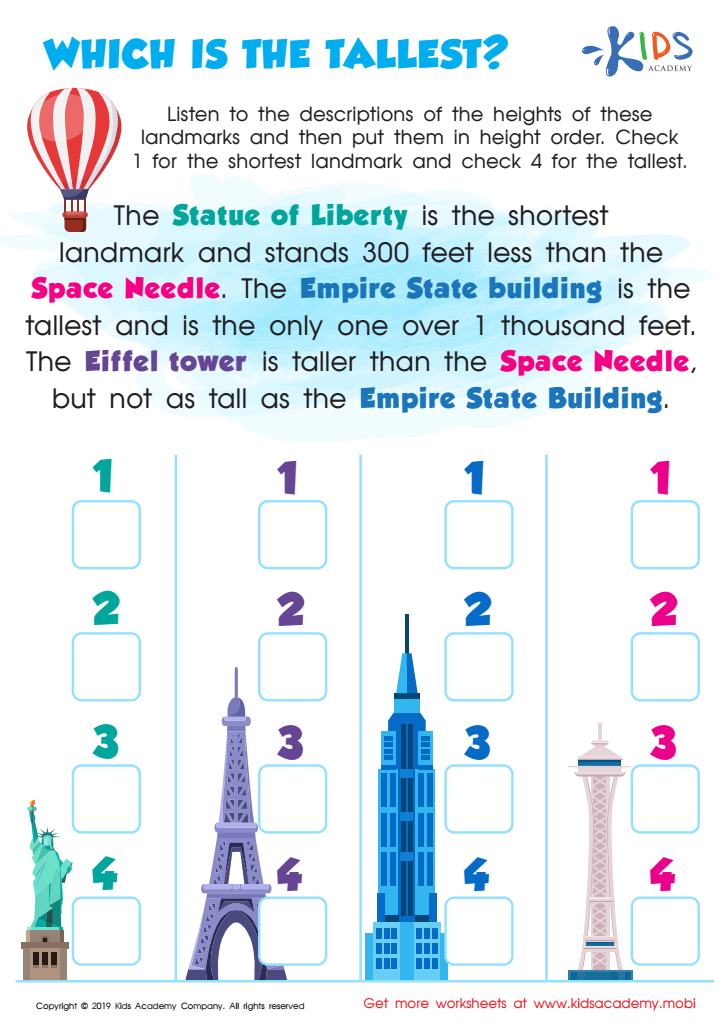
Which is the Tallest? Worksheet
 Assign to My Students
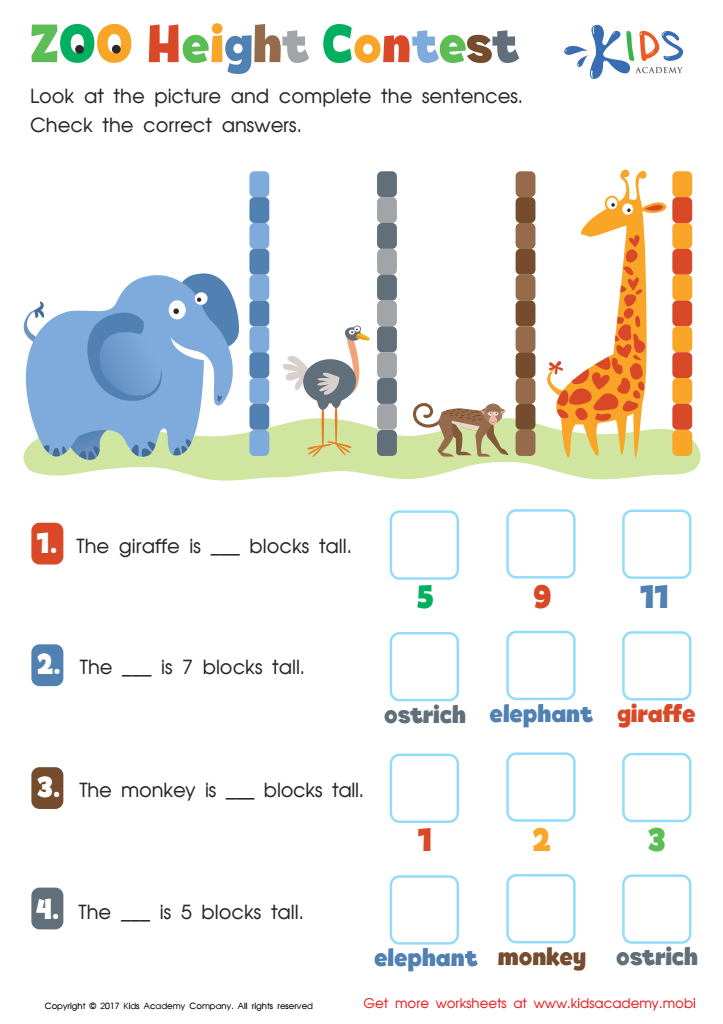
Zoo Height Contest Worksheet
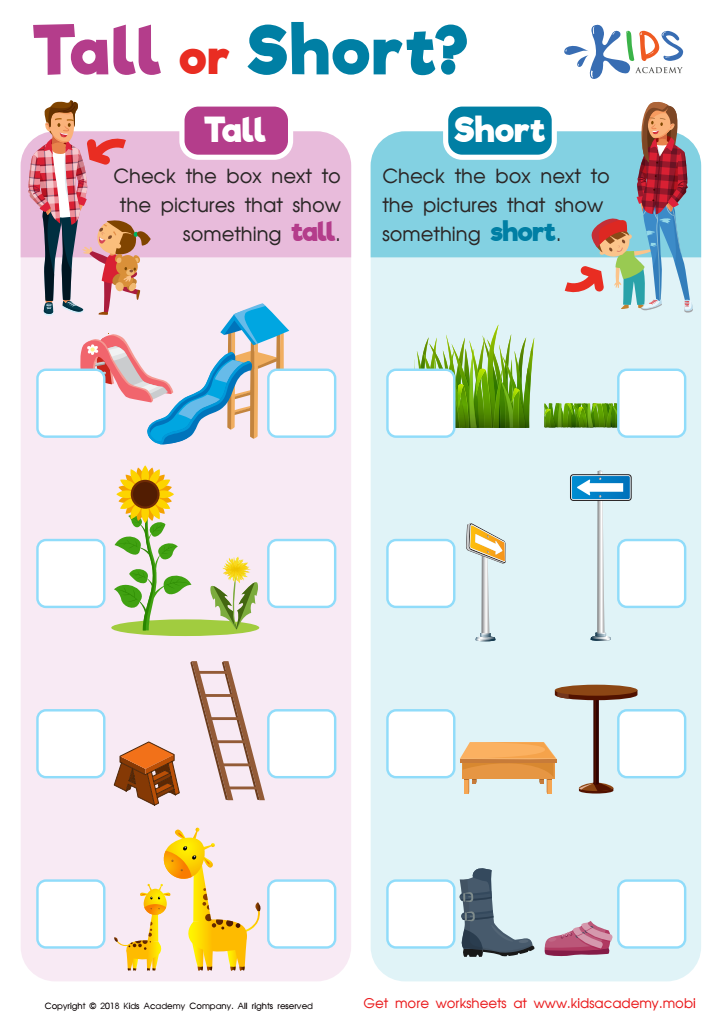
Tall or Short? Worksheet








Comparing heights and understanding measurement from ages 4-8 is vital for a child's cognitive development and foundational math skills. Through simple activities like comparing heights, children start grasping basic mathematical concepts, such as more than, less than, equal to, and sequencing, which are crucial for later arithmetic and problem-solving abilities.
Engaging in height comparison also enhances observational skills and logical thinking. It encourages young minds to categorize, estimate, and communicate findings, promoting language development and critical thinking. Moreover, such activities foster a practical understanding of the real world, making abstract concepts more tangible.
Height comparisons instill a scientific mindset by encouraging curiosity and inquiry. When kids ask questions like "Who is taller?" or "By how much?", they're engaging in early scientific methods of reasoning and experimentation. Additionally, these activities support social and emotional learning. Children learn to work collaboratively, share measurement tools, and respect differences among peers — foundational for their interpersonal, inclusive, and empathetic development.
Overall, understanding measurement and comparative skills ages 4-8 lays a multi-faceted educational foundation, nurturing well-rounded, inquisitive, and math-proficient individuals. Parents and teachers thus play a critical role in integrating these lessons seamlessly into everyday interactions and structured learning experiences.








