Comparing objects Measurement Worksheets for Ages 4-8
3 filtered results
-
From - To
Discover our engaging "Comparing Objects Measurement Worksheets for Ages 4-8" at Kids Academy! Designed to develop foundational math skills, these printable worksheets help young learners grasp the concept of comparing sizes, lengths, and weights. Ideal for children aged 4-8, our worksheets use fun illustrations and simple exercises to teach comparisons like taller vs. shorter, heavier vs. lighter, and more. Perfect for classroom or at-home learning, these resources enhance critical thinking and observational skills. Make math exciting and accessible with our expertly crafted comparing objects worksheets that inspire and educate. Join now and watch your child's confidence soar!
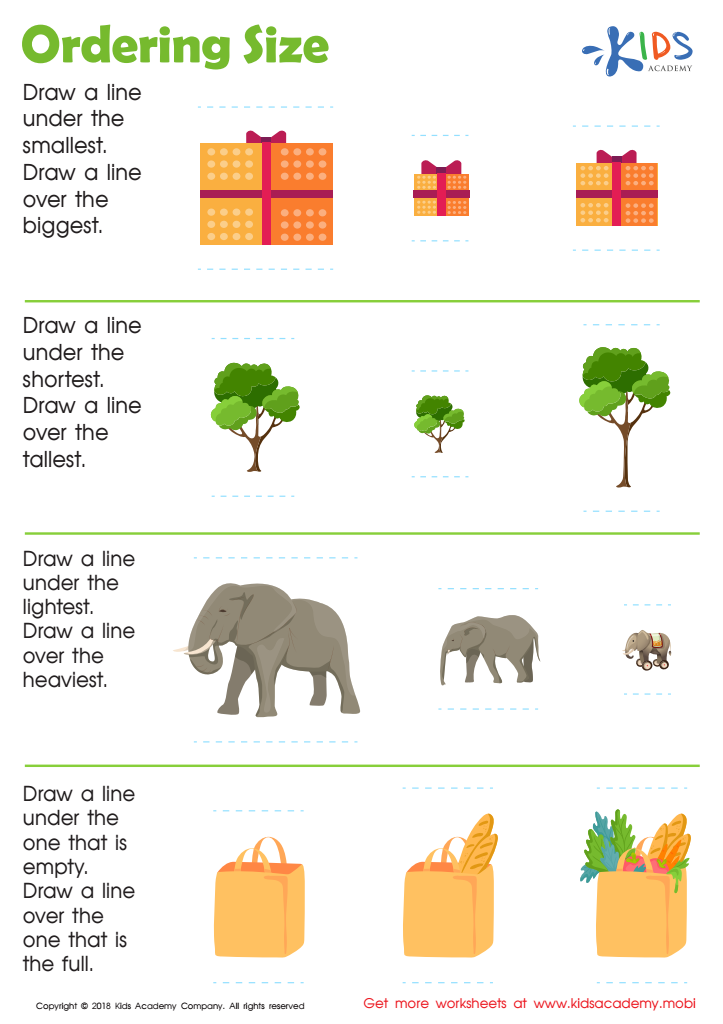
Ordering Size Worksheet
 Assign to My Students
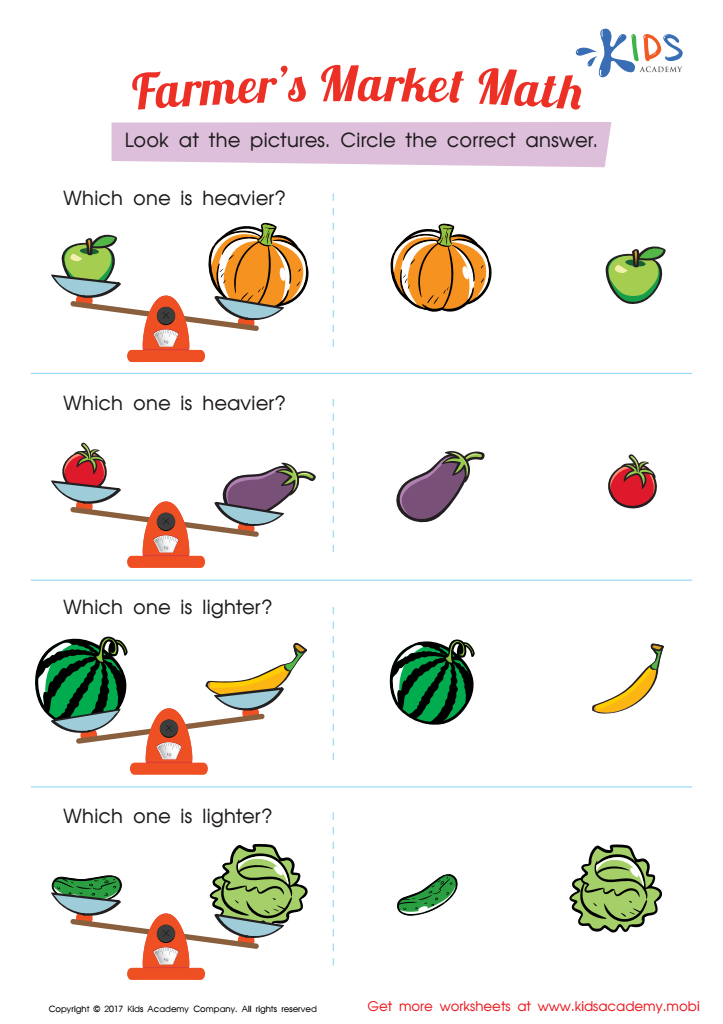
Which One Is Heavier Worksheet
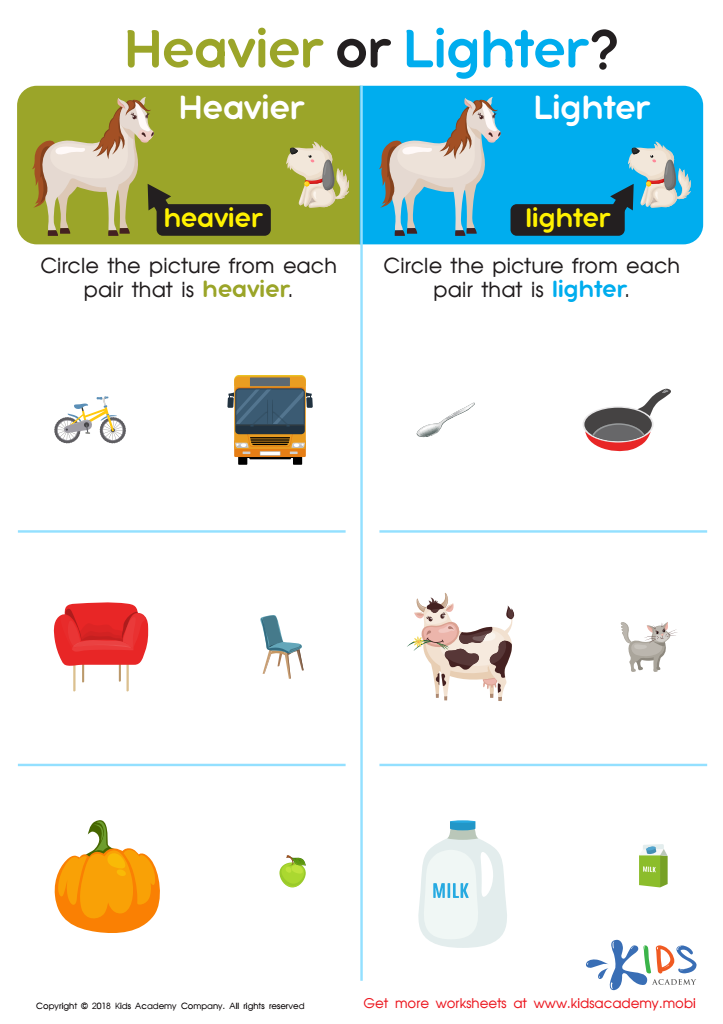
Heavier or Lighter? Worksheet








Parents and teachers play a crucial role in nurturing early childhood development, and introducing the concept of comparing objects through measurement is an essential foundational skill for children aged 4-8. Measurement comparisons help young learners understand and make sense of the world around them by developing critical thinking and problem-solving skills.
When children compare objects, such as by length, weight, or volume, they engage in hands-on, experiential learning that builds their cognitive abilities. These activities teach them to observe closely, differentiate between different sizes or shapes, and draw conclusions based on their observations. For instance, comparing the length of a pencil to a crayon helps them grasp the concept of measurement units and spatial reasoning, essential skills for mathematics and science.
Additionally, early measurement concepts contribute to language development. As children describe objects (taller, shorter, heavier, etc.), they expand their vocabulary and communication skills.
Engaging in these activities at a young age helps solidify a strong mathematical foundation, promotes curiosity, and encourages a lifelong love of learning. By prioritizing measurement comparisons in educational experiences, parents and teachers equip children with necessary skills that extend beyond the classroom, setting them up for future academic success and practical problem-solving in everyday life.








