Times table reinforcement Multiplication Worksheets for Ages 4-8
4 filtered results
-
From - To
Introducing our Times Table Reinforcement Multiplication Worksheets, specially designed for children ages 4-8! These engaging, printable worksheets are perfect for building a solid foundation in multiplication. With fun and interactive activities, kids will quickly master their times tables, enhancing their math skills and boosting their confidence. Our worksheets cater to different learning styles, ensuring every child can enjoy and benefit from the exercises. Help your child excel in math with these expertly crafted resources that make learning multiplication both exciting and effective. Give your child the tools they need for academic success with our Times Table Reinforcement Multiplication Worksheets!
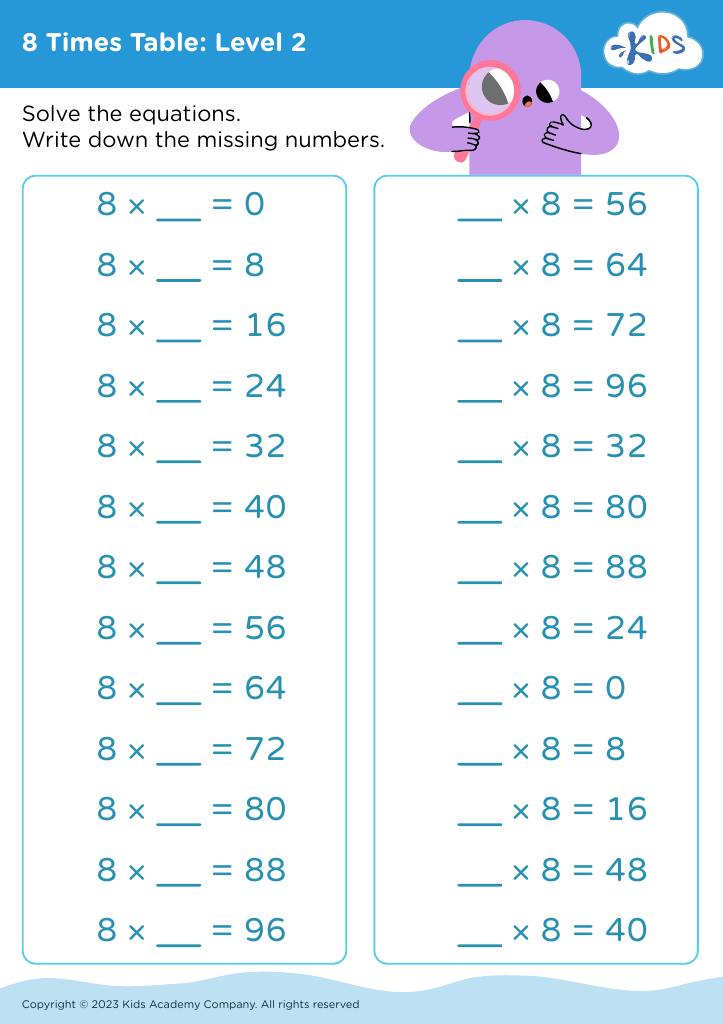
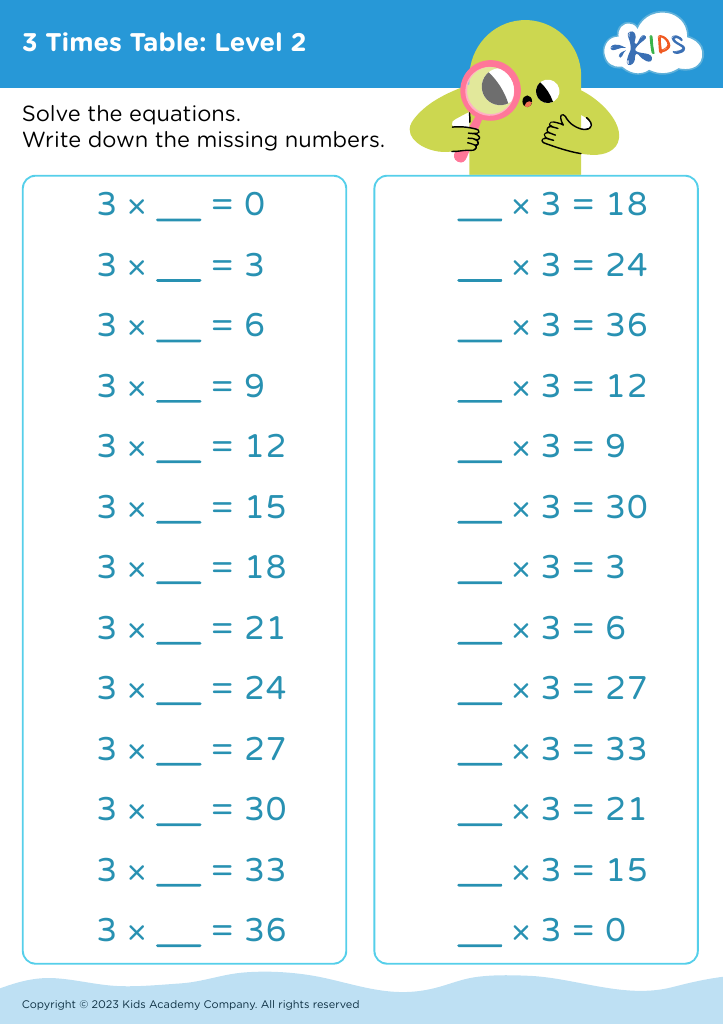
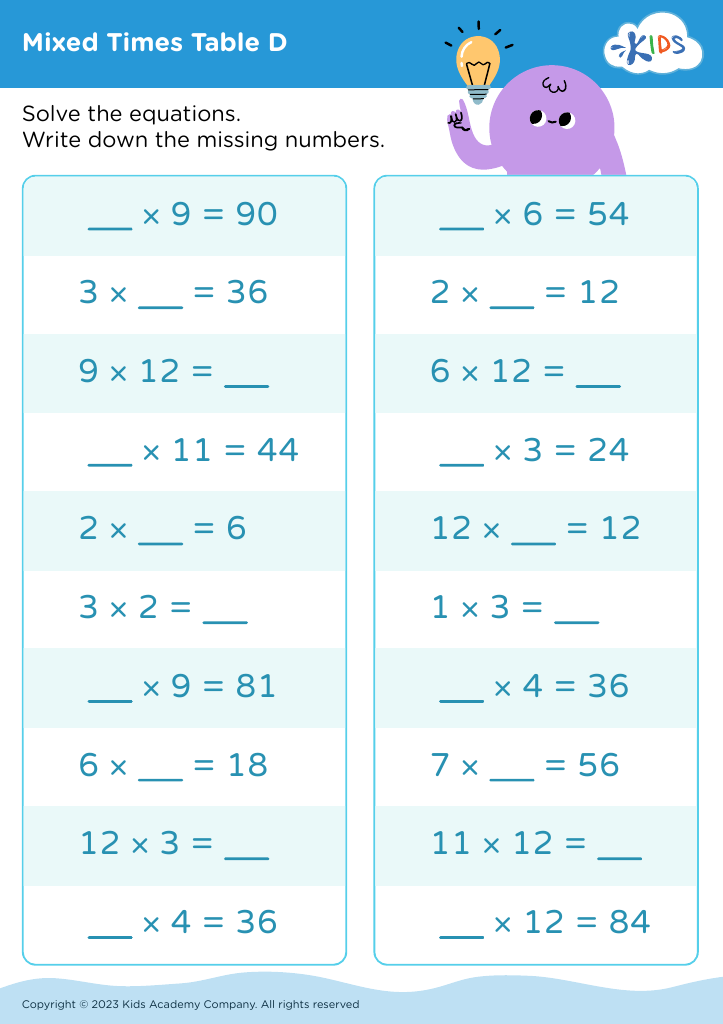
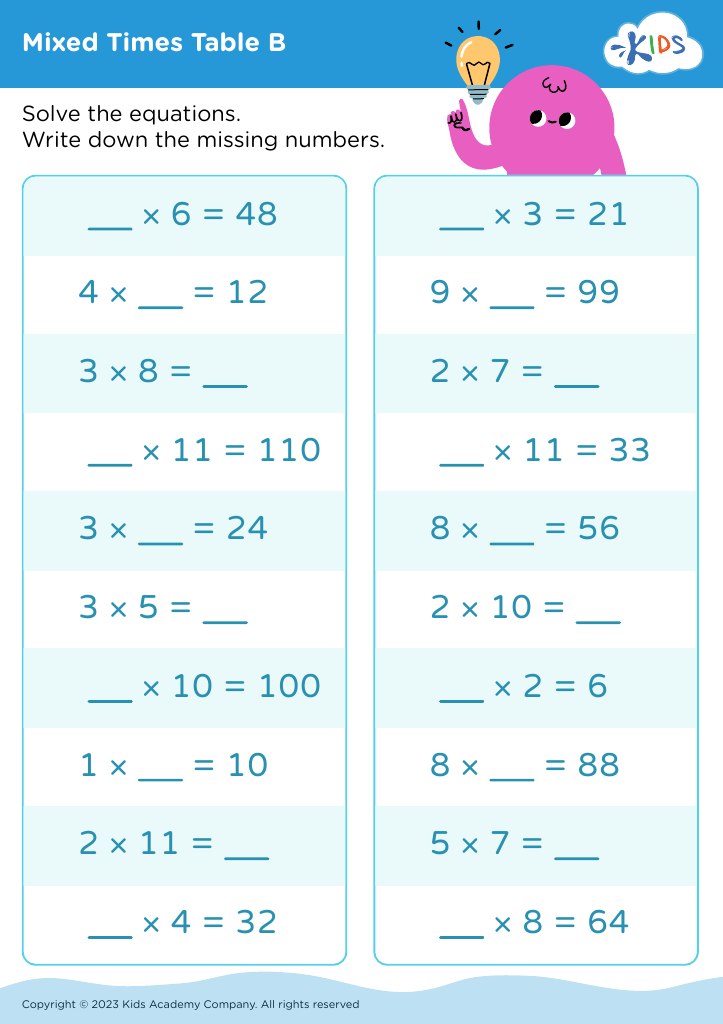








Parents and teachers should care about reinforcing times tables for children ages 4-8 because it establishes a strong foundation for advanced mathematical learning and everyday problem-solving. At this early age, children's brains are especially receptive to new information, and memorizing times tables can enhance cognitive development. By understanding multiplication, children are better equipped to tackle more complex math concepts, including division, fractions, and algebra, which rely on a solid grasp of basic arithmetic.
Moreover, mastery of times tables builds confidence and improves academic performance. When children know their times tables, they can complete math tasks more quickly and with greater accuracy. This speed and accuracy can reduce math-related anxiety, fostering a more positive attitude toward learning. It also enables children to handle practical tasks involving multiplication, such as calculating the total cost of multiple items or determining equal portions, which are vital life skills.
Reinforcing these skills at an early age creates a framework for advanced thinking, logical reasoning, and lifelong learning. Therefore, consistent practice through engaging activities, games, and positive reinforcement is crucial for helping young learners achieve mathematical fluency and gain a lasting appreciation for the subject.








