Basic Counting Numbers 0–10 Worksheets for Ages 4-8
3 filtered results
Difficulty Level
Grade
Age
-
From - To
Subject
Activity
Standards
Introduce your child to the magical world of numbers with our Basic Counting Numbers 0–10 Worksheets, specially designed for kids ages 4-8! These engaging and educational worksheets help young learners build a solid foundation in counting, number recognition, and basic math skills. Through fun activities like tracing, coloring, and counting objects, children develop their numerical abilities while staying entertained. Perfect for both home and classroom settings, our worksheets support early math skills and progressive learning with clear instructions and visually appealing designs. Give your child the tools to excel in math and have fun along the way!
Favorites
With answer key
Interactive
 Assign to My Students
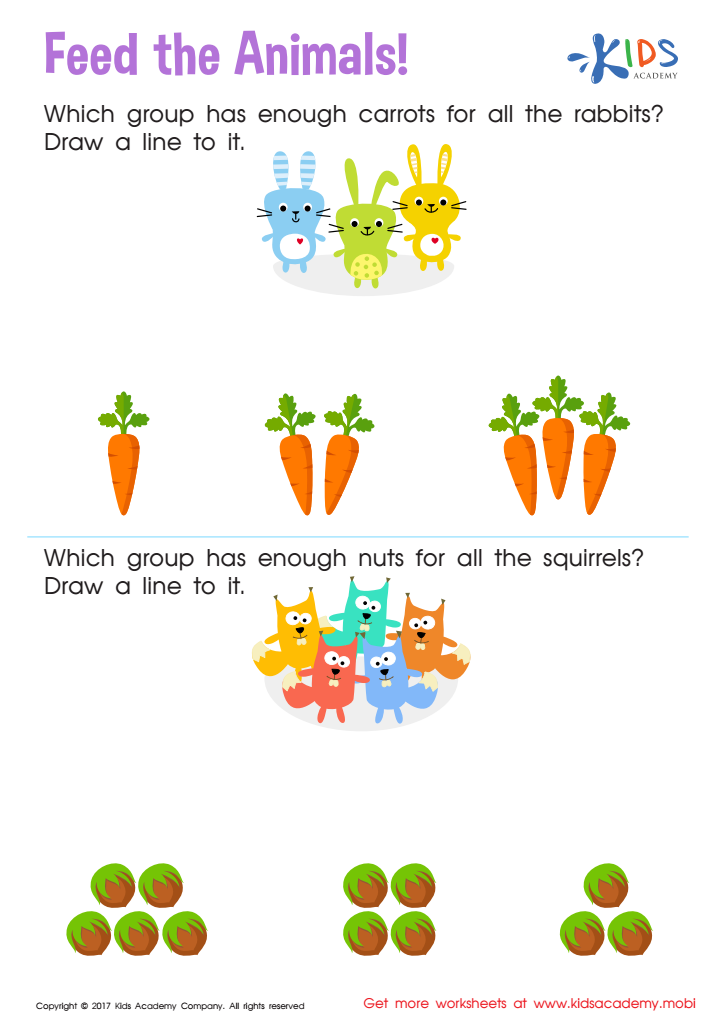
Count and Match: Feed the Animals Worksheet
Learning and growing involves more than just numbers, phonics and comparison. This Feed the Animals worksheet helps kids to exercise their reasoning skills. They must work out how many rabbits and carrots there are, and then repeat the process for the squirrels. This encourages problem solving and counting skills.
Count and Match: Feed the Animals Worksheet
Worksheet
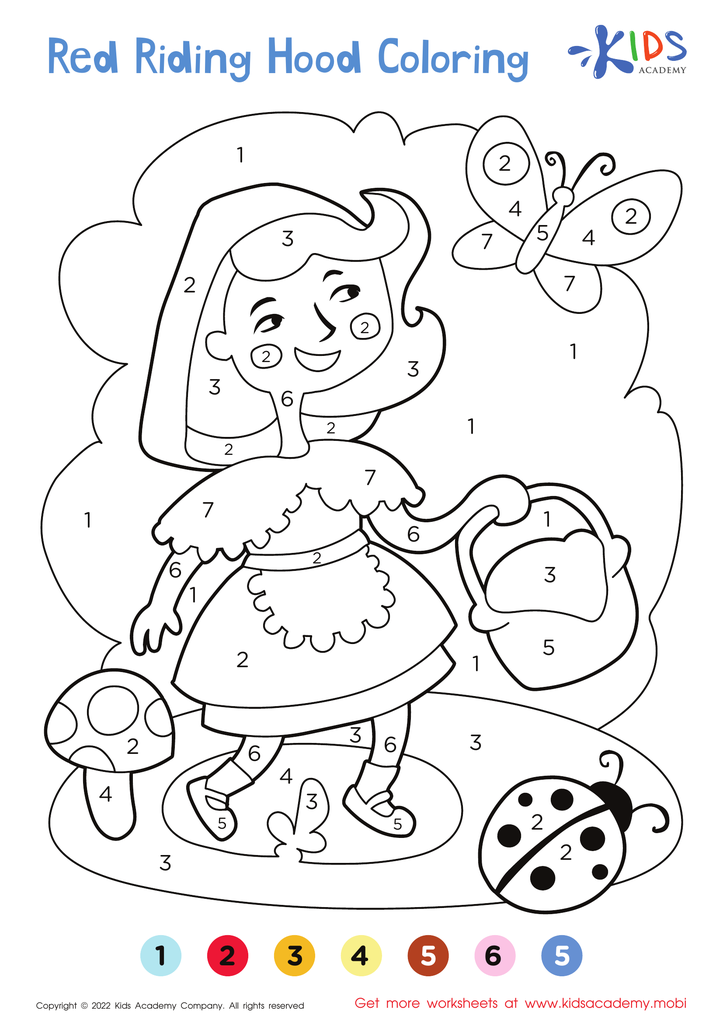
Little Red Riding Hood – Coloring by Numbers
Download this free PDF page and enjoy coloring Little Red Riding Hood. It's an easy and fun activity that everyone can do - just follow the numbers! Get your colored pencils ready and have a blast. 80 words.
Little Red Riding Hood – Coloring by Numbers
Worksheet
Join Kids Academy for Free
Who is primarily going to use this learning content?








Basic counting numbers from 0 to 10 serve as the foundation for a child's mathematical understanding and are vital for their cognitive development. For children ages 4-8, learning these numbers is not just about rote memorization but about comprehending the concept of quantity, order, and comparison.
Parents and teachers should emphasize counting within this range as it intersects with various crucial skills. Firstly, it fosters number sense, helping children understand that numbers represent quantities; for instance, recognizing that the numeral '3' corresponds to three objects. This understanding is essential for grasping more advanced mathematical concepts later.
Secondly, introducing basic counting at an early age promotes confident problem-solving abilities and logical thinking. Opportunities to count objects, fingers, or steps enhance concentration and focus, which are essential for overall academic success.
Moreover, integrating counting into daily routines—such as setting the table with a specified number of utensils or marking calendar days—allows practical application, making learning meaningful and relevant. These activities not only strengthen math skills but also improve fine motor skills and eye-hand coordination.
In essence, early mastery of counting numbers from 0 to 10 forms a solid educational foundation, enabling children to approach future mathematical challenges with assurance and competence. Both parents and teachers play pivotal roles in encouraging and nurturing this fundamental skill.