Hand-eye Coordination Numbers 11–20 Worksheets for Ages 4-8
3 filtered results
-
From - To
Enhance your child's hand-eye coordination with our engaging Numbers 11–20 worksheets, designed specifically for ages 4-8. These worksheets combine fun activities with essential mathematical concepts, helping young learners develop fine motor skills while reinforcing their understanding of numbers. From tracing and coloring exercises to interactive games, each worksheet fosters focus and coordination, making learning enjoyable. As children practice recognizing, writing, and manipulating numbers 11-20, they'll gain confidence in their abilities while honing crucial developmental skills. Perfect for at-home learning or classroom use, our worksheets provide a well-rounded educational experience for early learners. Explore our collection today and watch your child thrive!
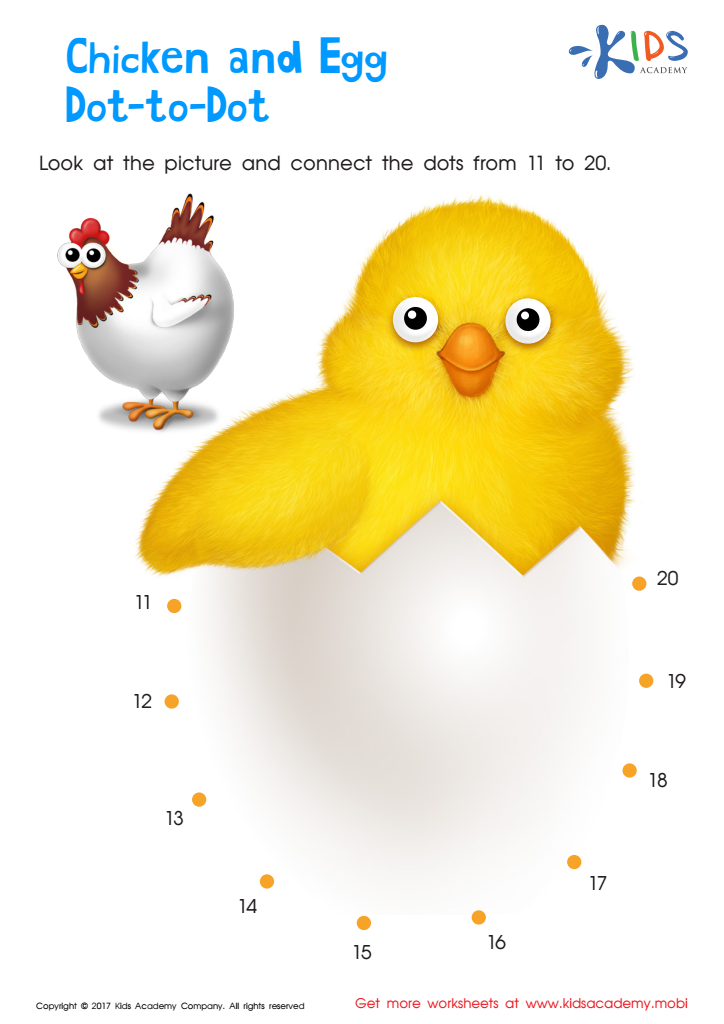
Ordering 11–20: Chicken & Egg Dot–to–dot Worksheet
 Assign to My Students
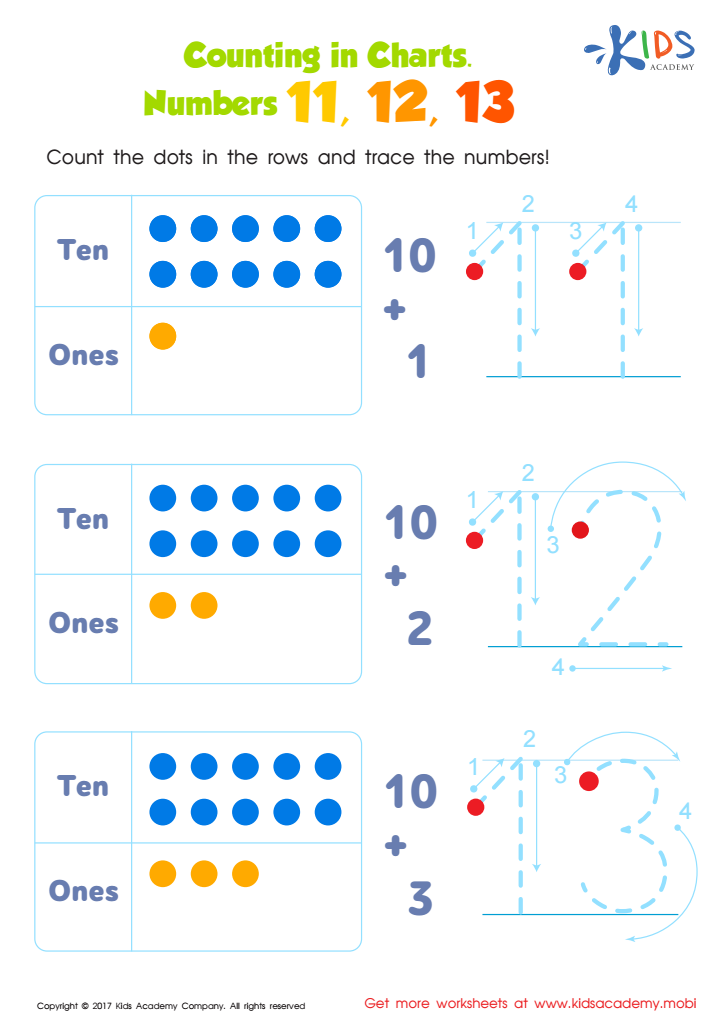
Number Tracing Worksheet For Kindergarten
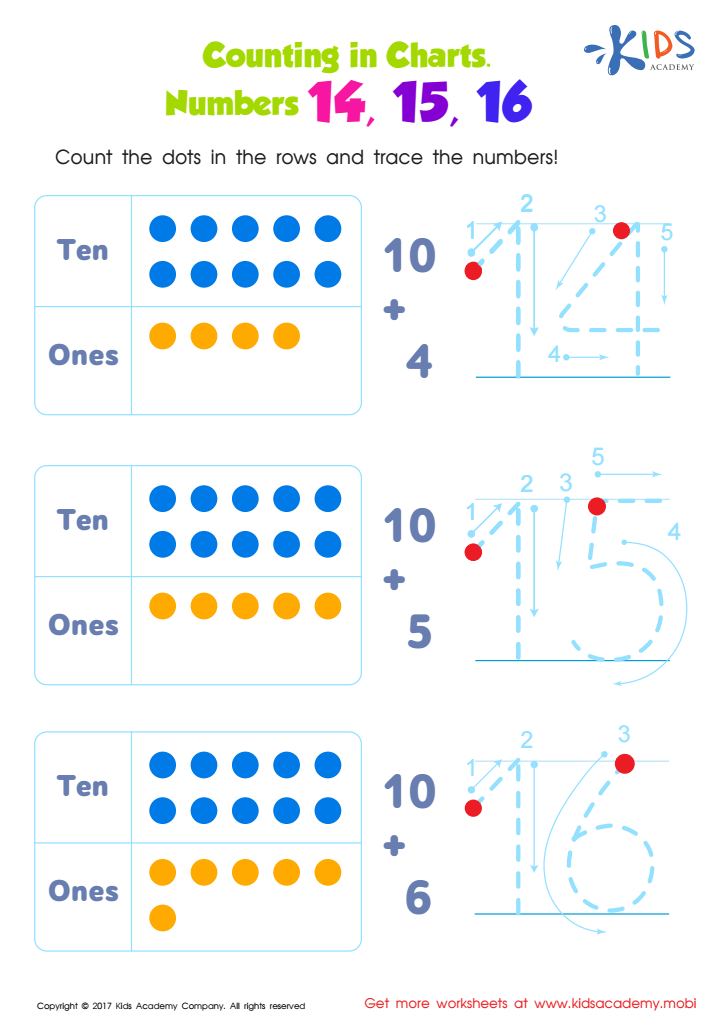
Number Tracing Worksheet



Hand-eye coordination is a critical skill that significantly influences a child's development, particularly for ages 4-8. During this period, children are engaging in various activities that place emphasis on fine motor skills, such as writing, drawing, and playing sports. Developing hand-eye coordination can enhance their ability to perform these tasks with greater precision and confidence.
Focusing on specific exercises or games that involve Hand-eye coordination Numbers 11-20 can significantly improve both motor skills and cognitive abilities. For instance, incorporating number-related activities can encourage children to recognize numbers while simultaneously improving their coordination. This dual focus not only aids numerical comprehension but also fosters a sense of achievement as they successfully complete tasks.
Moreover, strong hand-eye coordination skills contribute to better academic performance. Children who can effectively coordinate their hand movements with visual input are generally more adept at tasks like reading, writing, and using tools. This newfound confidence can lead to a more positive attitude toward learning.
Finally, enhancing hand-eye coordination supports social interaction as children engage in group activities and games. Ultimately, prioritizing these skills enables parents and teachers to provide a more nurturing environment, fostering both cognitive and physical growth in young learners.