Pattern recognition Patterns Worksheets for Ages 4-8
5 filtered results
-
From - To
Enhance your child's analytical skills with our engaging Pattern Recognition Worksheets tailored for ages 4-8! At Kids Academy, we understand the importance of foundational math skills. Our printable worksheets are designed to captivate young learners, making the process of identifying, continuing, and creating patterns both educational and enjoyable. Focused on developing critical thinking and mathematical readiness, each worksheet provides fun exercises that challenge children to spot sequences and understand their logic. Perfect for home or classroom use, these activities support early learning goals and foster a love for math from an early age. Start building essential skills today!
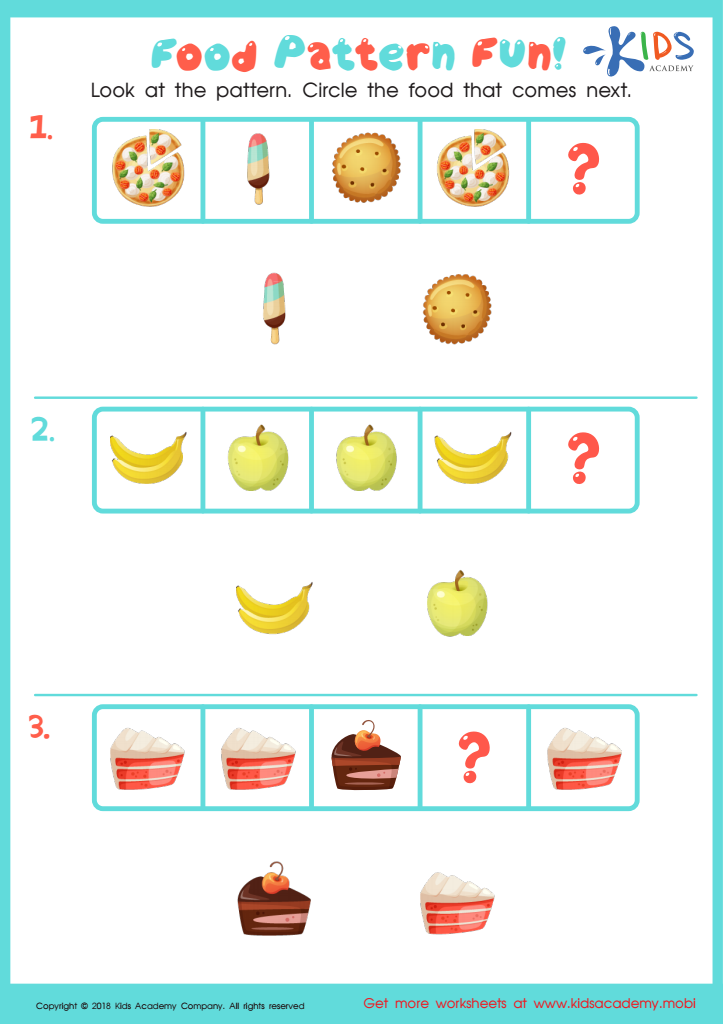
Food Pattern Fun Worksheet
 Assign to My Students
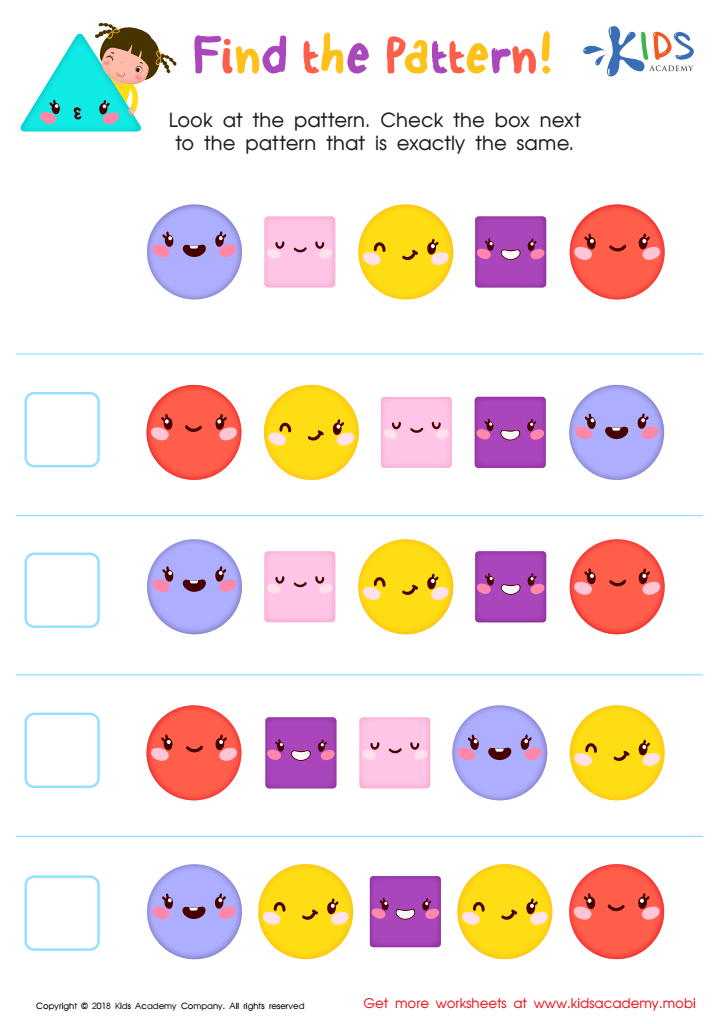
Find the Pattern Worksheet
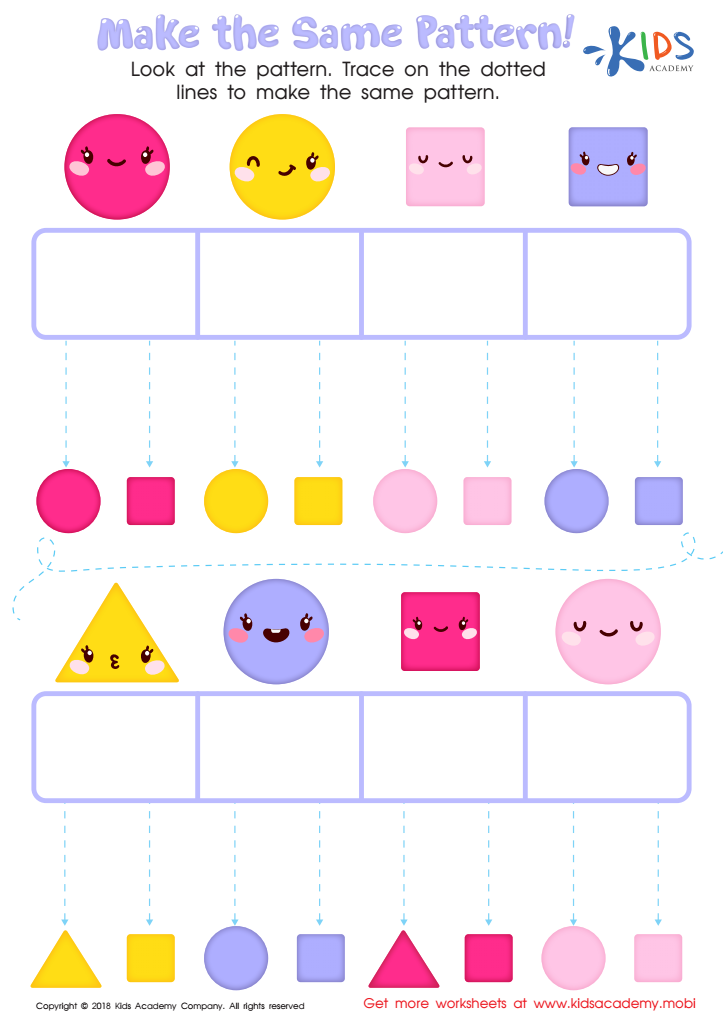
Make the Same Pattern Worksheet
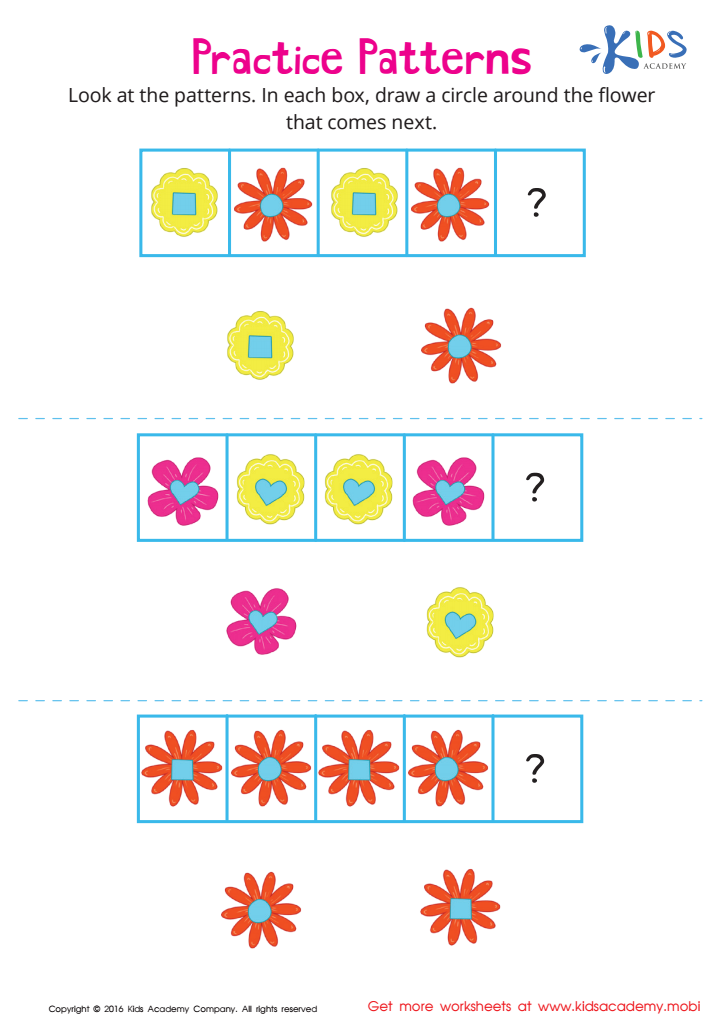
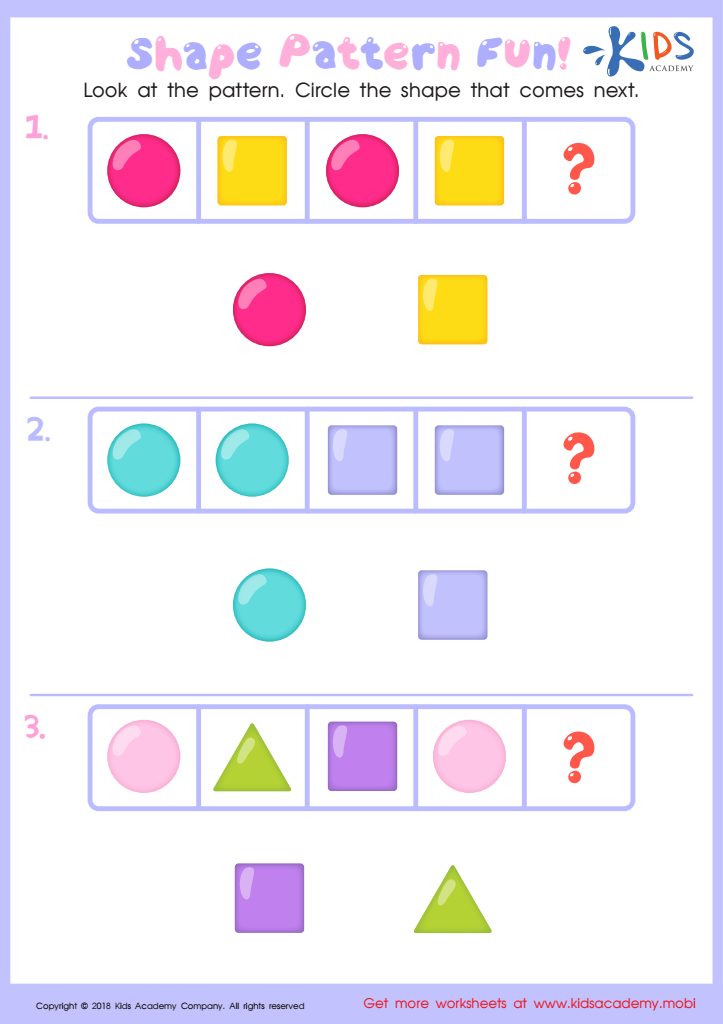
Shape Pattern Fun Worksheet








Pattern recognition is a foundational skill that plays a critical role in the cognitive development of children aged 4-8. Parents and teachers should care about nurturing this skill because it lays the groundwork for future learning in various academic areas, particularly in mathematics and science. Through identifying and understanding patterns, children enhance their ability to make predictions, establish routines, and comprehend sequences, all of which are crucial for problem-solving and logical reasoning.
For young children, engaging in activities that involve recognizing patterns, whether through colors, shapes, or numbers, promotes their observational skills and attention to detail. This cognitive process supports early literacy skills by helping them recognize letter patterns, word structures, and eventually, sentence formation.
Moreover, pattern recognition fosters creativity and critical thinking. By exploring patterns in music, art, and nature, children develop an appreciation for rhythm, symmetry, and aesthetics. This cross-disciplinary approach not only makes learning enjoyable but also helps children understand the interconnectedness of various fields.
Caring about pattern recognition translates to creating a rich learning environment where children can explore, experiment, and engage with different types of patterns. Such environments encourage curiosity and a thirst for learning, setting the stage for academic success and a lifelong love of discovery.








