Multiplication practice Times Tables Worksheets for Ages 4-8 - Page 2
33 filtered results
-
From - To
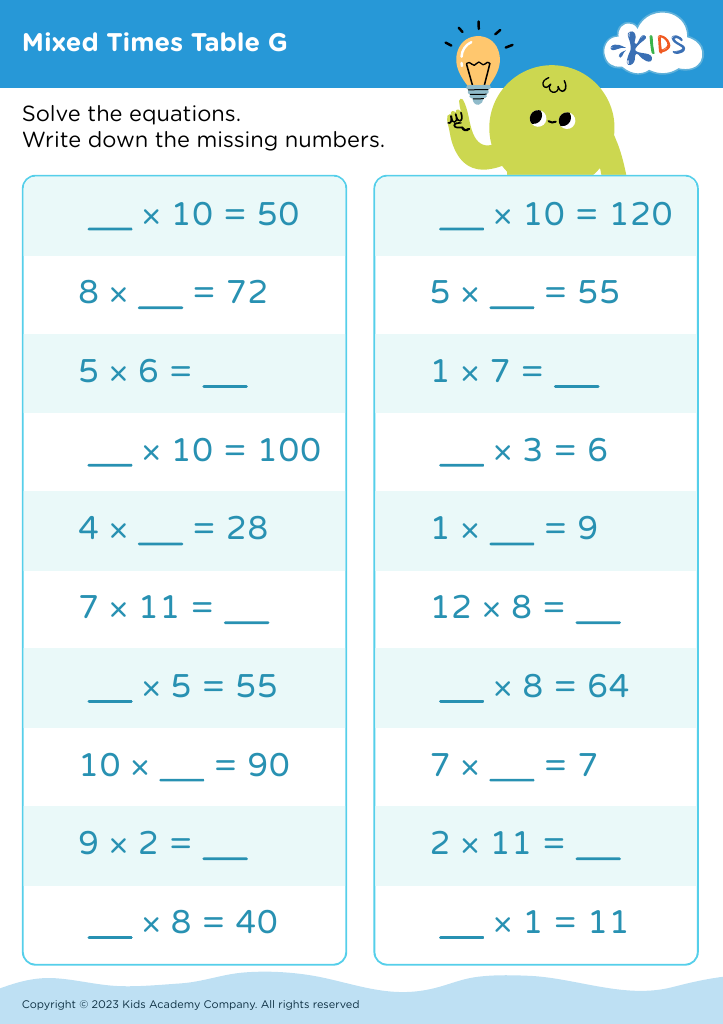
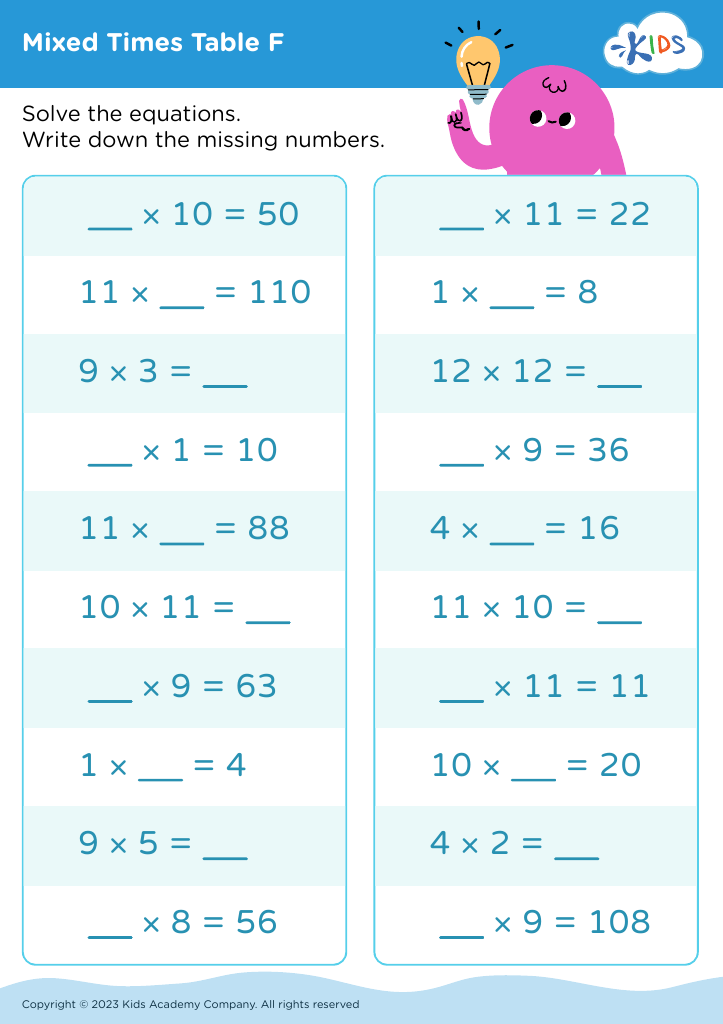
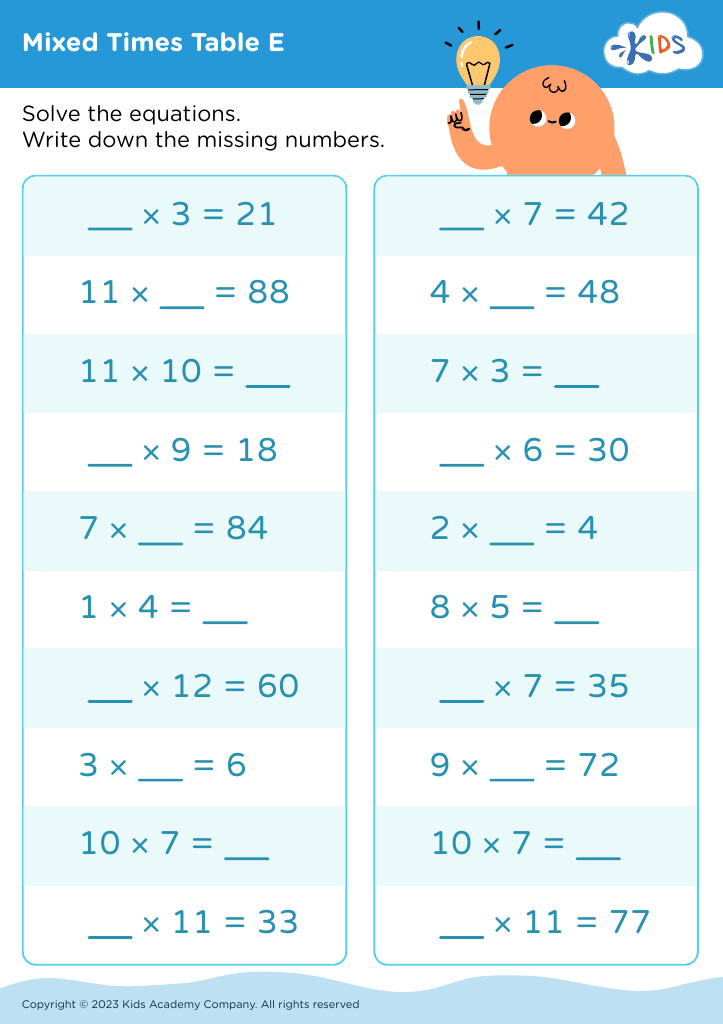
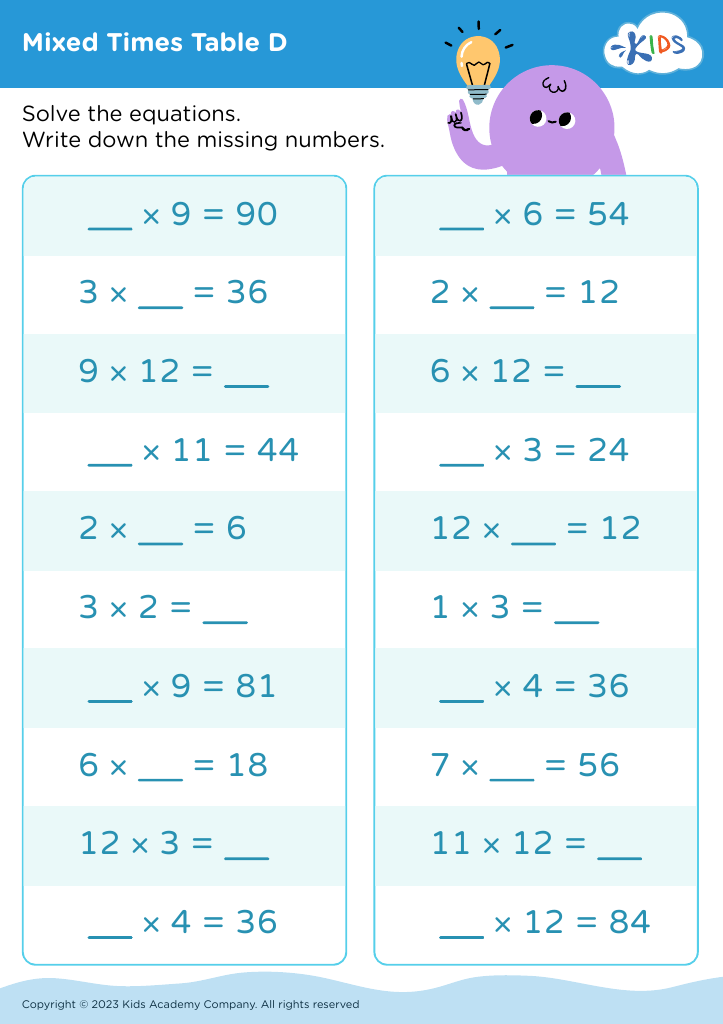
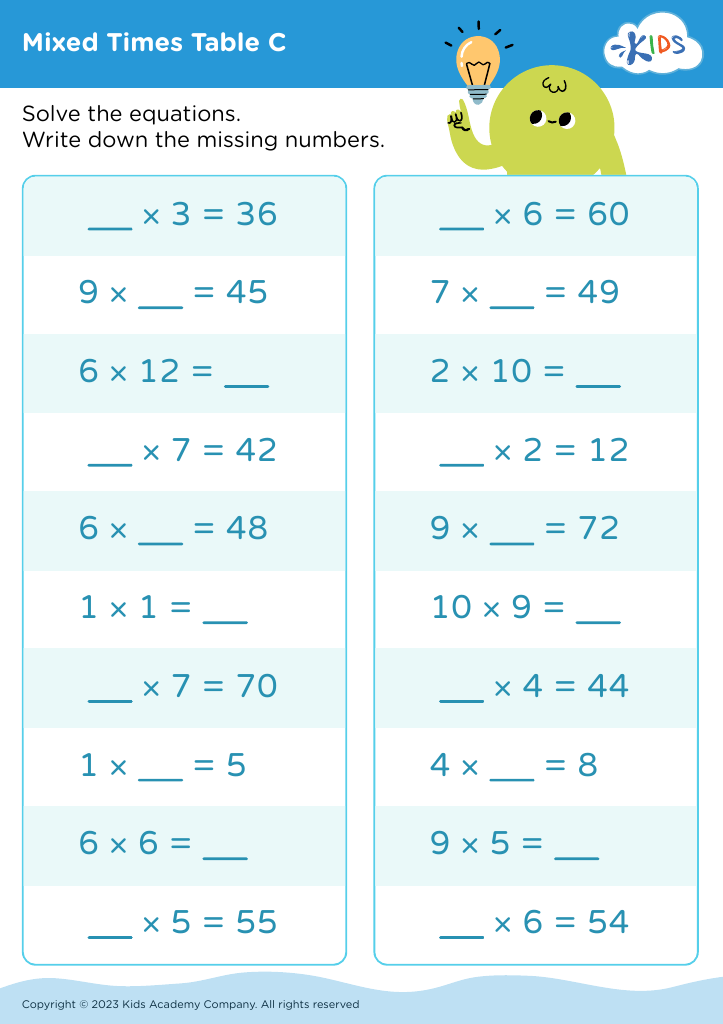
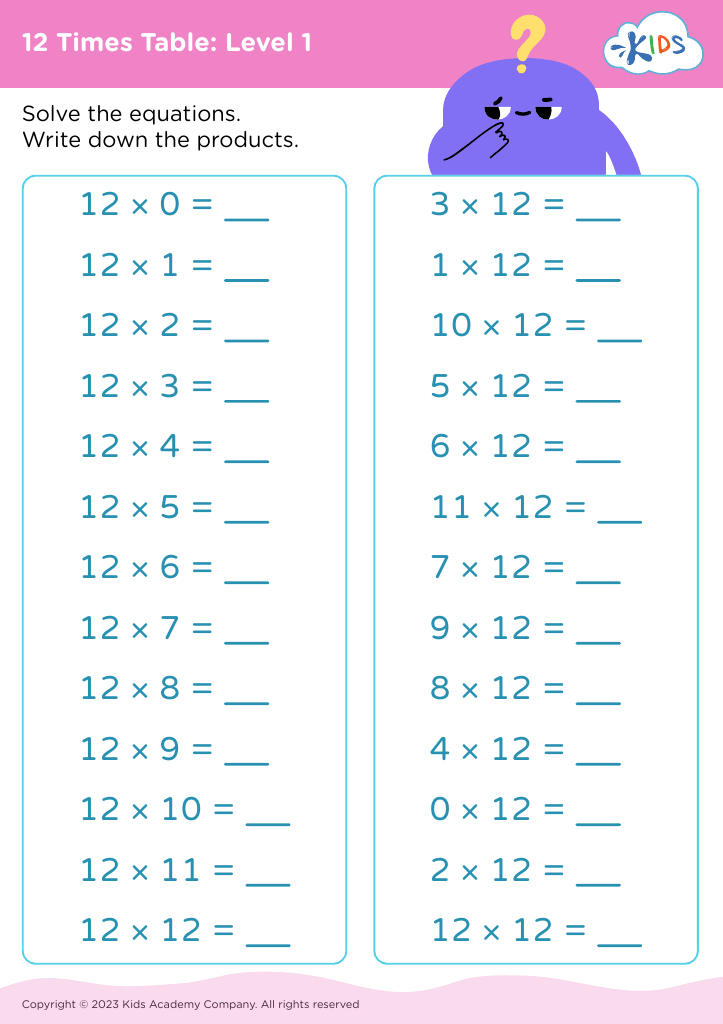
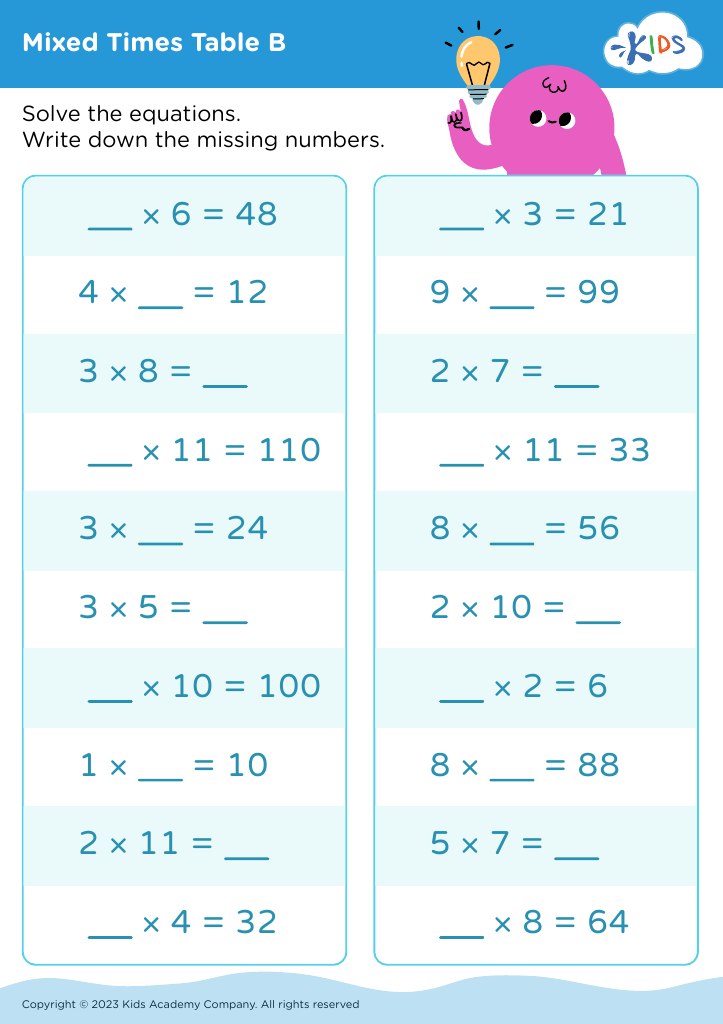
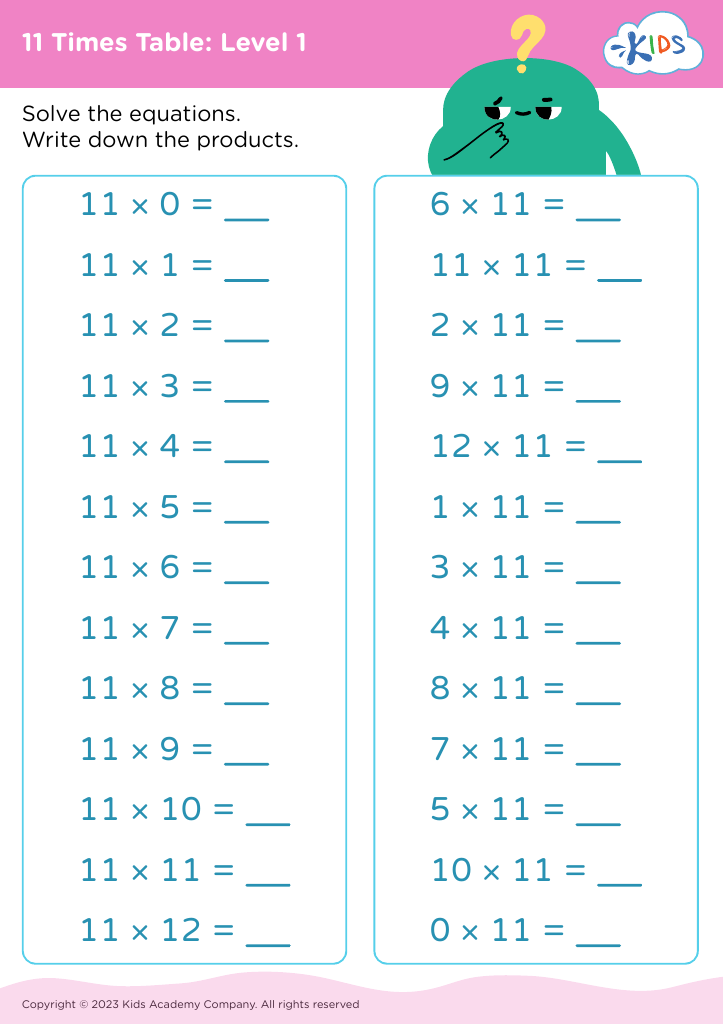
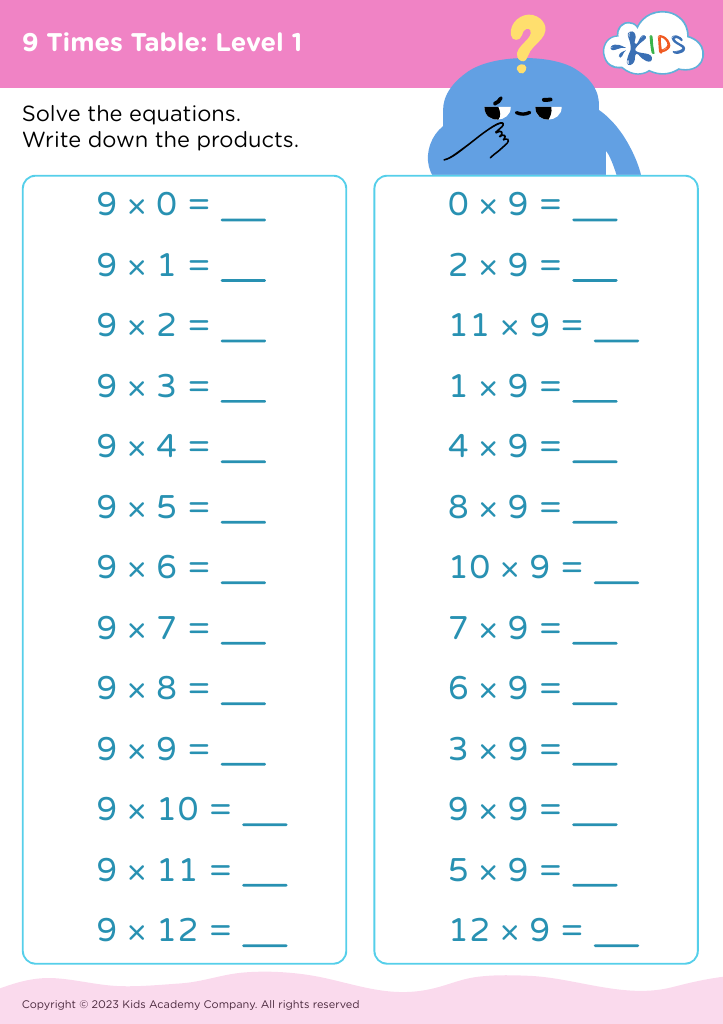





Parents and teachers should prioritize multiplication practice, particularly times tables, for children ages 4-8 for several reasons. First, mastering multiplication lays the foundation for more complex mathematical concepts in future grades. Early exposure strengthens number sense and supports problem-solving skills, facilitating a smoother progression into fractions, division, and other arithmetic operations.
Additionally, repetition and practice build confidence. Children who are comfortable with their times tables often approach math with a positive attitude, reducing anxiety associated with calculations in later grades. Engaging in multiplication practice can also enhance memory and cognitive skills, as children learn strategies for retention and recall.
Moreover, multiplication is a crucial life skill encountered in everyday situations—such as calculating expenses, sharing food, or planning activities—which underscores the importance of practical understanding.
Finally, consistent practice promotes a sense of accomplishment and motivation. When children master their times tables, they feel empowered and eager to tackle increasingly challenging mathematical tasks. Therefore, investing time in multiplication practice at this early age not only supports academic growth but also fosters a lifelong appreciation for mathematics.








