Reading comprehension Two-step Word Problems Worksheets for Ages 4-8
5 filtered results
-
From - To
Unlock your child's potential with our engaging "Reading Comprehension Two-Step Word Problems Worksheets" designed specifically for ages 4-8. These worksheets seamlessly blend literacy and math skills, encouraging young learners to practice reading comprehension while tackling fun two-step word problems. Our carefully crafted exercises promote critical thinking, enabling children to decode, analyze, and solve problems through story-based scenarios. Ideal for classroom or home use, these worksheets are perfect for fostering independence and confidence in budding mathematicians. Enhance learning through creativity and understanding with our interactive resource, making math a delightful adventure for every young learner! Perfect for building essential reading and problem-solving skills.
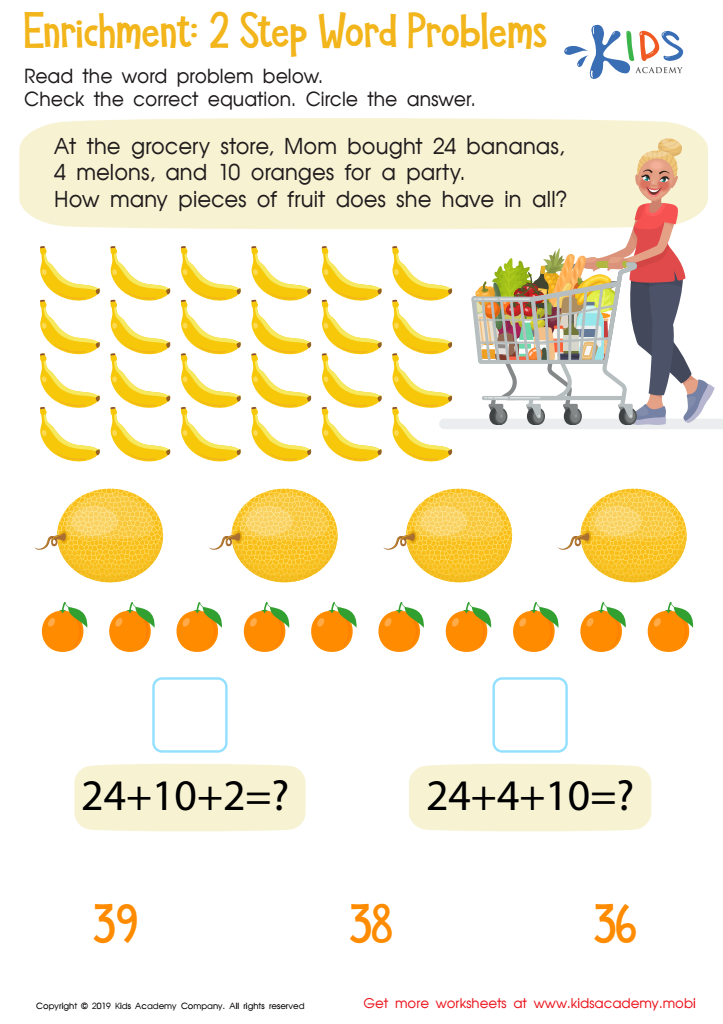
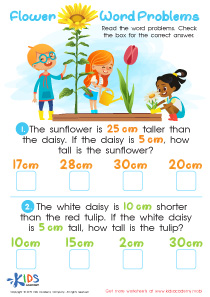
Enrichment -2 Step Word Problems Worksheet
 Assign to My Students
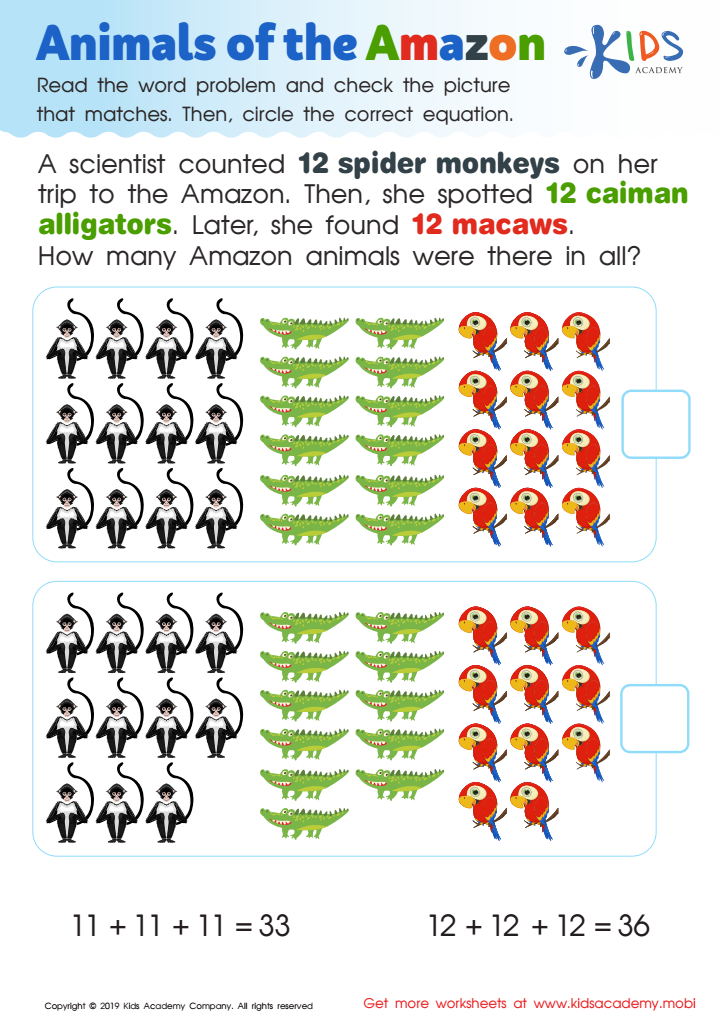
Animals of Amazon Worksheet
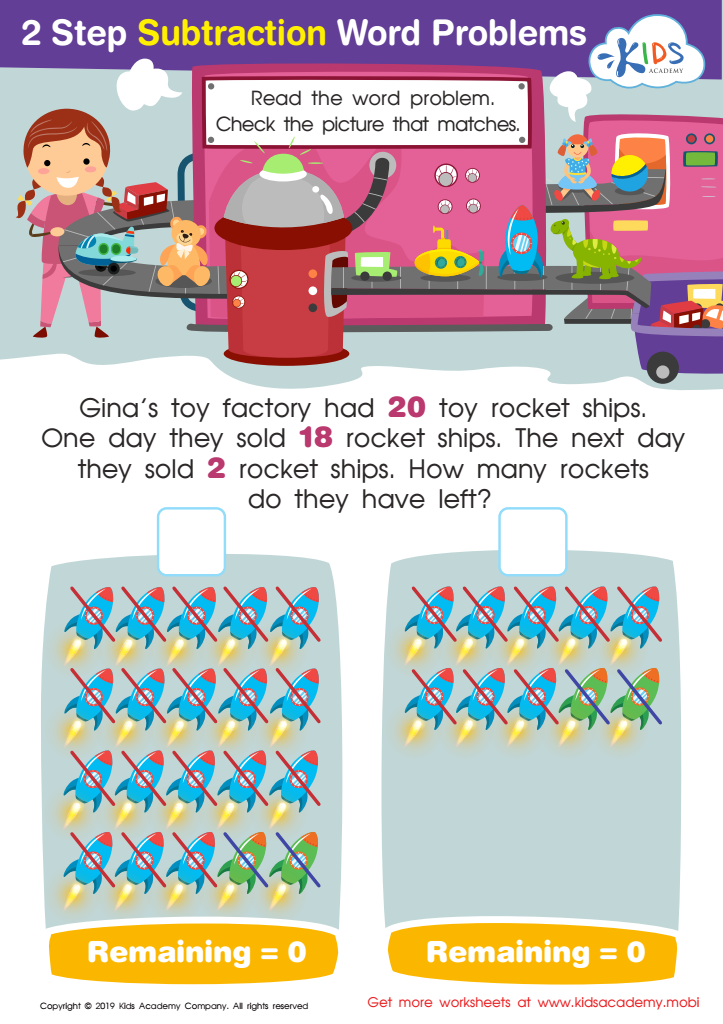
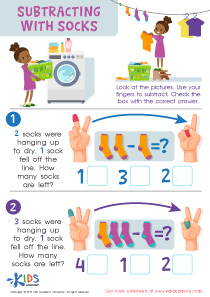
Step Subtraction Word Problems Worksheet
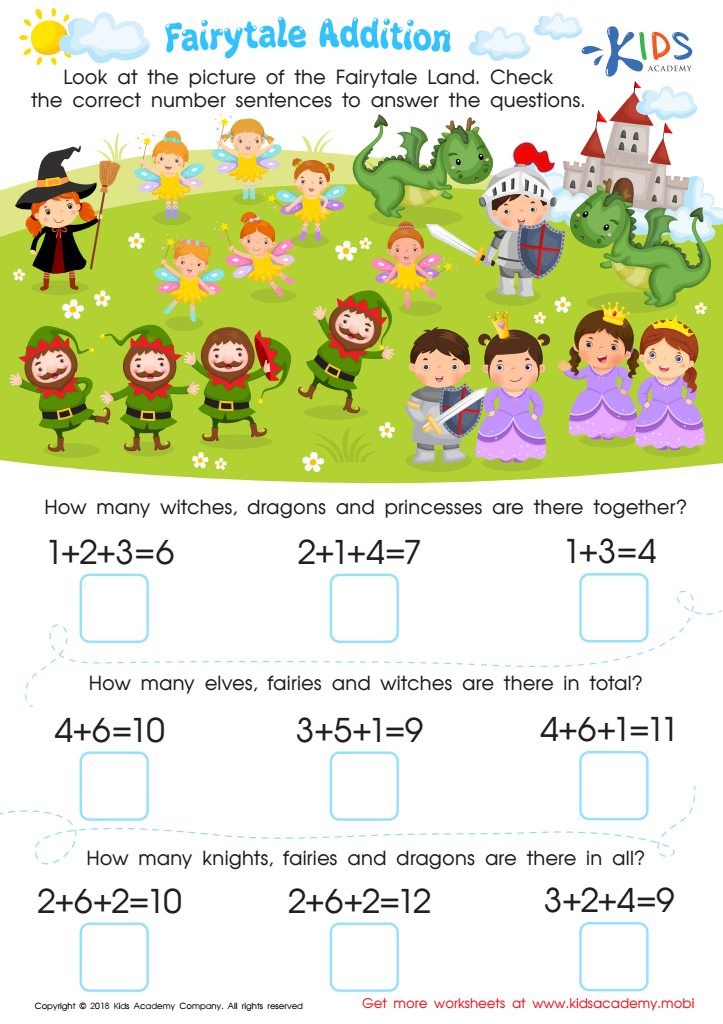
Fairytale Addition Worksheet
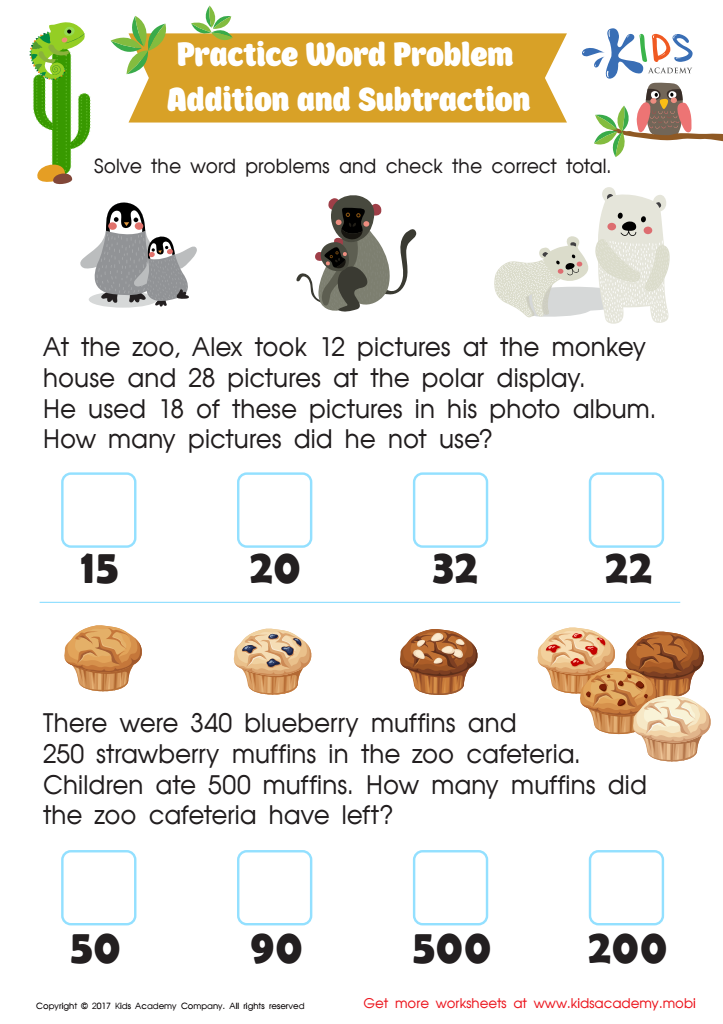
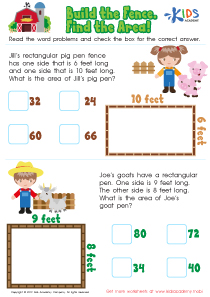
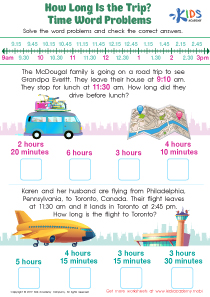
Addition and Subtraction: Word Problems Worksheet



Reading comprehension of two-step word problems is crucial for children aged 4-8, as it lays the foundation for their mathematical and literacy skills. During these early years, children are developing their ability to process information and think critically, and mastering two-step problems fosters this development. Parents and teachers should be concerned because these skills are not just relevant for math; they promote overall cognitive growth and enhance reasoning abilities.
Engaging with two-step word problems requires students to decode the language, comprehend the concepts, and execute multi-step solutions. This process hones their listening and reading comprehension skills, which are vital for academic success across subjects. Additionally, addressing these problems encourages logical thinking and problem-solving abilities, helping children learn how to approach complex situations in a structured way.
By emphasizing reading comprehension in word problems, parents and teachers also instill a love for learning and build mathematical confidence early on. Moreover, strong foundational skills in these areas promote better performance in standardized tests and real-world applications, ensuring that children are prepared for future academic challenges. Ultimately, fostering these abilities at a young age sets children up for a lifetime of learning and success.