Basic Arithmetic Word Problems Worksheets for Ages 4-8
5 filtered results
-
From - To
Discover our engaging Basic Arithmetic Word Problems Worksheets designed specifically for children ages 4 to 8. These worksheets provide a fun and interactive way to enhance kids' math skills by combining storytelling with essential arithmetic concepts. Covering addition and subtraction in relatable contexts, each worksheet encourages critical thinking and problem-solving abilities. Perfect for use at home or in the classroom, these printable resources support early learners in mastering math fundamentals while fostering a love for learning. Explore our collection today and help your child build confidence and proficiency in basic arithmetic through captivating word problems!
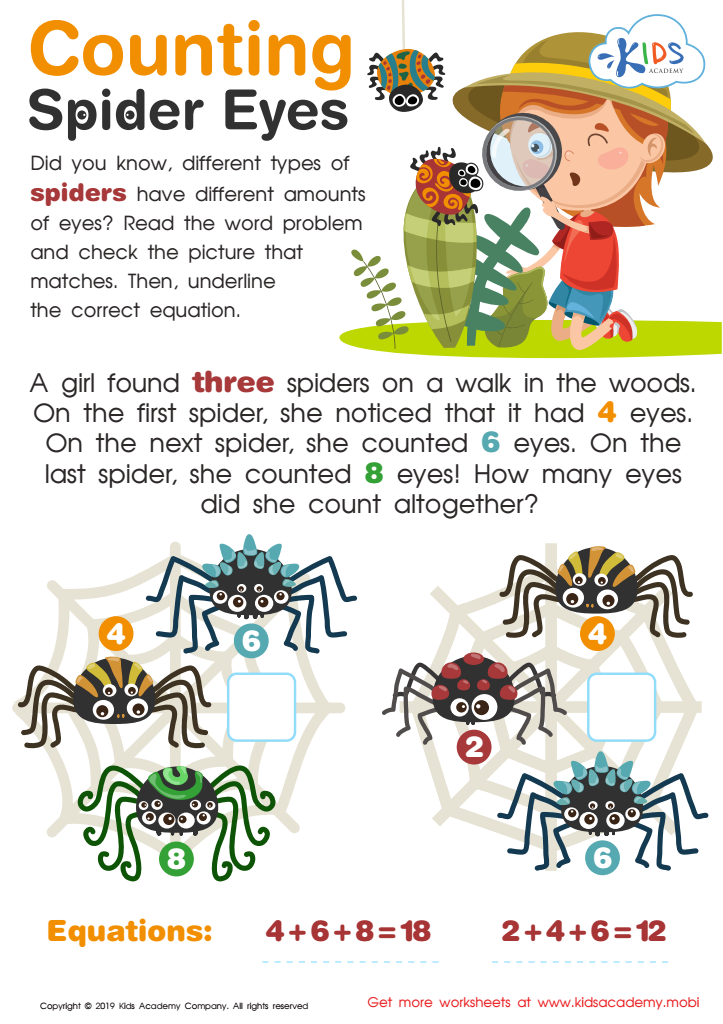
Counting Spider Eyes Worksheet
 Assign to My Students
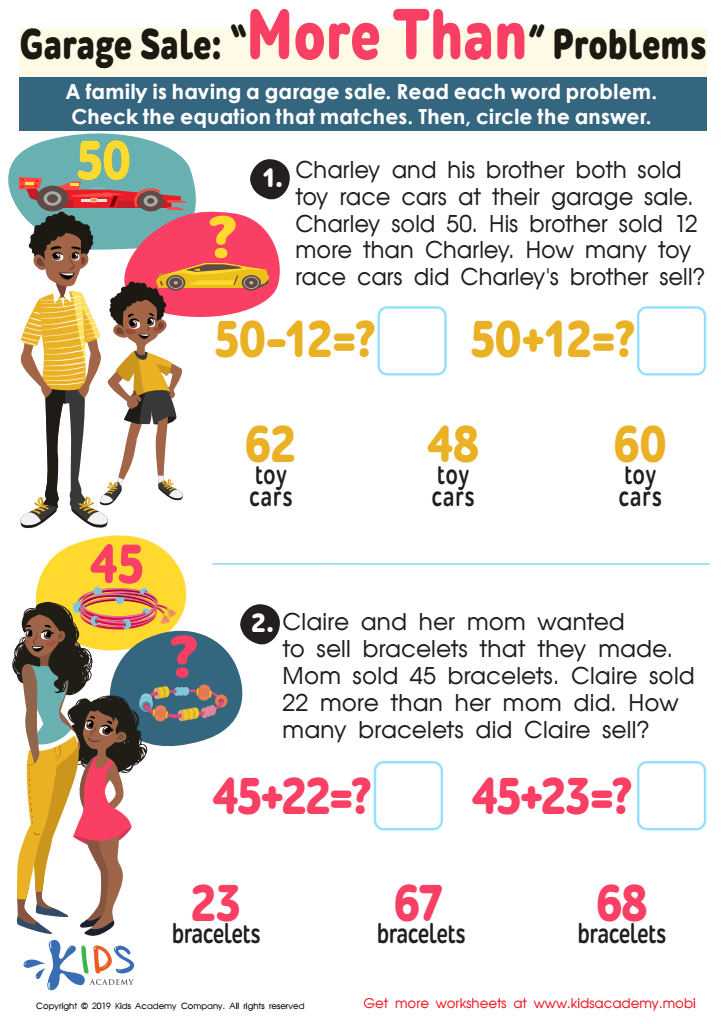
Garage Sale - More yhan Worksheet
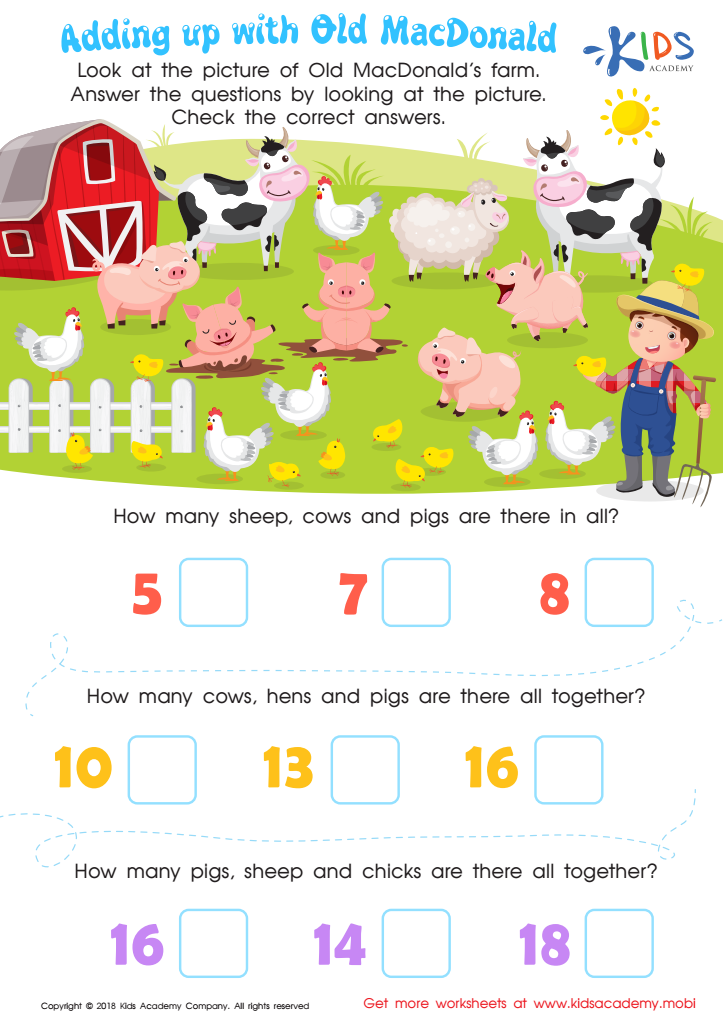
Adding Up with Old MacDonald Worksheet
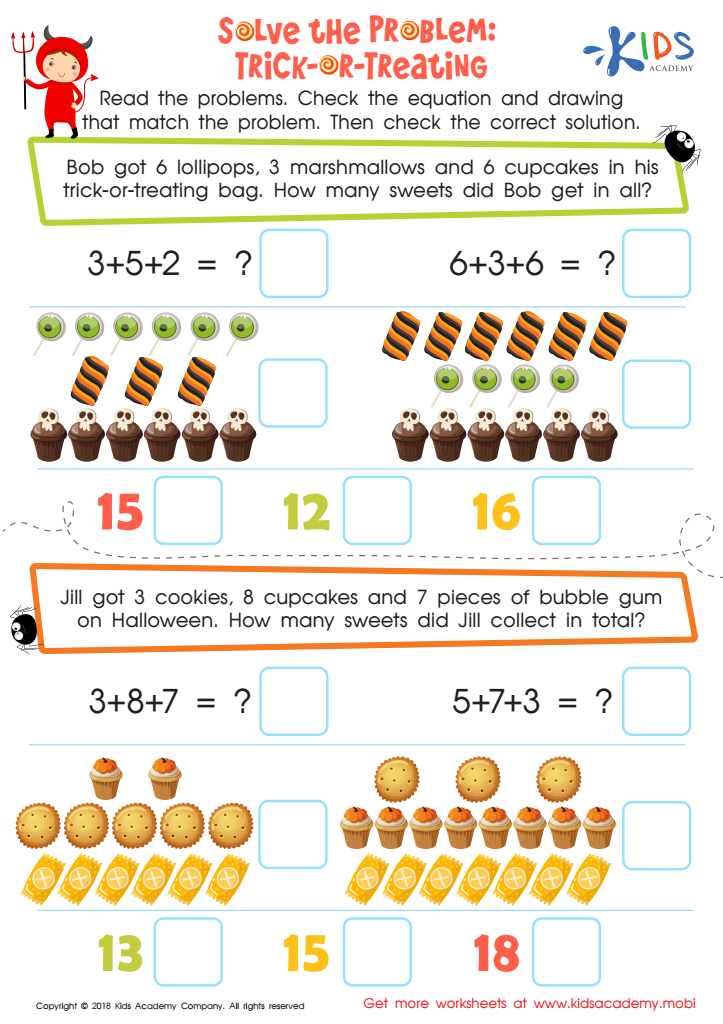
Solve the Problem: Trick–or–treating Worksheet
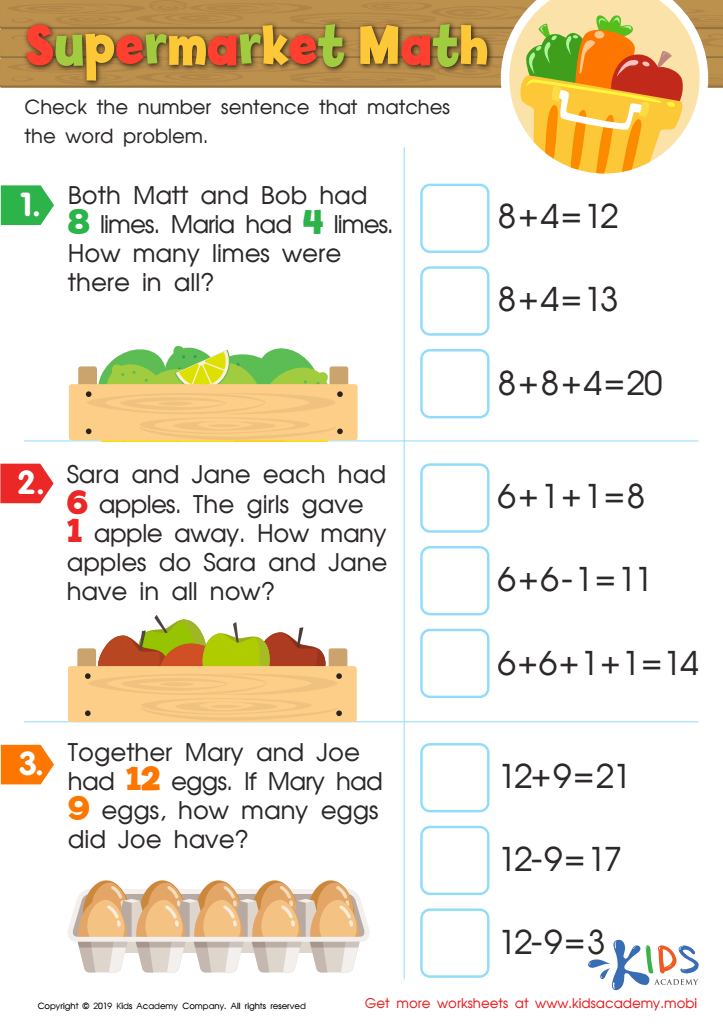
Supermarket Math Worksheet








Basic arithmetic word problems are crucial for children aged 4-8 as they lay the foundation for mathematical understanding and critical thinking skills. At this age, children are not just learning numbers; they are beginning to comprehend the relationship between language and math.
Word problems encourage students to read carefully and interpret information, which enhances their comprehension and analytical abilities. By translating verbal scenarios into numerical expressions, children learn to extract relevant information, a skill that is valuable not only in math but across various subjects and real-life situations.
Additionally, these problems foster problem-solving skills, enabling children to approach challenges methodically. Understanding how to dissect a word problem helps them develop strategies, promoting a growth mindset and resilience in the face of difficulty.
Parents and teachers play a pivotal role in this developmental phase. Engaging children in discussions around word problems can spark their interest in math and reinforce the idea that math is a part of everyday life. By assisting them in navigating these early challenges, adults can cultivate a positive association with math, encouraging a lifelong curiosity and appreciation for learning. Ultimately, nurturing these skills supports future academic success and prepares them for more complex mathematical concepts down the line.








