Division practice Word Problems Worksheets for Ages 4-8
5 filtered results
-
From - To
Enhance your child's math skills with our Division Practice Word Problems Worksheets tailored for ages 4-8! Perfect for young learners, these engaging worksheets make mastering division fun and accessible. Designed to boost critical thinking and problem-solving abilities, each worksheet features real-world scenarios your child can relate to. Our colorful and interactive formats keep kids motivated while reinforcing their learning. From simple to more challenging problems, each sheet supports gradual skill development. Ideal for both classroom and home use, these educational resources help build a solid foundation in math. Visit Kids Academy for free, high-quality division practice worksheets.
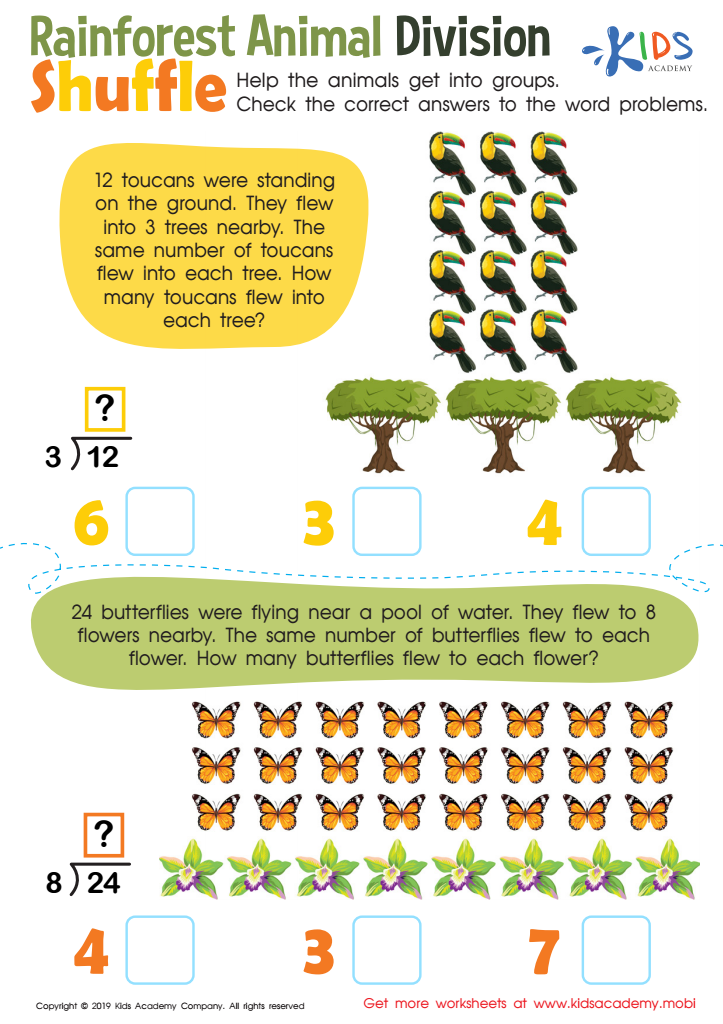
Rainforest Animal Division Worksheet
 Assign to My Students
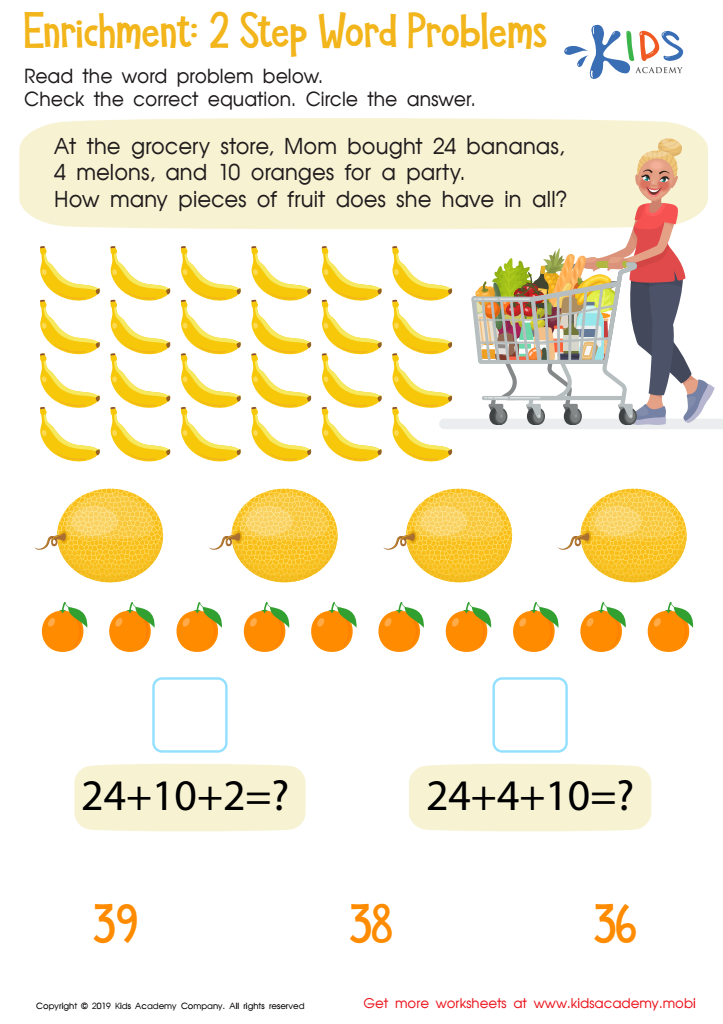
Enrichment -2 Step Word Problems Worksheet
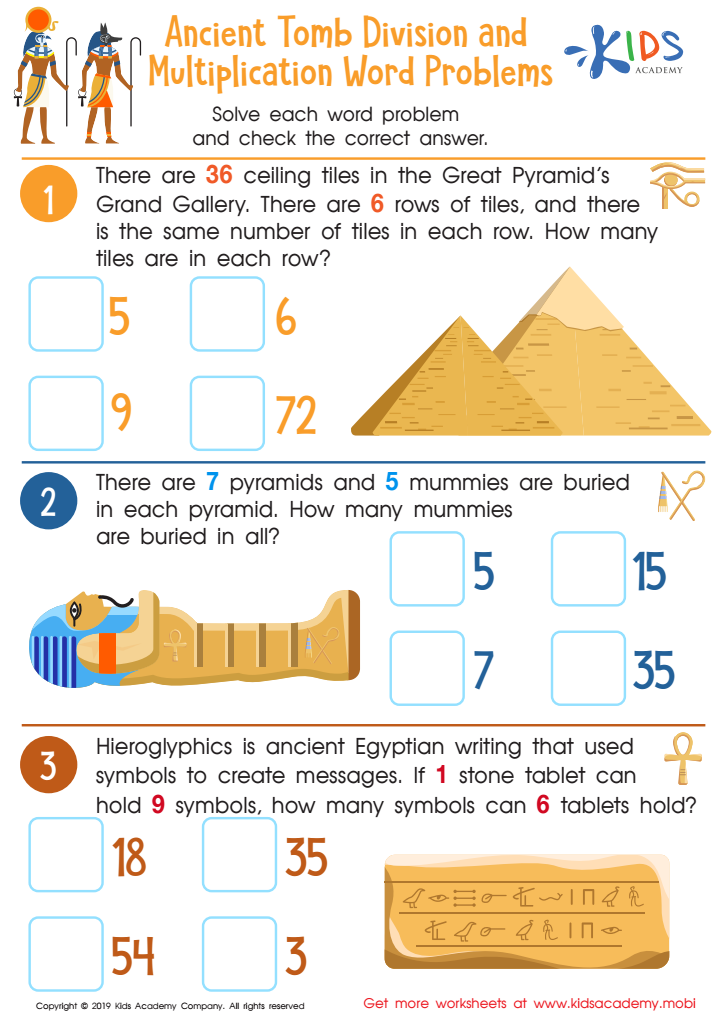
Ancient Tomb Division and Multiplication Word Problems Worksheet
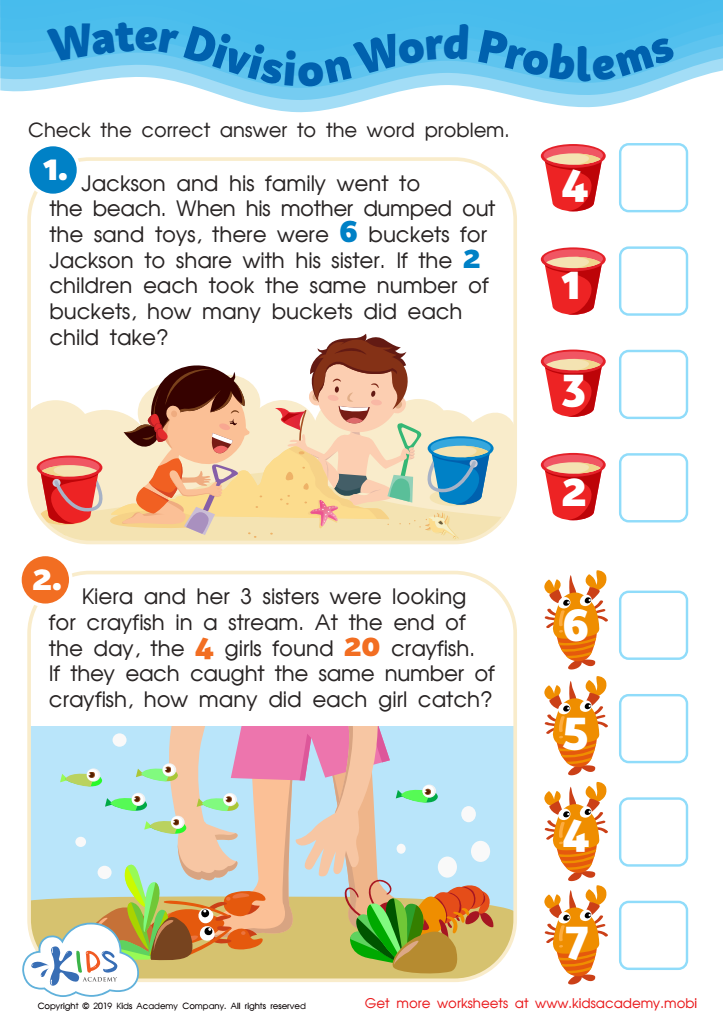
Water Division Word Problems Worksheet
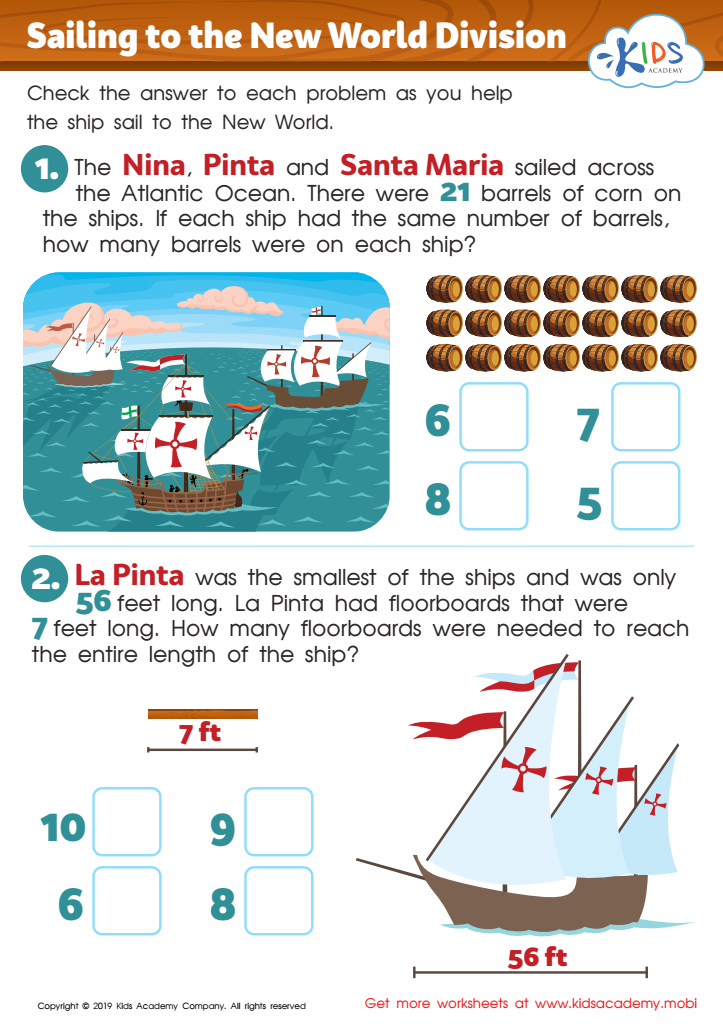
Sailing to the New World Division Worksheet


.jpg)





Division practice word problems are vital for the cognitive and academic development of children ages 4-8. At this tender age, young minds are highly receptive and begin to form the foundational blocks of mathematical understanding. Engaging with division word problems allows children to apply mathematical concepts to real-life scenarios, which helps in solidifying their understanding.
Firstly, these problems enhance critical thinking and problem-solving skills. Children learn to break down complex questions into manageable steps, fostering logical reasoning. This not only boosts their mathematical abilities but also nurtures skills that are transferable to other subjects and real-world situations.
Secondly, word problems integrate reading comprehension with math. Kids must understand the context and extract relevant quantitative information from a story-based problem. This dual practice of reading and arithmetic enhances their literacy and numeracy simultaneously.
Thirdly, early practice with division word problems ensures smoother progression into higher-level mathematics. Understanding division as both a concept and operation lays groundwork for future topics like fractions, ratios, and algebra.
Lastly, it makes math more engaging and relatable. Children tend to show increased interest and motivation when they see how math applies to their daily lives, making learning a joy rather than a chore.
In summary, incorporating such problems into early education empowers children with essential skills, encourages a loving relationship with math, and sets a solid educational foundation.








