Logical Reasoning Word Problems Worksheets for Ages 4-8
5 filtered results
-
From - To
Enhance your child's critical thinking skills with our engaging Logical Reasoning Word Problems Worksheets, specially designed for ages 4-8. These worksheets provide a fun and interactive way for children to apply logical reasoning in everyday scenarios. Each activity encourages problem-solving, critical thinking, and the ability to analyze information effectively. With clear instructions and age-appropriate challenges, kids will gain confidence as they learn to solve a variety of word problems. Perfect for classroom use or at-home learning, our worksheets make logical reasoning both approachable and enjoyable. Dive into a world of learning and help your child develop essential thinking skills today!
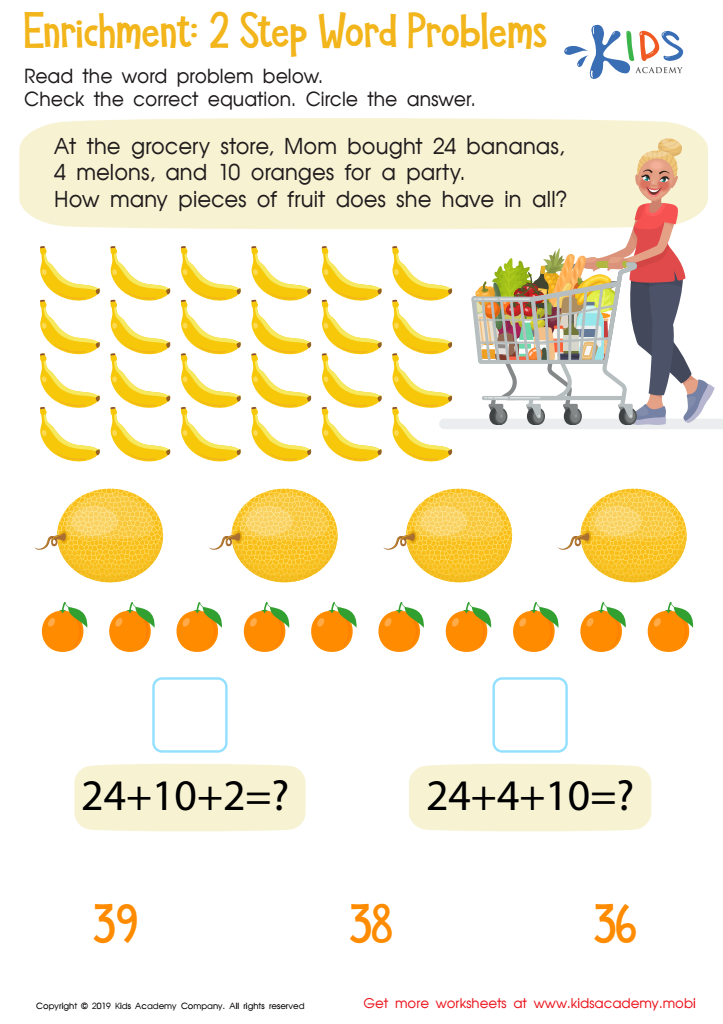
Enrichment -2 Step Word Problems Worksheet
 Assign to My Students
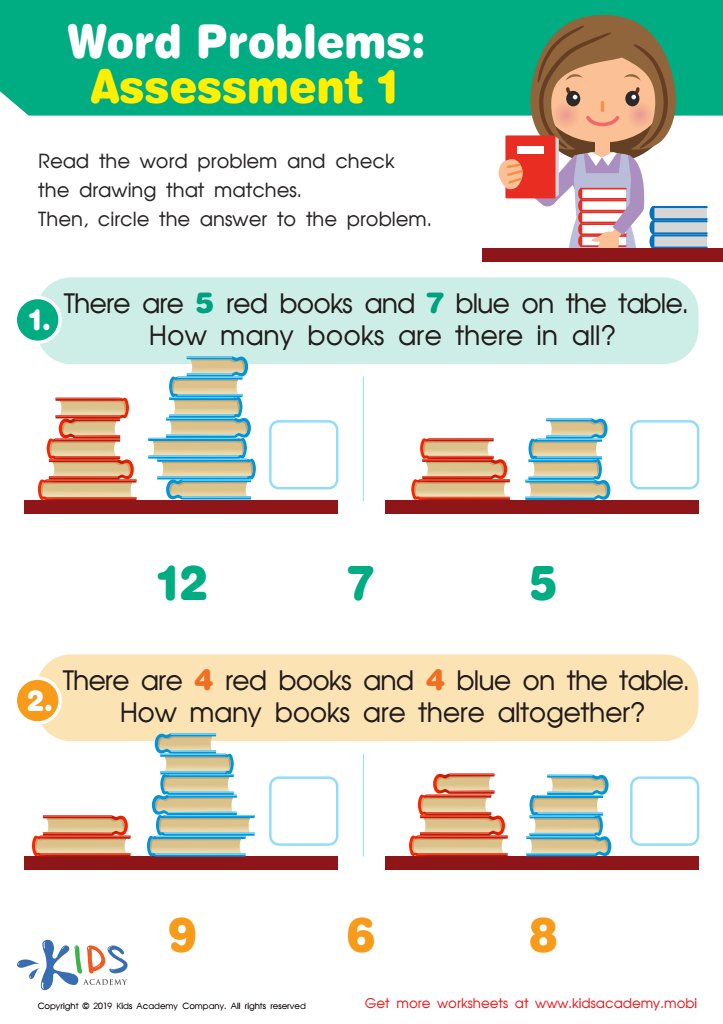
Word Problems: Assessment 1 Worksheet
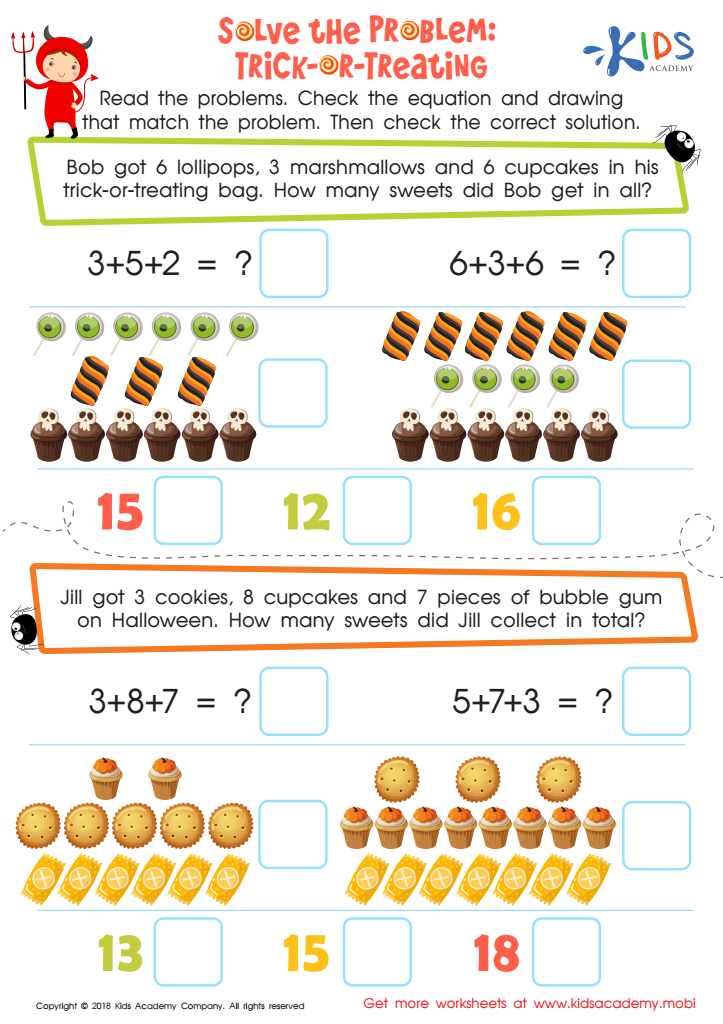
Solve the Problem: Trick–or–treating Worksheet
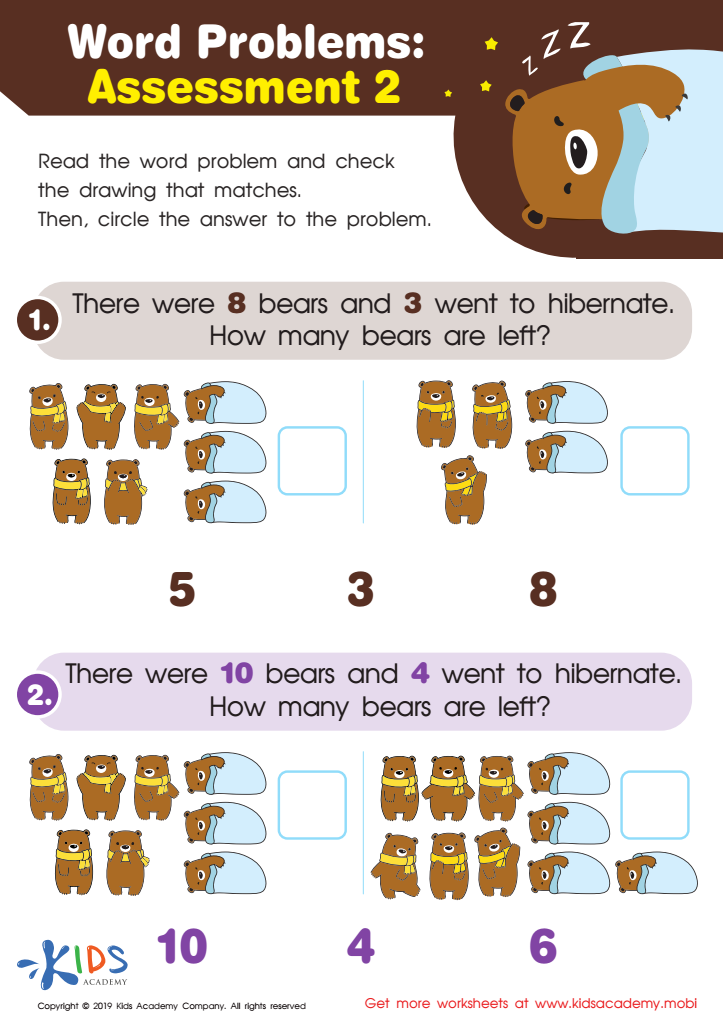
Word Problems: Assessment 2 Worksheet
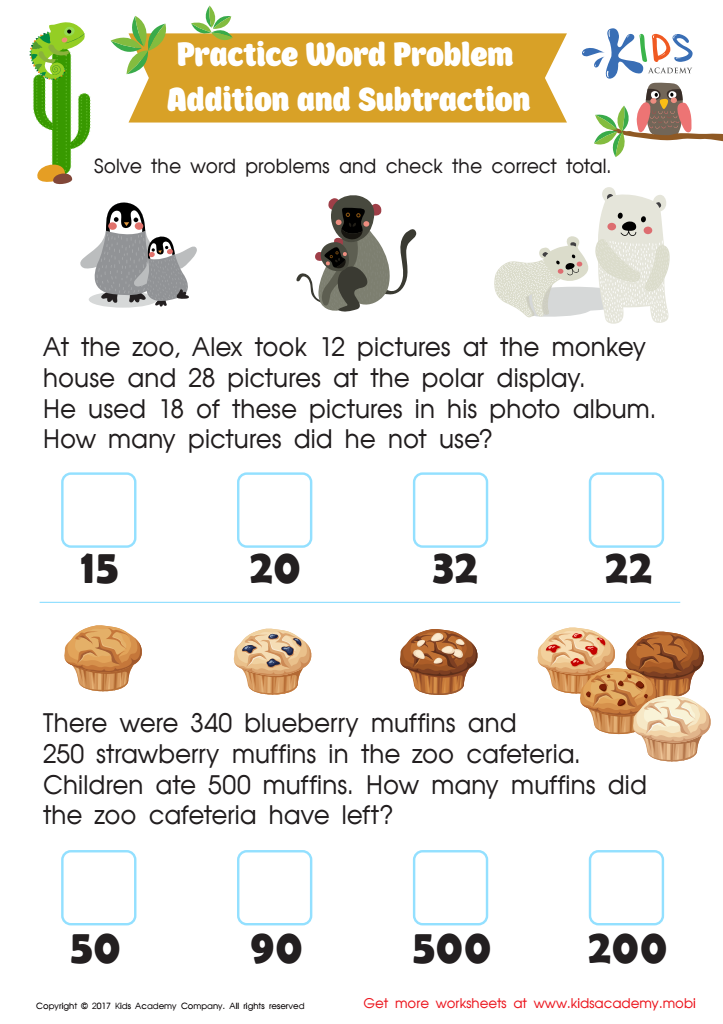
Addition and Subtraction: Word Problems Worksheet








Logical reasoning word problems are essential for children aged 4-8 as they lay the foundation for critical thinking and problem-solving skills. At this developmental stage, children are naturally curious and eager to understand the world around them. Engaging with word problems helps them articulate their thoughts and develop reasoning abilities.
These activities promote cognitive development, allowing children to make connections between concepts and apply their understanding in real-world contexts. For example, solving problems like “If you have two apples and give one away, how many do you have left?” encourages them to reason through arithmetic and understand subtraction.
Moreover, logical reasoning skills foster perseverance. Allowing children to tackle challenging word problems helps cultivate a growth mindset, teaching them to view obstacles as opportunities for learning rather than insurmountable challenges. It aids in developing soft skills such as communication, collaboration, and negotiation, as children often work through problems in pairs or groups.
For parents and teachers, integrating logical reasoning word problems into daily learning activities supports a well-rounded education. It ultimately empowers children to navigate their academic journey with confidence, better preparing them for future educational demands and real-life situations.








