Number Recognition Word Problems Worksheets for Ages 4-8
18 filtered results
-
From - To
Discover our engaging Number Recognition Word Problems Worksheets designed for children ages 4-8! These worksheets from Kids Academy make learning fun through interactive word problems that help develop essential number recognition skills. With a variety of colorful and age-appropriate exercises, young learners will practice identifying numbers, counting objects, and solving simple math problems. Perfect for early grade students, these printables promote critical thinking and problem-solving abilities while preparing kids for more advanced mathematical concepts. Foster your child's love for math with our captivating and educational number recognition worksheets today!
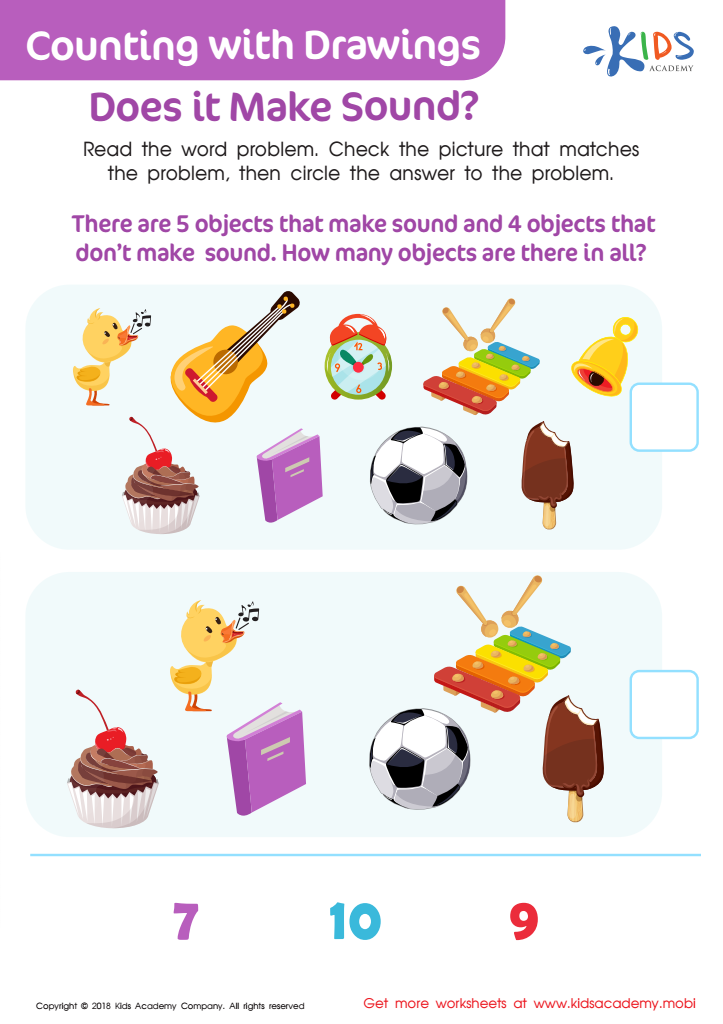
Counting With Drawings. Does It Make Sound? Worksheet
 Assign to My Students
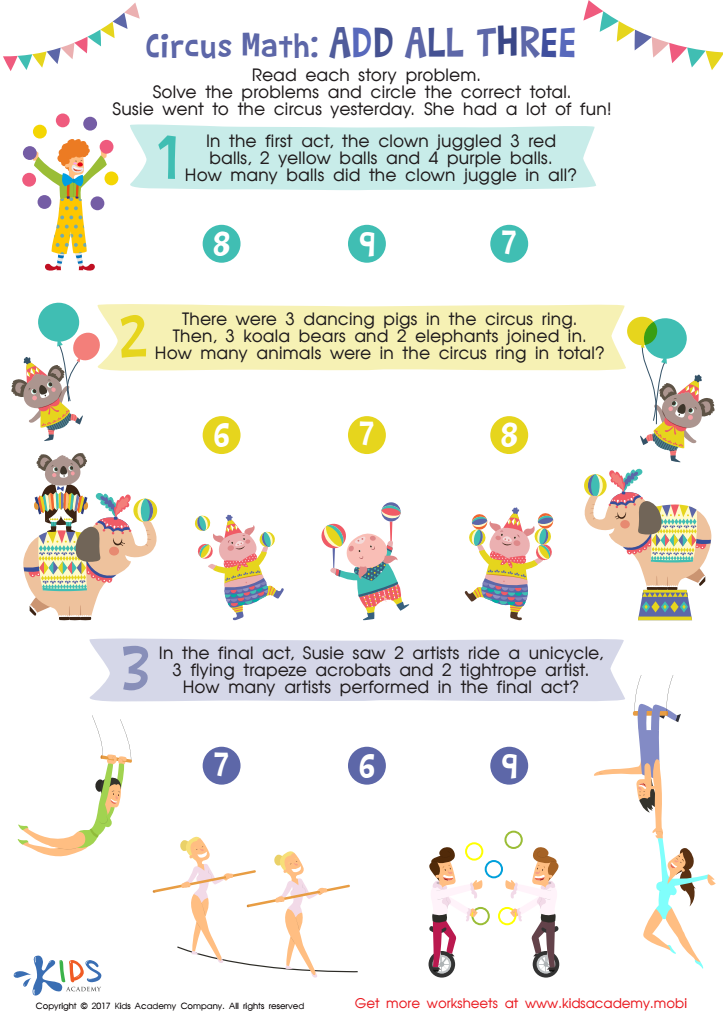
Circus Math Printable
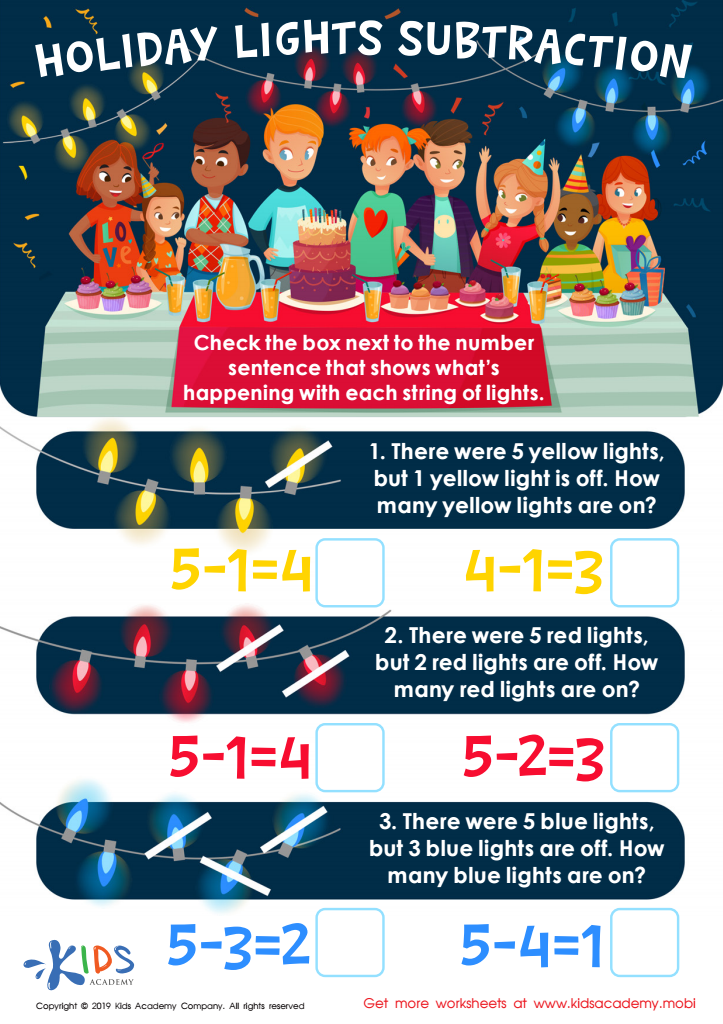
Holiday Lights Subtraction Worksheet
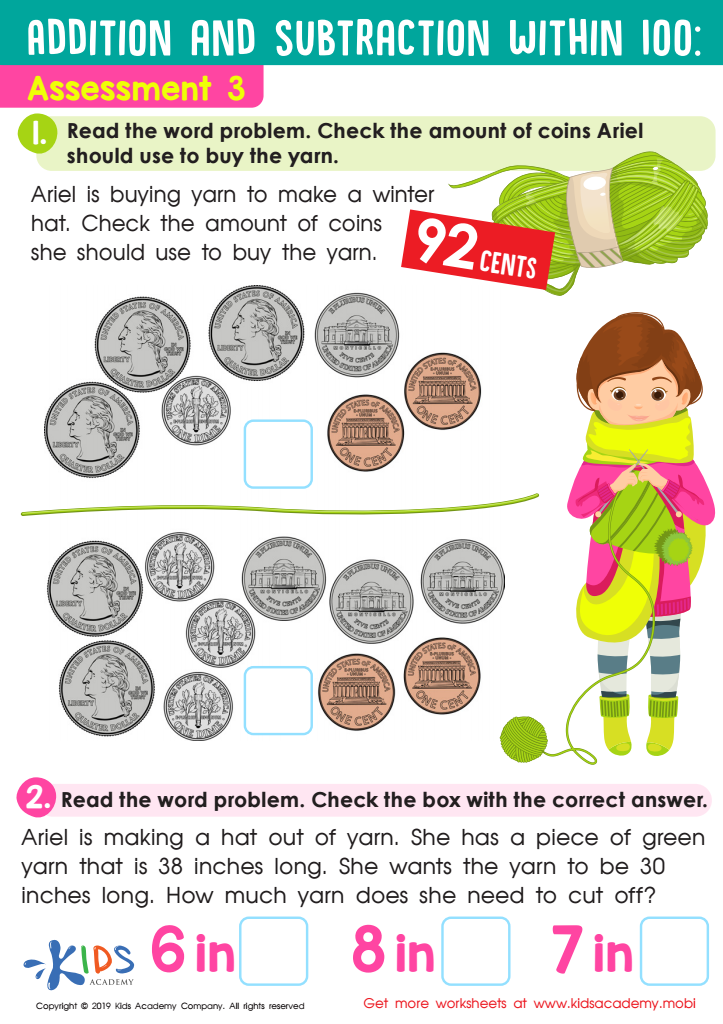
Assessment 3 Math Worksheet
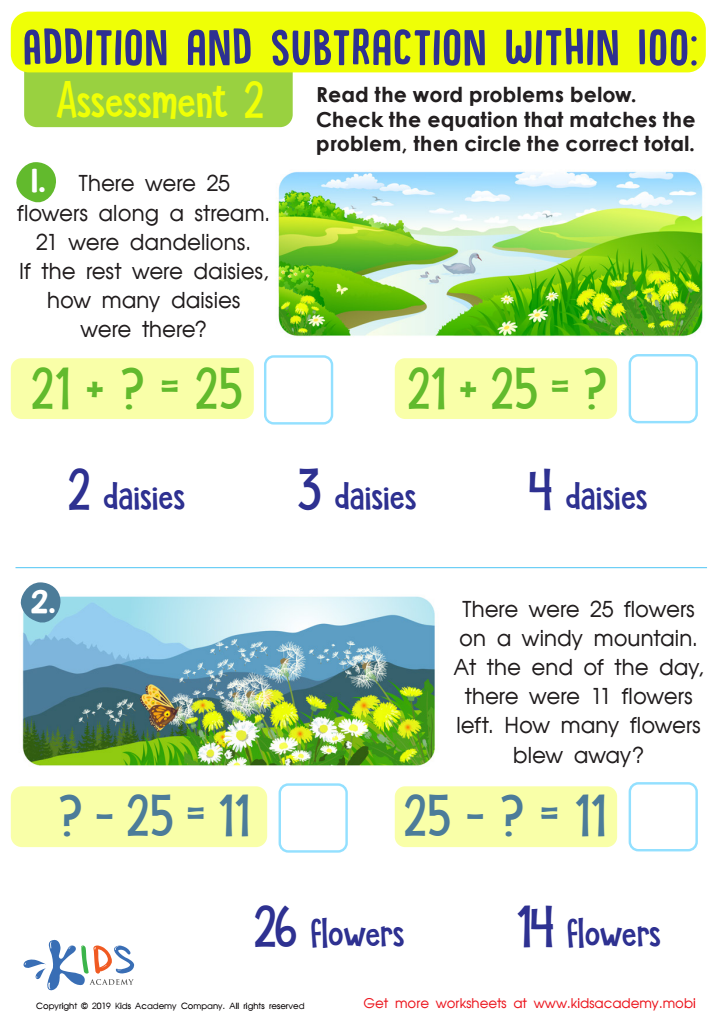
Assessment 2 Math Worksheet
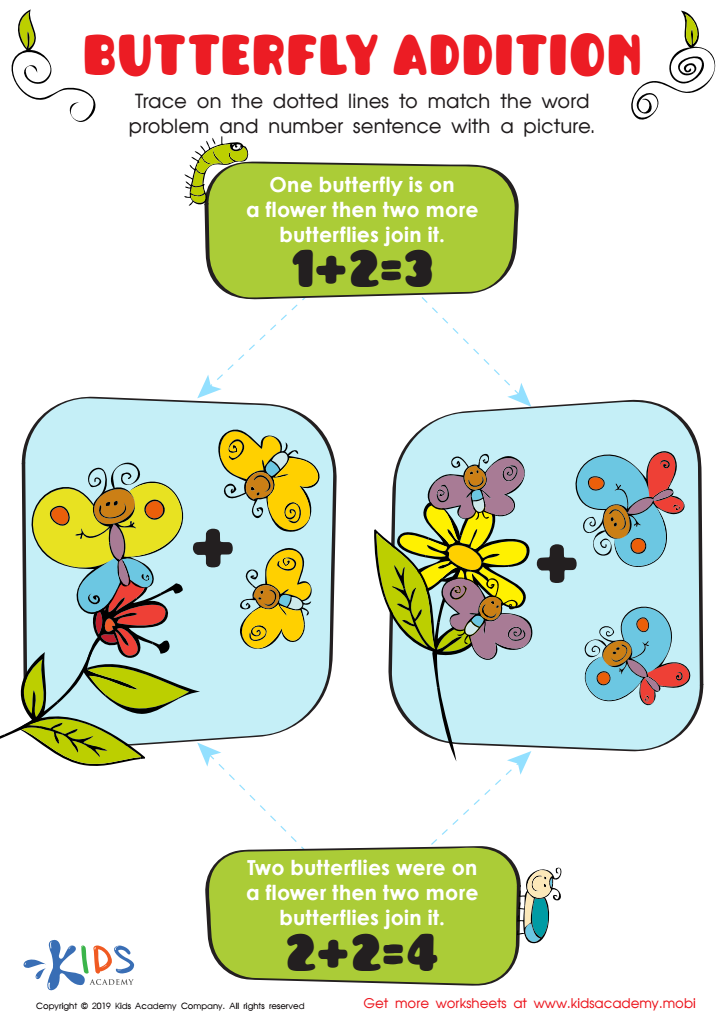
Butterfly Addition Worksheet
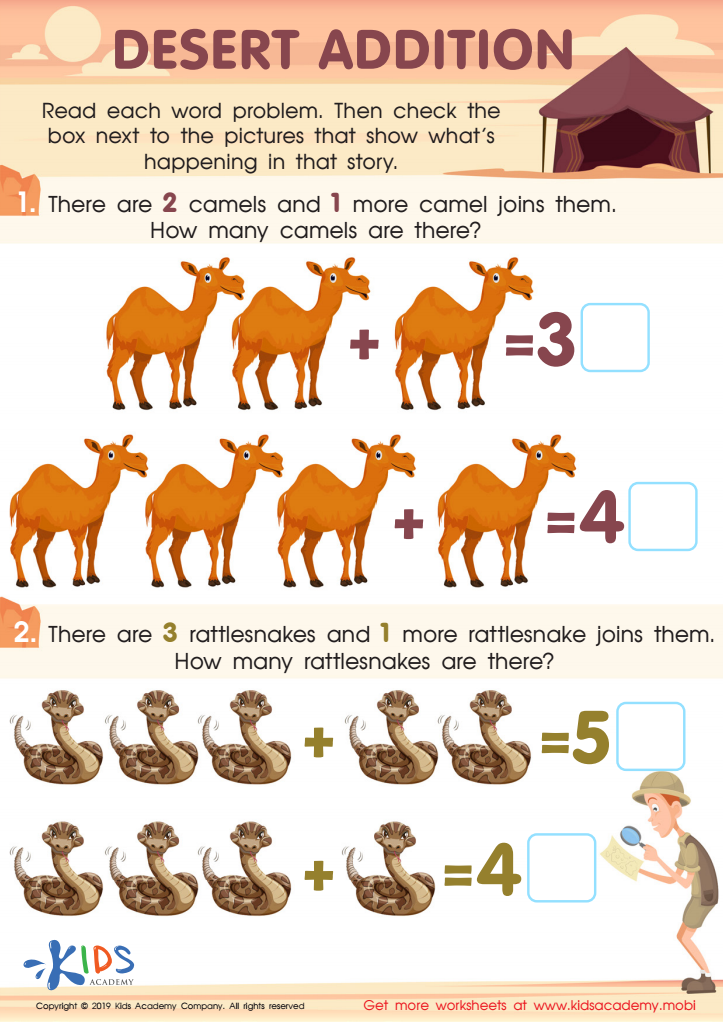
Desert Addition Worksheet
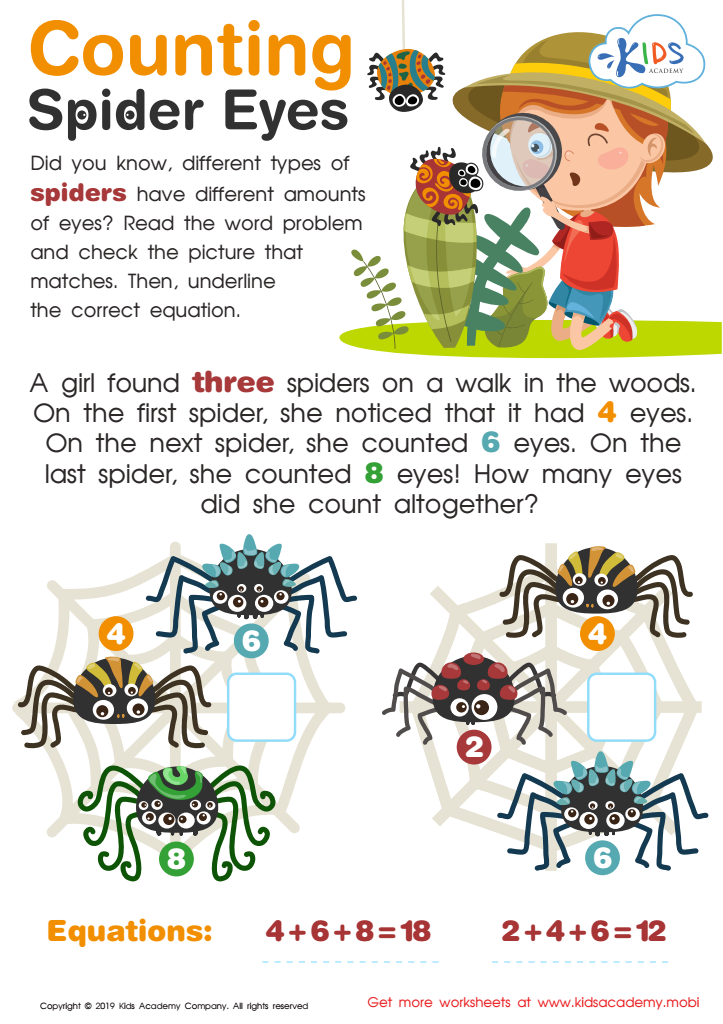
Counting Spider Eyes Worksheet
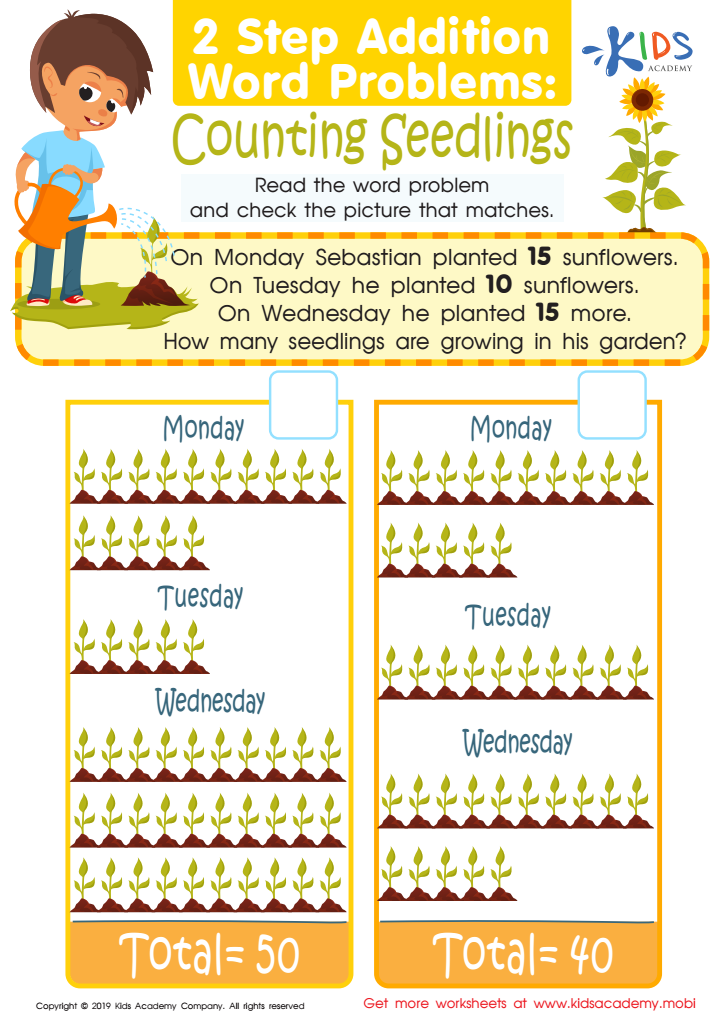
Counting Seedlings Worksheet
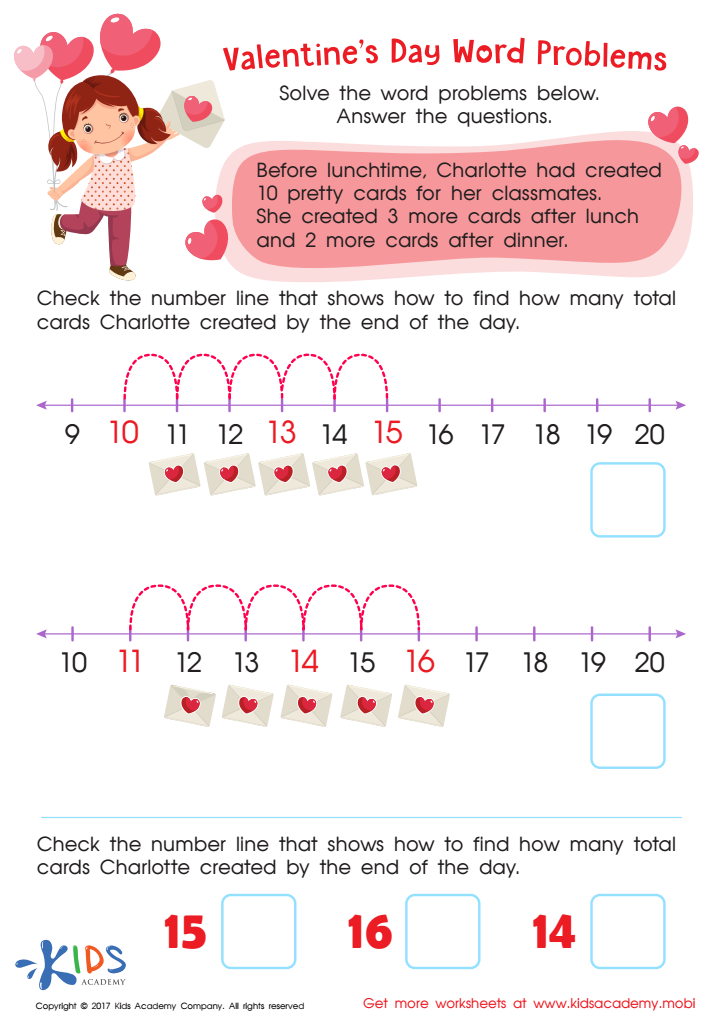
Valentines Day Word Problem Worksheet
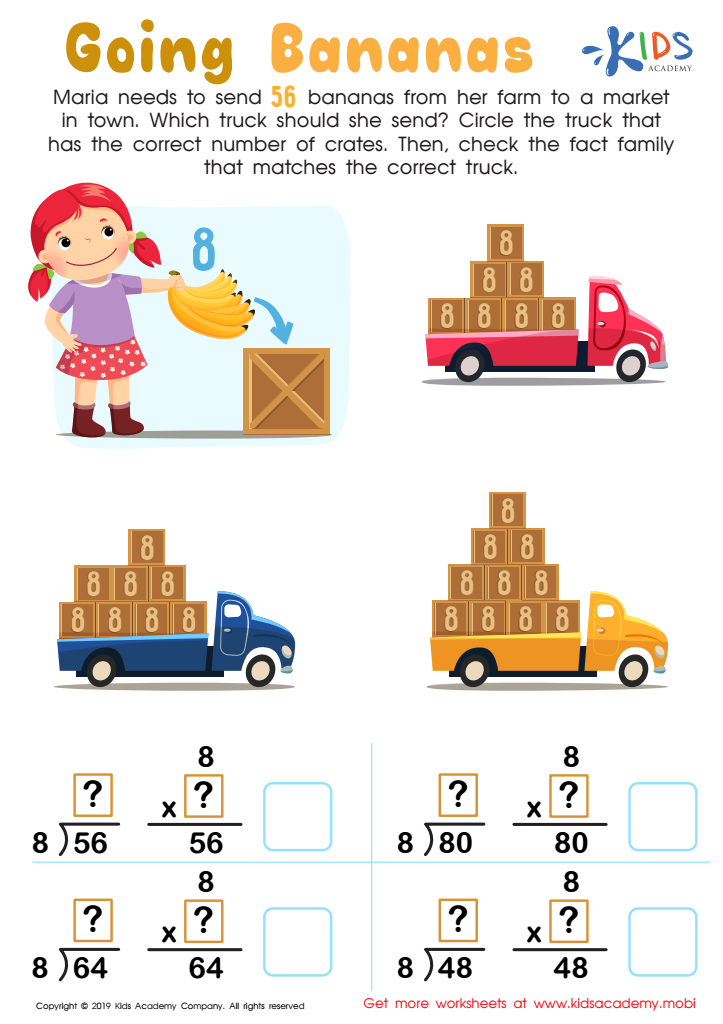
Going Bananas Worksheet
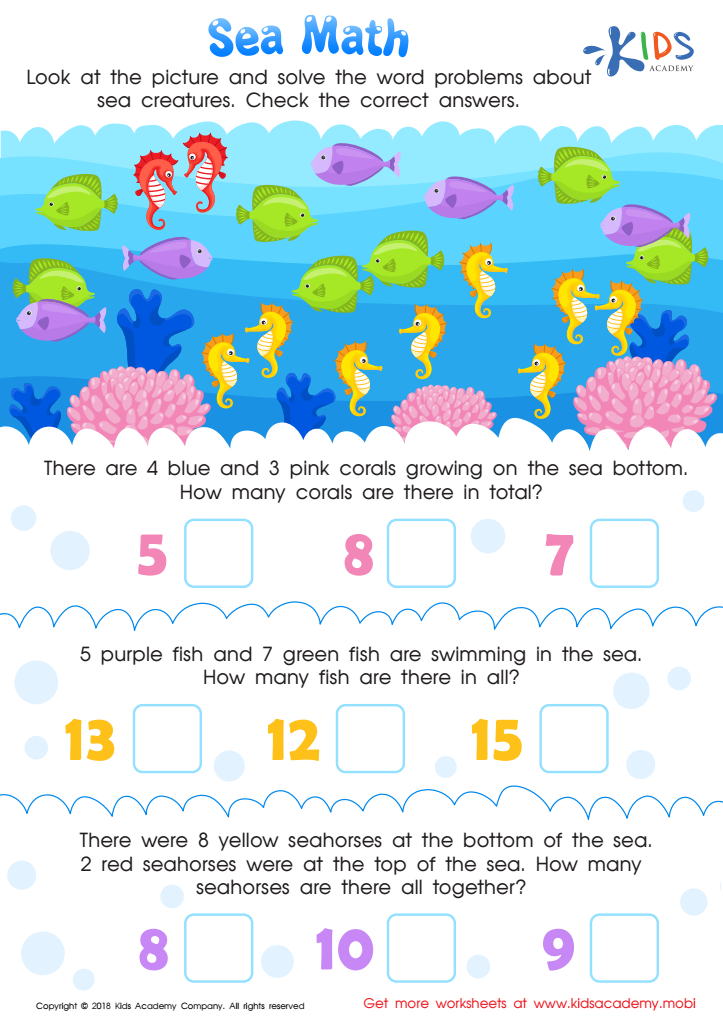
Sea Math Worksheet
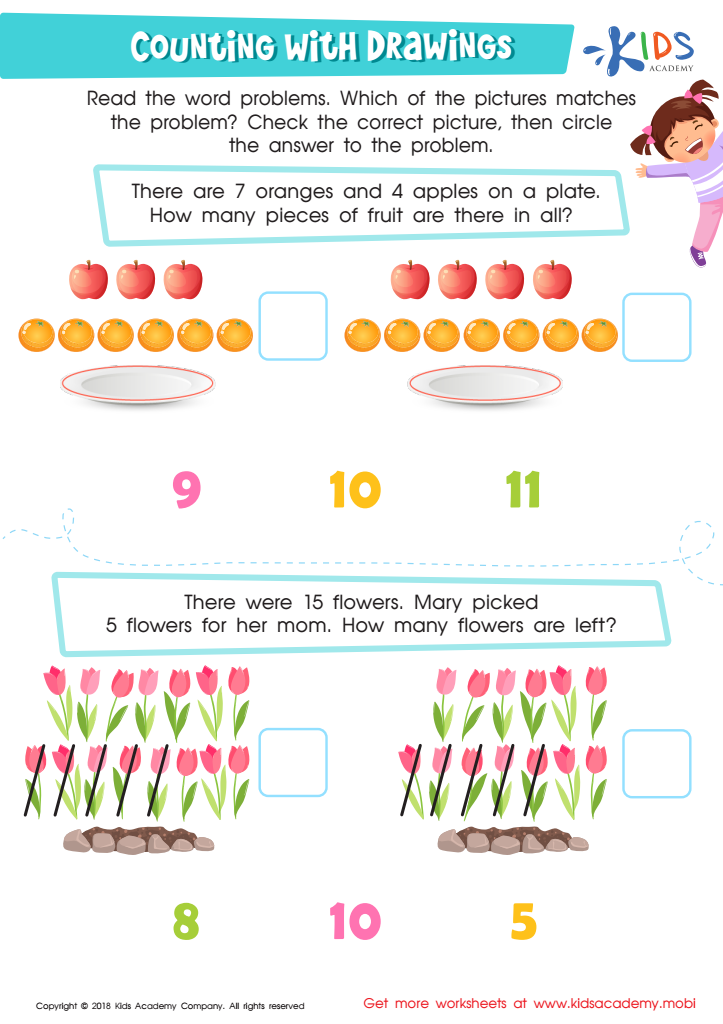
Counting with Drawings: Fruits & Chocolates Worksheet
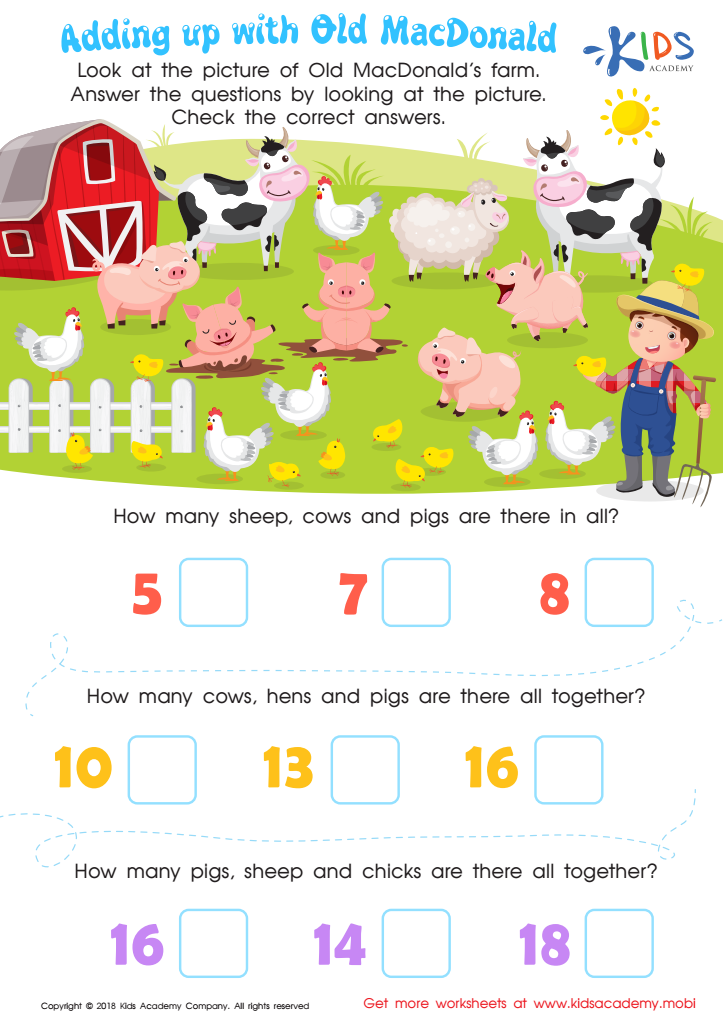
Adding Up with Old MacDonald Worksheet
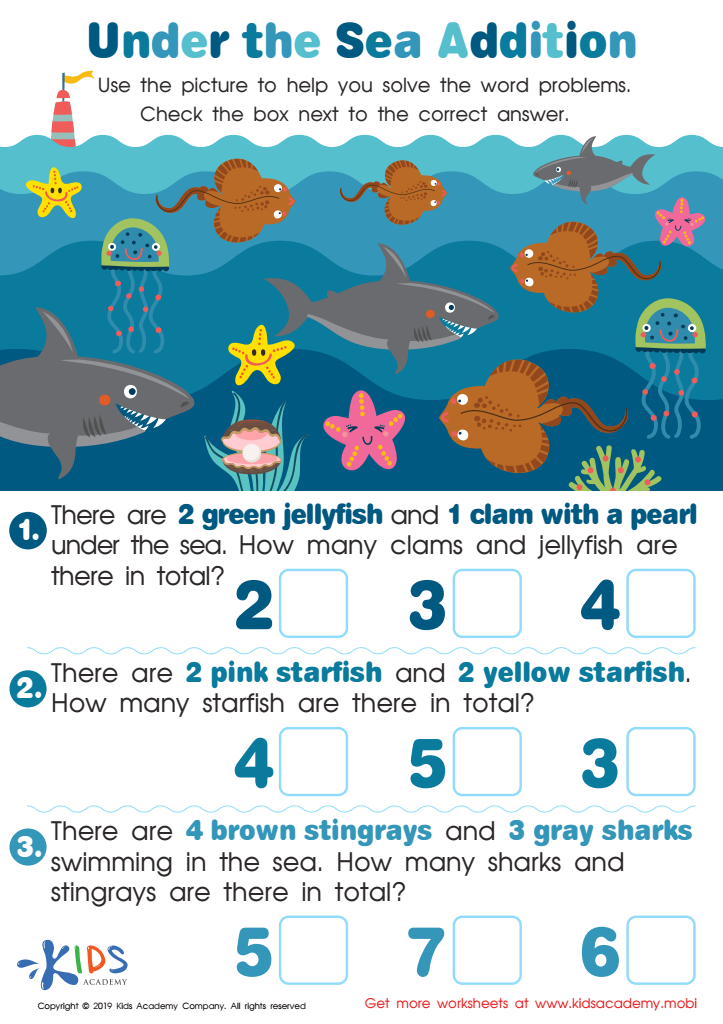
Under the Sea Addition Worksheet
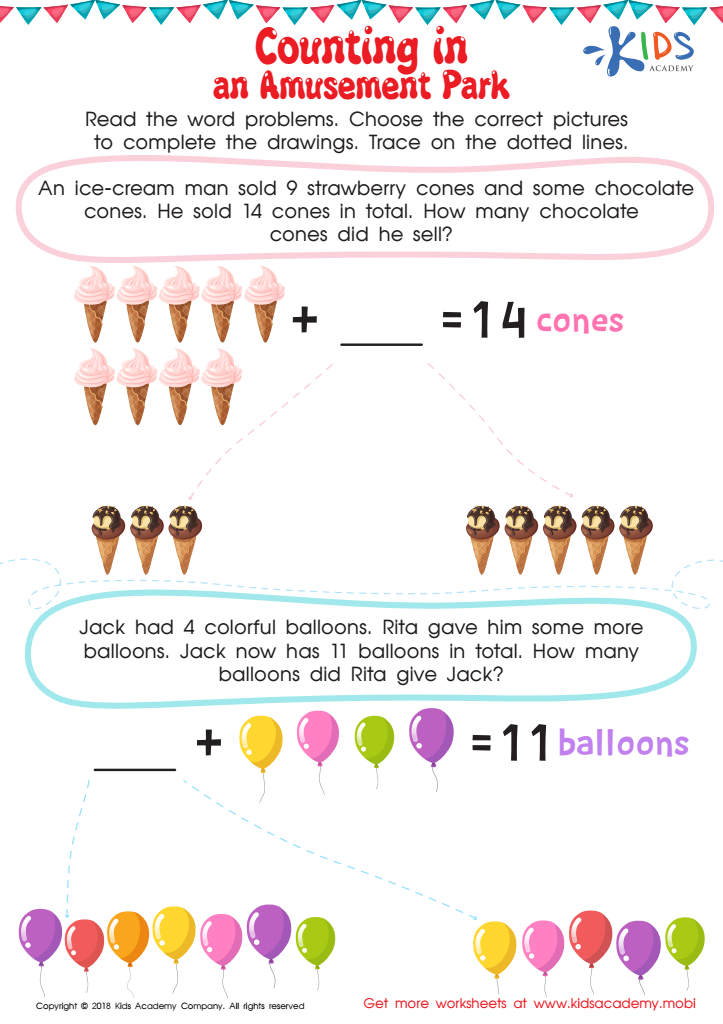
Counting in an Amusement Park Worksheet
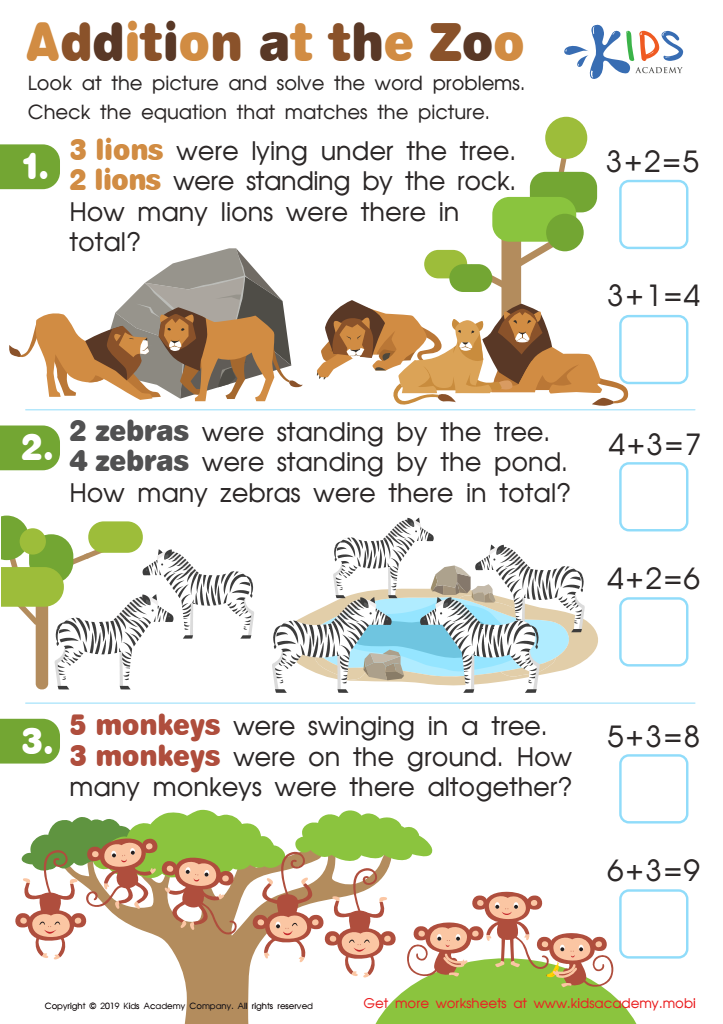
Addition at the Zoo Worksheet
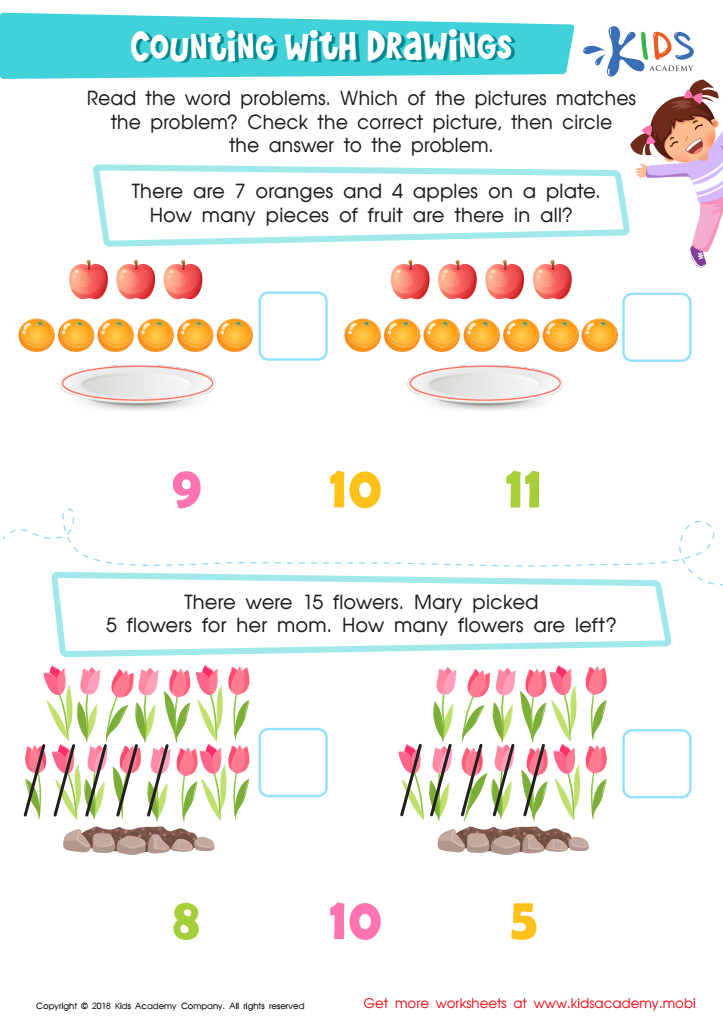
Counting with Drawings:Fruits & Flowers Worksheet








Number recognition word problems are foundational activities designed for children aged 4-8 that combine reading and math skills to provide a multifaceted learning experience. At this young age, children's brains are highly malleable and capable of assimilating basic concepts that will form the bedrock of future learning.
From an educational standpoint, these word problems foster critical thinking and problem-solving abilities. Young learners must not only recognize numbers but also understand their application in various contexts. This dual skill set enhances cognitive development and sets the stage for more complex mathematical reasoning in later years. Practicing these problems helps build a stronger number sense, which is crucial for elementary math competencies like addition and subtraction.
From a developmental perspective, blending literacy with numeracy promotes better comprehension and verbal skills. When children read a problem aloud or listen to it being read, they improve their vocabulary and language skills simultaneously.
Furthermore, number recognition word problems can be tailored to include real-life scenarios, making learning relevant and engaging. This contextual learning not only makes abstract numbers more concrete but also instills the practical utility of mathematics in everyday life.
Overall, investing time in these activities boosts confidence, encourages persistence, and fosters a positive attitude toward learning, all of which are vital for academic success.








