
Real-life application Word Problems Worksheets for Ages 4-8
3 filtered results
Difficulty Level
Grade
Age
-
From - To
Subject
Activity
Standards
Discover engaging real-life application word problems worksheets for ages 4-8 at Kids Academy. Our fun, printable worksheets enhance early math skills by relating concepts to everyday situations, making learning both effective and enjoyable. With a focus on practical examples, children solve problems involving addition, subtraction, and basic counting within real-life contexts such as shopping, traveling, and daily routines. These worksheets promote critical thinking and problem-solving abilities, aimed at fostering a solid foundation in mathematics while keeping young learners intrigued and motivated. Visit our website to explore our diverse collection and elevate your child's learning journey today!
Favorites
With answer key
Interactive
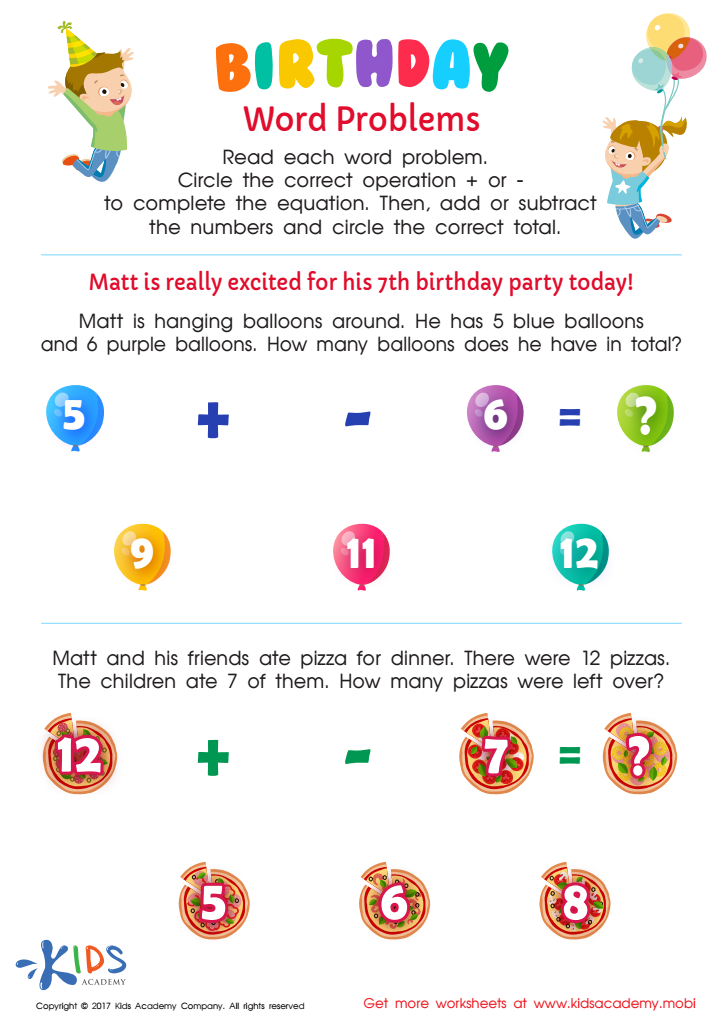
Birthday Word Problems Substraction Worksheet
This worksheet, Birthday Word Problems, is a great way to improve your child's math and literacy skills. It features tricky subtraction equations based on a birthday celebration - perfect for kids who love birthdays!
 Assign to My Students
Birthday Word Problems Substraction Worksheet
Worksheet
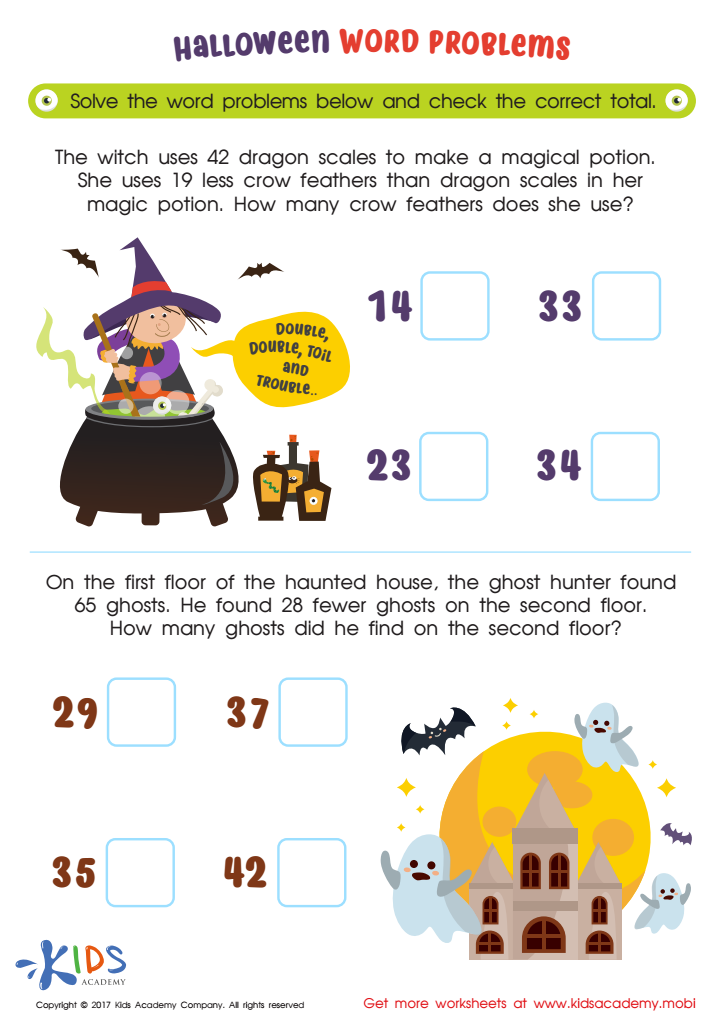
Halloween Word Problems Printable
Ghosts, witches, and other spooky characters make these problems exciting and interactive. Get ready to have some math fun!
Halloween Word Problems Printable
Worksheet
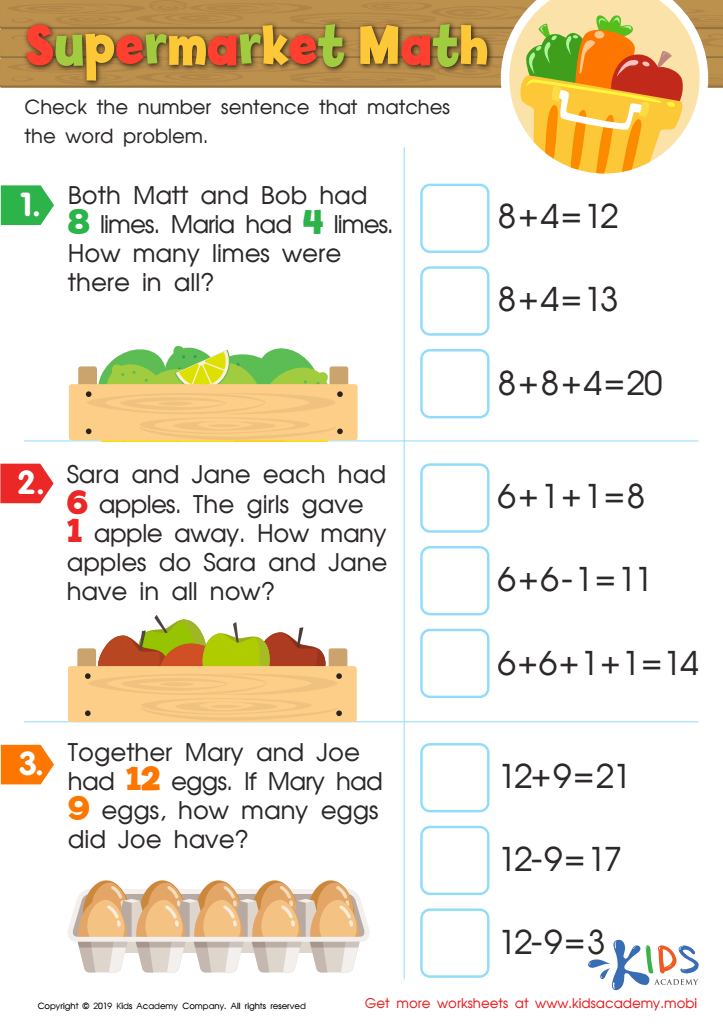
Supermarket Math Worksheet
Take your kids to the supermarket and ask what they're looking forward to buying. Help them solve the three questions in the worksheet by interpreting each one into an equation, then choose the right answer.
Supermarket Math Worksheet
Worksheet
Join Kids Academy for Free
Who is primarily going to use this learning content?








Parents and teachers should care about real-life application word problems for ages 4-8 because these problems build essential skills that lay the foundation for future learning and everyday life. At this formative age, children are naturally curious about the world around them. Real-life word problems help channel this curiosity into practical learning opportunities, making abstract concepts tangible and relatable.
By solving word problems, children begin to understand how math applies to real-world situations. This fosters a positive attitude toward math, reducing anxiety and encouraging a growth mindset. Skills like critical thinking, problem-solving, and logical reasoning are developed as children break down complex problems into manageable steps. Additionally, these exercises improve literacy because children must comprehend the text to extract relevant mathematical information.
For example, calculating the total number of apples when two friends combine their fruit not only teaches addition but also collaborative thinking and resource-sharing. Integrating learning into daily contexts, like grocery shopping or cooking, makes math relevant, engaging, and fun.
Moreover, early exposure to word problems lays the groundwork for more advanced problem-solving skills needed later in their education and life. Therefore, cultivating these abilities in young learners can set them on a path of academic success and practical competence.








