Enhancing Reading Comprehension Building Vocabulary Worksheets for Ages 4-8
4 filtered results
-
From - To
Boost your child's literacy skills with our Enhancing Reading Comprehension Building Vocabulary Worksheets for Ages 4-8. These free, printable resources are expertly designed to improve reading comprehension while expanding young learners' vocabularies. Through engaging activities and exercises, children will develop the ability to understand texts, think critically, and express ideas confidently. Perfect for at-home practice or classroom use, our worksheets align with early education standards, making them an ideal supplementary tool for parents and teachers. Cultivate a lifelong love of reading and empower your child with the skills they need for academic success today!
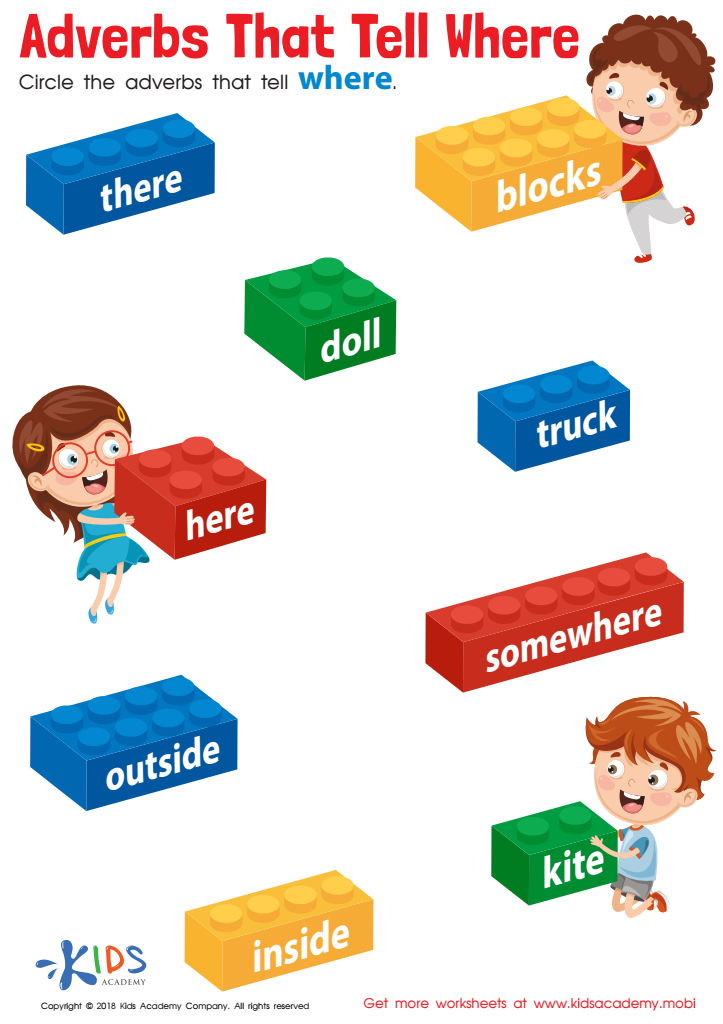
Adverbs That Tell Where Worksheet
 Assign to My Students











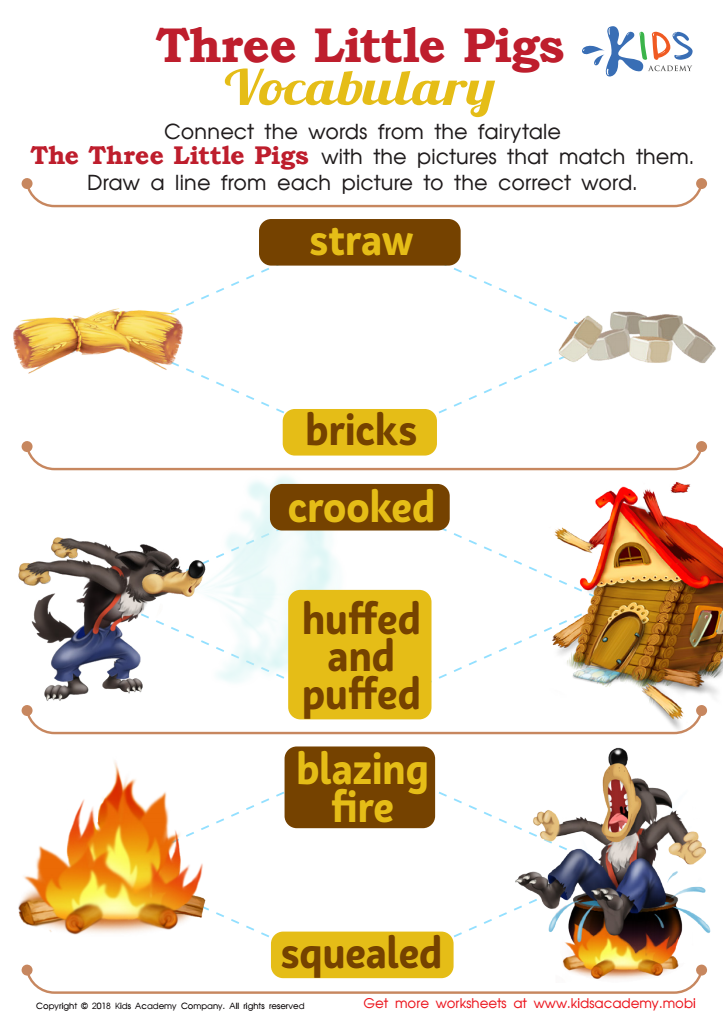
Three Little Pigs Vocabulary Worksheet
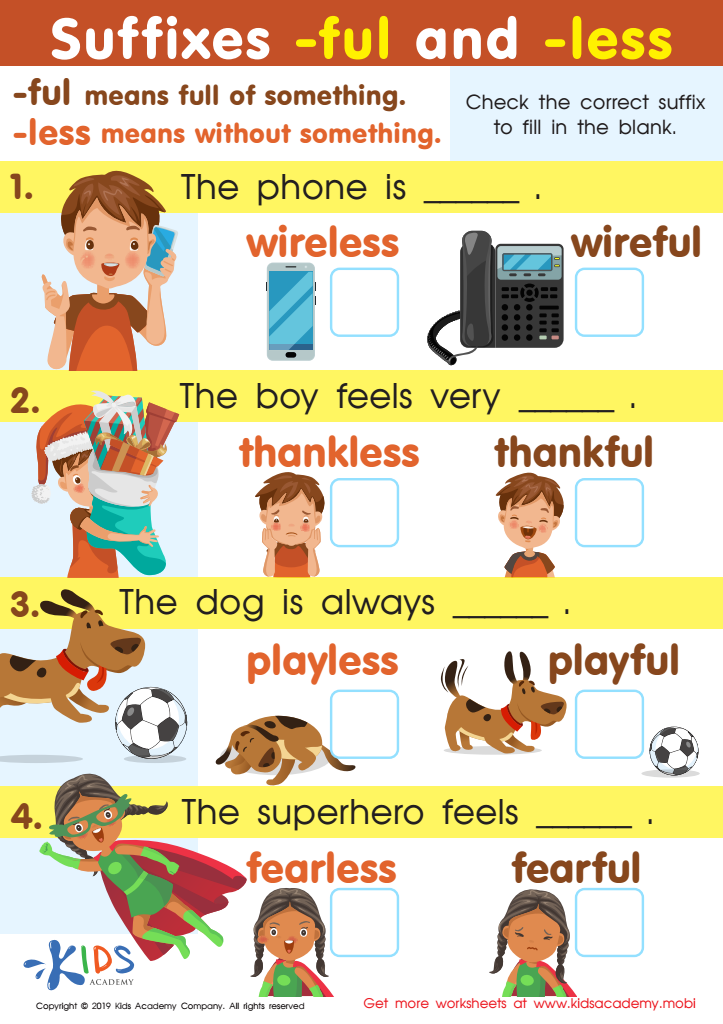
Suffixes –ful and –less Worksheet
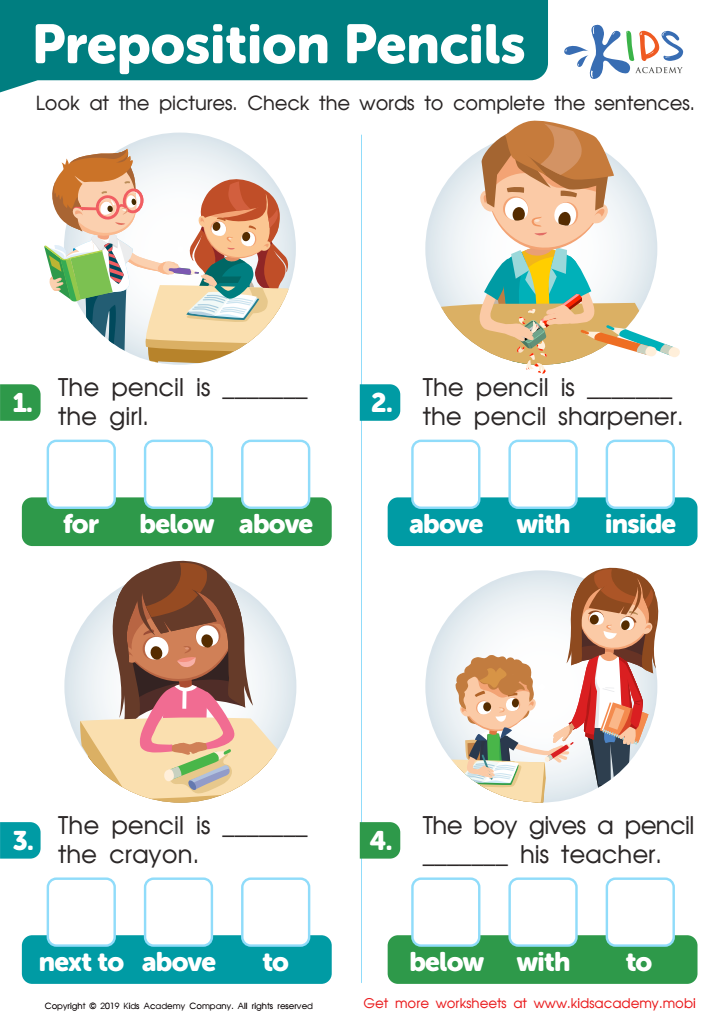
Preposition Pencils Worksheet





.jpg)


Enhancing reading comprehension and building vocabulary for children ages 4-8 is crucial for several reasons. First, these foundational skills set the stage for academic success. Children who comprehend what they read are more likely to enjoy reading and continue to develop their skills. This enjoyment and proficiency, in turn, contribute to better performance across all subjects, including math, science, and social studies, as most academic learning involves reading.
Second, a rich vocabulary allows children to express themselves more clearly and effectively, fostering better communication skills. This is not only essential for academic success but also for social interactions and emotional development. Children with strong vocabularies can articulate their thoughts and emotions better, enabling them to build stronger relationships with peers and adults.
Third, early vocabulary and comprehension skills are linked to long-term cognitive development. Young brains are incredibly receptive to learning, and the skills developed in these formative years create neural pathways that benefit lifelong learning and cognitive function.
Lastly, encouraging parents and teachers to focus on these skills promotes a collaborative environment for a child's education. When parents and teachers work together to support literacy, children receive a consistent and reinforced message about the importance of reading and learning. This collaboration ensures that children have the resources and encouragement they need to succeed.








