
Phonics recognition Building Vocabulary Worksheets for Ages 4-8
5 filtered results
Difficulty Level
Grade
Age
-
From - To
Subject
Activity
Standards
Discover our engaging Phonics Recognition Building Vocabulary Worksheets, designed specifically for children aged 4-8. These worksheets foster essential reading skills by encouraging kids to connect sounds with letters and words, enhancing their vocabulary in a fun and interactive way. Each worksheet is tailored to keep young learners motivated, featuring colorful visuals and easy-to-follow exercises that make phonics practice enjoyable. Ideal for classroom or home learning, our resources support early literacy development, preparing children for future reading success. Help your child build a strong foundation in phonics with our thoughtfully designed worksheets today! Explore the fun of learning with Kids Academy.
Favorites
With answer key
Interactive
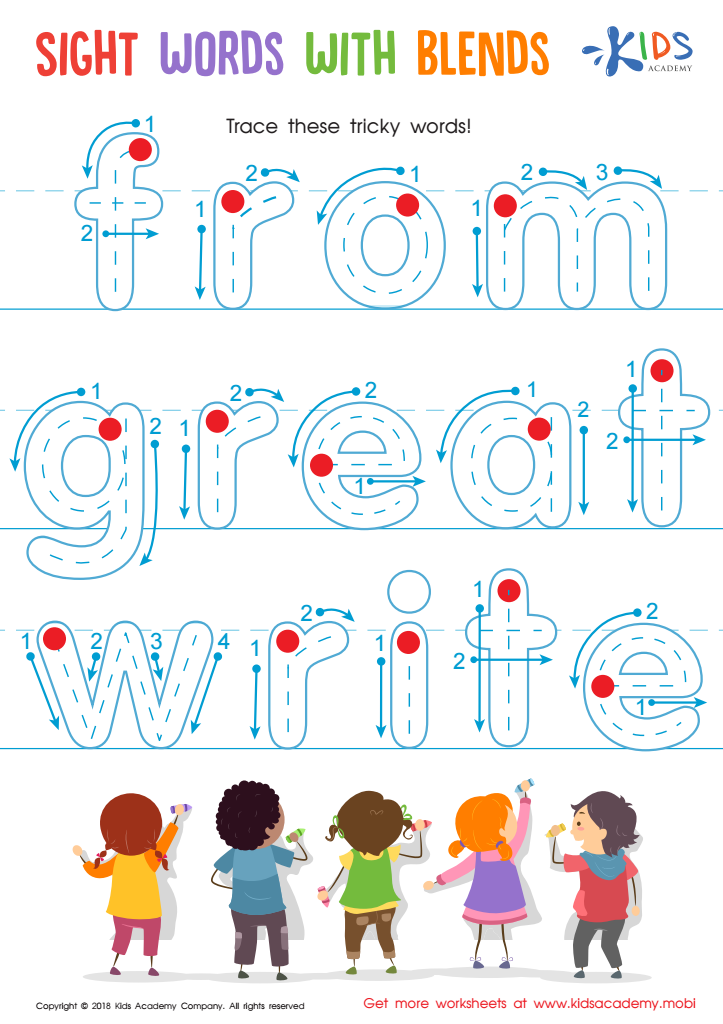
Sight Words with Blends Worksheet
This free PDF lets your children trace and write sight words with tricky blends. The guide numbers help them start from the top, building fine motor skills and enhancing sight word vocab. It's a great way to give your kids a solid foundation for reading!
 Assign to My Students
Sight Words with Blends Worksheet
Worksheet











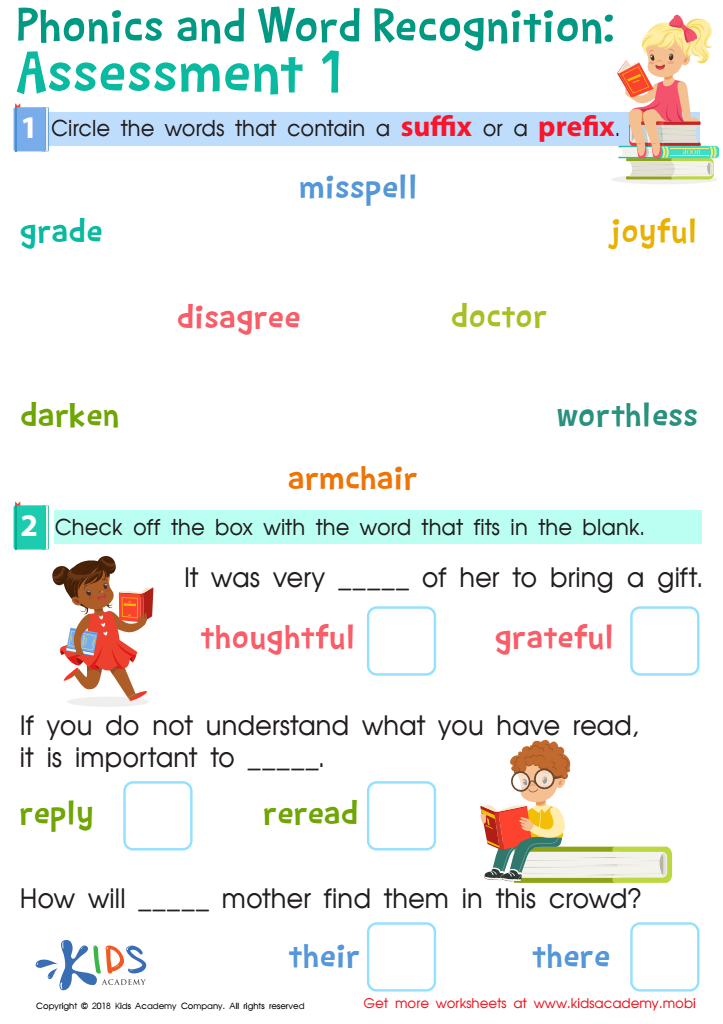
Phonics and Word Recognition: Assessment 1 Worksheet
Explain prefixes (words added to start of another word to give it a new meaning) and suffixes (added to end of word to change its meaning) to your kids with examples like 'unhappy' (prefix) and 'forgetful' (suffix). Now, help your child complete this worksheet, including circling words and checking boxes.
Phonics and Word Recognition: Assessment 1 Worksheet
Worksheet
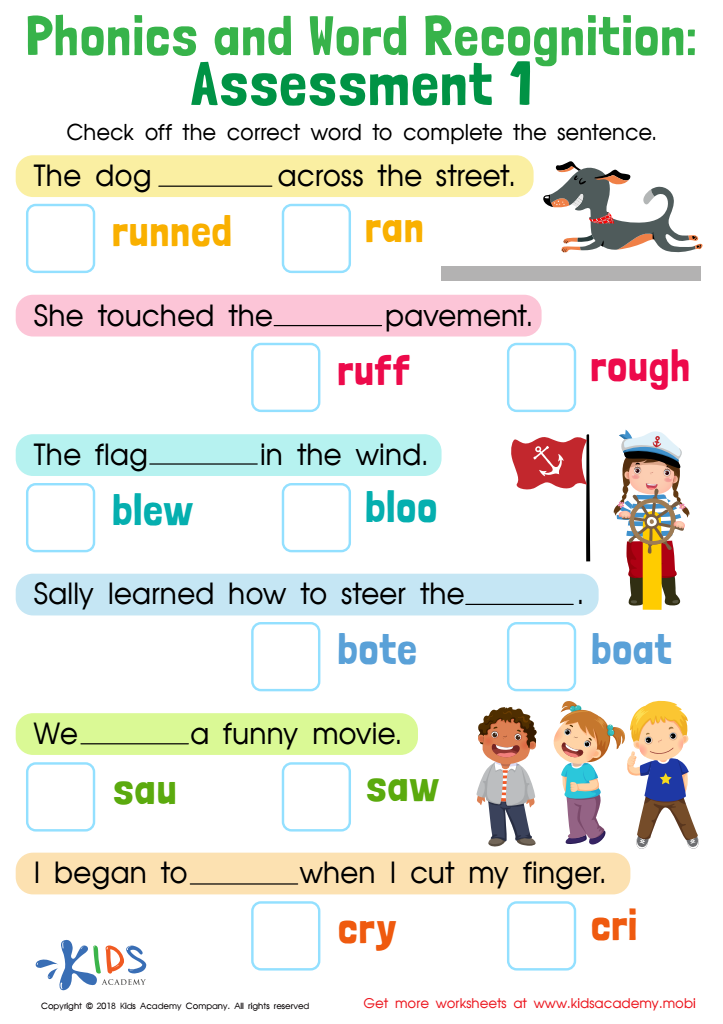
Phonics and Word Recognition: Assessment 1 Worksheet
This worksheet tests phonetics and word recognition. Students should be familiar with past tense verbs. Read incomplete sentences, then read multiple options and help students select the correct one.
Phonics and Word Recognition: Assessment 1 Worksheet
Worksheet
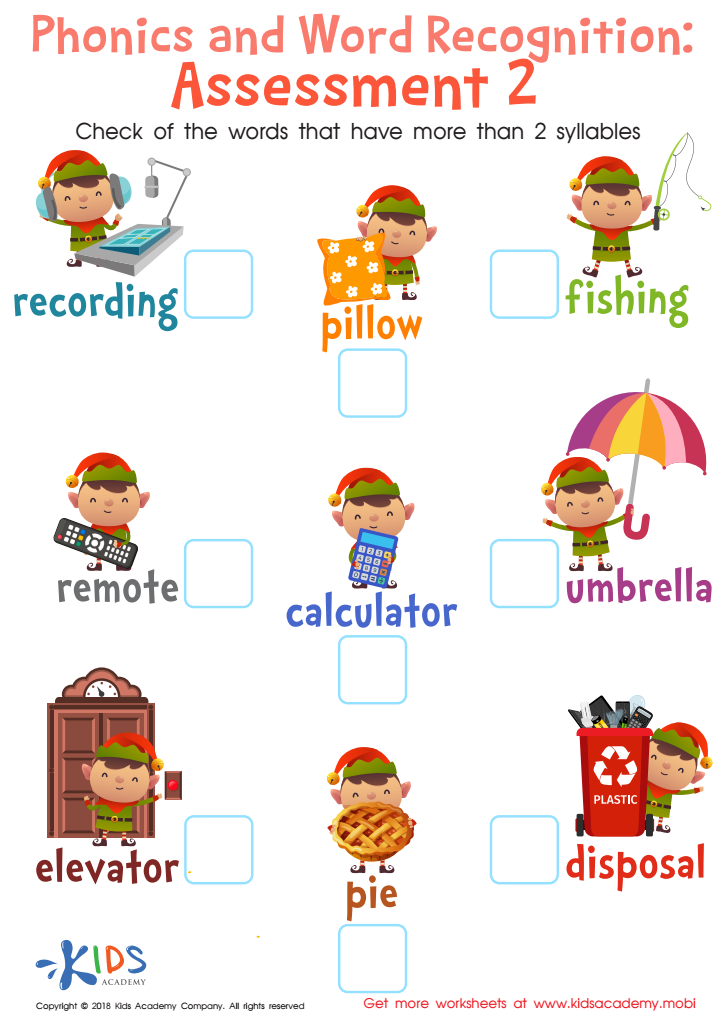
Phonics and Word Recognition: Assessment 2 Worksheet
Help your kids learn proper pronunciation by counting syllables. Most words they'll encounter have 1-3 syllables, making them simple to say. Have them repeat the words in your worksheet after you. Focus on longer words with more than two syllables.
Phonics and Word Recognition: Assessment 2 Worksheet
Worksheet
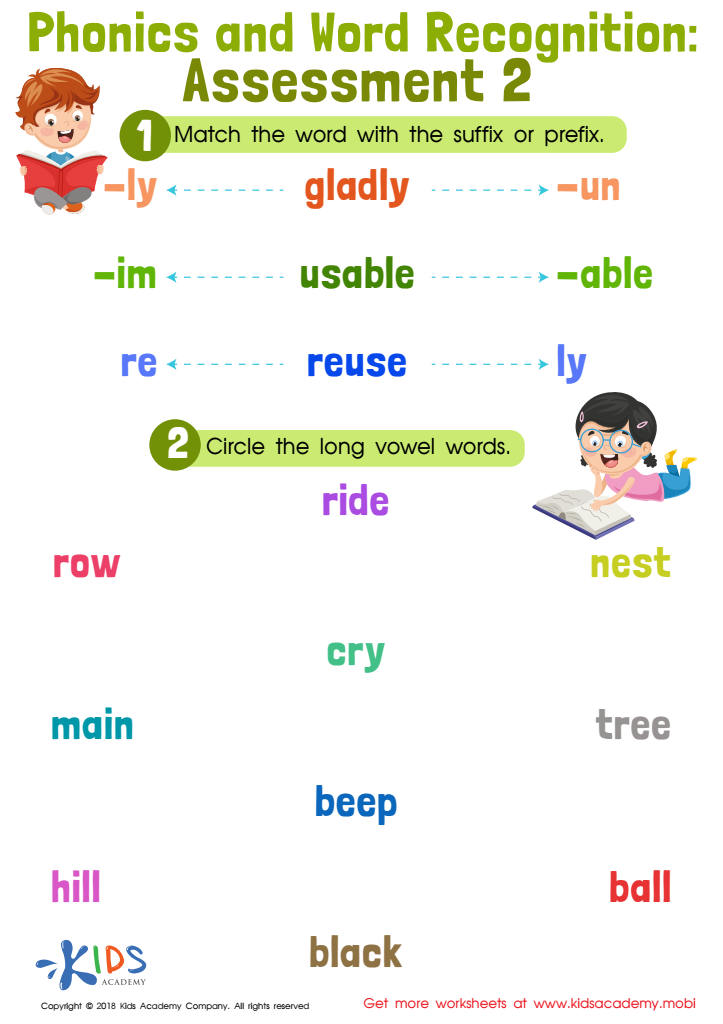
Phonics and Word Recognition: Assessment 2
Give kids common examples of suffixes and prefixes, such as "un-," "unhappy," "ness," "happyness." Ask them to match each word in the word recognition exercise to the correct suffix or prefix. Test phonetic understanding by having them circle the long vowel sounds.
Phonics and Word Recognition: Assessment 2
Worksheet
Join Kids Academy for Free
Who is primarily going to use this learning content?








Phonics recognition and vocabulary building are critical components of early literacy for children aged 4-8. First and foremost, phonics is the foundation of reading, as it helps children understand the relationship between letters and sounds. By mastering phonics, children gain the ability to decode words, which is essential for reading competence. This skill becomes particularly important as children progress in their schooling and encounter more complex texts.
Moreover, building vocabulary is integral to comprehension and communication. Children with a rich vocabulary are better equipped to express themselves and understand what they read. Expanding vocabulary also enhances critical thinking and invites curiosity about the world around them, fostering a love for learning.
Parents and teachers play a crucial role in this developmental stage. Engaging children in phonics through fun activities like rhymes, games, and storytelling can make learning enjoyable and effective. Furthermore, encouraging vocabulary expansion through reading diverse books, introducing new words in everyday conversations, and involving children in discussions about different topics enriches their linguistic skills. Investing in phonics recognition and vocabulary development not only sets children on a path to academic success but also prepares them to navigate their future with confidence and clarity.








