Understanding symmetry Building Vocabulary Worksheets for Ages 4-8
5 filtered results
-
From - To
Explore our "Understanding Symmetry Building Vocabulary Worksheets" designed for children ages 4-8! These engaging worksheets introduce young learners to the concept of symmetry through fun activities and creative exercises. Kids will expand their vocabulary while identifying symmetrical shapes, exploring patterns, and recognizing symmetry in everyday objects. Our carefully crafted resources encourage critical thinking and enhance observational skills, making learning about symmetry both enjoyable and educational. Perfect for classroom use or at-home study, these worksheets support early math skills and language development. Help your child discover the beauty of symmetry while building their vocabulary today!











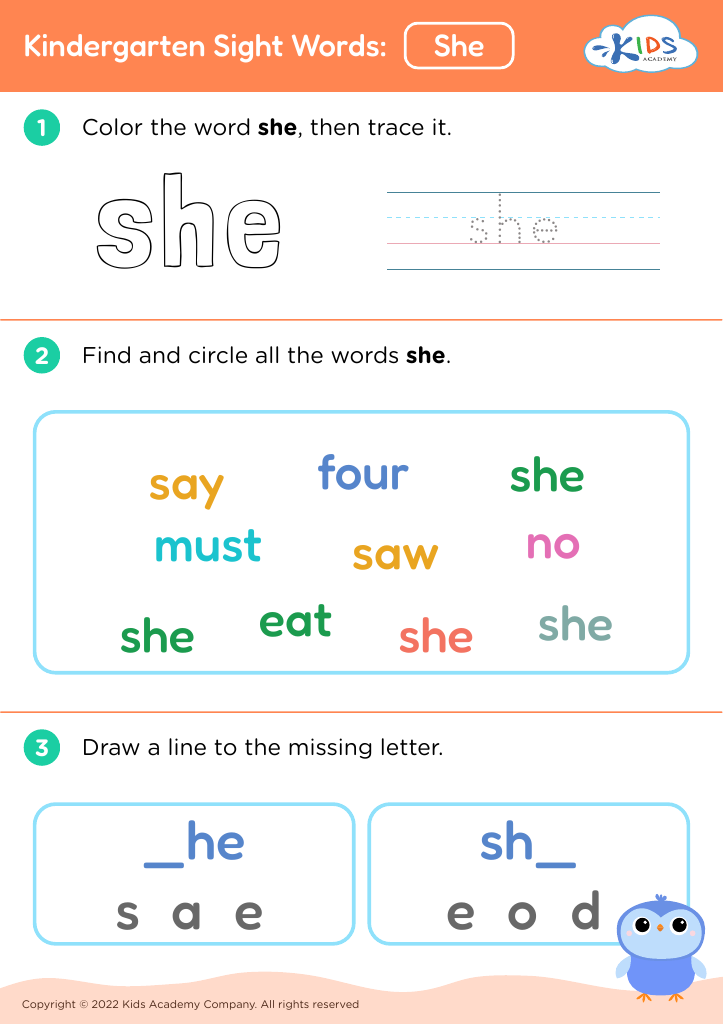








Understanding symmetry is crucial for children aged 4 to 8 as it lays the foundational skills for mathematical reasoning, problem-solving, and critical thinking. When children grasp the concept of symmetry, they enhance their spatial awareness and learn to recognize patterns, which are essential skills in geometry and science. Moreover, symmetry is prevalent in nature, art, and daily surroundings, making its understanding meaningful and relatable for young learners.
Building vocabulary alongside teaching symmetry is equally important, as it enriches children’s communication skills and fosters their ability to express ideas. Vocabulary development at this stage supports literacy, comprehension, and overall cognitive growth. When children can articulate concepts such as "symmetrical," "asymmetrical," "mirror," and "pattern," they are better equipped to engage with peer discussions, follow instructions, and explore their environments creatively.
Involving parents and teachers in these discussions can create a shared learning experience that reinforces these concepts in various contexts. By emphasizing the significance of symmetry and vocabulary, parents and teachers help children develop a keen understanding of their world, paving the way for academic success and a lifelong love of learning.








