Word identification Building Vocabulary Worksheets for Ages 4-8
5 filtered results
-
From - To
Boost your child’s reading journey with our engaging Word Identification Building Vocabulary Worksheets, specially designed for ages 4-8. These fun, educational resources from Kids Academy enhance word recognition and vocabulary in young learners, promoting reading fluency and comprehension. Our printable worksheets incorporate interactive activities that foster critical thinking and language skills. Perfect for early grade students, they provide a solid foundation in phonics, sight words, and context clues. Empower your child to become a confident reader while enjoying dynamic learning experiences. Download today and embark on an exciting literacy adventure!
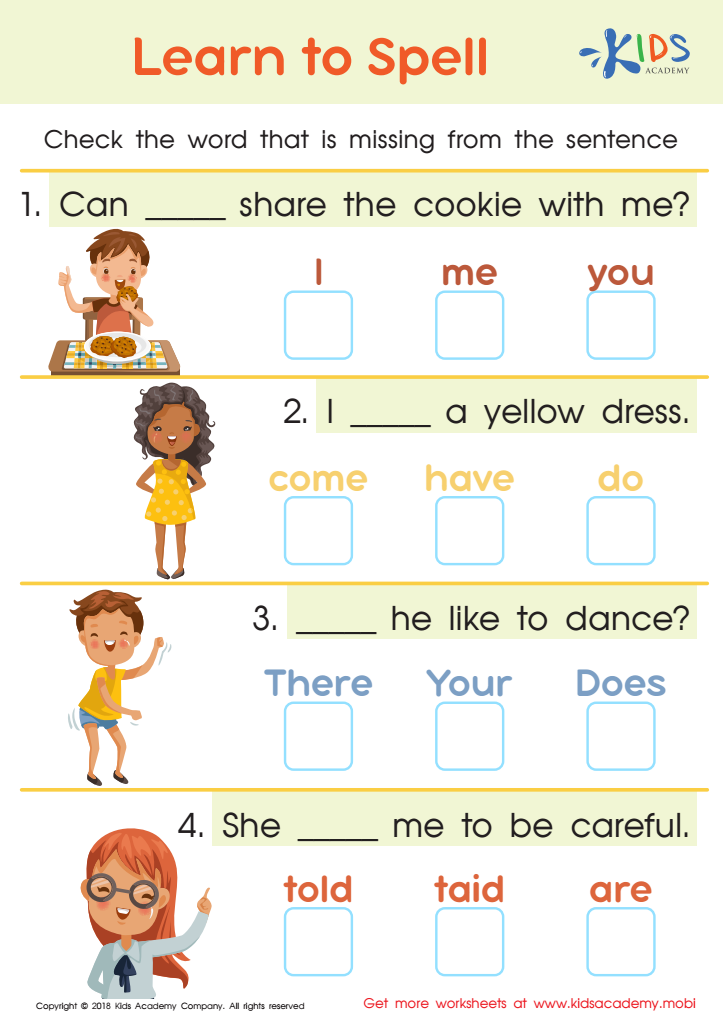
Learn to Spell Worksheet
 Assign to My Students











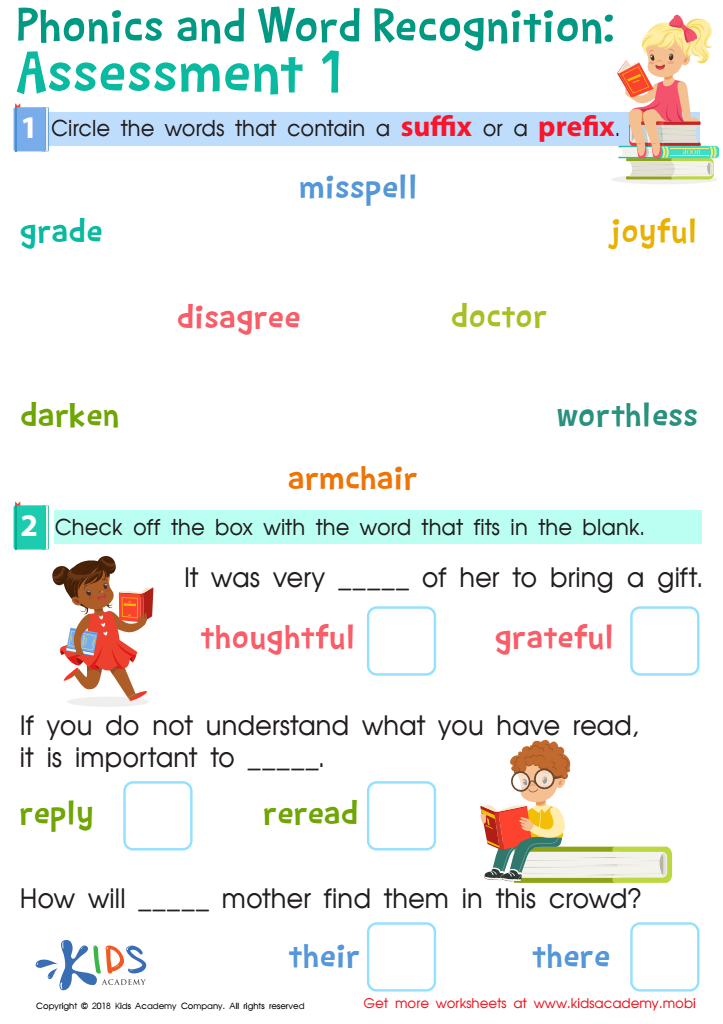
Phonics and Word Recognition: Assessment 1 Worksheet
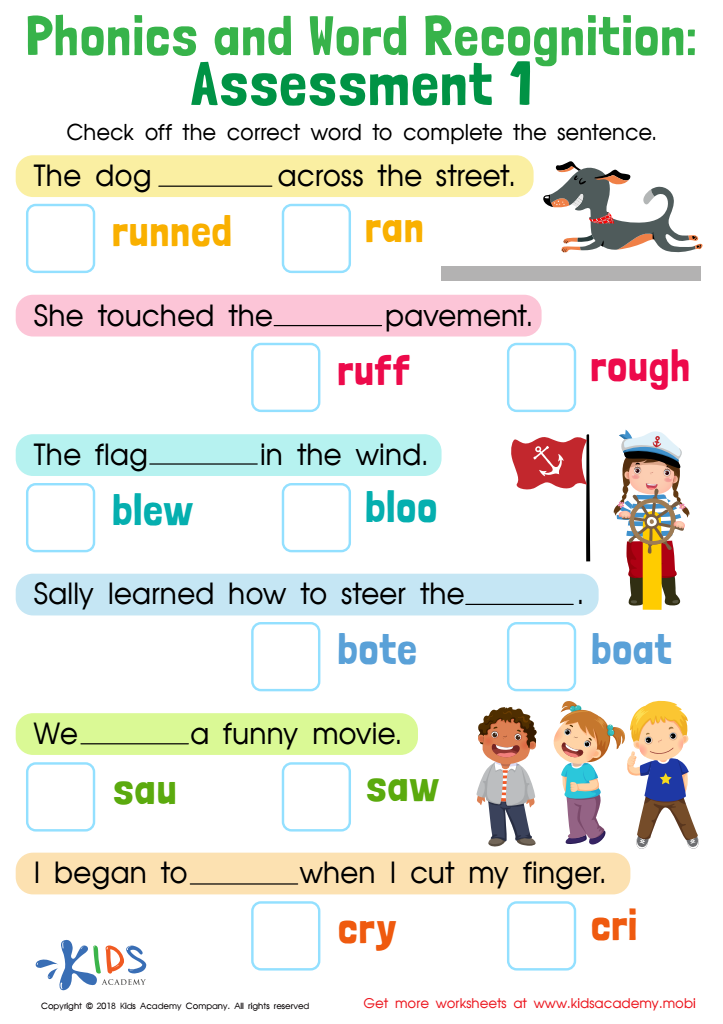
Phonics and Word Recognition: Assessment 1 Worksheet
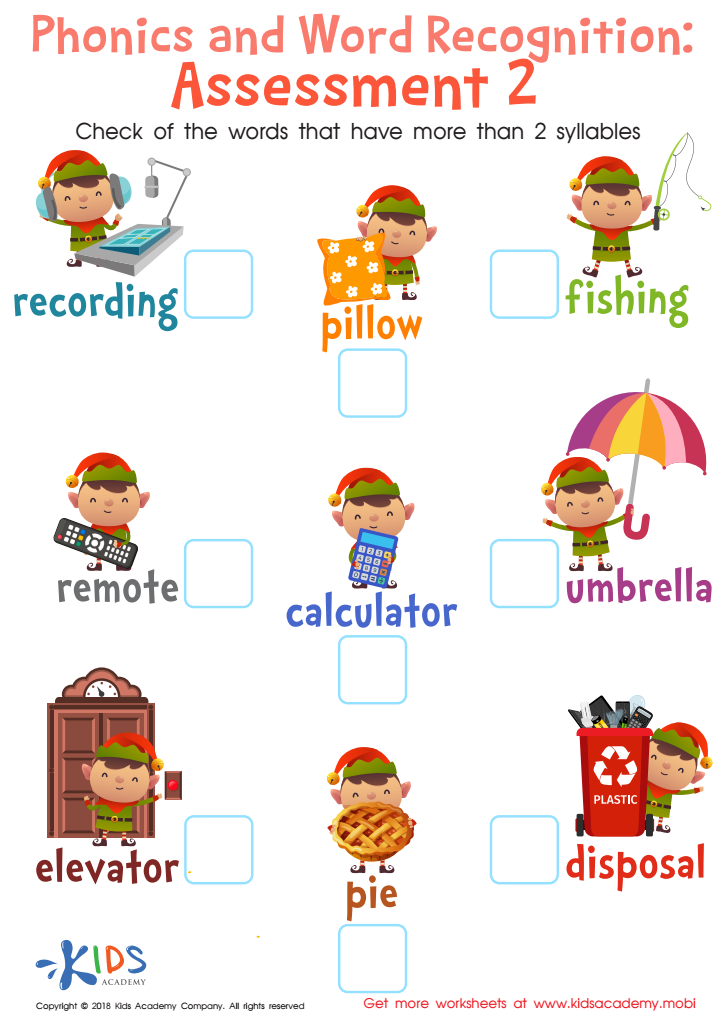
Phonics and Word Recognition: Assessment 2 Worksheet
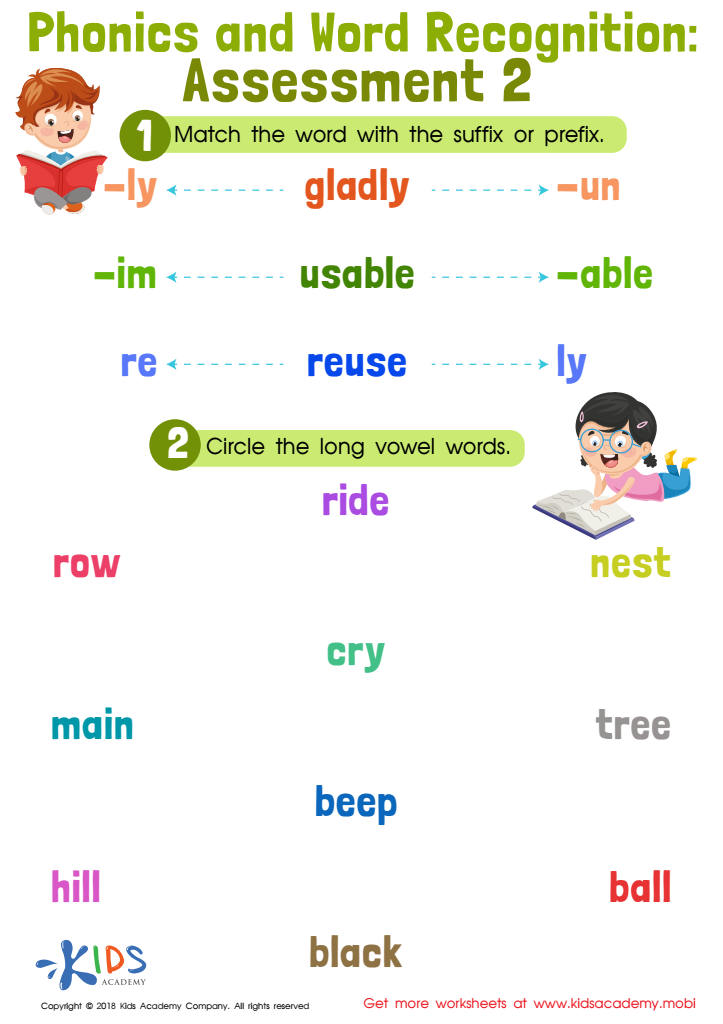
Phonics and Word Recognition: Assessment 2








Parents and teachers should prioritize Word Identification and Building Vocabulary in children aged 4-8 because this foundational period shapes future learning and academic success. At this critical stage, children's brains are particularly receptive to language acquisition. Encouraging vocabulary development helps them understand and describe the world around them, enhancing cognitive development and overall communication skills.
A robust vocabulary is closely linked to reading comprehension. As children begin to read, recognizing and understanding words allows them to make sense of the text. This skill not only influences their ability to read fluently but also fosters a love for reading. These positive experiences with early literacy often persist, leading to greater academic achievement in the long term.
Furthermore, strong vocabulary skills contribute significantly to social-emotional development. They enable children to express their feelings, thoughts, and needs more effectively, facilitating better interactions with peers and adults. This can enhance relationships and boost confidence and independence.
Given these benefits, it is essential for both parents and teachers to create a language-rich environment by engaging in activities that promote word identification and vocabulary building. Reading books, playing word games, and encouraging conversations are all impactful strategies that can lay a strong linguistic foundation for children, setting them on a successful educational journey.








