
Drawing skills Reading Worksheets for Ages 4-8
3 filtered results
Difficulty Level
Grade
Age
-
From - To
Subject
Activity
Standards
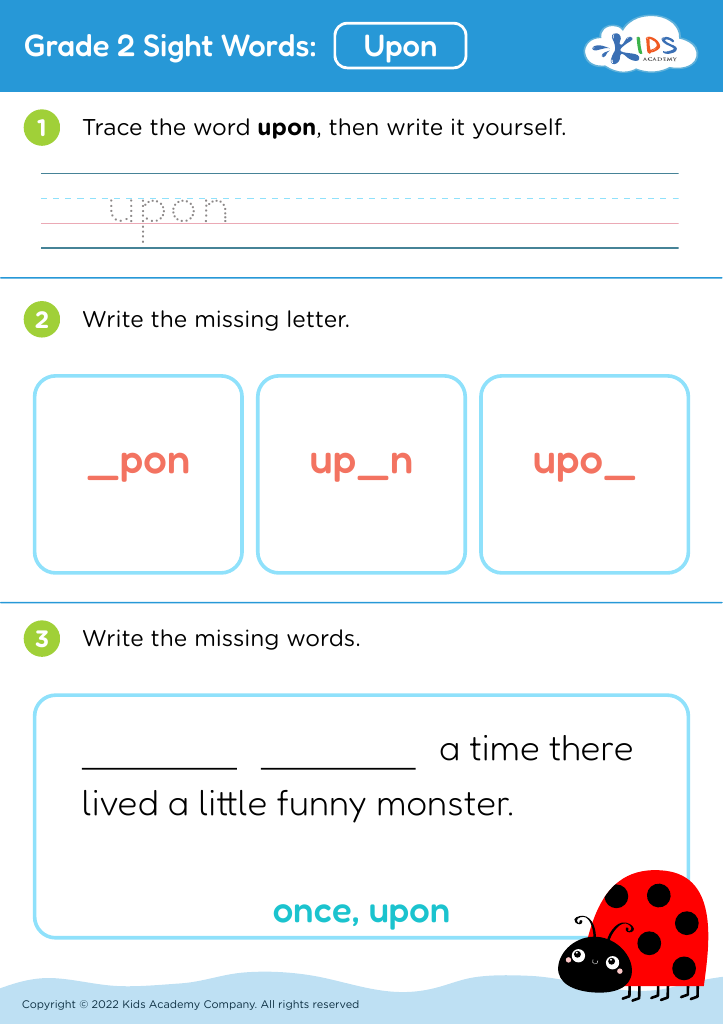
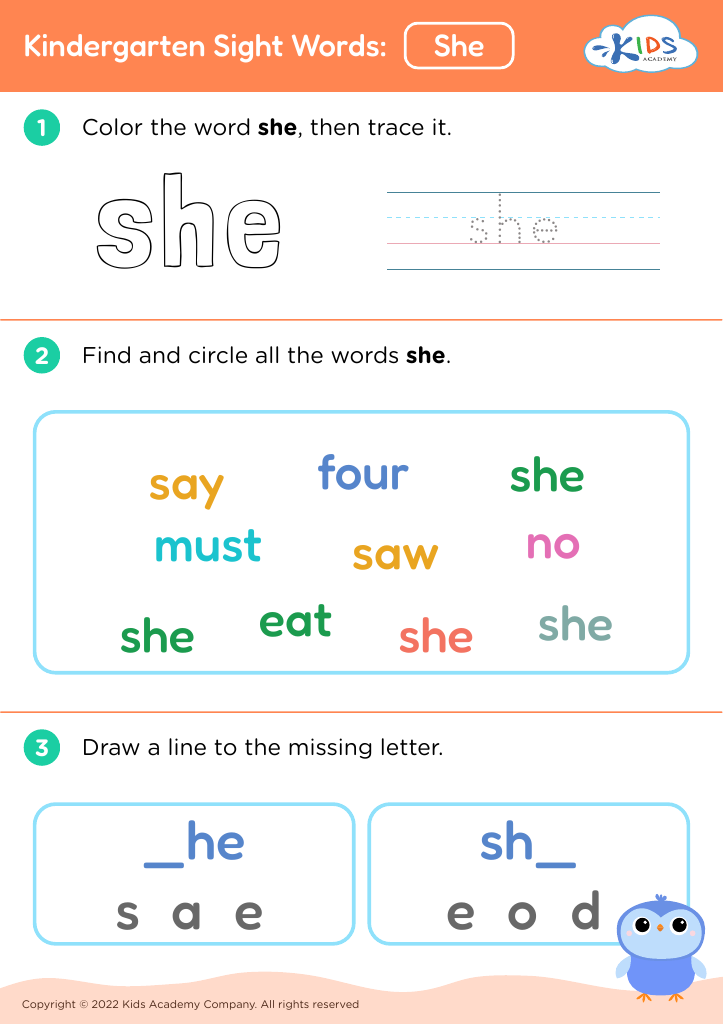
Enhance your child's learning experience with our engaging Drawing Skills Reading Worksheets, designed specifically for ages 4-8! These interactive resources help young learners develop essential pre-reading and fine motor skills through creative drawing activities. Each worksheet combines fun illustrations with guided prompts, encouraging children to express themselves artistically while reinforcing their understanding of letters, sounds, and words. Perfect for parents and educators alike, our worksheets make learning enjoyable and help cultivate a love for reading. Download now to inspire your child's imagination and support their early literacy journey! Let creativity spark their reading skills today!
Favorites
With answer key
Interactive
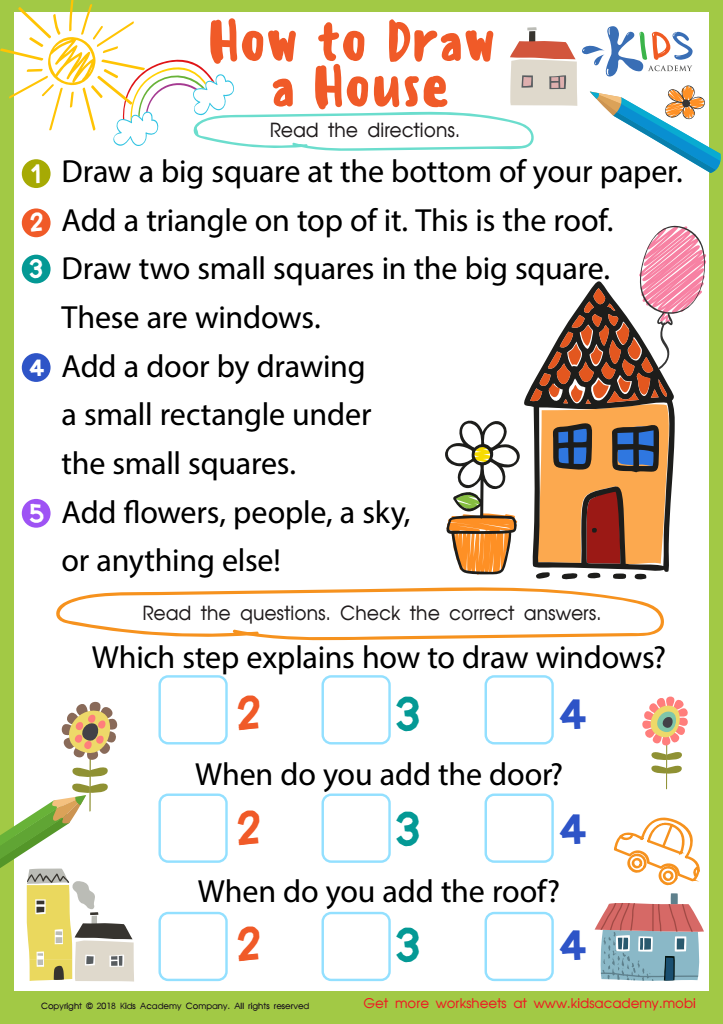
How to Draw House Worksheet
Does your child love to draw? Why not try teaching them some easy tricks? Get them to follow directions on this worksheet and learn how to draw a house. Read the questions at the end and ensure they get the answers right. Your kids will surely love it!
 Assign to My Students
How to Draw House Worksheet
Worksheet
Join Kids Academy for Free
Who is primarily going to use this learning content?






.jpg)

Drawing skills are crucial for children aged 4-8 as they significantly contribute to early literacy development, including reading. When children engage in drawing, they express their thoughts, feelings, and narratives visually, fostering creative thinking. This process of visualization allows them to understand and interpret stories better, enhancing their comprehension skills vital for reading.
Furthermore, drawing helps develop fine motor skills, which are essential in mastering writing—an important step in literacy. As children learn to hold crayons or markers, their hand-eye coordination improves, paving the way for smoother handwriting.
Additionally, drawing often involves storytelling. When young children illustrate a scene or character, it encourages them to think about sequences and relationships, laying the groundwork for narrative skills that translate into reading fluency. Teachers and parents can utilize drawing activities to promote phonetic awareness by asking children to illustrate words or concepts, thus directly linking visual creativity with reading.
Lastly, when parents and teachers acknowledge the relationship between drawing and literacy, they create a holistic learning environment where kids feel encouraged and motivated to engage in both art and reading. This integrated approach will foster a love for learning that can last a lifetime.








