
Grammar practice Reading Worksheets for Ages 4-8
5 filtered results
Difficulty Level
Grade
Age
-
From - To
Subject
Activity
Standards
Discover engaging Grammar Practice Reading Worksheets designed specifically for children ages 4-8! Our resources aim to enhance kids' language skills through fun and interactive activities that captivate young learners. Each worksheet focuses on fundamental grammar concepts such as punctuation, word usage, and sentence structure, making learning both enjoyable and effective. These printable worksheets are perfect for parents and teachers seeking to reinforce grammar skills in a creative way, helping children build a strong foundation for reading and writing. Explore our diverse selection today and watch your child's confidence soar as they master grammar concepts through practice and play!
Favorites
With answer key
Interactive
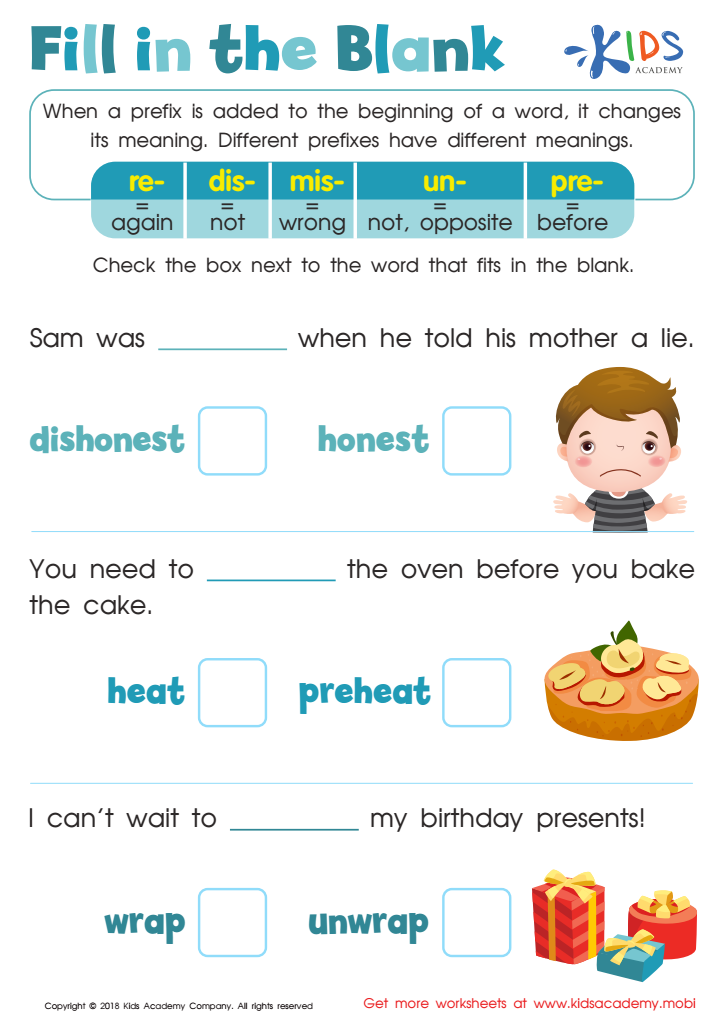
Reading: Fill in the Blank Worksheet
Students can practice understanding the meaning of common prefixes with this worksheet. They read sentences and pick the correct word with the appropriate prefix to complete it. Downloadable and a great addition to reading and vocabulary resources, this helps improve comprehension with mastery of the skill!
 Assign to My Students
Reading: Fill in the Blank Worksheet
Worksheet
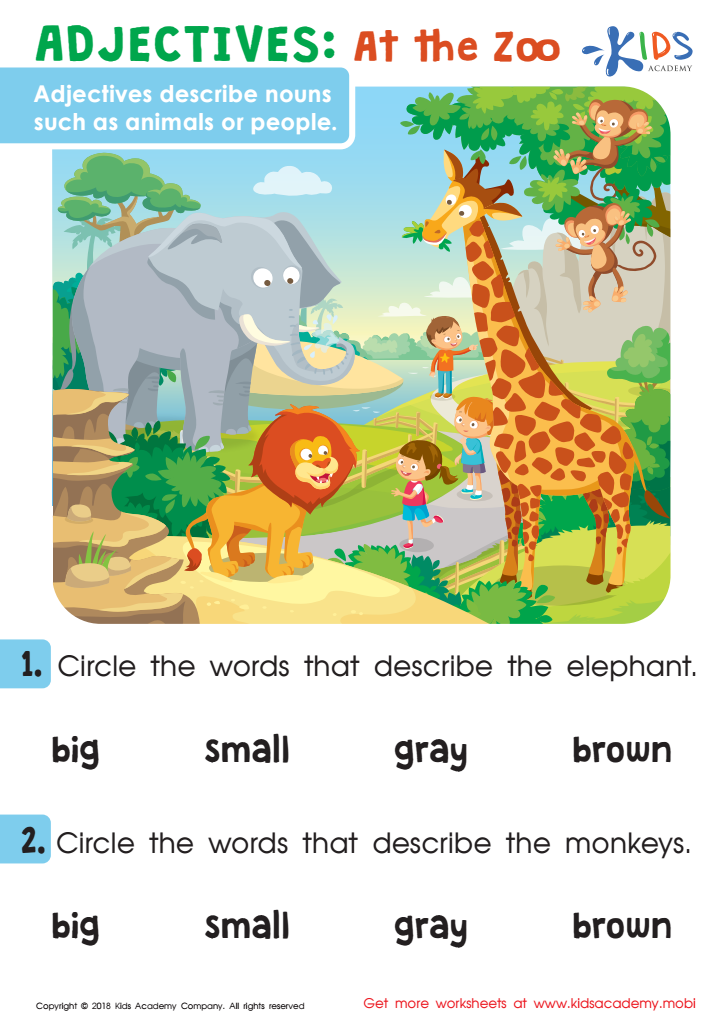
Adjectives: At The Zoo Worksheet
Take your kids to the zoo and ask them about their favorite activities and animals. This worksheet is a great way for kids to learn about adjectives. Explain that adjectives describe nouns like people or animals (e.g. big, tall, dark). Look at the printout with your kids and help them circle words that describe the animals in the picture.
Adjectives: At The Zoo Worksheet
Worksheet
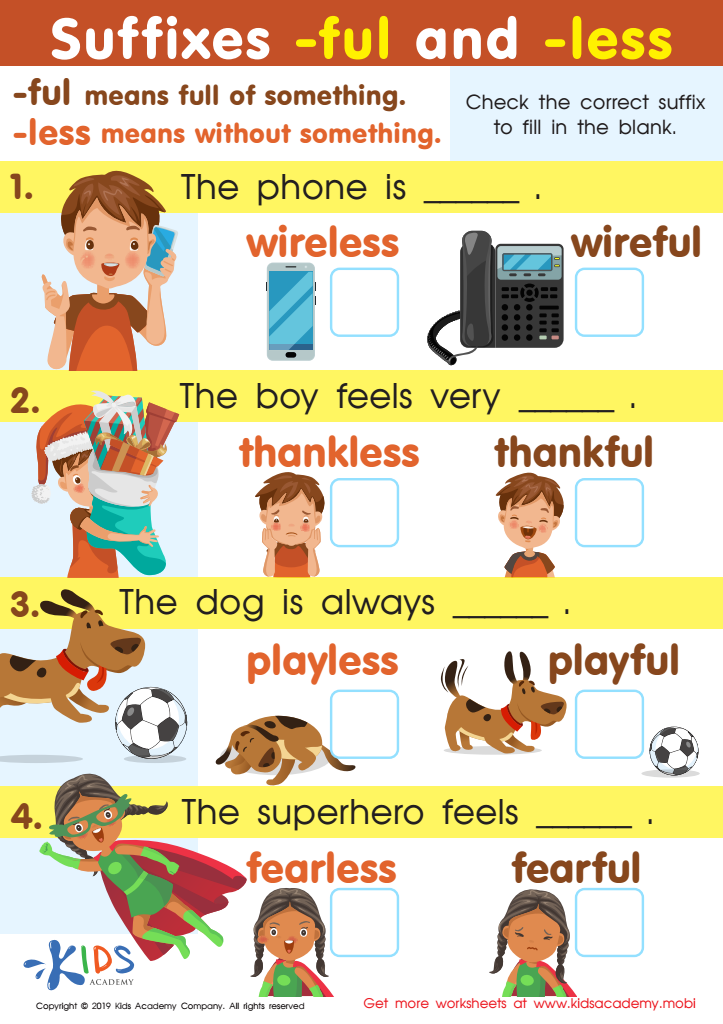
Suffixes –ful and –less Worksheet
Before you start this worksheet, make sure your kids know about suffixes. Explain that they're added to the end of words to change their meaning. In the worksheet, kids will learn about the suffixes –ful and –less. Look at the sentences in the picture with them, and help them to choose the right one for each blank.
Suffixes –ful and –less Worksheet
Worksheet
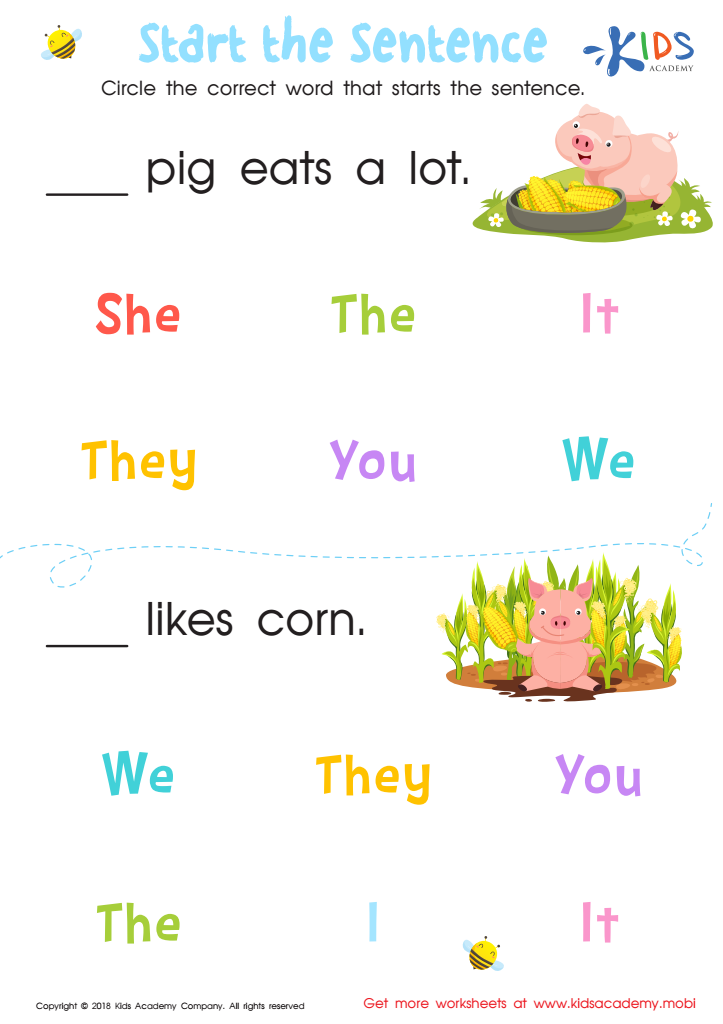
Start the Sentence Worksheet
Test your students' understanding of sentences with this easy worksheet. Ask them to read the sentences and circle the correct word that starts each. This will show how well their lessons have paid off and if they can construct short simple sentences.
Start the Sentence Worksheet
Worksheet
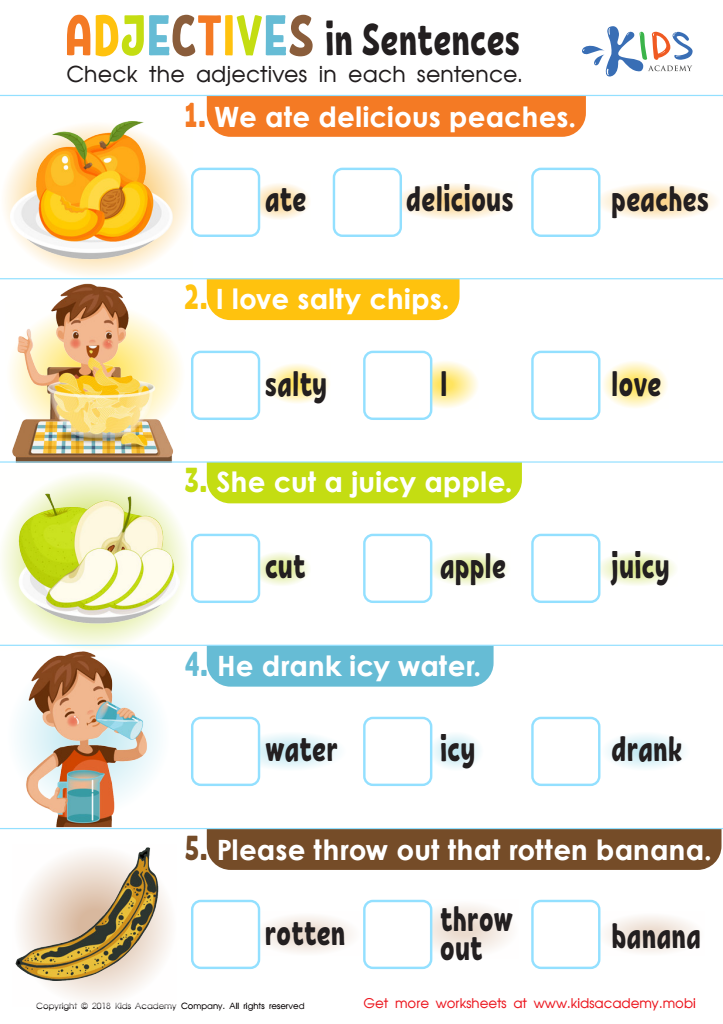
Adjectives in Sentences Worksheet
Our learners can find it hard to use writing to add detail, but adjectives can help. With this fun worksheet, kids can identify adjectives that describe food and drink. Guide them through each sentence, discussing the words and having them choose the one that gives information about the food/drink.
Adjectives in Sentences Worksheet
Worksheet
Join Kids Academy for Free
Who is primarily going to use this learning content?








Grammar practice reading for children aged 4-8 is crucial for their linguistic development and academic success. At this early stage, children are like sponges, absorbing information and patterns from their environment. Engaging with grammar through reading helps them understand language structure, enhancing their ability to form coherent sentences and express thoughts clearly. Proper grammar is foundational for effective communication, which is essential in both oral and written forms.
Reading materials that incorporate grammar practice not only make learning enjoyable but also foster a love for reading. Children who grasp grammatical concepts early are better equipped to tackle more complex language tasks as they progress through school. Such practice aids vocabulary development, strengthens comprehension skills, and promotes critical thinking as children analyze texts.
Moreover, parental and teacher involvement is vital. When adults show enthusiasm for grammar and reading, they model positive attitudes towards learning. Supporting grammar practice at home and in the classroom helps establish a strong foundation that will benefit students throughout their educational journey. Ultimately, nurturing children’s grammatical skills through engaging reading materials empowers them to express themselves confidently and prepares them for future literacy challenges.








