Sequencing events Reading Worksheets for Ages 4-8
3 filtered results
-
From - To
Discover our engaging Sequencing Events Reading Worksheets, specially designed for children aged 4 to 8! These worksheets foster critical early literacy skills by helping young learners identify the order of events in stories. With colorful illustrations and age-appropriate content, children will enjoy practicing sequencing to enhance reading comprehension. Ideal for both classroom and home use, our worksheets provide structured activities that encourage active participation and critical thinking. Perfect for educators and parents alike, these resources facilitate smooth learning experiences, spark creativity, and build a strong foundation for literacy development. Start your child's reading journey today with our fun and interactive worksheets!
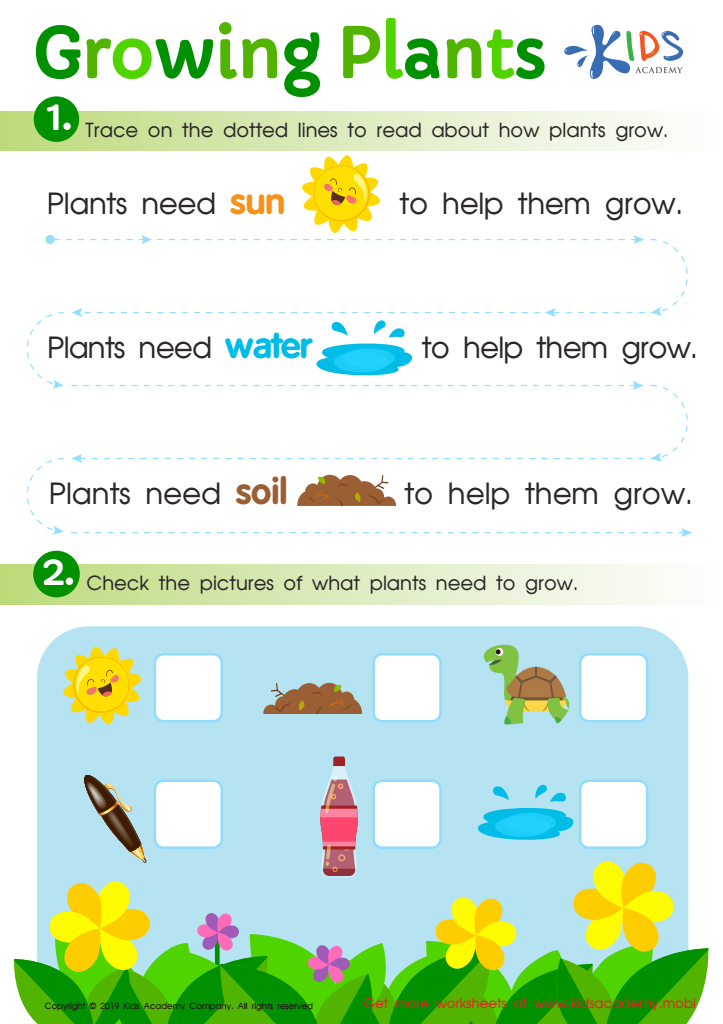
Growing Plants Worksheet
 Assign to My Students
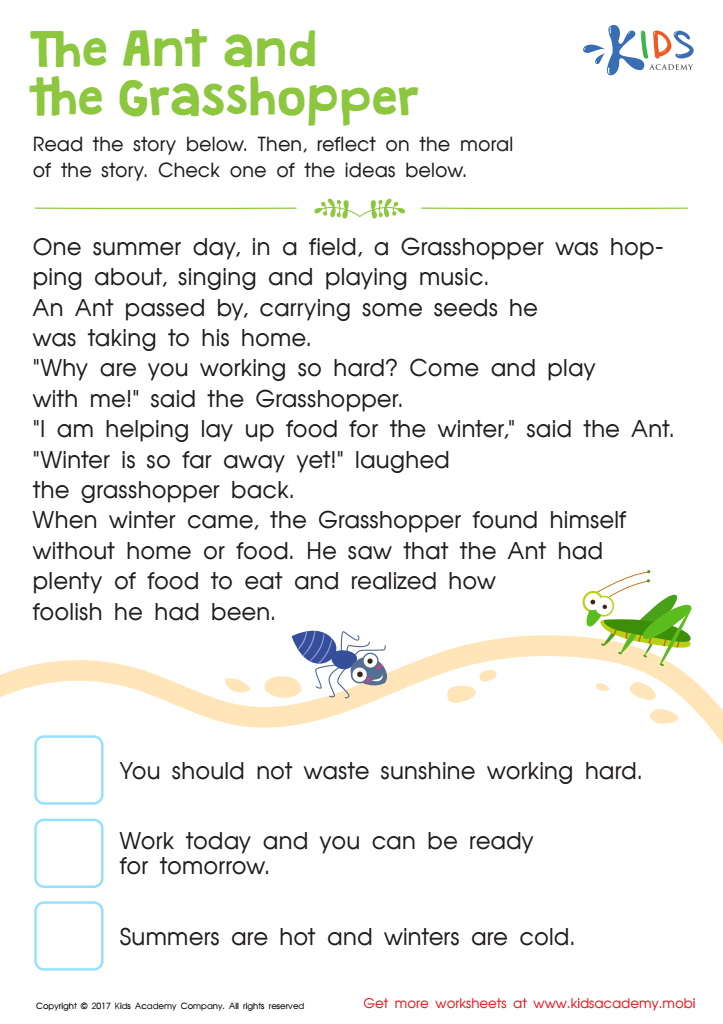
The Ant and The Grasshopper Printable
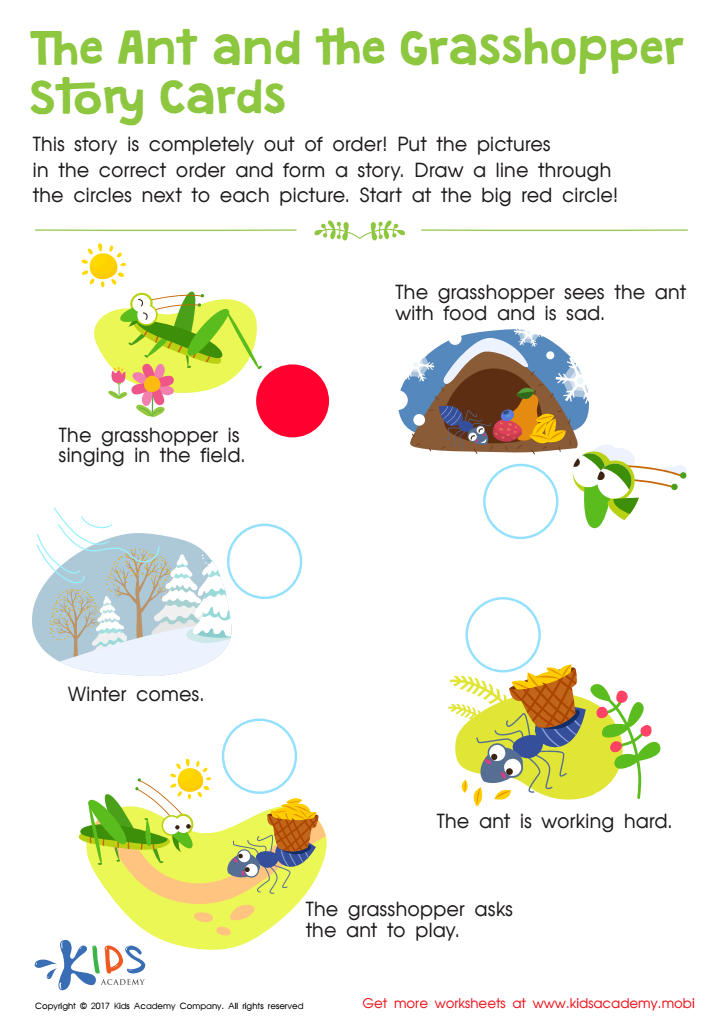
The Ant and The Grasshopper Worksheet







Sequencing events in reading is a fundamental skill that significantly benefits children aged 4-8. This skill involves understanding the order in which happenings occur in a story, which is crucial for several reasons. First, sequencing helps young readers develop comprehension; it allows them to make connections between events, understand the plot, and grasp the story's structure. When children can identify the sequence of events, they are better equipped to summarize the story and identify main ideas and themes.
Second, acquiring sequencing skills fosters critical thinking. Children learn to predict outcomes and analyze cause-and-effect relationships, developing their cognitive abilities. By understanding that certain events lead to consequences, children gain insight into reasoning and problem-solving.
Moreover, sequencing supports language development and enhances vocabulary as children learn to describe events logically, improving their storytelling abilities. This aspect promotes communication skills, allowing them to articulate thoughts more clearly.
Lastly, fostering sequencing skills can increase a child's confidence in reading. As they master this skill, they feel more accomplished, encouraging a positive attitude toward literacy. For these reasons, implementing sequencing in reading activities is essential for parents and teachers to nurture young learners' cognitive and communicative growth.








