Understanding prepositions Reading Worksheets for Ages 4-8
6 filtered results
-
From - To
Explore our "Understanding Prepositions" reading worksheets designed specifically for children aged 4-8. These engaging activities help young learners grasp the concept of prepositions through fun exercises that enhance their reading and comprehension skills. With vibrant illustrations and relatable examples, our worksheets encourage children to identify and use prepositions correctly in sentences. Perfect for home or classroom use, these resources are aimed at building foundational language skills while keeping learning enjoyable. Help your child become a confident reader by incorporating our interactive preposition worksheets into their daily practice. Start your journey to mastery of prepositions today!
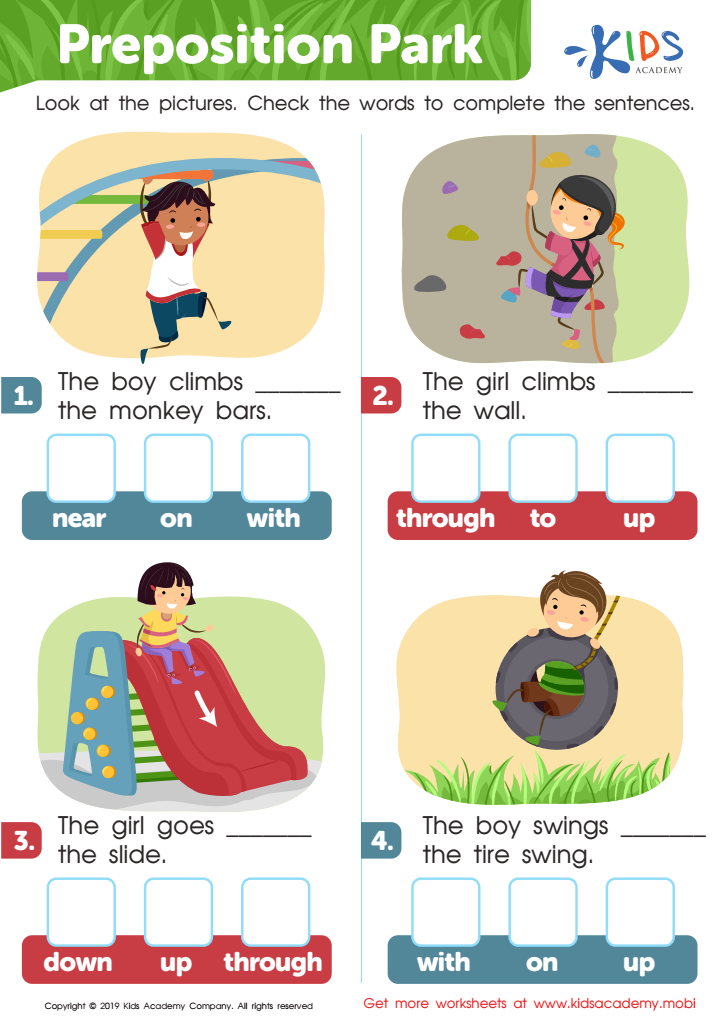
Preposition Park Worksheet
 Assign to My Students
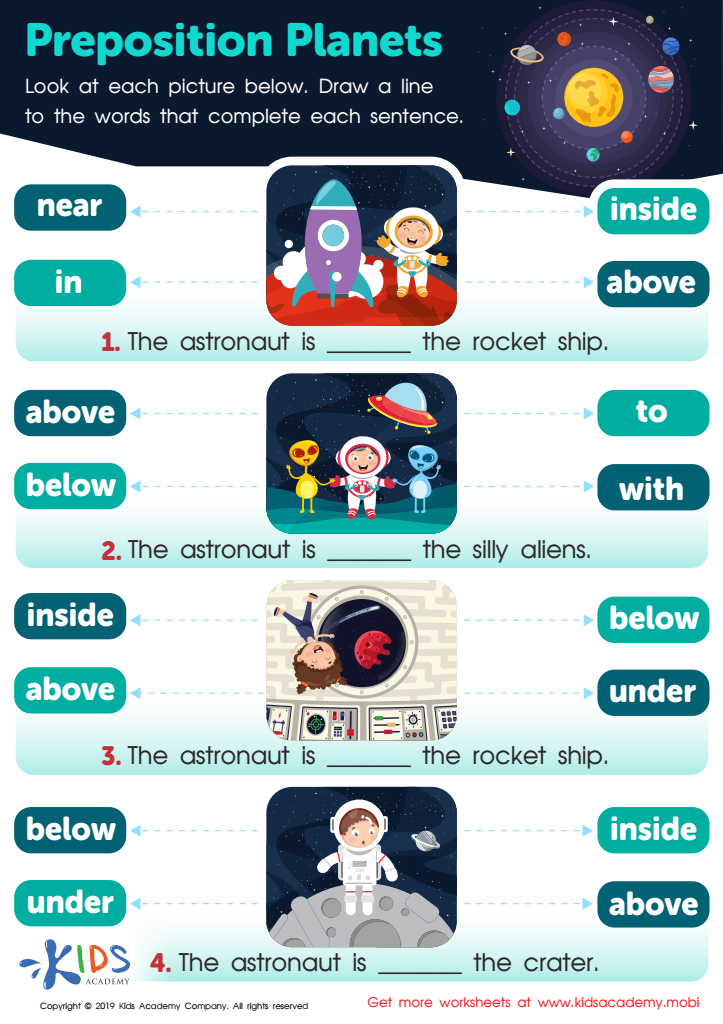
Preposition Planets Worksheet
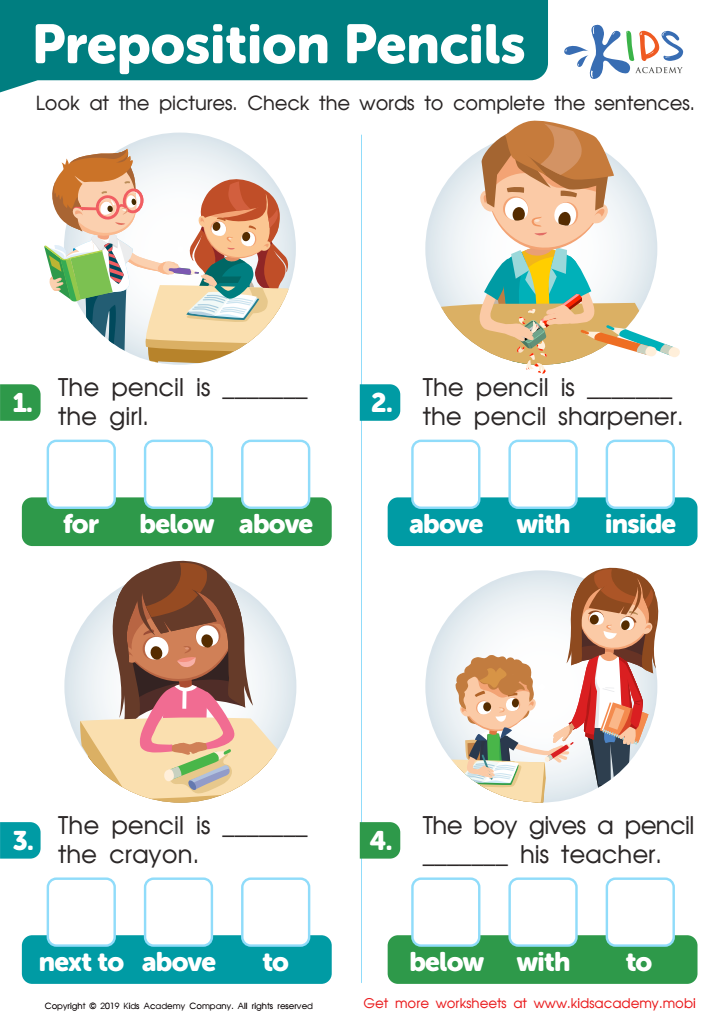
Preposition Pencils Worksheet
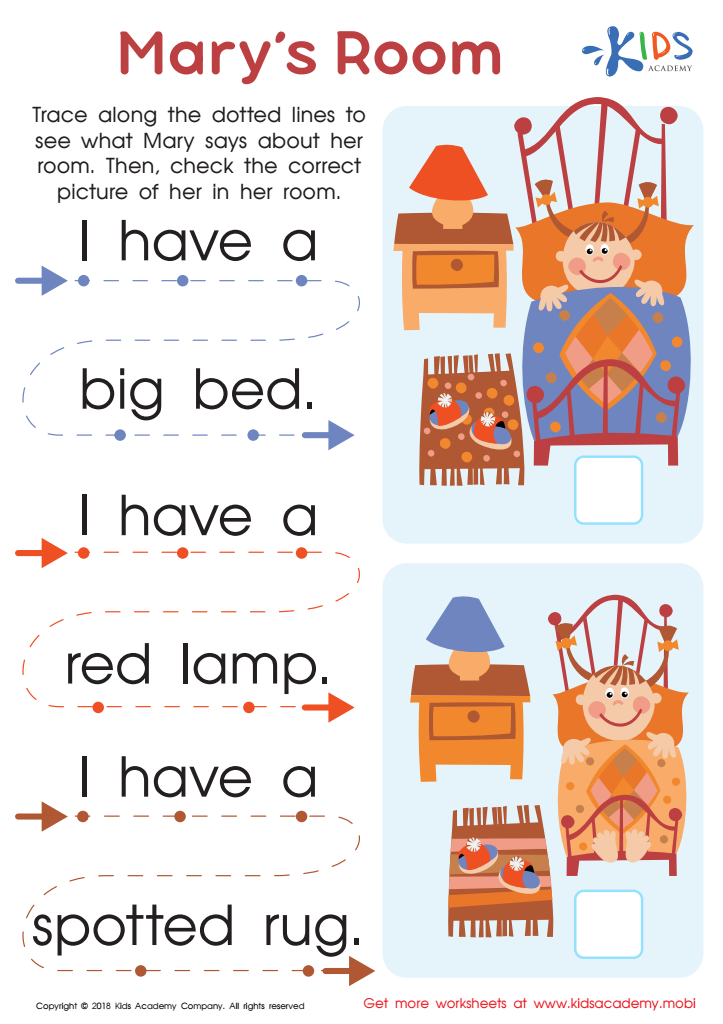
Mary's Room Worksheet


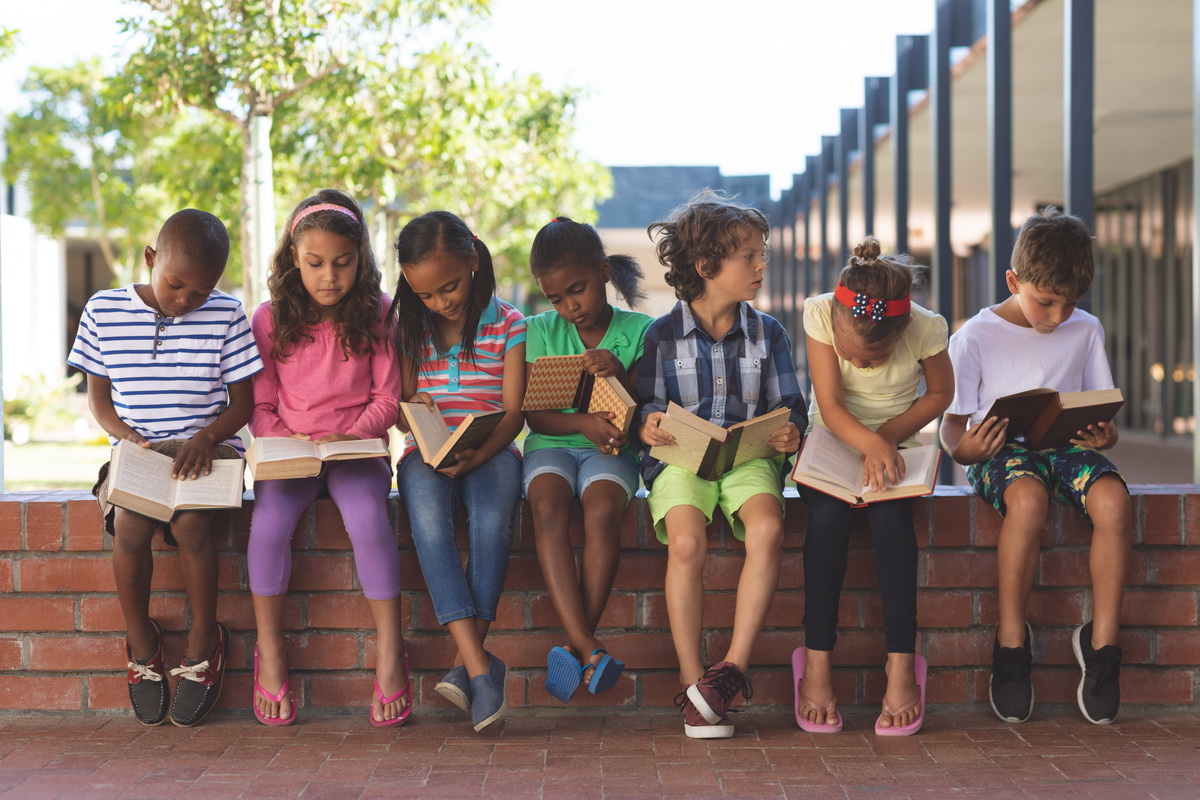


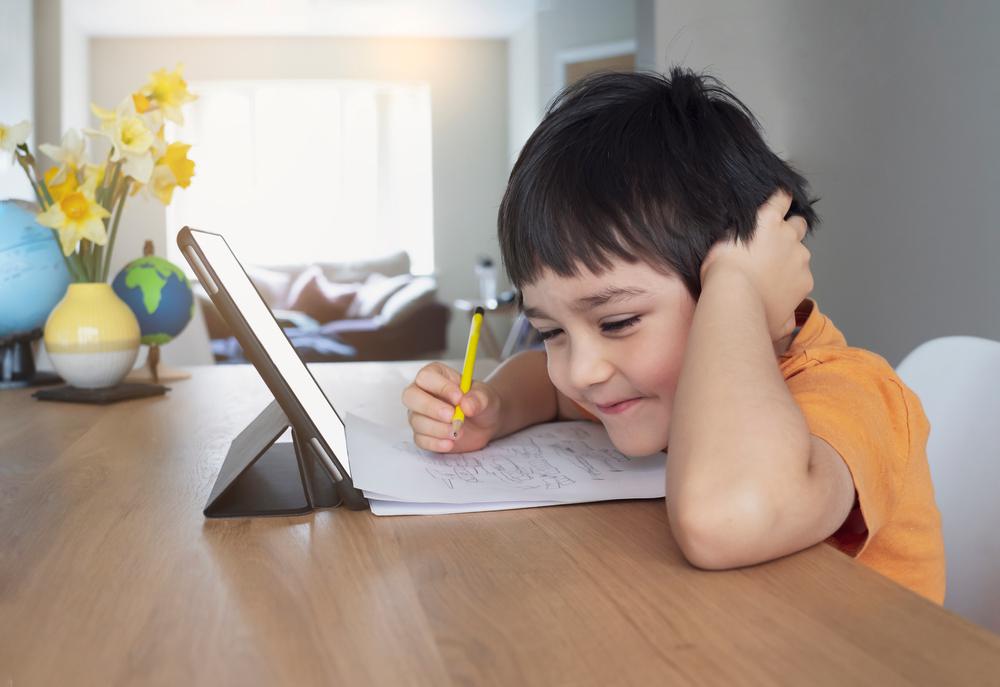
Understanding prepositions is crucial for children aged 4-8, as it forms the foundation for their language development and comprehension skills. Prepositions, which describe relationships between people, places, and things, are essential for building meaningful sentences. By grasping the use of prepositions, children improve their ability to express themselves clearly and accurately. This ability enhances both their oral and written communication skills, which are vital for academic success.
Moreover, prepositions are fundamental in reading comprehension. When children encounter texts, understanding prepositional phrases allows them to follow narratives, identify character relationships, and visualize settings. Proper understanding of prepositions aids in the development of critical thinking skills as children learn to interpret information and infer meanings from context.
For parents and teachers, focusing on prepositions during this developmental phase fosters an engaging learning environment. Interactive activities such as games, storytelling, and rhymes can make learning fun. Encouraging the use of prepositions in everyday conversations further reinforces their learning. As children gain confidence in using prepositions, they become more enthusiastic readers and effective communicators, paving the way for their lifelong learning journey. Ultimately, investing in this aspect of language development benefits both children's academic progress and their social interactions.








