Understanding sequencing Reading Worksheets for Ages 4-8
3 filtered results
-
From - To
Welcome to our "Understanding Sequencing Reading Worksheets" for ages 4-8! These engaging worksheets are designed to help young learners grasp the concept of sequencing, a crucial reading skill. Through fun activities, children will practice organizing events in the correct order, enhancing their comprehension and critical thinking abilities. Our printable resources include colorful illustrations, relatable stories, and various exercises that make learning exciting. Perfect for parents and educators, these worksheets promote reading fluency and narrative understanding. Get your kids on the path to becoming confident readers with our thoughtfully designed sequencing materials. Start enhancing their skills today!
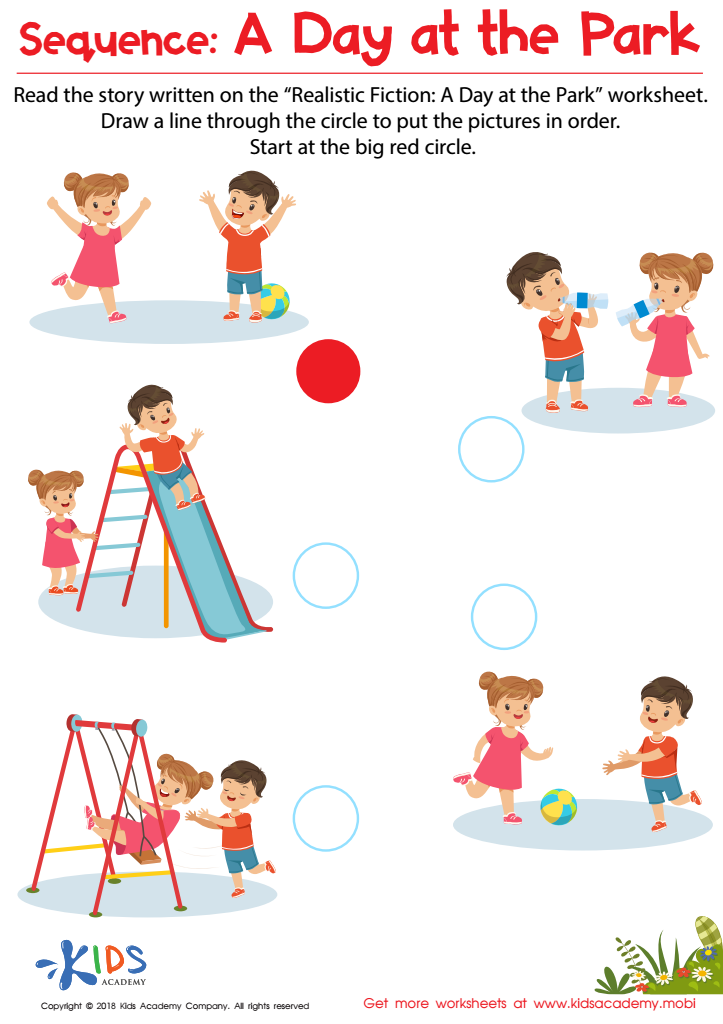
Sequence: A Day at the Park Worksheet
 Assign to My Students
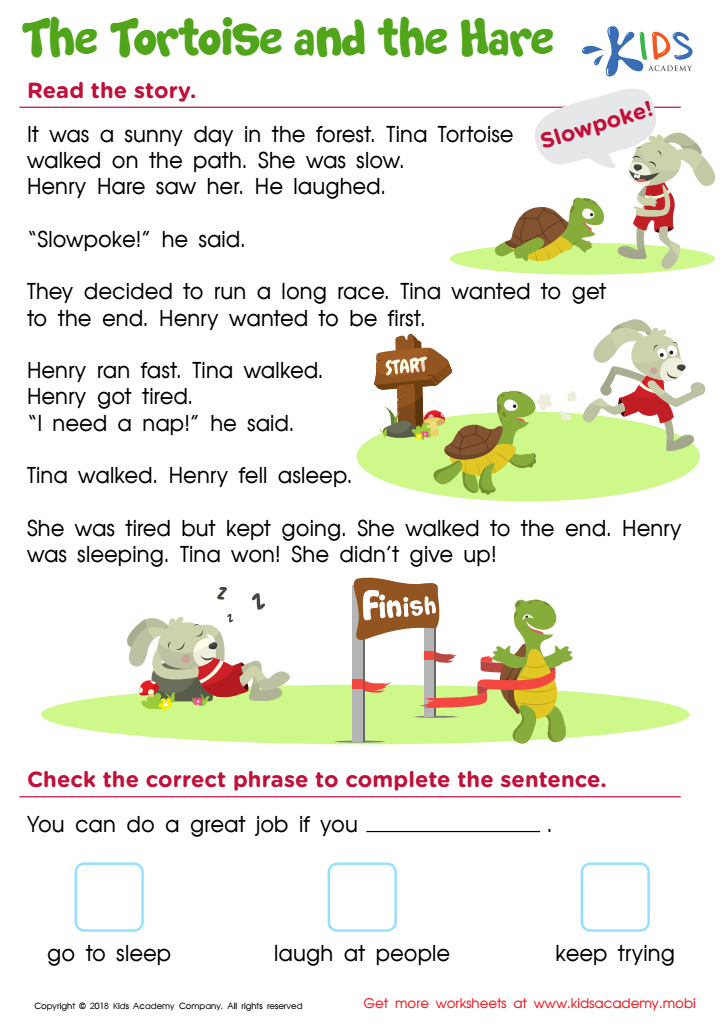
The Tortoise and the Hare Worksheet
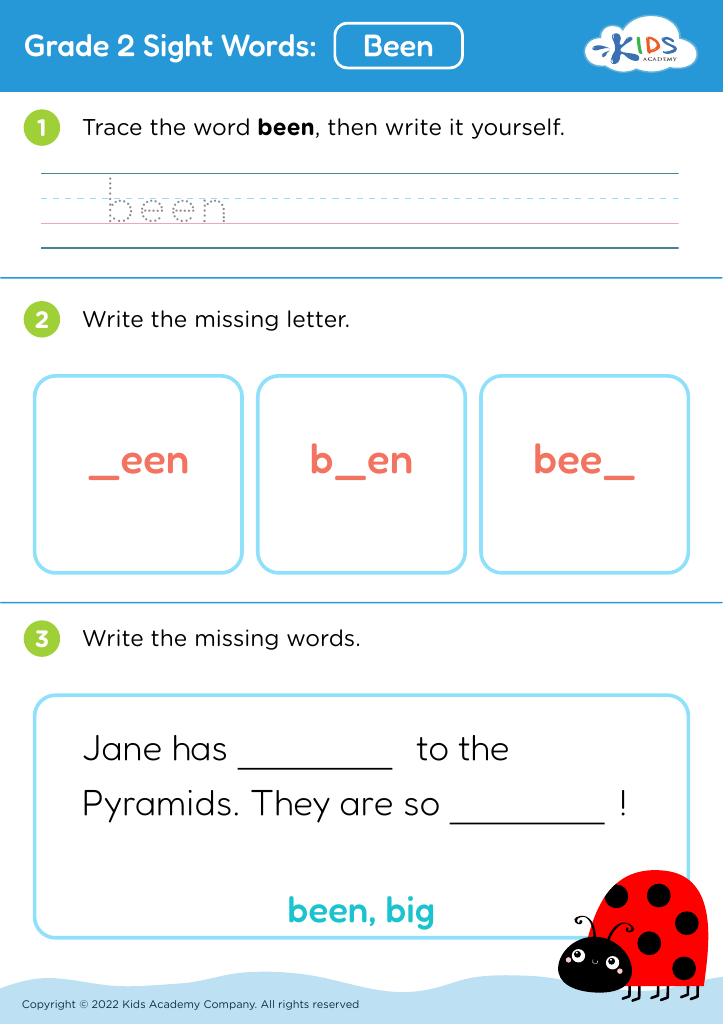








Understanding sequencing in reading is essential for children aged 4-8 because it builds a foundation for their literacy skills and cognitive development. Sequencing helps children understand the order of events in a story, which is crucial for comprehension and retention. When parents or teachers emphasize this skill, they support children's ability to predict outcomes and draw connections between different parts of a narrative.
Moreover, sequencing enhances critical thinking. As children learn to organize thoughts chronologically, they develop skills that extend beyond reading, aiding them in problem-solving and later academic tasks. The ability to sequence supports language development, as children learn to narrate stories coherently, using appropriate vocabulary and grammar.
Additionally, activities that focus on sequencing foster a love of reading and storytelling. Engaging children in interactive reading sessions, where they predict what comes next or recount stories, makes learning enjoyable and absorbing. This fosters motivation and confidence in young readers. Ultimately, by prioritizing sequencing skills, parents and teachers equip children with the necessary tools for successful reading and comprehension, setting them on a path for lifelong learning and literacy appreciation.








