Understanding perspectives Reading Comprehension Worksheets for Ages 4-8
3 filtered results
-
From - To
Discover our engaging "Understanding Perspectives" reading comprehension worksheets, designed specifically for children ages 4-8. These interactive resources help young learners develop critical thinking skills by exploring different viewpoints through relatable stories and scenarios. Each worksheet encourages children to read attentively, understand diverse perspectives, and enhance their comprehension abilities. Fun illustrations and age-appropriate questions make learning enjoyable and accessible. By fostering empathy and curiosity, our worksheets lay the foundation for effective communication and social understanding. Ideal for parents and educators, these materials provide a valuable tool in nurturing young minds and helping them grasp the concept of different perspectives in storytelling.
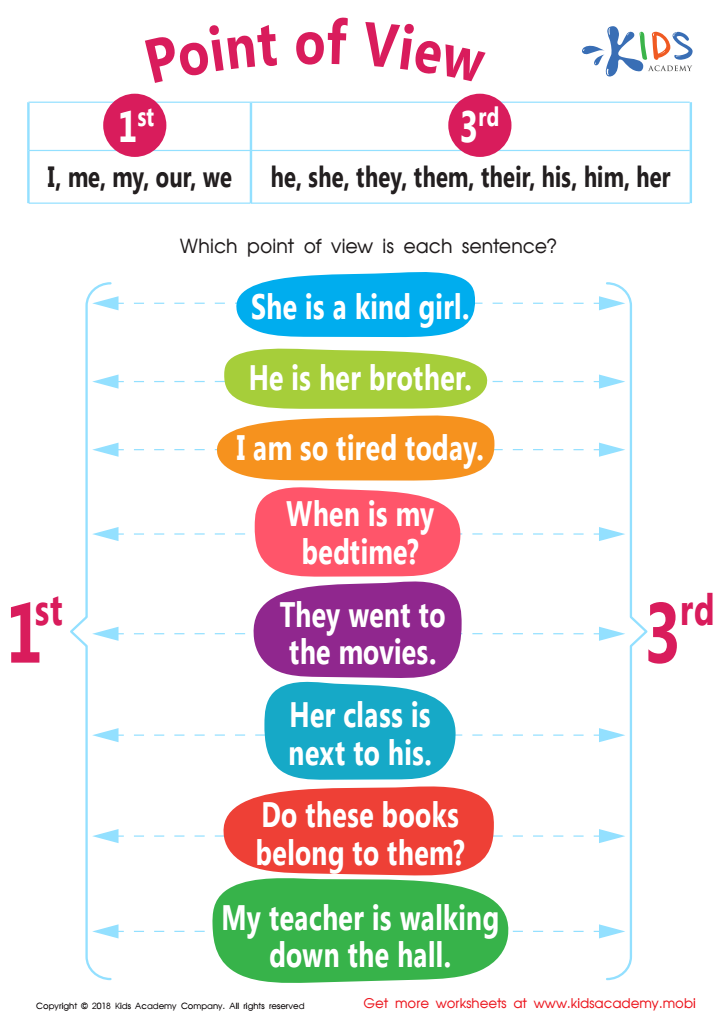
Point of View Worksheet
 Assign to My Students
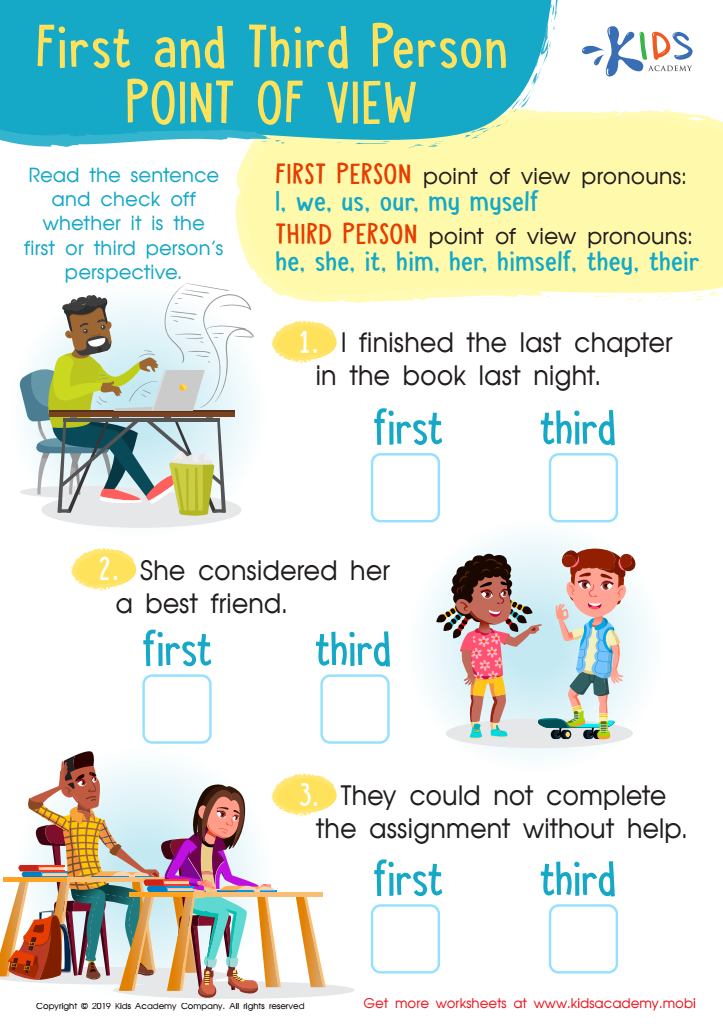
First and Third Person Point of View Worksheet
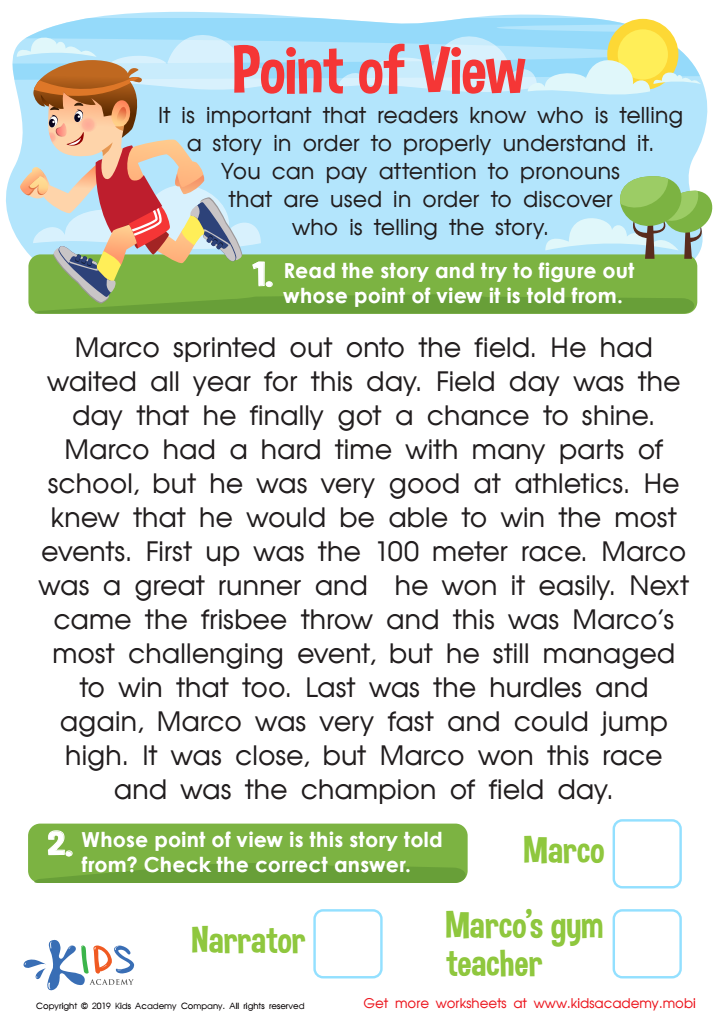
Point of View Worksheet








Understanding perspectives is a crucial aspect of reading comprehension for children aged 4-8. At this developmental stage, children are not only learning to read but also making sense of the world around them. When parents and teachers emphasize perspective-taking in reading, they help children comprehend not just the words on the page, but the emotions, motivations, and viewpoints of different characters. This skill enhances empathy, letting young readers connect with diverse experiences and ideas, fostering a more inclusive mindset.
Moreover, understanding perspectives aids critical thinking. Children learn to analyze situations, question intentions, and draw conclusions based on characters' behaviors and choices. This set of skills enriches classroom discussions and builds a foundation for more complex interpretations as they progress in their education.
Additionally, engaging with various perspectives can ignite a child's imagination, encouraging creativity and self-expression in storytelling and writing. By dedicating time to explore these themes in reading, parents and teachers provide children with essential tools for effective communication, problem-solving, and emotional intelligence. In nurturing these skills, caregivers lay the groundwork for lifelong learning and development, significantly enhancing children's academic and social success.








