Cognitive Development Reading Fiction Worksheets for Ages 4-8
4 filtered results
-
From - To
Enhance your child's cognitive development with our engaging reading fiction worksheets tailored for ages 4-8! These resources promote critical thinking, comprehension, and creativity through delightful stories and interactive exercises. Each worksheet encourages young learners to analyze characters, predict story outcomes, and relate personal experiences to the narratives. By integrating fun activities with essential reading skills, our worksheets inspire a love for literature while boosting cognitive abilities, such as problem-solving and reasoning. Foster a positive learning environment and help your child flourish in their literacy journey. Explore our collection today to provide the foundation for a lifelong love of reading!
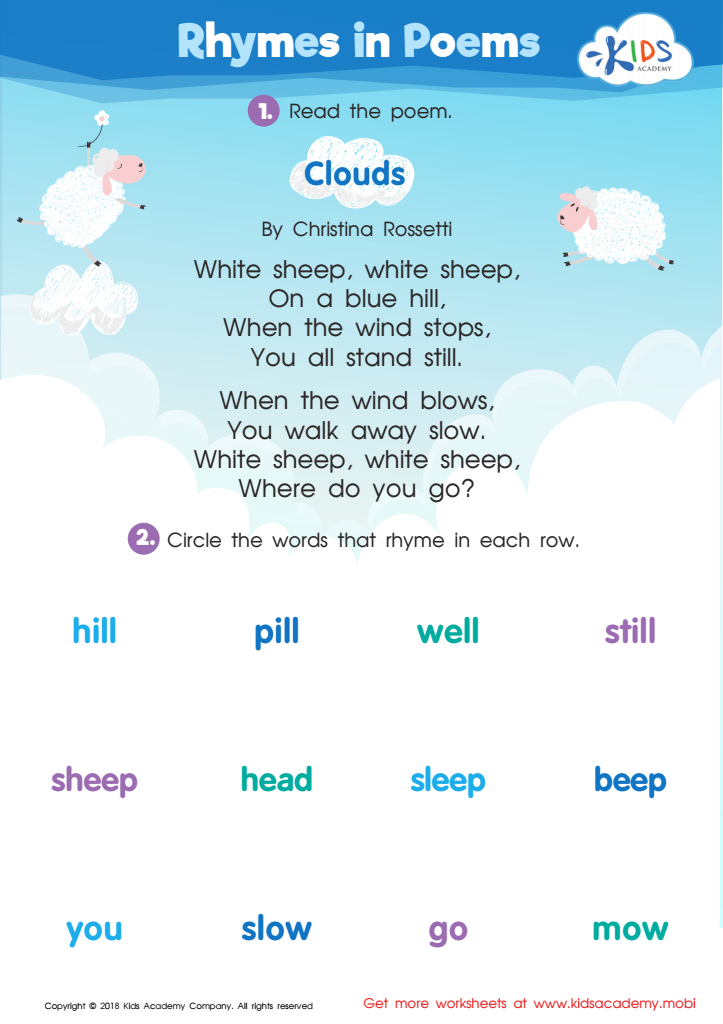
Rhymes in Poems Worksheet
 Assign to My Students
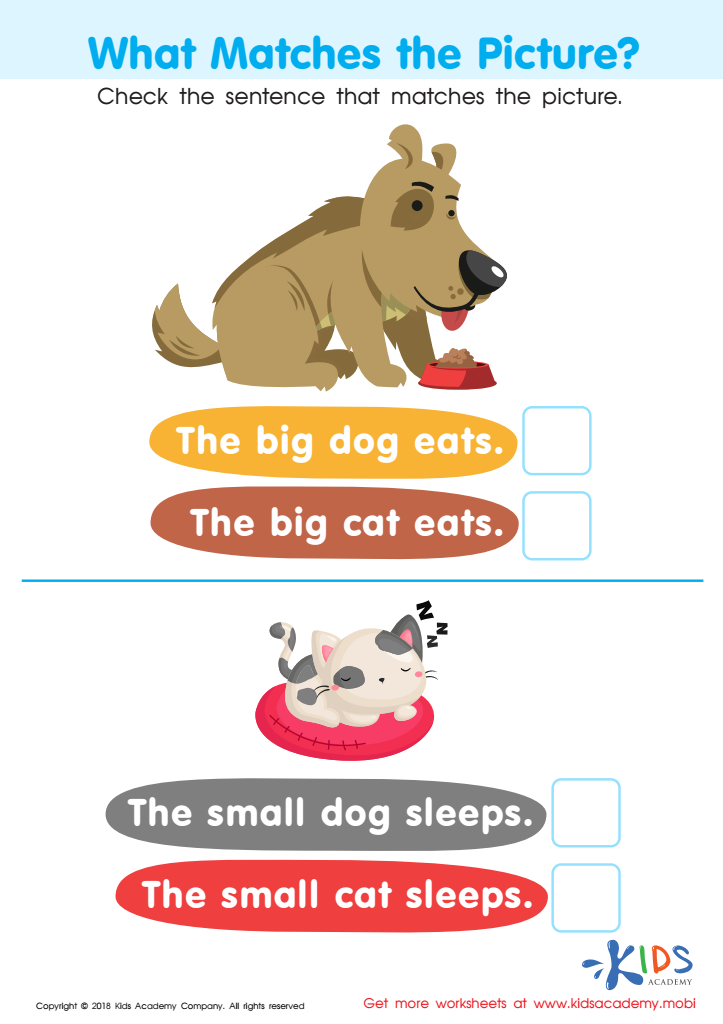
What Matches the Picture? Worksheet
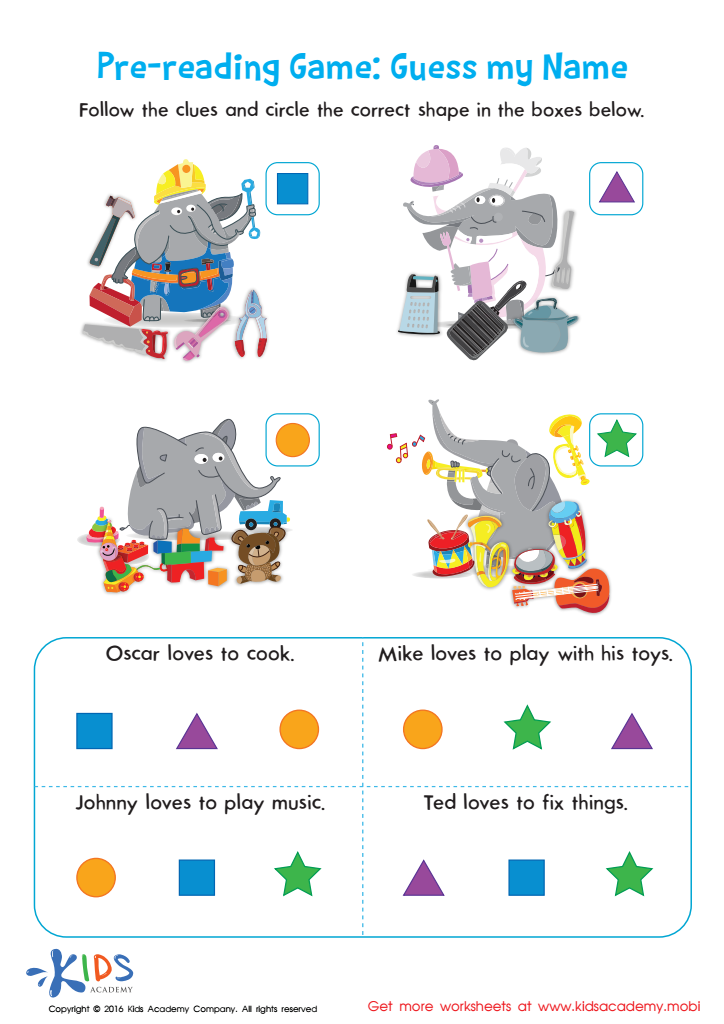
Pre Reading Worksheet Guess My Name
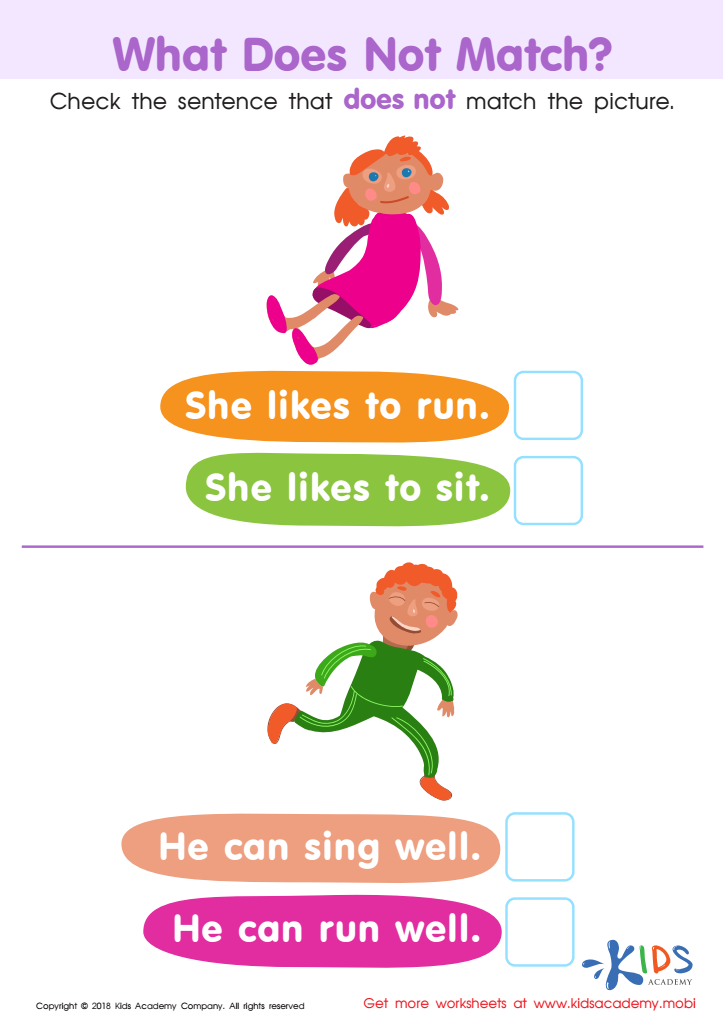
What Does Not Match? Worksheet




.jpg)



Cognitive development is a crucial aspect of early childhood education, and reading fiction plays a significant role in this process for children aged 4-8. Engaging with fictional narratives not only captivates young minds but also enhances critical thinking, empathy, and comprehension skills. When parents and teachers prioritize reading fiction, they foster a child’s imagination and creativity, enabling them to explore diverse perspectives and experiences.
Reading fiction encourages children to understand complex characters and situations, helping them make connections between their own lives and the narratives presented. This relational understanding deepens their emotional intelligence, as they learn to recognize and navigate their feelings and those of others. Additionally, fiction often introduces new vocabulary and sentence structures, enriching language skills that are foundational for communication and literacy.
Moreover, through storytelling, children develop the ability to predict outcomes, draw inferences, and solve problems, all of which are essential cognitive skills that benefit their overall learning. By nurturing a love for reading fiction, parents and teachers not only enhance cognitive development but also cultivate a lifetime habit of reading, setting the stage for academic success and personal growth. Thus, fostering a reading-rich environment is vital for optimal development during these formative years.








