Identifying story elements Reading Fiction Worksheets for Ages 4-8
4 filtered results
-
From - To
Unlock your child's literary potential with our "Identifying Story Elements" worksheets designed for ages 4-8! These engaging activities focus on key story components like characters, settings, and plots, helping young readers develop essential comprehension skills. Each worksheet is crafted to spark creativity and make learning enjoyable, offering colorful illustrations and interactive exercises that captivate young minds. Whether used at home or in the classroom, these printable resources aim to build a strong foundation in reading comprehension. Join us in nurturing a lifelong love for reading and storytelling in your little ones! Explore our worksheets today and watch their imaginations soar!
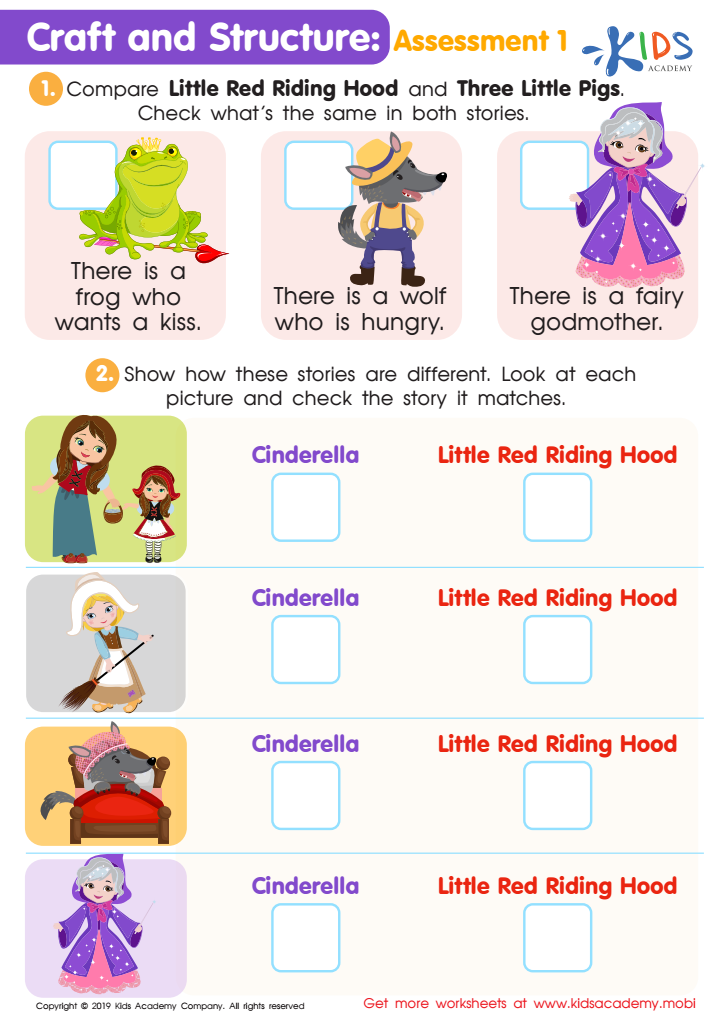
Craft and Structure: Assessment 1 Worksheet
 Assign to My Students
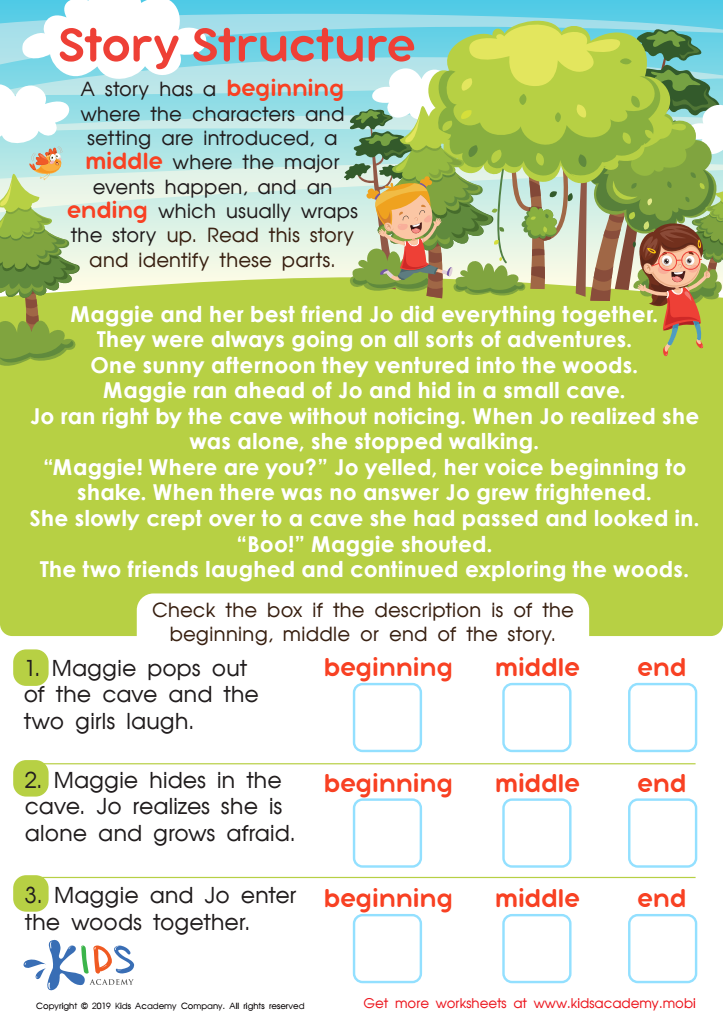
Story Structure Worksheet
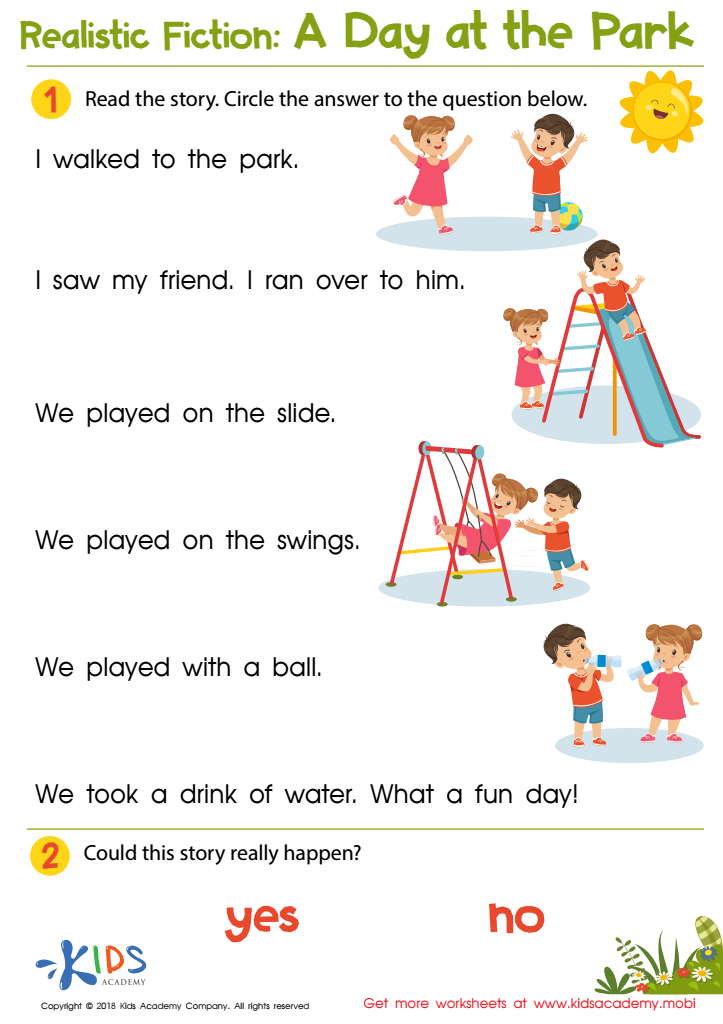
A Day at the Park Worksheet
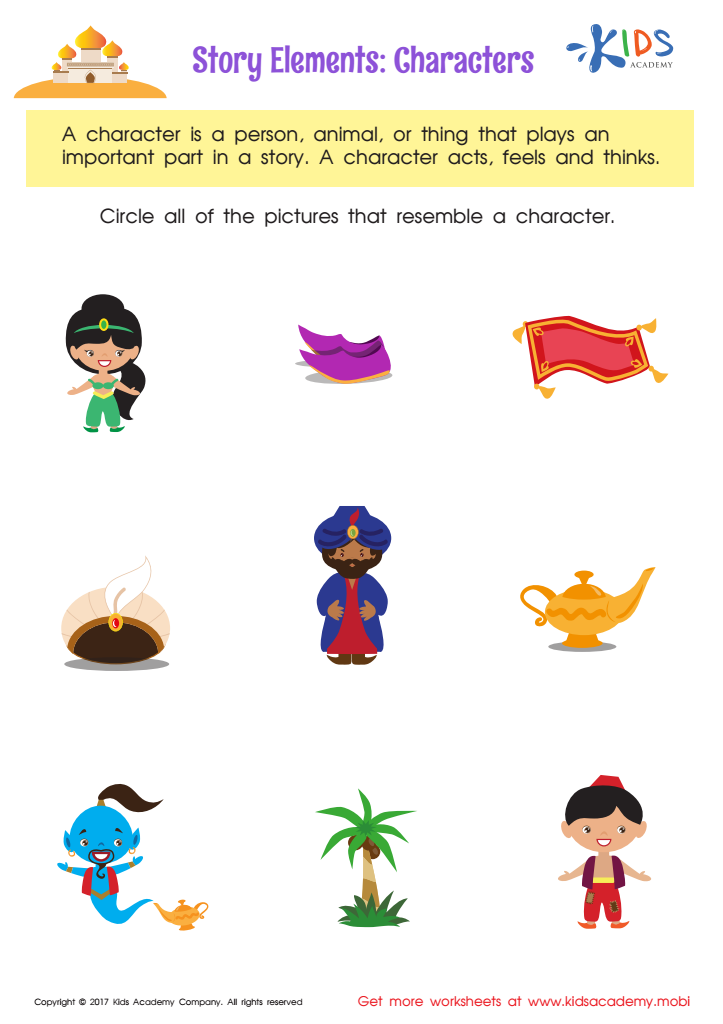
Story Elements Printable








Identifying story elements in fiction is crucial for children aged 4-8, as it lays the foundation for literacy development and critical thinking. Parents and teachers should care about this because understanding story elements—such as characters, setting, plot, conflict, and resolution—helps children navigate narratives and enhances their comprehension skills. Recognizing these components enables young readers to connect emotionally and cognitively with the text, fostering a love for reading.
Moreover, identifying story elements promotes language development by expanding children’s vocabulary and encouraging them to articulate their thoughts about what they read. It also supports social skills, as discussing stories can lead to conversations about various perspectives and experiences. Additionally, mastering these skills builds confidence in children as they begin to engage with more complex texts.
By investing time in teaching story elements, parents and teachers equip children with the tools necessary to enjoy reading and think critically about the world around them. This active engagement with literature not only improves academic performance but also nurtures creativity and imagination, which are essential for lifelong learning. Ultimately, prioritizing story element identification fosters a generations of informed, empathetic, and skilled readers and thinkers.








