Moral understanding Reading Fiction Worksheets for Ages 4-8
5 filtered results
-
From - To
Unlock your child's potential with our engaging Moral Understanding Reading Fiction Worksheets, designed for ages 4-8. These worksheets promote critical thinking and empathy by exploring important moral lessons from captivating stories. Children will delve into fiction, identifying core values and morals presented through relatable characters and scenarios. Our expertly crafted resources encourage discussion, comprehension, and reflection, helping kids connect emotionally and ethically with the text. Perfect for classroom use or at-home learning, these worksheets support literacy development while nurturing moral reasoning. Foster a lifelong love for reading and understanding with these essential tools, guiding young minds towards becoming thoughtful and compassionate individuals.
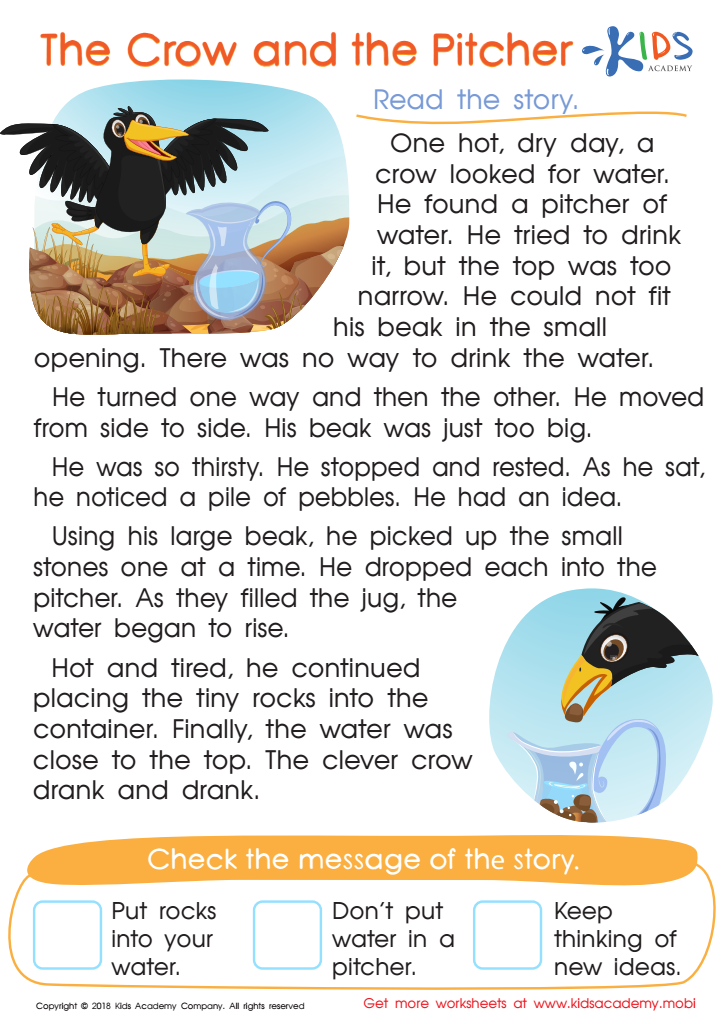
The Crow and the Pitcher Worksheet
 Assign to My Students
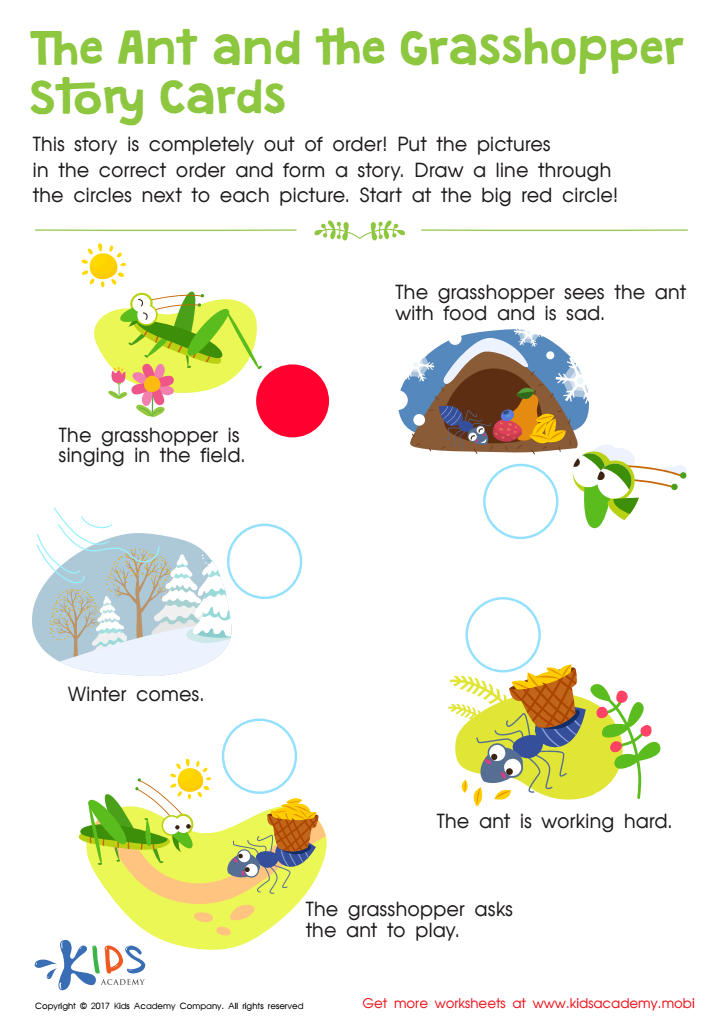
The Ant and The Grasshopper Worksheet
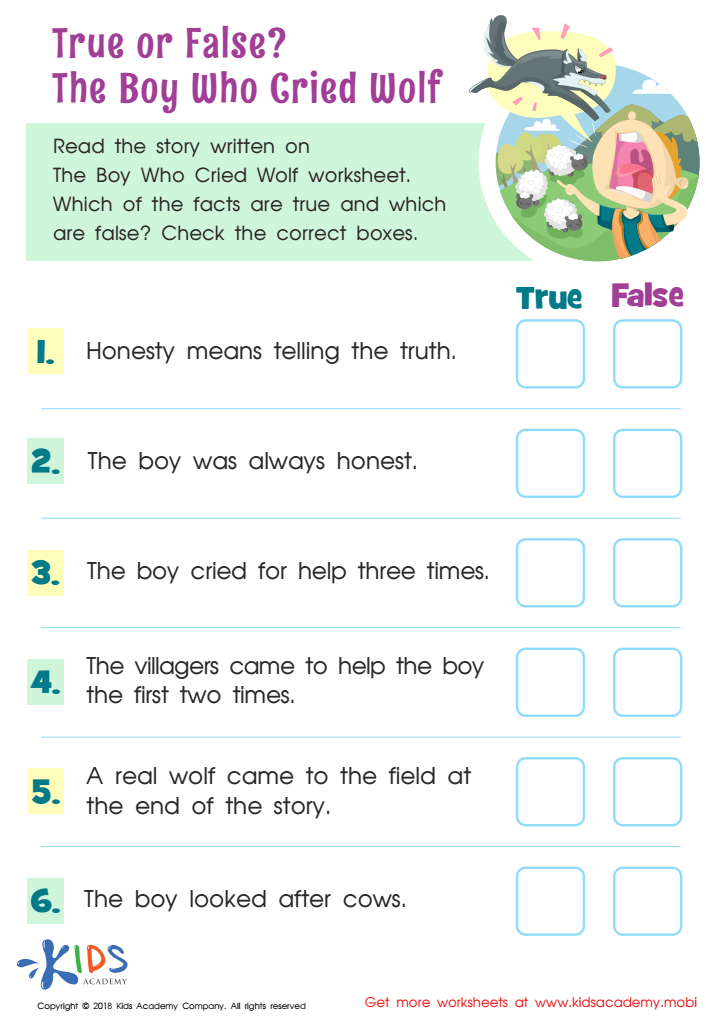
True or False? The Boy Who Cried Wolf Worksheet
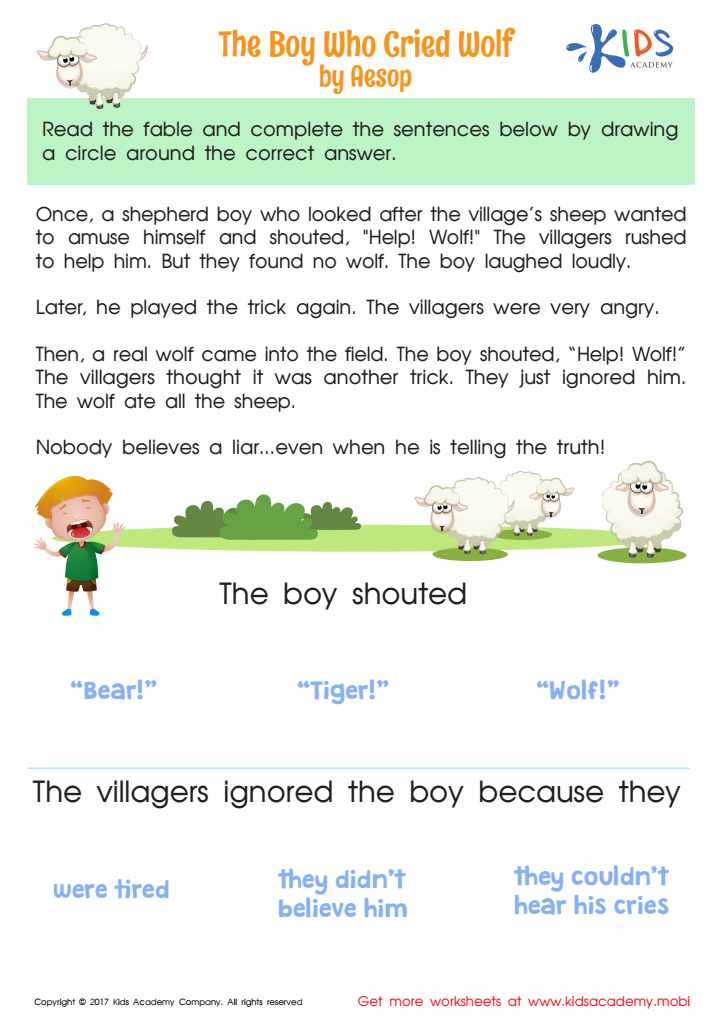
The Boy Who Cried Wolf Worksheet
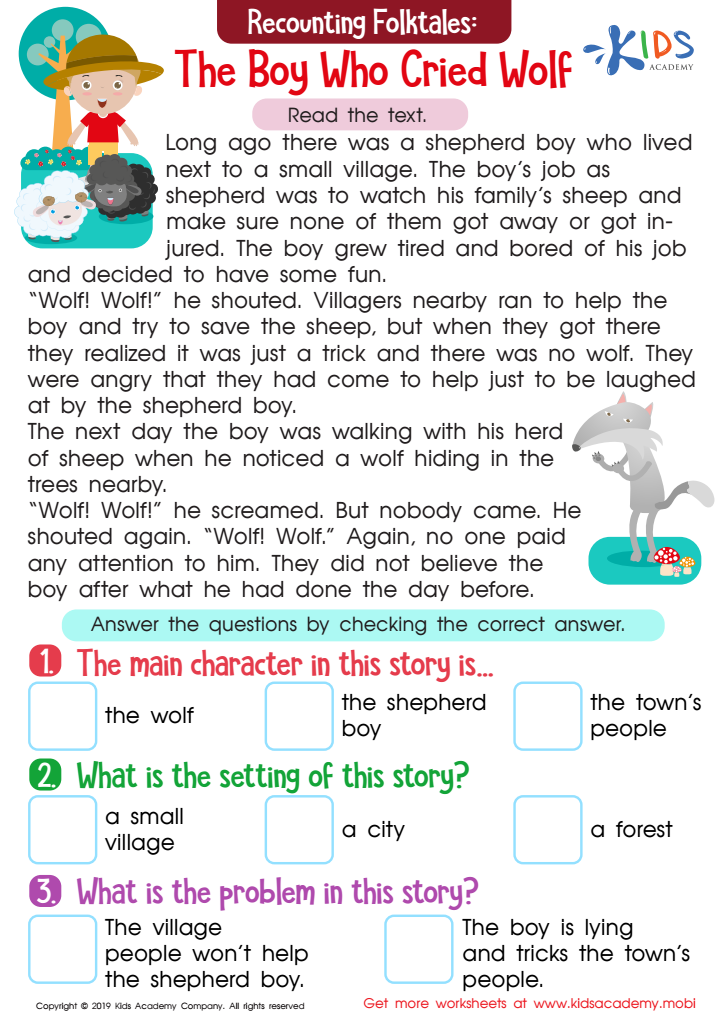
The Boy Who Cried Wolf Part 1 Worksheet








Parents and teachers should prioritize moral understanding through reading fiction for children ages 4-8 because it plays a crucial role in social and emotional development. At this formative stage, children are beginning to shape their understanding of right and wrong, empathy, and ethical behavior. Fictional stories provide relatable scenarios that can help children navigate complex moral dilemmas in a safe, engaging manner.
When children encounter characters facing moral choices, they have the opportunity to reflect on the consequences of those choices, fostering critical thinking and ethical reasoning. Moreover, stories often present diverse perspectives, cultivating empathy as children learn to understand and appreciate experiences different from their own.
Reading fiction also aids language development, improving vocabulary and storytelling skills, which are essential for effective communication of feelings and beliefs. Furthermore, when parents and teachers discuss the moral lessons in stories, it encourages open dialogue about values, promoting a shared understanding of ethics.
Ultimately, incorporating moral understanding through fiction enriches children’s literacy experiences, prepares them for social interactions, and helps cultivate responsible, caring individuals who are equipped to contribute positively to society. Hence, making reading a priority in moral education for young children can have lasting benefits.








